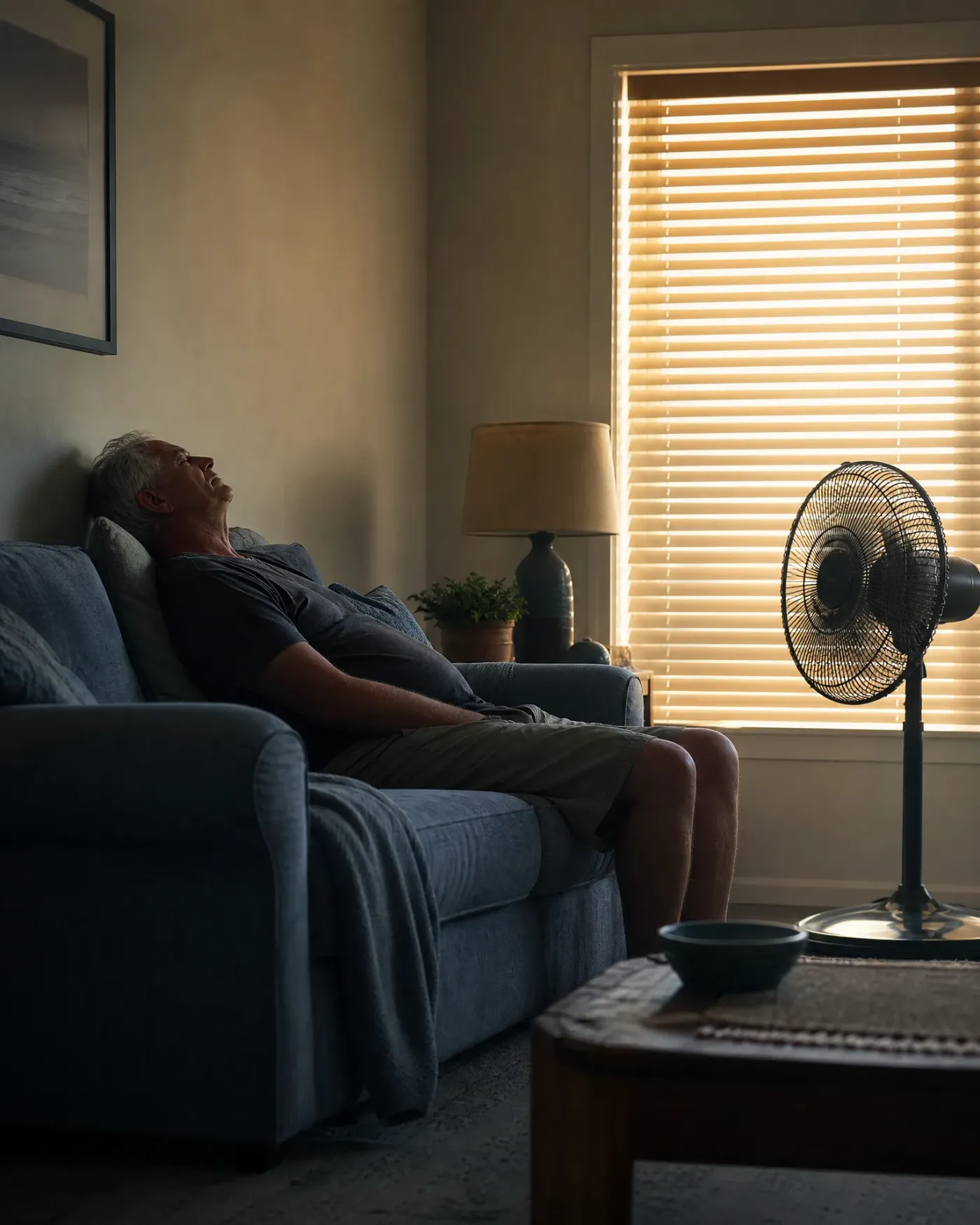

What emergency heat means on a Utah heat pump

RepairHeat PumpUtah
Step 1 of 2

What ZIP code is the job in?

What does emergency heat mean on my heat pump?

That switch on your thermostat marked EM HEAT is probably not something you flip on purpose. Most people find it because a kid or a pet bumped the thermostat, or because the heat pump outside stopped working and someone went looking for a way to keep the house warm. Either way, you want to know what you just turned on before you leave it running overnight.

Emergency heat runs the backup heat only, not the heat pump

Emergency heat tells your system to stop using the heat pump and run on backup heat alone. In most homes here that backup is electric resistance heat built into the air handler, since gas furnaces are usually paired with the heat pump as the main source of heat rather than the backup. It exists for when the outdoor unit is frozen over, broken down, or waiting on repair. It will keep the house warm, but it costs more to run than the heat pump does, because it's making heat directly instead of moving it. If that switch is on and nothing is wrong with the outdoor unit, you're paying more than you need to for the same warm air.

A gray outdoor condenser unit on a concrete pad beside a beige vinyl-sided house, with a wall-mounted disconnect box, flexible conduit, mulch bed, shrubs and a concrete walkway in front.

Running normally

When your heat pump is working, it pulls heat from the outside air and moves it inside, even when it's cold out. The thermostat stays set to normal heat, and the outdoor unit runs quietly on its pad. No EM HEAT light, no backup system kicking in.


An outdoor air conditioning condenser unit on a concrete pad beside a house with horizontal siding above a brick foundation, with a flexible conduit running to a wall-mounted disconnect box.

When it switches over

A heat pump caked in dust or iced over can't pull heat from the air anymore, and that's when emergency heat takes over. It relies on electric resistance heat instead, which keeps the house warm but costs more to run than the heat pump itself.

Emergency heat or back to normal

Leave it on emergency heat

  • The backup system is almost certainly electric resistance heat, and in Utah power is cheap, so running it for a few days won't hit your bill hard.
  • It keeps the house warm while you wait for a contractor to look at the outdoor unit.
  • You skip the risk of the heat pump trying to run broken and causing more damage to the compressor.
  • Most homes here heat with gas anyway, so this backup is only there to cover the heat pump when it's down, not to replace your main system long term.
  • If the outdoor unit is frozen over or the fan isn't spinning, emergency heat avoids running it in that state until someone checks it.

Switch back to normal heat

  • Normal heat pump operation costs less to run than electric resistance heat, so you want to get back to it once the outdoor unit is fixed.
  • Leaving the thermostat on EM HEAT after the heat pump is repaired means you're paying for backup heat you no longer need.
  • Switching back confirms the repair worked. If the house heats and the outdoor unit runs quietly again, the fix held.
  • If you switch back and the heat pump still won't kick on, that tells the contractor the problem wasn't what they thought, or something else failed.
A woman with long wavy brown hair in a grey ribbed sweater sits on a couch indoors, looking toward a window, with a potted palm-like plant and fireplace behind her.
A woman with long brown hair wearing a green V-neck top and beige cardigan sits on a light sofa, looking off to the side, with a dining table, lamp and framed picture in the background.
A woman with long dark hair in a cream knit sweater sits on a beige sofa indoors, looking toward a bright window with a houseplant and framed picture in the background.
A woman with long dark hair in a green knit sweater sits on a couch indoors, smiling and looking toward a window with a blurred room behind her.
A woman in a cream cardigan and jeans stands with one hand raised facing an open front door of a gray horizontal-siding house, with a black lantern wall light, a potted shrub with yellow flowers, and a stone-faced porch column.

What this means for your house

If the EM HEAT light is on and you didn't flip it, your heat pump isn't pulling heat from outside anymore. The backup system is carrying the whole load. Most homes here heat with gas, but if your backup is electric resistance, you'll likely notice the air coming out of the vents feels warmer than usual, almost hot, compared to what a heat pump normally puts out. That's normal for backup heat. It's not a sign anything else is wrong.

What it puts at risk is the outdoor unit sitting there not running. Left alone, that's a repair that doesn't fix itself, and the longer it sits the more you're relying on backup heat to keep the house livable. You don't have to spend your afternoon calling around and explaining the same problem to three different companies. Tell the page what's going on and a contractor who handles heat pumps in your area will follow up with you directly.

A living room corner with a light beige sofa holding a textured taupe cushion, a large ceramic vase of olive branches by a window, a framed neutral artwork on the wall, and a dark bowl with stacked books in the foreground.
A gray outdoor air conditioning condenser unit on a concrete pad beside a house with horizontal siding, next to a green lawn and a plain light-colored wall.

Why the switch exists at all

A heat pump moves heat from the outside air, and below a certain outdoor temperature it can't pull enough to keep up. The backup heat is there to cover that gap. EM HEAT forces the system to skip the outdoor unit entirely and run only on backup, which is normally reserved for the coldest stretches of the night, not for routine use.

A white outdoor heat pump unit on a concrete pad beside a plain light wall, with gravel and mowed grass in front.

What the outdoor unit is doing

When the outdoor unit can't run, usually something is wrong with the compressor, the fan, or the refrigerant charge, and the system has backed itself off rather than run broken. A contractor who services heat pumps can check the outdoor unit and tell you whether it's a part that failed or something simpler, like a tripped breaker or a stuck fan.

Power costs 13.02 cents per kilowatt-hour statewide

At 13.02 cents a kilowatt-hour, running electric resistance heat for a few days while you wait on a contractor won't do much damage to your bill. That's the one upside to emergency heat kicking in here. It's not what you want long term, but it won't wreck your budget either.

EIA-861 2025 statewide residential average

If it's running on EM HEAT for a day while you wait on someone to come look at it, that's fine. Nothing in your house is at risk, and the bill won't jump much in that time.

If it's been a week, something is wrong with the outdoor unit and it needs a look. Emergency heat was built to get you through a gap, not to replace the heat pump.

A gray-haired woman in a cream knit sweater stands in a dimly lit kitchen at night, looking to her right, with a round loaf of bread in the foreground and a dark window and potted plant behind her.
A woman with her hair in a bun holds a sleeping young child against her chest, both wrapped in a textured beige knit blanket on a sofa in a dimly lit room with a lamp, framed picture, and bookshelf behind them.

A pro who works on heat pumps

You've read what EM HEAT means and what it costs you to leave it running a few days. The part left is getting someone out to look at the outdoor unit, and that's the part that eats a weekend. Calling around to find a contractor who works on heat pumps, waiting on callbacks, explaining the same thing about the EM HEAT light to three different people, then sitting with quotes trying to guess who actually knows this equipment. None of that gets your heat pump pulling from outside air again any sooner. Submitting this request sends your situation to one contractor who takes it from there, so you're not the one chasing it down. Your backup heat is holding the house warm right now. That buys you room to get this looked at instead of living on emergency heat all winter, which is the one thing you don't want to just let ride.

How the thermostat routes the heat

  • The thermostat has two stages, and EM HEAT forces a jump straight to the second one, skipping the outdoor unit.
  • Inside the air handler, the backup heat strips sit right in the airflow, and EM HEAT powers them directly without waiting on the outdoor coil first.
  • A normal heat pump call for backup heat happens automatically through a second stage on the thermostat, not through the EM HEAT switch.
  • The outdoor unit has a reversing valve that switches it between heating and cooling, and that valve sits idle whenever EM HEAT is on.
  • A contractor checks the outdoor unit's defrost control and compressor first, since those are what usually force a heat pump onto backup heat on its own.
  • Some thermostats show EM HEAT the moment they lose communication with the outdoor unit, even if the compressor itself is fine.

Your thermostat normally handles backup heat in stages. Stage one is the outdoor unit pulling heat from the air. If it can't keep up on a cold morning, the thermostat calls stage two on its own, and the electric strips in the air handler kick in to help. That happens without you doing anything, and it clears once the house catches up.

EM HEAT skips that process. It tells the thermostat to ignore the outdoor unit entirely and send power straight to the backup strips in the air handler. The outdoor unit sits idle, reversing valve and all, since there's no call for it to switch between heating and cooling if it isn't running.

This is why EM HEAT matters as a signal. If you see it on and you didn't switch it, the thermostat has decided the outdoor unit isn't worth calling on. Sometimes that means the compressor or the defrost control actually failed. Sometimes it just means the thermostat lost its signal to the outdoor unit and defaulted to backup heat out of caution, with nothing wrong outside at all. A contractor checks the defrost control and compressor first, since those are what usually force the switch on their own. Either way, the strips doing the work are the same ones that would've helped out for an hour on a cold morning, just running full time instead.

A gray outdoor air conditioning condenser unit on a concrete pad beside a house with light vinyl siding, with a gray electrical disconnect box and conduit on the wall to the right.
Before you get your heat pump repair
A gray outdoor condenser unit on a concrete pad beside a house with horizontal lap siding, a conduit and disconnect box on the wall, a shrub with white flowers at right and evergreen foliage at left.
After you get your heat pump repair
A two-story gray horizontal-siding house with multiple gables, a covered front porch with white columns and railing, and a dark front door, fronted by a patchy green and brown lawn under a clear blue sky.

Summer air in Utah sits at a dew point of 41°F, which is dry. That's why your heat pump isn't the one working hard here. In the winter, the outdoor unit is pulling heat out of cold, dry air, and that's a harder job than cooling a dry house in July. When it can't keep up and EM HEAT kicks on, the backup strips take over entirely. A dry summer doesn't tell you much about why that happened. It's the cold outside, not the air's moisture, that pushed your system into backup mode.

NASA POWER T2MDEW county cells weighted by homes

A beige outdoor air conditioning condenser unit on a concrete pad beside a house with horizontal vinyl siding, with refrigerant lines and a disconnect box on the wall, surrounded by dark mulch and a green shrub at left.
The outdoor unit is doing its job, pulling in heat and sending it inside without any help from the backup strips.
An outdoor air conditioner condenser unit on a concrete pad beside a house with beige horizontal siding, with conduit running from an electrical box on the wall.
A disconnect box feeding power down to a quiet outdoor unit that isn't moving any heat on its own anymore.

EM HEAT on your thermostat means the outdoor unit has stopped pulling heat from the air, and the backup strips are carrying your house on their own. That's fine for a day or two while you line someone up to look at the outdoor unit. It's not fine for a week. The house stays warm either way, so there's no reason to live with it longer than it takes to get a contractor out there. Instead of calling a few companies, explaining the EM HEAT light and the thermostat and the outdoor unit each time, then sitting with quotes trying to guess who actually works on heat pumps, you answer a few questions once and a contractor who handles this equipment calls you. The switch did its job if it got the heat to keep running. The rest is just getting the outdoor unit looked at before a few days turns into a few weeks.

Sunlight falls across a beige upholstered sofa with a textured woven cushion and a chunky knit throw, beside a dark wood cabinet holding a ceramic vase with green leafy branches, near a white-framed window.
A sunlit corner of a room with a wooden side table holding a ceramic vase of green foliage and a wooden bowl, beside a light upholstered sofa with a knit throw and rust-colored pillow, with window shadows cast on a beige wall.
A sunlit room corner with beige walls, a white-framed window with sheer cream curtain, wood floor with a light rug, and a woven basket holding a knit blanket.
A beige ceramic vase holding a leafy green branch sits on a wooden cabinet in a corner, with sunlight through a sheer curtain casting leaf shadows on the wall.
A grey upholstered sofa with a rust-orange velvet cushion and a textured throw sits beside a window with linen curtains, next to a wooden side table holding a pale ceramic vase of olive branches.

Get your heat pump to the right pro

Answer a few questions instead of calling shop after shop.

Get a heat pump pro

It costs nothing to send, and you don't have to hire anyone.


















