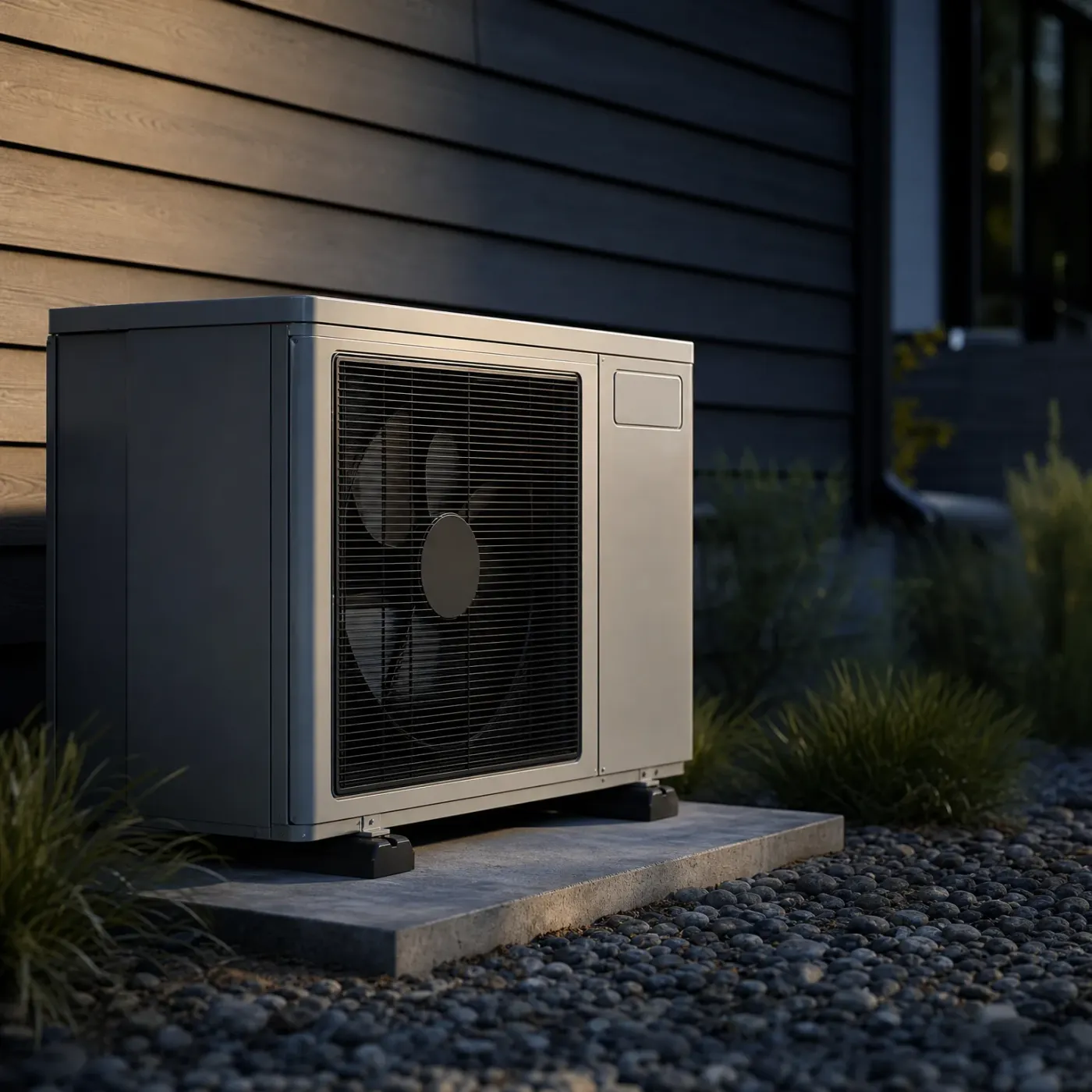
An outdoor heat pump unit with a front fan grille sits on a concrete pad beside a dark horizontal wood-clad wall, surrounded by gravel and ornamental grasses.

Done looking for a heat pump pro

Heat pump stuck on emergency heat in Logan, UT

Your heat pump switched over to emergency heat and won't go back on its own, and with a Cache County winter outside, that's not something to sit on. Usually it means the system has stopped reading something right or the outdoor unit isn't doing its job. This page gets into what causes it and how it gets fixed. Send the details once and let a local contractor who works on these year-round take it from there.

I'm done searching

A heat pump that has switched itself to emergency heat is telling you it stopped trusting its normal heating cycle. That switch usually gets thrown by the system's own controls when the outdoor unit isn't moving heat the way it should, often because the coil has iced over and defrost isn't clearing it, or because a sensor is feeding the thermostat bad information. Sometimes it's simpler: the outdoor unit has stopped running altogether, from a tripped breaker, a failed motor, or a part that's worn out. Emergency heat works off the backup heat strip, not the heat pump itself, so the house stays warm while this is going on. But it costs more to run that way, and on a Logan winter day it isn't something to leave alone for long. The fix means finding out why the system stopped trusting the heat pump side and getting that corrected, not just switching the setting back.

Power here costs 13.03 cents per kilowatt-hour

At 13.03 cents per kilowatt-hour, running on emergency heat costs you more than your heat pump normally would, since that backup strip heat uses electricity straight, without pulling any warmth from outside. Stuck there, you'll see it on your next bill.

EIA-861 2025

You switched it on yourself

If you flipped the switch to emergency heat because the outdoor unit was icing up, making noise, or not blowing warm air, that's doing exactly what it's there for. The strip heat inside will keep the house warm while the heat pump itself gets looked at. There's nothing wrong with leaving it there for a day or two while you get someone out. The only real downside is the electric bill, since strip heat doesn't pull any warmth from outside air the way the heat pump does.
It switched over by itself

If you never touched the switch and the system put itself on emergency heat, that's the controls deciding the outdoor unit can't be trusted right now. A frozen coil, a dead compressor, a sensor reading wrong, any of those can trigger it. This isn't something to wait out. The outdoor unit needs a tech to find out why it got locked out, and until that happens, you're paying strip heat prices for heat the house would otherwise get for less.

Why does this matter so much in Logan?

  • Winter nights average 17°F

    Overnight lows averaging 17°F mean strip heat alone has to cover real cold, and it's not built to do that night after night.

  • Heat runs September through June

    Heat runs September through June here, so a heat pump stuck on emergency heat is a problem for most of the year, not a short stretch.

  • Cooling runs July through July

    Cooling only runs in July, which means this system spends nearly its whole working life on heat, and getting the heating side fixed right matters most.

NOAA nClimDiv 1991-2020

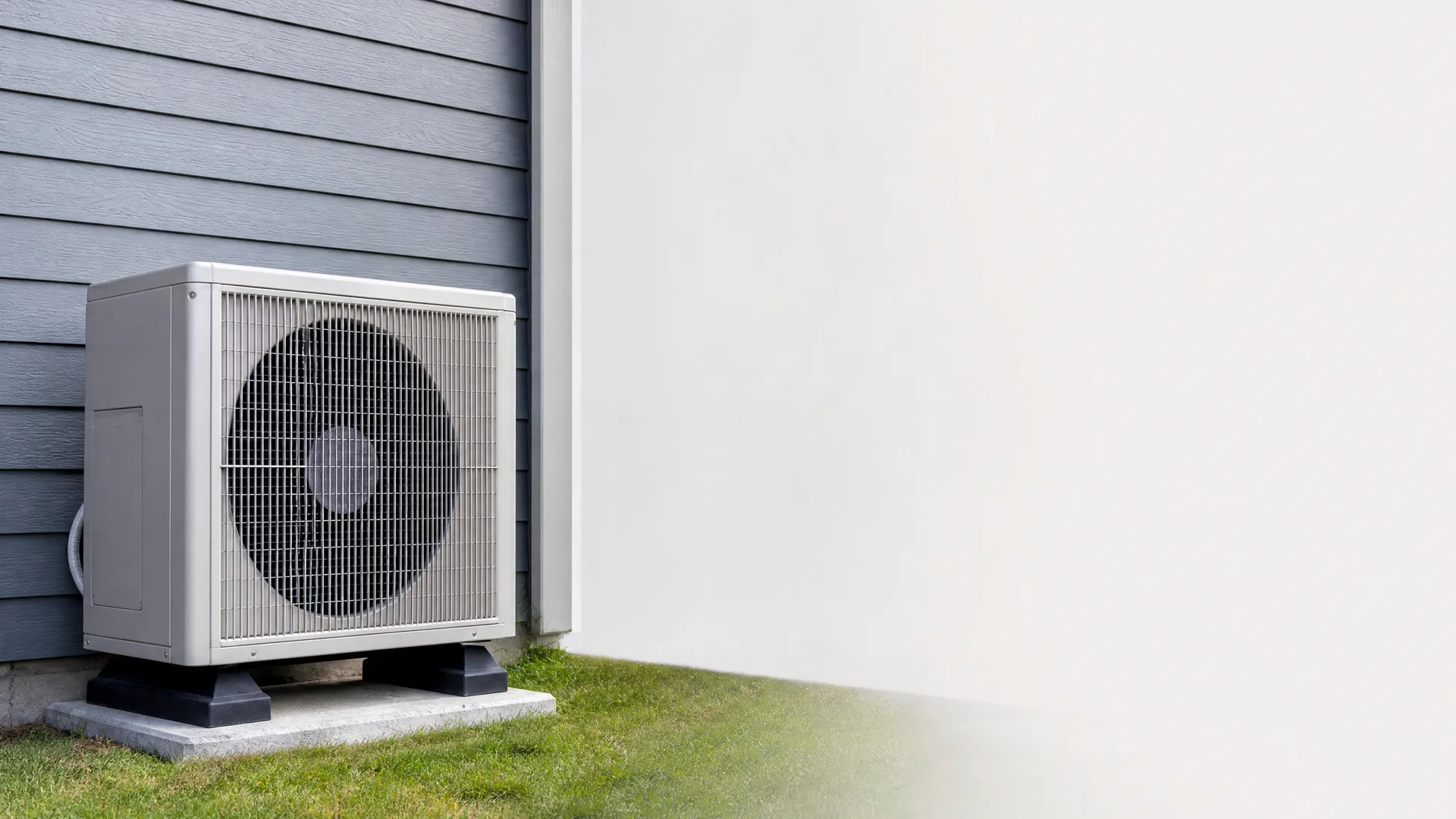
An outdoor heat pump unit on a concrete pad beside a gray horizontal-siding wall, next to a blank white wall and a strip of grass.

What you'll notice running this way

The strip heat will keep the house warm, so day to day nothing feels wrong. What changes is how long the furnace closet or air handler runs and how warm the air coming out feels, usually warmer than your heat pump's normal air. Some homes notice the breaker for that circuit warming up or tripping if it's run for days straight. None of that means stop, it means the house is being heated the expensive way while the real problem waits.

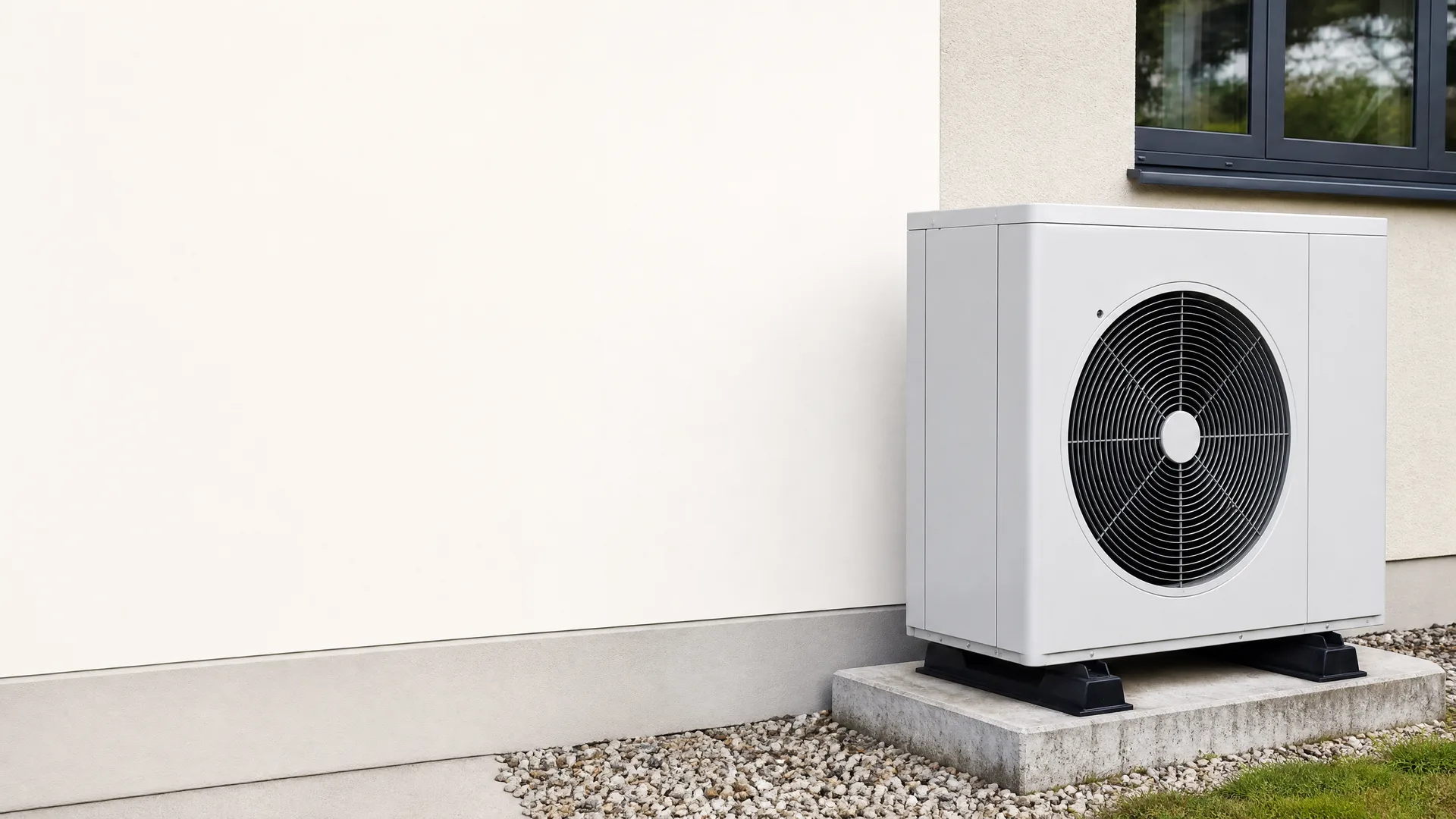
A white air-source heat pump unit with a circular fan grille sits on rubber feet atop a concrete pad beside a light-colored stucco house wall, with gravel and grass in the foreground and a dark-framed window above.

What it costs you left alone

Every day on emergency heat is a day of straight electric resistance heat instead of a heat pump moving warmth from outside. In a Logan winter that difference shows up fast on the bill, and it keeps showing up for as long as the system stays stuck. The outdoor unit problem that caused the switch doesn't go away on its own either. Left alone through a hard freeze, a coil that's icing or a unit that's not running at all can go from a repair to a replacement.

What's actually going on in your house right now

Walk past the thermostat and it may still say "heat," giving no hint anything's wrong. The air coming out of the vents will feel hotter than what your heat pump usually puts out, almost like a furnace. The outdoor unit will likely sit still, not running at all, while the strip heat inside does all the work. You might hear the air handler cycling more than usual to keep up. None of this will feel like an emergency day to day, which is exactly why it's easy to let it ride for weeks while the electric bill quietly climbs and the real problem with the outdoor unit goes unaddressed.

A gray outdoor heat pump unit on a concrete pad beside a house with horizontal lap siding, with a conduit running to a wall-mounted disconnect box and a green shrub to the left.

Running as it should

This is a heat pump doing its normal job. The outdoor unit sits there drawing heat from the air outside, quiet, clean, no ice built up on the coil. Your thermostat reads heat, and it's your heat pump meeting it, not the strip heat picking up the slack.

An outdoor air conditioning condenser unit on a concrete pad beside a house with horizontal siding above a brick foundation, with a flexible conduit running to a wall-mounted disconnect box.

Stuck on backup heat

Dust and weathering like this on the outdoor unit often go along with a coil or sensor that isn't reading right, which is what trips the switch to emergency heat. The unit sits there not running while the strip heat inside carries the whole load, something it wasn't built to do for long.

A gray-haired man in a dark green sweater sits on a sofa in a sunlit living room, looking off to the side, with a framed landscape painting, dining table and shelving behind him.
A gray-haired bearded man in a dark green collared sweater sits on a sofa in a living room with a window, houseplant, floor lamp and bookshelves, looking off to the side.
A middle-aged man in a dark green sweater sits on a light grey sofa looking toward a sunlit window, with a wooden shelving unit, lamp and potted plants in the background.
A gray-haired bearded man in a dark knit sweater sits on a light gray sofa in a sunlit living room, looking to his left, with a framed artwork, a potted palm, and a curtained glass door behind him.

It's off your list after this

A licensed pro who repairs heat pumps in Cache County gets your request.

Sending the form costs nothing.

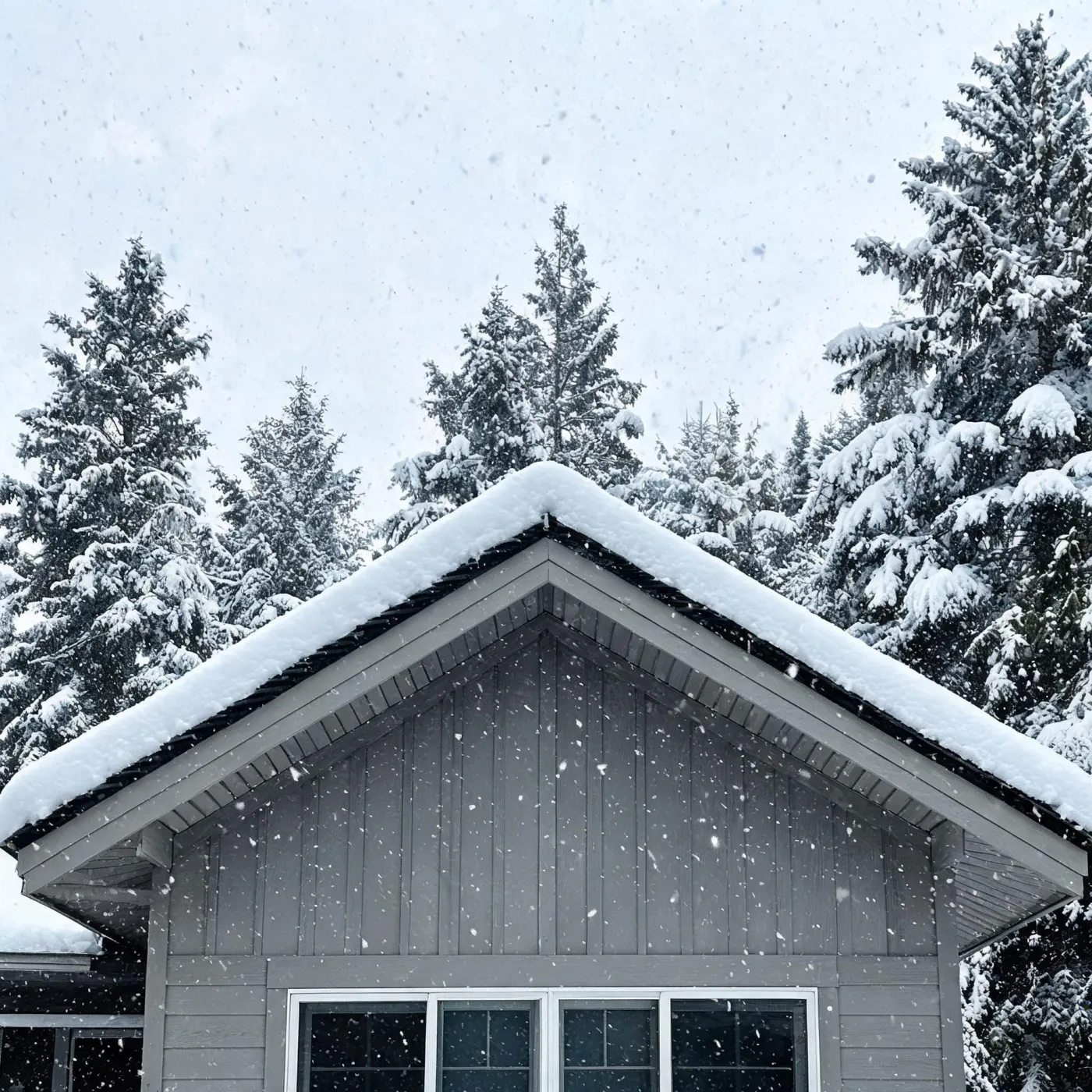
The snow-covered gable end of a gray board-and-batten house with wide eaves and a window below, backed by snow-laden conifers under a pale sky with falling snowflakes.

Cache County winter nights average 17°F, according to NOAA climate data. At that temperature a heat pump's outdoor unit has to work harder just to pull warmth from the air, and once it trips to emergency heat, the strip heat inside takes over the whole job instead of helping out now and then. Strip heat wasn't built to carry a house through nights that cold on its own, night after night. That's the load stuck on emergency heat is asking it to carry until the heat pump's normal cycle comes back.

NOAA nClimDiv 1991-2020

Leave It or Get It Checked

Wait it out

  • Strip heat keeps the house warm while the problem sits there, so nothing forces your hand tonight.
  • Every day on emergency heat runs straight electric resistance, no heat pulled from outside, and that shows up on the next bill.
  • The outdoor unit stays idle the whole time, so whatever tripped it, ice, a bad sensor, a failed reversing valve, doesn't get looked at or fixed.
  • If the cause is a frozen or failing outdoor coil, leaving it alone through more cold nights can make the repair bigger than it is right now.
  • You're guessing at why it switched, and a wrong guess means you're paying strip heat rates longer than you need to.

Get it diagnosed

  • A technician who works on heat pumps in Cache County through the winter knows what usually trips the switch to emergency heat here.
  • Finding the actual fault, whether it's a sensor, a defrost control, or the outdoor unit itself, gets the heat pump back to doing the job the strip heat is standing in for.
  • Once it's fixed, your system goes back to pulling heat from outside instead of running straight electric, and the bill reflects that.
  • A local contractor can check the outdoor unit in person, which is the only way to tell ice buildup from a failed component.
  • One contractor means one visit, not several companies working the same question.
A gray outdoor condenser unit on a concrete pad beside a house with horizontal lap siding, with a wall-mounted disconnect box, conduit and insulated refrigerant lines, a shrub at left and gravel at right.

This is what your outdoor unit should look like

Clean fins, no ice, nothing unusual running up the wall to the disconnect. When it looks like this, the outdoor unit is pulling heat from the air the way it's built to, and your thermostat reads heat because your heat pump is actually meeting it.

A gray outdoor air conditioning condenser unit on a concrete pad beside a house with light vinyl siding, with a gray electrical disconnect box and conduit on the wall to the right.

This is the kind of unit that ends up stuck on emergency heat

Dirt packed into the fins and weathering like this slow the coil down until it can't pull heat the way it needs to. Once the system gives up on it, it switches to strip heat and leaves the outdoor unit sitting there not doing its job.

How does the system decide to switch to emergency heat on its own?

You didn't touch the thermostat, but it's sitting on emergency heat anyway. That's a switch the system threw on its own, and it usually means something tripped it rather than you choosing it. Knowing what makes that call helps you tell whether this is a quick reset or a part that's actually failed.

The thermostat's control board makes the call, based on what the outdoor unit reports back

A heat pump thermostat watches two things: how long the outdoor unit runs to satisfy a call for heat, and whether the outdoor unit is reporting a fault back to it. If the compressor runs too long without catching up to the set temperature, or if a sensor on the outdoor unit trips, the control board locks out the normal heating cycle and switches to the strip heat instead. It does this on its own, without asking you first, because the thermostat is built to assume the strip heat can always keep the house warm even when the heat pump can't. That's why it shows up on its own with no warning on the display beyond the mode itself.

A woman with shoulder-length brown hair in a cream cardigan and top sits in an armchair indoors, looking toward a sunlit window with trees outside.
A woman with hair in a bun sits on a couch holding a sleeping child, both wrapped in a chunky knit blanket, in a dimly lit room with a lamp and bookshelves behind.

Where this leaves you

  • Emergency heat that won't switch back on its own means the system needs a technician, not a thermostat reset.
  • The fix is usually the outdoor unit, the defrost control, or a sensor reading something wrong, not the strip heat that's keeping you warm now.
  • A technician who works heat pumps through Cache County winters has seen this exact fault plenty of times before.
  • One licensed, local contractor takes the call, so you're not fielding quotes from four different companies while your bill climbs.
  • Every day it runs this way is another day of straight electric resistance heat on a system built to do better.
  • Getting the outdoor unit looked at is what gets your heat pump back to pulling heat from the air instead of making it from electricity.

Your heat pump isn't broken beyond use. It threw a switch to protect the house, and now it's stuck there, running strip heat instead of doing its normal job. That's a control problem or an outdoor unit problem, something a technician needs to look at directly rather than something you can reset from the thermostat. Nothing about the fix is a mystery to someone who works on these systems through a Cache County winter. The same handful of things trip emergency heat here, and a technician who's been out on these calls before knows which part to check first instead of guessing through all of them. That's the kind of familiarity that comes from doing this in this specific cold, not from a manual. When you send the request, it goes to one licensed contractor local to the area, not a list of four companies competing for your callback. You'll deal with one person who already knows what this fault usually turns out to be, not a string of quotes to sort through while the strip heat keeps running up your bill. The thermostat will keep saying heat. The air will keep coming out warm. None of that tells you the outdoor unit is back doing its job. The only way this changes is a technician getting eyes on the equipment itself. Until then, the house stays warm, and the system keeps doing it the expensive way.

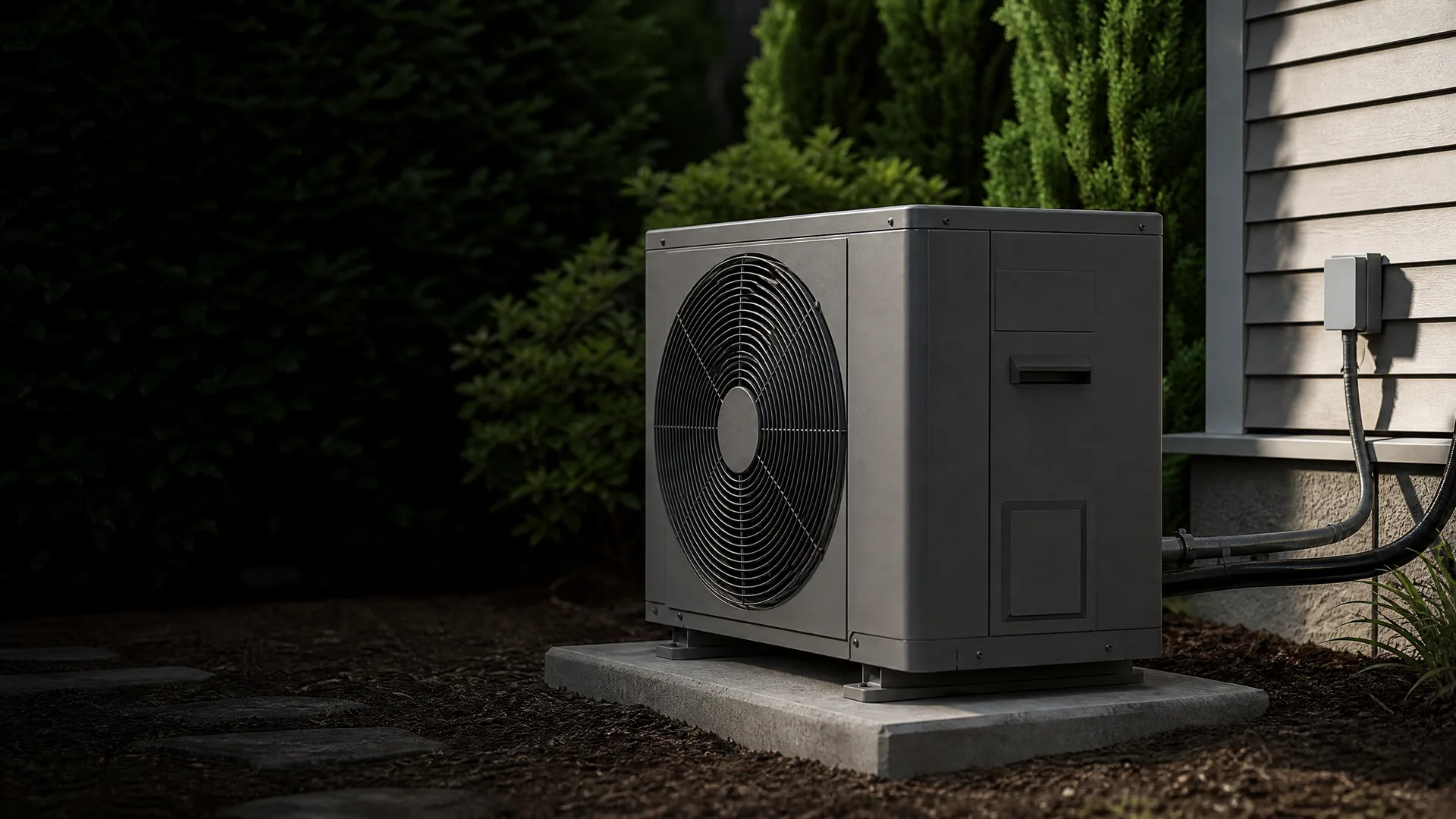
A gray outdoor heat pump unit with a large circular fan grille sits on a concrete pad beside a house with lap siding, with refrigerant lines running to an exterior electrical box and dark shrubs behind.

Hand off the search today

RepairHeat PumpCache County, UT
Step 1 of 2

What ZIP code is the job in?