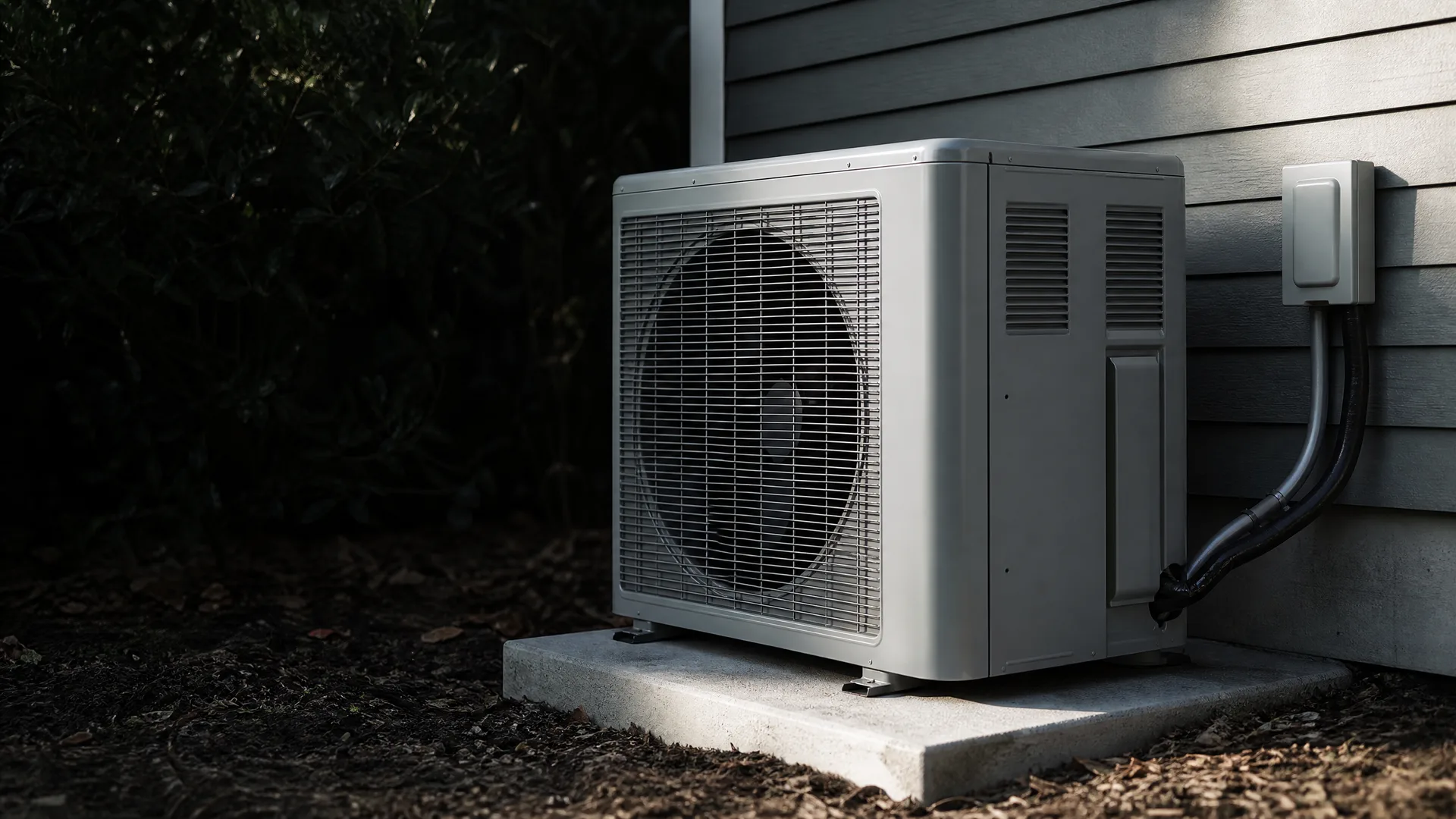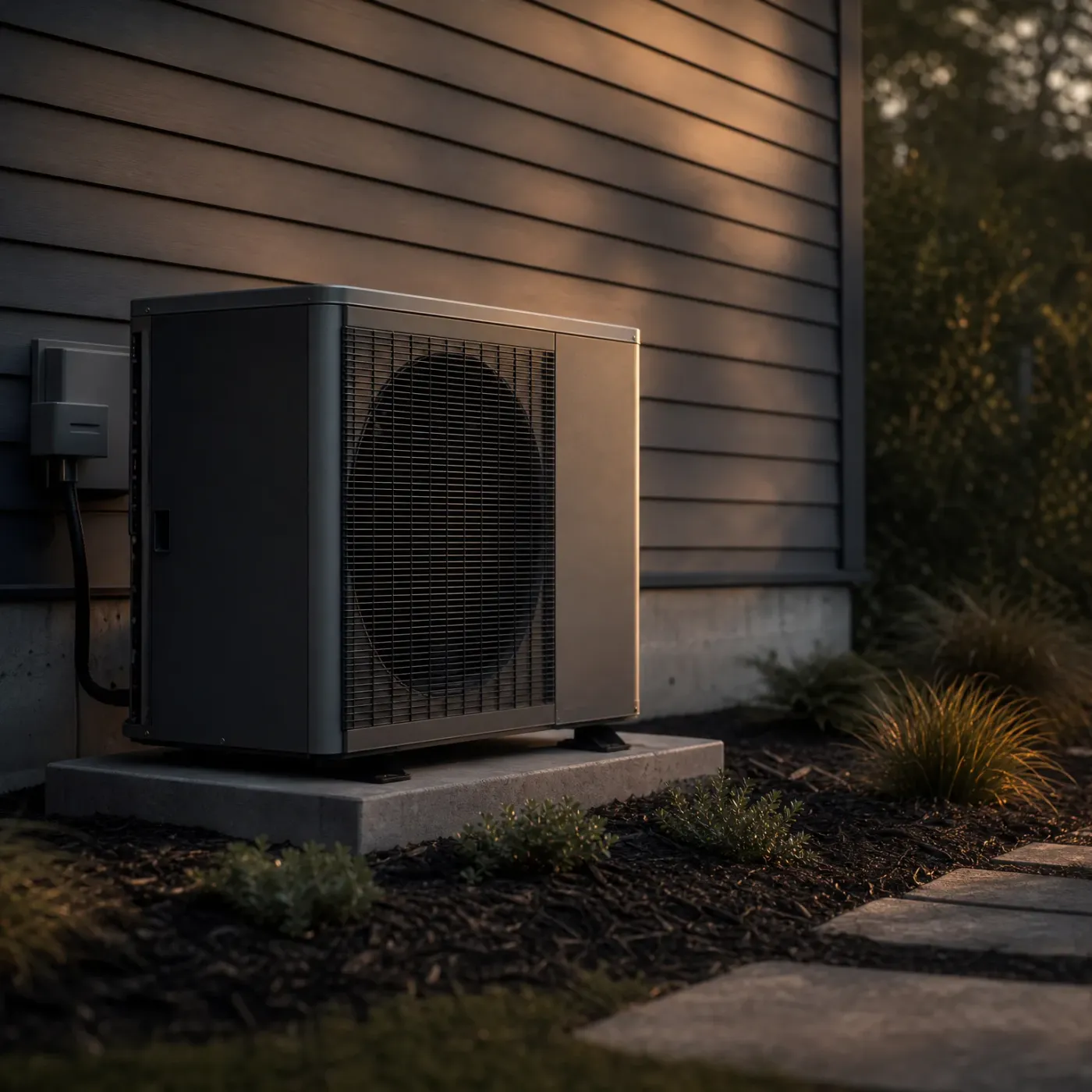





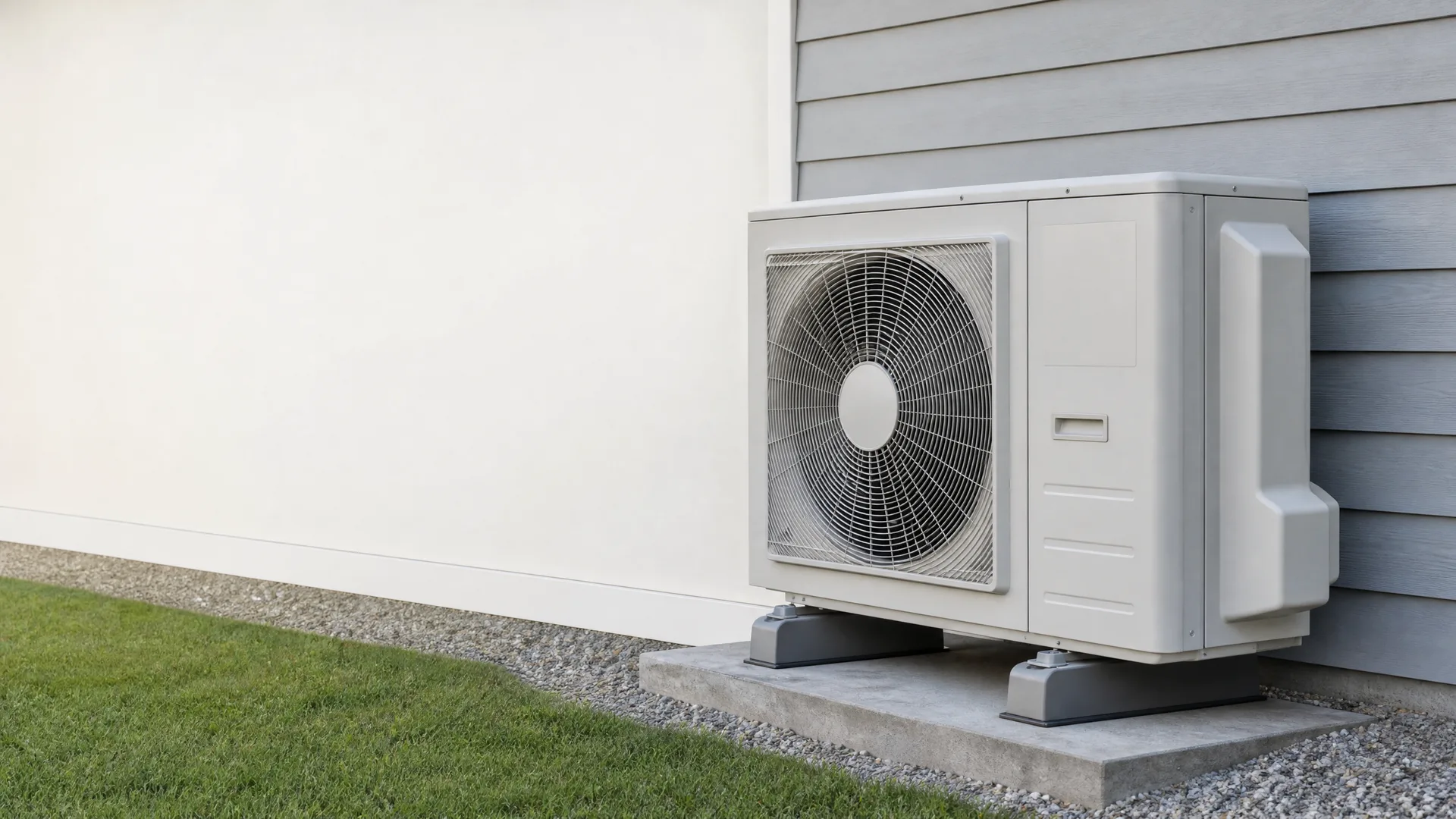

An outdoor heat pump unit on a concrete pad beside a house with horizontal lap siding, with a wall-mounted disconnect box and conduit at left and mulched planting beds with grasses and a stone path at right.

One request and it's handed off

What auxiliary heat means on a Utah heat pump

Your heat pump's thermostat shows "aux heat" or "emergency heat" and you want to know if that's normal or a sign something's wrong. This page covers what auxiliary heat does on a cold Utah morning, when it should kick in, and when it running too much points to a problem with the unit outside. If yours needs a look, a licensed local contractor can get it sorted out without you having to track one down yourself.

Let a pro reach out

Auxiliary heat is the backup heater built into your heat pump system, and it switches on when the heat pump alone can't keep up with the cold. Heat pumps move heat from the outside air into your house, and that gets harder the colder it gets outside. On a Utah morning when temperatures drop into the teens or lower, the outdoor unit can't pull in enough warmth fast enough, so the system brings in electric resistance heat to make up the difference. You'll see "aux heat" on the thermostat during those cold stretches, and that's expected. It should turn off once the house warms up or the outdoor temperature climbs. If it stays on for hours at a time, or runs on mild days when it shouldn't need to, that points to the heat pump itself not working the way it should, and that's worth having someone look at before it drives up what you're paying to stay warm.

  1. Outdoor air drops low enough that the heat pump loses pull

  2. The thermostat senses the house falling behind its set point

  3. A second stage signal calls for backup heat to join in

  4. Electric strip heat or a furnace adds the missing heat

A smiling man in a navy long-sleeve shirt sits at a wooden table in a kitchen and dining area, with a ceramic mug, a potted plant, and a sliding glass door behind him.
A smiling bearded man in a green henley shirt stands at a kitchen island with a gray mug, looking off to the side, with a dining area and shelves blurred behind him.
A smiling bearded man in a navy sweater sits at a white kitchen island with a ceramic mug, with open shelves, potted plants and a range hood behind him.
A smiling man in a dark olive long-sleeve shirt sits in a kitchen beside a counter with a dark mug, with a dining table, sideboard and hallway visible in the blurred background.

How cold it has to get

A heat pump in Utah can usually cover the house down into the 30s on its own. Below that, the outdoor coil is pulling heat from air that has less and less of it to give, and the compressor can't keep up with how fast the house loses warmth. That's when aux heat is supposed to step in. On a January morning here, especially before sunrise when it's coldest, seeing aux heat on the thermostat is normal operation, not a malfunction. The system is doing what it was built to do.

Why it costs more to run

Aux heat works by resistance, the same way a toaster or a space heater does, which takes a lot more electricity than the heat pump moving heat from outside. Power is cheap here compared to a lot of places, so a short run most winter mornings won't do much to your bill. What's worth noticing is how long it stays on. A thermostat that calls for aux heat for an hour or more at a time, or on afternoons that aren't especially cold, is a sign the heat pump itself isn't pulling its weight anymore.

Power costs 13.02 cents per kilowatt-hour statewide

At 13.02 cents per kilowatt-hour, running the strip heat for a morning or two when it's genuinely cold won't hit your bill hard. What costs you is aux heat staying on for days because the heat pump itself has lost its pull, a weak capacitor or a low charge keeping it from covering what it should.

EIA-861 2025 statewide residential average

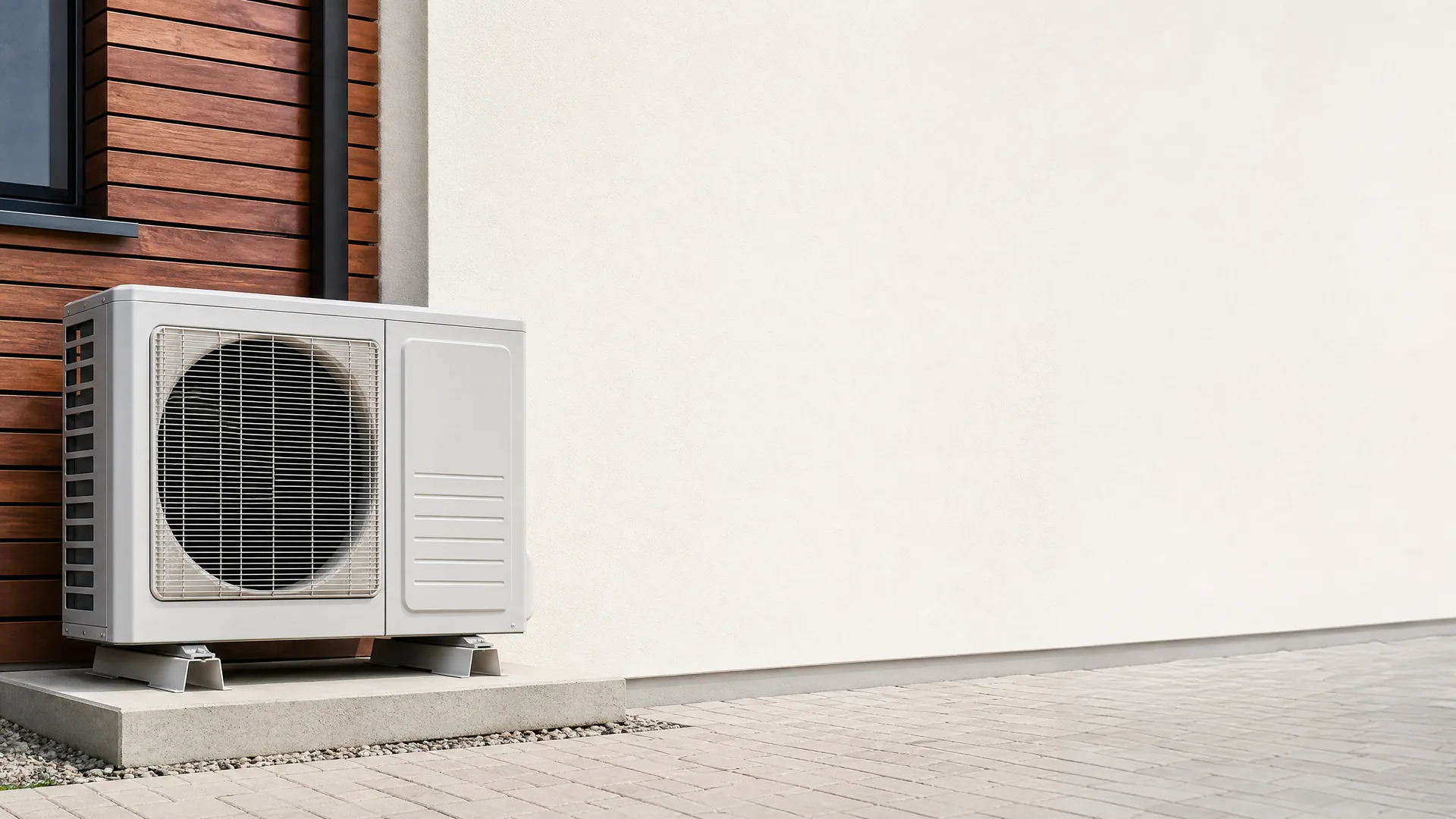
A white outdoor heat pump unit on a concrete pad beside a house with wood-slat siding and a large plain light-colored stucco wall, with paving stones in the foreground.

Aux heat on for an hour

You wake up to a cold house and the thermostat shows aux heat. By the time you're dressed, the house has caught up and the heat pump is back to running on its own. That's the backup doing exactly what it's built for, covering the gap on a cold morning until the house gets back to temperature. Nothing to check here, nothing to fix. It'll probably show up again the next cold morning, and that's fine too.

A white outdoor heat pump unit on rubber feet sits on a concrete pad beside a gray-sided house wall, next to a smooth light wall, gravel strip and lawn.

Aux heat on for days

The thermostat still shows aux heat that afternoon, and the next day, and it hasn't let up. That's not a cold snap anymore, that's the heat pump losing its ability to carry the house on its own and the backup doing all the work it wasn't built to do alone. A local contractor who works on these year-round can usually tell within a visit whether it's a weak capacitor, a low charge, or something else keeping the compressor from pulling its weight.

Is your aux heat light staying on too long?

You glance at the thermostat and the aux heat light has been on since last night, not just through the cold snap at dawn. The house might still feel a step cool even with it running, or your gas or power bill comes in heavier than the weather alone explains. Sometimes you'll hear the heat pump outside cycling on and off more than usual, or the air coming from the vents feels lukewarm instead of warm. None of this means the backup heat is broken. It means the heat pump isn't carrying its share of the work anymore, and the longer that goes unchecked, the more you're paying for heat the heat pump should have been providing on its own.

A gray outdoor condenser unit on a concrete pad beside a beige vinyl-sided house, with a wall-mounted disconnect box, flexible conduit, mulch bed, shrubs and a concrete walkway in front.

Heat pump running clean

This is what it should look like. The grille is clear, the pad underneath is bare, and nothing is blocking the airflow in or out of the unit. Air moves through it the way it's supposed to, so the heat pump can pull what it needs from the outside air and aux heat only steps in on the coldest mornings.


A weathered gray outdoor condenser unit on a concrete pad beside a house with horizontal vinyl siding, with conduit, refrigerant lines, and an electrical disconnect box on the wall behind it.

Heat pump losing ground

Dust and grime caked across the grille and top panel choke off airflow before the unit can use it. Dead leaves piled against the base do the same from the ground up. A heat pump working this hard to breathe gives up sooner in the cold, and aux heat ends up covering for it far more than it should.

An outdoor air conditioning condenser unit with a top fan grille sits on a concrete pad beside a house with horizontal siding and a concrete step.
Before you get your heat pump repair
A gray outdoor condenser unit on a concrete pad beside a house with horizontal lap siding, a conduit and disconnect box on the wall, a shrub with white flowers at right and evergreen foliage at left.
After you get your heat pump repair
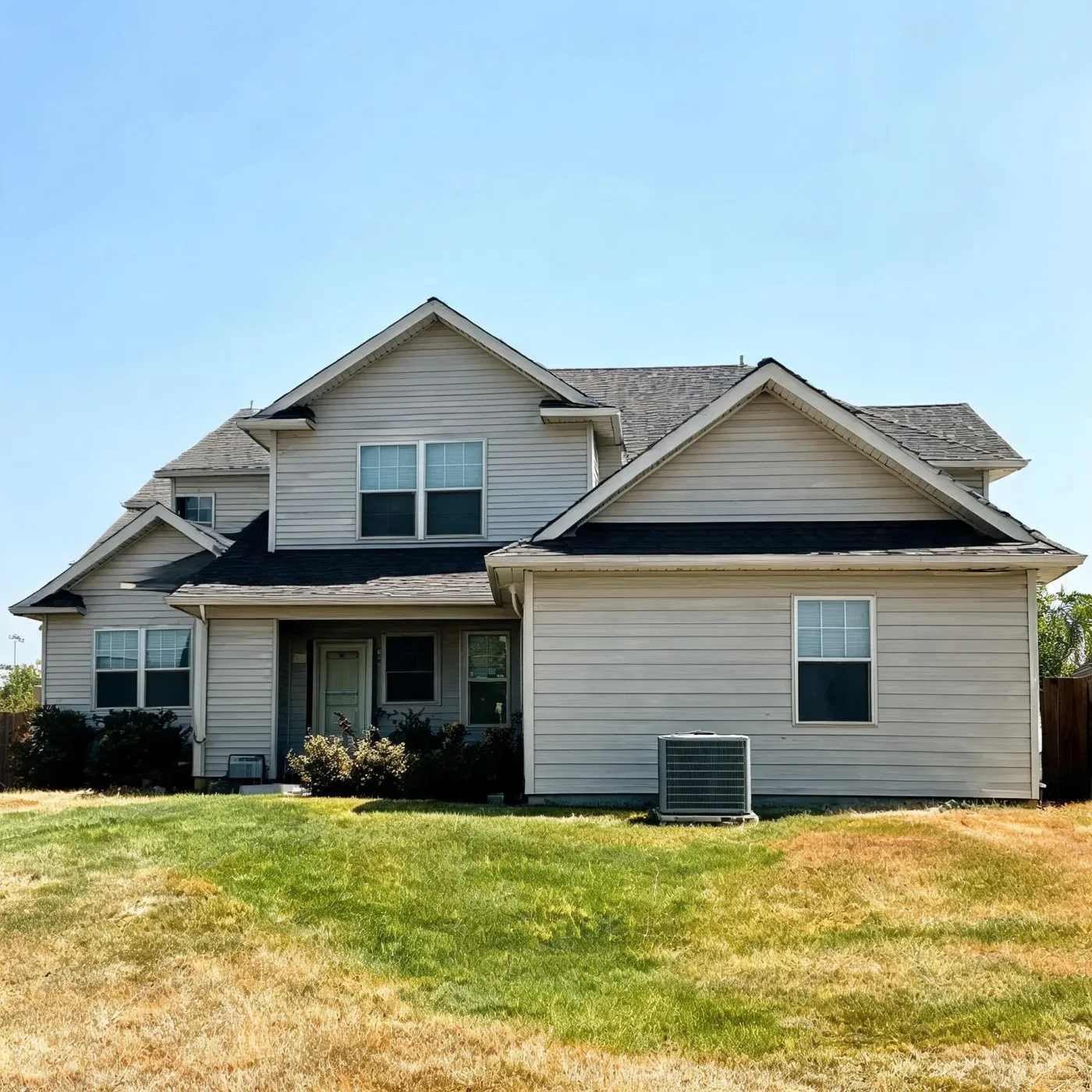
Two-story house with beige horizontal siding, gray shingled gable roofs and a covered front entry, with an outdoor air conditioning unit beside it and a partly dry grass lawn in front under a clear blue sky.

Summer air in Utah sits at a dew point that averages 41°F across June, July and August, which is dry air by any measure. That matters for a heat pump come winter, because the same outdoor coil that moves heat into your house in January is built to shed heat into dry air in July. Dry air lets the coil work without fighting moisture load, so the strain that shows up on your system here tends to come from cold, not humidity. When aux heat is kicking on more than it should, a contractor who works on heat pumps in this climate all year is looking at the compressor and the charge first, not a coil fouled by thick summer air. One contractor gets the call, local and licensed, and already knows what this climate does to the equipment before they show up. Source: NOAA climate normals, Utah

NASA POWER T2MDEW county cells weighted by homes

Done looking for a heat pump pro

If your aux heat has been on since last night, or your heat pump just isn't keeping the house warm the way it should, that's worth having someone look at. A heat pump that's lost refrigerant charge or is running on a weak capacitor will lean on backup heat far more than it should, and that shows up on your gas or power bill before you see anything obvious at the unit. A local contractor who works on heat pumps all winter knows what tends to fail in them and what a normal aux heat cycle looks like versus one that means trouble. Send the request and it goes to one contractor, not a handful, so you're not fielding calls from companies you didn't ask for. From there, finding someone to look at your system stops being something you have to chase down yourself.

A beige outdoor air conditioning condenser unit on a concrete pad beside a house with horizontal vinyl siding, with refrigerant lines and a disconnect box on the wall, surrounded by dark mulch and a green shrub at left.

Heat pump running clean

The pad under the unit is bare and the grille sits clear of leaves or ice. Air moves through it without a fight, so the compressor pulls what it needs and aux heat only steps in when the cold really calls for it.

An outdoor air conditioner condenser unit on a concrete pad beside a house with horizontal lap siding, with a shrub to the left, bare dirt in front, and conduit and a metal disconnect box on the wall.

Heat pump struggling

Nothing blocking the unit means nothing explains it running weak. If the grille looks clear like this and aux heat still won't quit, the problem is inside it, a low charge or a part on its way out.

Is Your Aux Heat Normal or a Warning Sign

Normal aux heat

  • The thermostat shows aux heat during a cold snap, usually overnight or early morning when temperatures drop into the 20s or lower.
  • It shuts off within an hour or two once the house catches up to the set point.
  • The house warms at a normal pace and feels right once aux heat clears.
  • Your gas or power bill moves a little that month but doesn't jump.
  • The heat pump goes back to running on its own as soon as the outdoor temperature climbs back up.

Aux heat that signals a problem

  • The light stays on for a full day or longer, not just through the coldest stretch of the morning.
  • It comes on even when it's not especially cold outside, a sign the heat pump isn't pulling its share.
  • The house stays a step cool even with aux heat running.
  • Your gas or power bill climbs because the backup heat is carrying the load instead of helping it.
  • A weak capacitor, a low refrigerant charge, or a blocked outdoor coil can be behind it, and none of those fix themselves.
An outdoor condenser unit on a concrete pad beside a gray lap-sided house, with an electrical disconnect box and conduit on the wall and shrubs with mulch to the right.
A heat pump like this pulls outside air across a clean coil without resistance, so it covers the house on its own down into the 30s.
An outdoor air conditioning condenser unit on a concrete pad beside a house with horizontal siding above a brick foundation, with a flexible conduit running to a wall-mounted disconnect box.
Dust caked over the coil and a weathered cabinet make the unit work harder for less heat, and aux heat ends up filling the gap more than it should.
A smiling bearded man in a green t-shirt sits on a gray sofa, looking down toward a device at the bottom of the frame, with a bookshelf and a green plant blurred behind him.
A bearded man in a plaid flannel shirt stands indoors beside a wood-framed, frost-covered window, looking outside, with a steaming brown mug on the sill and a wooden cabinet behind him.

What aux heat is telling you

  • Aux heat kicking on for an hour during a cold snap and shutting off on its own is the system working the way it was built to.
  • Aux heat that stays lit for days, or a house that still feels cool with it running, points to the heat pump losing its pull.
  • A clear coil and an unblocked unit let the compressor do its job, so backup heat only fills in when the cold really calls for it.
  • A local contractor who services heat pumps all winter has likely already seen whatever is tripping yours into backup heat so often.
  • Sending one request puts you in touch with a single licensed contractor who knows this equipment, not a string of callbacks to sort through.
  • Once that request is in, finding someone to look at it is off your plate.

Aux heat on your thermostat is backup heat filling in where the heat pump alone can't keep up. For an hour or two during a cold snap, that's the system doing its job. Outdoor air gets too thin for the compressor to pull enough heat from it, the backup steps in, and once the house catches up the heat pump takes back over on its own. You don't need to do anything when that happens.

What's worth a second look is aux heat that won't quit, or a house that stays cool even while it's running. That usually means the heat pump itself isn't pulling the way it should, whether that's a coil caked with dust, a unit boxed in by snow or debris, or something failing inside it like a weak capacitor or a low charge. None of those fix themselves, and the longer backup heat carries the load, the longer something upstream is going unaddressed.

A contractor who works on heat pumps through a Utah winter sees this same pattern over and over, and usually has a good guess what's wrong before they even get to your unit. Sending a request connects you with one licensed contractor local to you, not several companies competing for the callback. From there, tracking someone down is no longer something you have to manage. You'll know soon enough whether what you're seeing is normal or something that needs fixing.

An outdoor air conditioning or heat pump condenser unit on a concrete pad beside a gray horizontal-sided house, with a disconnect box and conduit on the wall and dark shrubbery to the left.

It's off your list after this

RepairHeat PumpUtah
Step 1 of 2

What ZIP code is the job in?