A gray outdoor heat pump unit with a circular fan grille sits on a concrete pad beside a dark wood-clad house, next to a gravel bed with ornamental grasses and a stepping-stone path.

Send one request and you're done looking

Can a heat pump keep up in a Utah winter

A heat pump in Utah has to work hardest right when winter does, on the cold mornings when most homes nearby are running gas. Below is what decides whether yours holds the house at temperature, and what a mismatched or aging system means for the months ahead. Send the form and skip calling around for someone to look at it.

Hand it off

A heat pump can heat your home through a Utah winter, but below the mid-20s it starts losing ground, and on the coldest nights it may not keep up on its own. That's because a heat pump pulls warmth from outside air, and the colder that air gets, the less heat it has to give. Most homes around you heat with gas, so a heat pump here is often working without backup unless one was built into the install. Some systems pair with a gas furnace or electric strips that kick in when the outdoor temperature drops too low, and some don't. Whether yours holds the house at 70 on a January morning comes down to how it was sized and whether it has that backup. If it doesn't, or if it's struggling already, that's a question about the equipment, not about whether heat pumps belong in Utah at all.

An outdoor air conditioning condenser unit on a concrete pad beside a house with light horizontal siding and a concrete block foundation, with bare soil and small green plants around it.
Before you get your heat pump installation
A dark gray outdoor condenser unit on a concrete pad beside a house with beige horizontal siding, with a gray electrical disconnect box and conduit on the wall, mulch beds, a hosta plant, a shrub, and mowed lawn in front.
After you get your heat pump installation

Will my heat pump still work when it's below freezing outside?

You've seen the temperature drop below freezing plenty of mornings and you're wondering if the heat pump is actually built for that or if it's going to leave you cold. It's a fair thing to want settled before you're relying on it on a January morning.

Yes, it keeps running, but it leans on backup heat to get there

A heat pump still pulls heat from outside air below freezing. It just has to work harder to do it, and it pulls less heat out of that air the colder it gets. Most systems pair with a backup heat source, often electric resistance strips or a gas furnace, that kicks in to cover the gap on the coldest mornings. You won't notice a gap in comfort when that happens. What you will notice is which system is doing the work, since backup heat costs more to run than the heat pump alone. Whether your setup has backup heat, and what kind, is worth checking if you didn't pick the system yourself.

  1. Outside air passes over the cold refrigerant coil.

  2. Refrigerant absorbs what heat that cold air still holds.

  3. The compressor squeezes the refrigerant to raise its temperature.

  4. Hot refrigerant moves inside and heats the indoor coil.

A smiling man in a dark navy sweater sits on a light sofa in a living room, with a glass bowl of popcorn on a wooden coffee table and bookshelves behind him.
A smiling man in a dark green sweater sits on a tan leather sofa in a dimly lit living room, with a bowl of popcorn in the foreground and a kitchen area blurred behind him.
A smiling middle-aged man in a dark shirt sits on a gray sofa in a living room, with a bowl of popcorn on a side table and shelves, a window and kitchen area behind him.
A smiling bearded man in a dark gray t-shirt sits on a gray couch in a living room, with a large glass bowl of popcorn on a wooden table in the foreground.

What a Utah Winter Costs Your System

  • Your backup heat strips or gas furnace kick in automatically once outdoor temps drop into the teens or lower.
  • A mismatched or undersized heat pump runs longer and still falls short, leaving rooms a few degrees cooler on the coldest mornings.
  • If the backup heat is doing most of the work all winter, your power bill carries that cost even with cheap rates.
  • An aging compressor loses capacity faster in cold weather than it does in summer's dry heat.
  • A system sized and installed for Utah winters holds the thermostat setting instead of drifting down overnight.
  • Ice building up on the outdoor unit and not clearing on its own usually means the defrost cycle isn't keeping pace.

On the coldest mornings, your heat pump isn't working alone. Once outdoor temps fall into the teens or lower, backup heat strips or a gas furnace take over part of the load automatically. That's by design. But how much they take over, and how often, depends on whether the heat pump matches your house in the first place. A unit that's too small for the space runs longer hours and still leaves bedrooms a few degrees under the thermostat setting by morning. You'll notice it before you understand why: a room that never quite catches up, a floor that stays cold near the vents. If backup heat is carrying most of the house through January and February, that shows up on your power bill, even with Utah's rates being lower than a lot of the country. An aging compressor adds to this. It loses capacity faster in cold outdoor air than it does cooling your house through a hot, dry summer, so a system that struggled last winter will likely struggle more this one. Ice on the outdoor unit is one way to check your own system. Some frost is normal. If it's building up and not clearing between defrost cycles, the unit is falling behind. A heat pump sized and installed for what Utah winters actually do, not just the summer heat, holds the temperature you set instead of losing ground overnight.

A gray outdoor condenser unit on a raised pad beside a house with horizontal lap siding, with refrigerant lines, conduit and an electrical disconnect box on the wall, and shrubs on a mulch bed to the left.
A heat pump sized right for your house and set up with working backup heat holds the temperature you set, even on the mornings it's in the teens outside.
A weathered gray outdoor condenser unit on a concrete pad beside a house with horizontal vinyl siding, with conduit, refrigerant lines, and an electrical disconnect box on the wall behind it.
A unit left to run dirty and unchecked year after year struggles longer to keep up, and on the coldest nights the house falls behind.
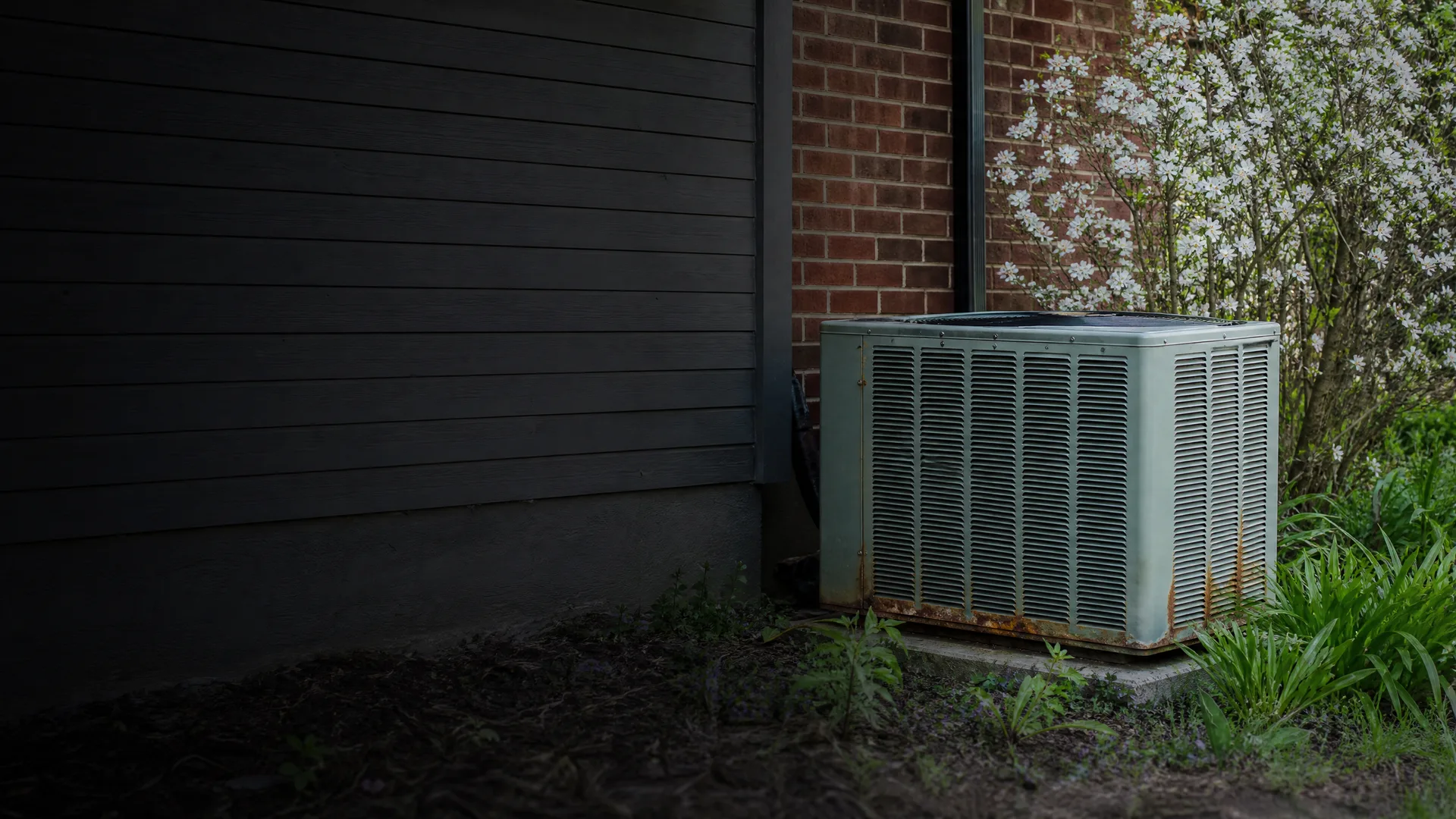
An outdoor air conditioning condenser unit on a concrete pad beside a dark horizontal-siding wall and a brick wall, with flowering shrubs and grass nearby.

The rust catches your eye before anything else does, a line of it low along the base of the unit where last winter's ice sat against the metal. It's a mild afternoon, that first stretch in spring when you finally go out to the side yard without a coat on. You crouch down to look closer and the fan inside sounds different than it used to, a little labored even now when it isn't working hard. You think back to January, to the mornings the thermostat read a few degrees under what you'd set it to, and you'd blamed the cold snap. Standing here now, you're not so sure that was all it was.


Finding a pro stops being your job

You already know the mornings that worry you, the ones where the thermometer sits in the teens and you're watching the thermostat to see if the house actually catches up. Whether it does comes down to how your heat pump was sized and installed against a Utah winter, not just the brand on the unit. A system sized for a milder state, or put in without the backup heat set up right, will leave you making excuses to your own family about why the bedrooms are cold. Getting that checked means finding a contractor who actually knows heat pumps in this climate, not just AC, then calling around, explaining the same problem to each one, and sitting with quotes trying to guess who's right. Send this request instead and that part is off your plate. You still have a winter to get through, but you won't be the one tracking down who can make sure your system is ready for it.

What balance point means for you

Every heat pump has a balance point, the outdoor temperature below which it can no longer pull enough heat to match what the house is losing. Above that point, the compressor alone carries the load. Below it, the system needs backup, either electric strips or a gas furnace working alongside it. Where that point sits depends on the size of the unit and how it was matched to your house when it went in. A unit sized right for a Utah winter has a lower balance point, so it leans on backup less often. One sized wrong hits that point sooner, on milder mornings than it should, and backup ends up doing work the heat pump was supposed to handle.

Why the install decides the outcome

Two heat pumps with the same rating on paper can perform differently once they're in the ground, because sizing and setup are what put that rating to use. A unit too large for the house cycles on and off fast and never settles into steady output. One too small runs constantly and still can't close the gap on the coldest mornings. The refrigerant charge has to be right, and the backup heat has to be set to come on at the correct point, not too early and not too late. None of that shows up on a spec sheet. It shows up in January, when the house either holds at the temperature you set or falls a few degrees short of it.

Power costs 13.02 cents per kilowatt-hour statewide

At that rate, the backup heat strips that kick in on your coldest mornings cost more to run than the compressor does. It's worth asking your installer to size the heat pump so it carries most of the load on its own, since resistance heat is the expensive way to stay warm here.

EIA-861 2025 statewide residential average

A gray outdoor heat pump unit with a large fan grille sits on a concrete pad beside a house with horizontal lap siding, next to a green shrub, mulch bed, and lawn.

Clean and clear

A heat pump kept free of dust and debris moves air the way it was designed to, pulling what heat is in that cold air across the coil without extra strain. The compressor cycles the way it should, and the house holds the temperature you set, even on a cold Utah morning.

An outdoor air conditioning condenser unit with a top fan grille sits on a concrete pad beside a house with horizontal siding and a concrete step.

Coil caked in dust

Dust and debris built up on the fins block airflow across the coil, so the unit works harder to pull the same amount of heat from the outside air. Run that way through a Utah winter, it falls behind on the coldest mornings, and the house never quite catches up to the thermostat.

Why does one room never feel as warm as the rest?

You've probably noticed it already. The thermostat says 70, but the room at the end of the hall feels closer to 65, and the vents there barely seem to push any air. Maybe you've caught the system running almost nonstop on the colder mornings, or heard it humming along well past when it should have shut off. Sometimes there's a faint burning smell the first time it kicks on after sitting idle. None of this means the heat pump is broken. It usually means it's working harder than it should to cover ground it wasn't sized for, and left alone through another Utah winter, that strain is what shortens the life of the compressor and drives up what you're paying to stay warm.

Single-story house with gray horizontal lap siding, dark shingled gable roof, a small covered front porch with a dark door, and windows, set behind a patchy green and brown lawn under a clear blue sky.

Summer here isn't the problem, but it's worth knowing what your heat pump handles the other half of the year. Utah homes see a summer dew point around 41°F, according to NOAA climate data, which is dry air by any measure. A heat pump sheds humidity easily in air that dry, so the coil isn't working to wring moisture out the way it would somewhere muggy. That matters in winter too. The same system pulling heat from cold, dry outdoor air in January isn't fighting the extra load that damp air would add. Dry air is lighter work for the unit either way.

NASA POWER T2MDEW county cells weighted by homes

A closed laptop and a cream mug of coffee on a coaster sit on a dark wooden table, with a potted plant at left and a kitchen counter, tiled backsplash and shelf of ceramics in the background.

So, can it keep up?

A heat pump sized for your house, installed with working backup heat, will carry your home through a Utah winter. It does most of the work on its own and hands off to backup heat on the mornings in the teens or lower. A heat pump that's too small for the house, or left to run dirty year after year, won't, and the rooms farthest from the unit are usually the first to tell you.

The difference is in how it was sized and installed from the start, not luck. If you're not sure where yours stands, you don't have to spend your evening calling around, explaining the same problem to three different companies and sorting through quotes that don't match up. Send the form and that part is off your plate.

A living room corner with a beige upholstered armchair holding navy and striped cushions, a small round wooden side table with a carved bowl and a potted green plant, a framed landscape picture on a pale wall, built-in shelving, and a curtained window.
A gray outdoor condenser unit on a concrete pad beside a house with horizontal lap siding, bordered by mulch, shrubs and a mowed lawn.

Let someone else find the pro

New system or replacementHeat PumpUtah
Step 1 of 2

What ZIP code is the job in?