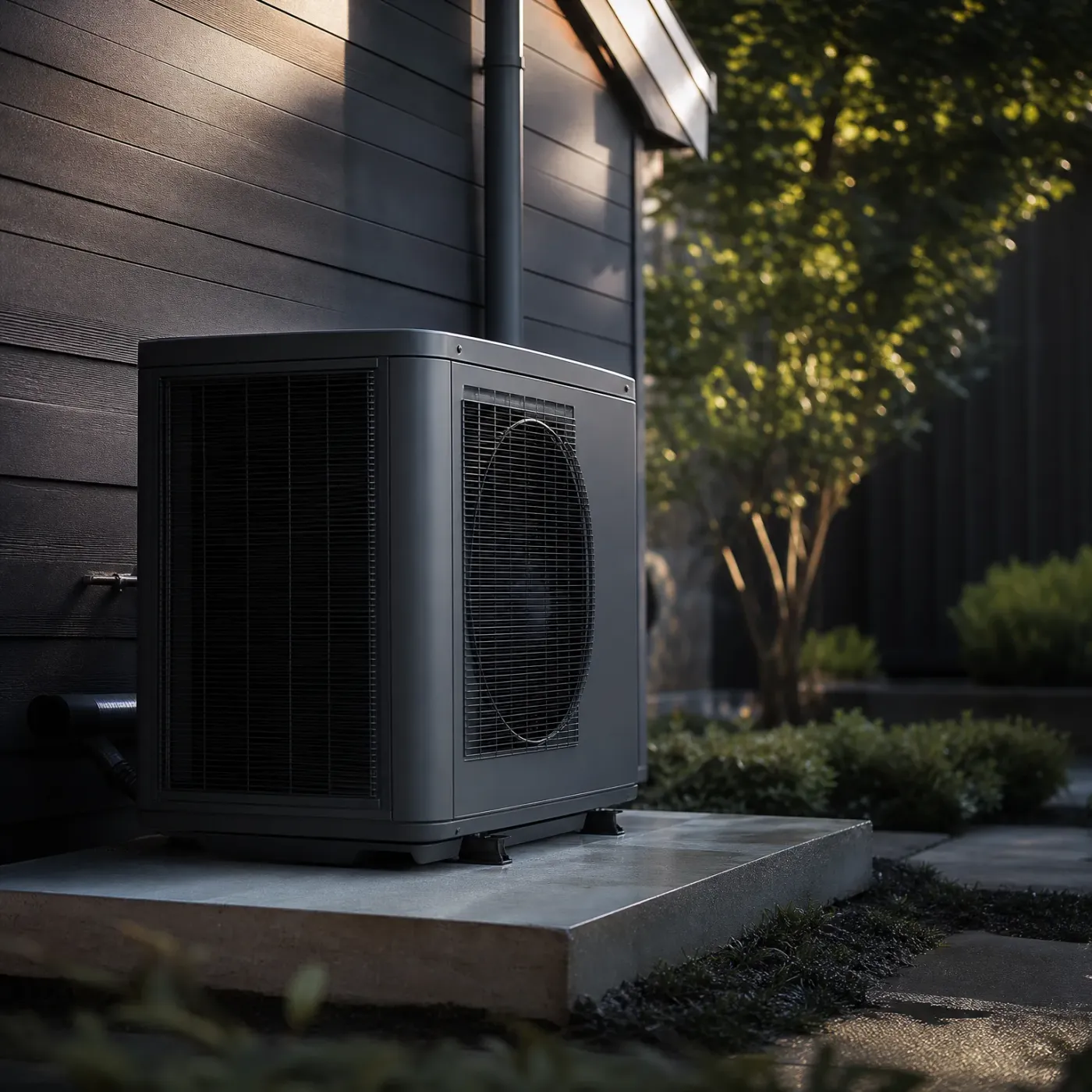
A gray outdoor condenser/heat pump unit with a side fan grille sits on a concrete pad beside a dark horizontal wood-sided house, with shrubs and a small tree nearby.

Describe it once

Why your heat pump bill jumps in a Utah winter

Your heat pump works harder once Utah temperatures drop, and that shows up on the power bill fast. This page gets into what changes inside the unit during cold weather, what a jump like that usually means, and when it points to something that needs a repair rather than just the season. Skip the search for a contractor who knows this equipment, the back and forth explaining the problem, and the pile of quotes to sort through.

Skip the calls

A heat pump moves heat from outside air into your house, and the colder that air gets, the harder it has to work to pull heat out of it. Below freezing, most units lean on backup electric resistance heat to keep up, and that backup heat uses far more electricity than the heat pump itself does on a mild day. That is almost always what is behind a sharp jump in your bill once a Utah winter settles in. It can be normal, especially during a long cold snap. But if the jump is bigger than past winters, or the system runs constantly without the house feeling warm, something is pushing it into backup heat more than it should: low refrigerant, a failing defrost control, or a unit that is undersized or losing efficiency. A technician who works on heat pumps through Utah winters can check which one it is.

A gray outdoor condenser unit on a concrete pad beside a house with horizontal lap siding, with an electrical disconnect box and insulated refrigerant lines on the wall, gravel in the foreground and a planting bed at left.

Running clean, pulling its normal load

A heat pump like this one draws outside air across clean fins and moves heat into the house without a fight. In cold weather it still leans on backup heat sometimes, but the unit itself isn't adding extra cost on top of that.

A weathered gray outdoor condenser unit sits on a concrete pad beside a house with horizontal siding, with refrigerant lines entering the wall at left and a mulched shrub bed at right.

Dirt on the fins, working against itself

Grime across the fins and base blocks airflow, so the unit runs longer to move the same amount of heat. That extra runtime adds to a bill that's already up for winter, and it's worth having someone qualified look at before the cold gets worse.

Is your heat pump running nonstop and still not keeping up?

You might notice the outdoor unit running almost constantly, or air coming from the vents that feels cool rather than warm even though the system is on. Some homeowners hear it cycling on and off more than usual, or see frost building up on the outdoor coil that doesn't clear on its own. The thermostat might show the house a few degrees under what you set it to, especially in the coldest part of the night. None of that means the unit is broken, but it does mean it's working past where it should be to hold the temperature. Left alone through a full winter, that strain is what turns one high bill into a pattern, and can wear down a system faster than it should.

A gray-haired bearded man in a dark knit sweater sits on a light gray sofa in a sunlit living room, looking to his left, with a framed artwork, a potted palm, and a curtained glass door behind him.
A middle-aged man in a dark green sweater sits on a light grey sofa looking toward a sunlit window, with a wooden shelving unit, lamp and potted plants in the background.
A man in a dark green sweater sits on a light grey sofa in a sunlit living room, looking to his left, with a shelving unit, houseplants, framed art and a large window behind him.
A gray-haired bearded man in a dark green sweater sits on a light gray sofa in a sunlit living room with a potted plant, framed picture, and dark shelving in the background.

Fix the Fault or Keep Paying

Fix it

  • A licensed technician who works on heat pumps all winter in Utah knows which failures cause a bill spike and which just look alarming.
  • A frozen coil that won't defrost, a failing defrost sensor, or a stuck reversing valve all push the system into backup heat far more than it needs.
  • One contractor takes the call, sees your situation, and diagnoses it, instead of you explaining the same problem to three different companies.
  • Once the actual fault is found and corrected, the unit goes back to pulling heat the way it's designed to, and backup heat stops filling in for it.
  • You skip the work of searching for someone qualified, calling around for availability, and sorting through quotes that may not even be comparing the same repair.

Let it ride

  • If nothing gets fixed, the unit keeps leaning on backup electric heat to cover for whatever it can't do on its own.
  • A bill that jumped once a problem started will likely keep running high through the rest of the winter, not settle back down.
  • Ice that keeps building on the outdoor coil without the defrost cycle clearing it can mean the compressor is working against a blocked unit every cycle.
  • Waiting means guessing whether the jump was one cold week or a sign the system needs attention, with no one checking the unit to tell you which.
  • The part causing the trouble doesn't usually resolve on its own, so the same bill or a worse one shows up again next month.
A dimly lit bedroom at dusk with a made bed, a table lamp on a nightstand, and a condensation-covered sash window with a dark curtain.

The outdoor unit has been running since before sunrise and it's still only January. You're at the kitchen table with the power bill open on your phone, scrolling back to compare it against November's. The furnace isn't the one costing you this time. Outside, frost rings the bottom of the unit and hasn't melted off by mid-morning the way it usually does. You can hear it cycling, shutting off, starting again a few minutes later. Upstairs the vents are blowing but the room hasn't warmed past sixty-eight in an hour. You've already decided you're not calling around to three different companies to ask the same questions twice. One call, someone who knows this unit, and you'll know by this afternoon what's actually wrong with it.

No phone calls to make

You could spend an afternoon calling around, telling each company the same thing about the outdoor unit and the bill, then waiting on quotes to compare. That's the part this page takes off your plate. The request goes to one licensed contractor near you, not a handful fighting for the job, so your phone isn't ringing off the hook with sales calls. Someone who services heat pumps through Utah winters has seen this exact bill jump before and knows the usual suspects, a defrost cycle stuck on, a reversing valve that won't switch back, backup heat running more than it should. That's the kind of knowledge that gets your system checked instead of guessed at. You've already read the furnace isn't the problem. The next step is getting someone out to look at the unit itself before another cold month runs the bill up again.

Defrost cycles add up fast

Every so often the outdoor unit reverses itself to melt frost off the coil, and for those few minutes it runs like a space heater instead of a heat pump. That's normal. A unit that defrosts every thirty minutes instead of every couple of hours is burning power the whole time, and you won't see it unless you're standing outside watching the fan. A stuck defrost sensor or a bad reversing valve can cause this, and it keeps costing you until someone fixes it.

The backup heat strip

Inside the air handler is a set of electric resistance coils, the same kind of heat as a toaster, wired to kick in when the heat pump alone can't keep the house warm. They draw a lot more power than the compressor outside. If yours are coming on during a mild afternoon in the 40s, not just on the coldest mornings, something is telling the system to call for backup heat it shouldn't need yet, and that's worth having checked.

Power costs 13.02 cents per kilowatt-hour statewide

That rate applies to every kilowatt-hour your backup heat strips draw, so once your heat pump leans on them, the jump shows up fast on your bill. Gas furnace households in Utah mostly skip that cost.

EIA-861 2025 statewide residential average

A woman with shoulder-length graying brown hair in a cream knit cardigan sits in a dark armchair indoors, looking off to the side with a slight smile, with a shelf, window and houseplant blurred behind her.
A woman with her hair in a bun sits wrapped in a beige knitted blanket on a couch, holding a sleeping child against her chest in a warmly lit room with a lamp and houseplant in the background.

What the bill is telling you

  • A heat pump bill that climbs with the cold is normal; one that climbs and keeps the house cold is a sign something has failed.
  • A frozen coil, a stuck reversing valve, or a defrost sensor that won't trigger all push the system onto expensive backup heat long before it should.
  • A technician who services heat pumps through a Utah winter knows which of those failures is common here and checks for it first.
  • One licensed, local contractor takes the call, so you're not fielding quotes from several companies for the same problem.
  • If the unit is running clean and the bill is just the cold doing its work, that's worth knowing too, and ruling it out is part of the visit.

Cold weather costs more to heat through. That part of the bill is just the air outside doing what it does every January. What isn't normal is a bill that climbs while the house stays cold, or an outdoor unit that never seems to stop running. That pattern usually traces back to one part: a coil that's iced over and not defrosting, a reversing valve stuck in the wrong position, or a defrost sensor that isn't telling the system to switch over when it should. Any one of those pushes the heat pump onto backup electric heat far more than a working system would need, and that backup heat is what drives the spike.

A technician who works on heat pumps through a Utah winter has seen these failures before and knows which ones show up most in weather like this. That's different from calling around to a handful of companies and explaining the same bill, the same noise, the same cold vents to each one. Here, the request goes to one licensed contractor local to you, someone who can look at the unit, check the parts that actually cause this, and tell you plainly whether it's a repair or just the cold doing what cold does. Either answer is useful. If the system checks out, you'll know the bill is the weather, not the equipment, and that's worth knowing too.

An outdoor air conditioning or heat pump condenser unit sits on a concrete pad surrounded by gravel beside a dark horizontal-sided house, with grass and shrubs nearby.

One form, no calling around

The pro who reaches out is licensed in Utah.

RepairHeat PumpUtah
Step 1 of 2

What ZIP code is the job in?