







Why your heat pump won't turn on in Utah

RepairHeat PumpUtah
Step 1 of 2

What ZIP code is the job in?

Why won't my heat pump turn on?

A heat pump that won't start at all usually means power isn't reaching it, or something is stopping it from starting as a safety measure. In Utah, winters bring hard freezes and summers run hot and dry, so the system works both sides of the year and either season can expose the same failure. Before anything else, it helps to know what's actually keeping it from turning on.

Most often it's a tripped breaker, a blown fuse, or a thermostat that's lost power or lost its mind

Check the breaker first. Heat pumps draw on a dedicated circuit, and if it's tripped, the whole unit goes dark, indoors and out. Next check the thermostat screen. If it's blank, the problem could be a dead battery or a tripped low-voltage fuse on the air handler's circuit board. If the thermostat is lit but the system still won't respond, a safety switch may have shut it down, often a float switch near the indoor coil that trips when condensate backs up. Utah's power is reliable and cheap enough that most homes don't ration how they run the system, so when it won't start, the cause is almost always electrical or mechanical rather than anything to do with how it's been used.

A dark bedroom with an unmade bed and pillows beside a curtained window showing rain-streaked glass and palm foliage outside.

It's past eleven and the bedroom is still holding the day's heat. You kicked the sheet down an hour ago and it hasn't helped. Utah nights in August don't always cool off the way people expect, and tonight is one of those. The window is cracked but the air coming through it is barely moving. You get up and check the thermostat again, same as you did twenty minutes ago. Still reads eighty-one. The unit outside is silent. No hum, no click, nothing. Your spouse has given up and gone to lie on top of the covers in the next room. You stand in the hallway in the dark, phone in hand, trying to decide if this can wait until morning.

A gray outdoor heat pump unit with a large fan grille sits on a concrete pad beside a house with horizontal lap siding, next to a green shrub, mulch bed, and lawn.
This outdoor unit cycles on and off as the thermostat calls for it, running clean with clear airflow through the grilles.
A weathered outdoor condenser unit on a concrete pad beside a house with white horizontal vinyl siding, with refrigerant lines and conduit running to a wall-mounted electrical box.
Years of grime on the grilles and a cluttered pad choke airflow, and a unit this worn often trips its own safety switch before it starts.
A woman in a gray sweatshirt with her hair pinned up sits in a living room looking off to the side, with a pale sectional sofa, cushions, a potted plant, framed wall art and a large window behind her.
A woman with long wavy brown hair in a gray top and dark cardigan stands near a window, looking to the side, with a living room, fireplace and round mirror blurred behind her.
A woman with curly dark hair in a grey long-sleeved top sits on a grey couch with patterned cushions, looking off to the side in a softly lit living room.
A woman in a gray knit sweater with her hair in a bun sits on a couch indoors, smiling and looking off to the side, with a dining area and framed picture blurred in the background.

Power costs 13.02 cents per kilowatt-hour statewide

At 13.02 cents per kilowatt-hour, running a heat pump here costs less than it would in most other states. That's worth knowing before you assume a short cycle or a safety trip is about saving power. If yours won't start, the cause is almost always electrical or mechanical, not the bill.

EIA-861 2025 statewide residential average

What a safety switch is checking

A heat pump has more than one safety switch, and each one is wired to stop the unit rather than let it run into damage. The float switch sits in the condensate pan and trips if water backs up, which happens when the drain line clogs. The high and low pressure switches watch the refrigerant side and shut the compressor down if the charge is wrong or airflow across the outdoor coil is blocked. None of these switches fail on their own. They trip because something upstream of them, a clogged line, a dirty coil, a low charge, gave them a reason to.

Why the outdoor coil matters most here

Utah summers run hot and dry, and that dry air carries fine dust that settles on the outdoor coil's grilles every season. A coil caked with that dust can't move enough air across it, so the refrigerant inside runs hotter than it should and the high pressure switch cuts the compressor before it starts. This is a separate issue from winter freezing, where ice on the coil blocks airflow the same way but from frost instead of dust. Either way, the switch is doing what it's built to do. A contractor checking a no-start call looks at the coil and the switches before anything electrical.

An outdoor air conditioning condenser unit on a concrete pad beside a house with light horizontal siding and a concrete block foundation, with bare soil and small green plants around it.
Before you get your heat pump repair
A gray outdoor condenser unit on a concrete pad beside a white horizontal-siding house, with refrigerant lines and conduit running to a wall-mounted disconnect box, bare soil in front and a green shrub at left.
After you get your heat pump repair

The breaker trips once and stays off

A single breaker trip can come from a surge or a motor pulling hard on startup, and resetting it once is normal. The outdoor unit hums or starts up like nothing happened. This is worth checking yourself before anything else, since it costs you nothing but a walk to the panel. If the breaker holds and the unit runs, the trip was likely a one-time event tied to that startup moment, not a sign of a failing part.


The breaker trips again right away

A breaker that trips again as soon as you reset it, or trips repeatedly over a day, is telling you something is drawing too much current every time the unit tries to start. That points to a failing compressor, a short in the wiring, or a motor seizing up, not a fluke. Resetting it again won't change the outcome, and running it that way risks the breaker itself or the wiring behind it. This is where a contractor needs to open the unit and test the parts drawing that current.

A woman and a child wrapped together in a thick knitted beige blanket on a sofa, both with eyes closed, beside a lit table lamp in a dim room.
An older woman with grey-blonde hair in an updo and a beige turtleneck sweater smiles while looking to the side in a warmly lit kitchen, with a round loaf of bread on the counter in front of her and a dark window showing snow outside.

Hand off the search today

Your request stays with one local pro.

No charge to send it. You decide if you hire them.

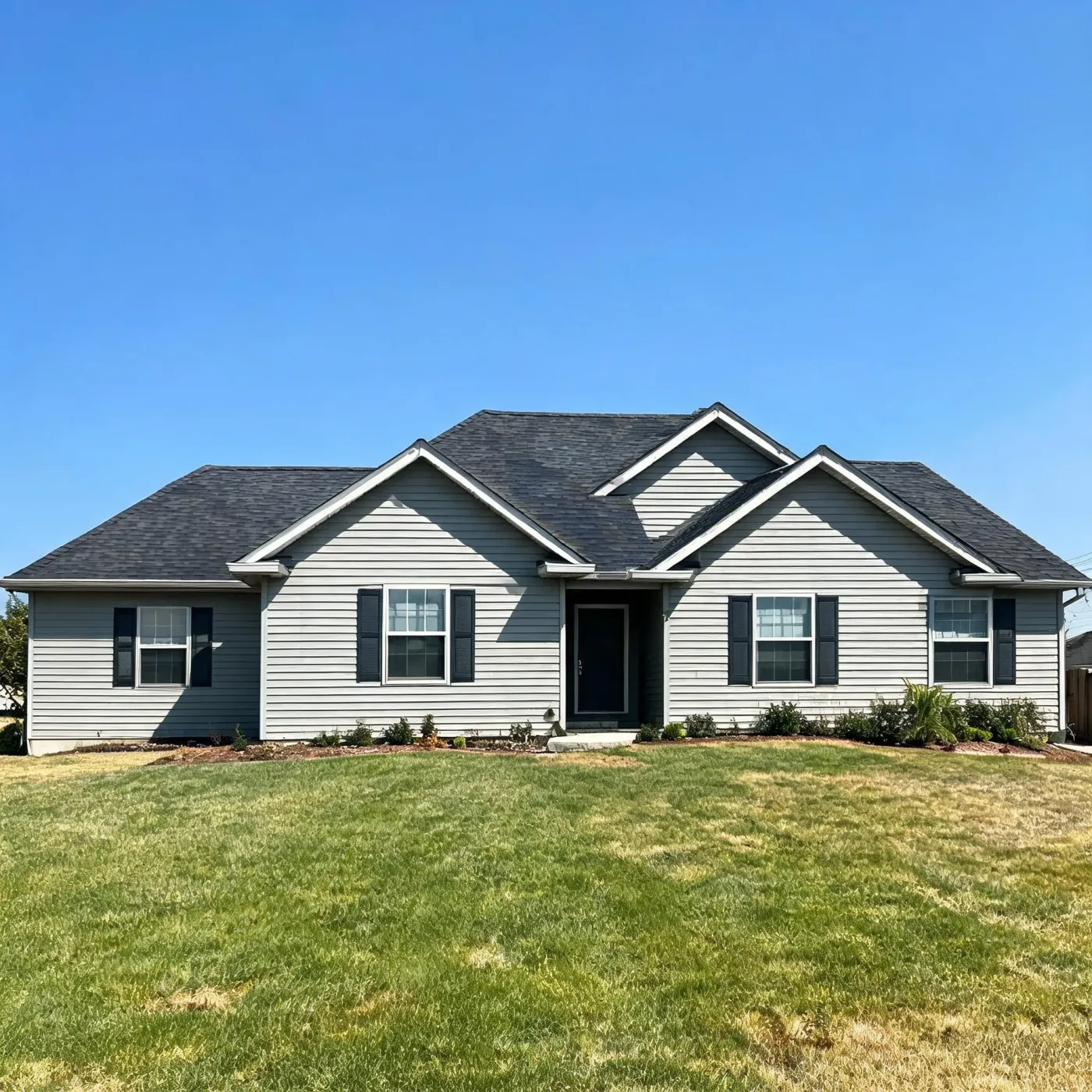
A single-story house with light gray horizontal siding, dark gray shingled gables, black shutters and a dark front door, fronted by a mulched bed of small shrubs and a large lawn under a clear blue sky.

Summer air in Utah sits around a 41°F dew point in June, July and August, according to NOAA data averaged across the state. That's dry air, and dry air is exactly what a heat pump is built to handle without strain. It doesn't have to wring much moisture out before it can cool the house, so if yours won't turn on this time of year, dryness isn't the reason. Low humidity rules out one cause and points harder at the rest: a tripped safety switch, a breaker, or wiring that isn't delivering power to the unit at all.

NASA POWER T2MDEW county cells weighted by homes

Why does the house feel wrong and nothing's running?

You've checked the thermostat twice and the house still doesn't match what it says. No hum from the outdoor unit, no air moving from the vents, nothing. Maybe the breaker panel shows a switch that won't stay up, or the unit clicks and then goes quiet again. If this has been going on for more than a day, whoever's home is dealing with it the whole time, not just at night. A unit that won't start isn't fixing itself in the background. Left alone through a Utah summer, the house just keeps climbing past where anyone set it, and if winter's the season, a cold snap makes the same silence a lot less comfortable to live with.

A gray outdoor condenser unit on a concrete pad beside a house with stacked stone and horizontal siding, surrounded by gray gravel and a plain light wall.

A reset that holds

Flip the breaker back and the outdoor unit starts right up, runs its cycle, and shuts off normally when the house reaches temperature. No hum, no clicking, no trip an hour later. A contractor who sees this on a service call still checks what made the breaker trip in the first place, because a motor straining to start once can strain again.

A dark gray outdoor heat pump unit sits on a concrete pad beside a white stucco wall and lap-sided house corner, with mulch and a small shrub in the foreground.

A reset that doesn't

The breaker trips again within minutes, or the unit won't even hum this time. That points past a simple surge and toward a failing capacitor, a motor pulling too much current, or a short somewhere in the wiring. A local contractor who works on these units all year knows which of those shows up most and checks there first.

A heat pump that won't start is telling you something specific, not failing at random. Power is cut off somewhere, or a safety switch has done its job and stopped the unit before it could run into damage. Either way, the cause has a name, whether that's a tripped breaker, a float switch full of water, or a pressure switch reacting to something upstream. Finding which one it is means someone opening the unit and testing it, not guessing from the thermostat. A contractor who works on heat pumps through Utah winters and summers has seen these same switches trip for the same handful of reasons more times than you have, and knows where to look first. You'll be matched with one licensed contractor local to you, not a list of names to call through yourself. No one else gets your information, and you're not fielding calls from three companies trying to beat each other's quote. Once that request is in, the search part of this is done. Someone who knows this equipment takes it from here.

A dark standing-seam metal roof with a stone chimney topped by two metal flue caps, with conifer trees, grassy foothills and snow-streaked mountain peaks in the background.

Hand off the heat pump problem

Send my request

There's no charge for the request.

A heat pump that won't start can leave a house stuck in whatever temperature it already is, and in a Utah summer that means it only gets hotter from here. Sending the request puts the question in front of someone local who works on this equipment all season and already knows where to look first.