Profile view of a bearded man wearing a dark green baseball cap and a dark gray T-shirt against a plain light background.

Repair or replace a heat pump in Utah

New system or replacementHeat PumpUtah
Step 1 of 2

What ZIP code is the job in?

Should I repair my heat pump or replace it?

Your heat pump is acting up again and you're trying to figure out if it's worth fixing or if you should just replace it. With a repair bill in hand, it's hard to know whether you're throwing money at an old unit or buying yourself a few more years for a reasonable price. The answer depends on the age of the unit, what's failing, and what that repair actually costs you now versus later.

Repair it if the unit is under 10 years old and the fix is minor. Replace it if it's older or the compressor is going.

A heat pump that's past 10 to 12 years old and needs a major part, especially the compressor, usually costs more to fix than it's worth. A properly licensed installer can tell you what the repair actually involves and whether the unit has enough life left to justify it. In Utah, most homes heat with gas and lean on the heat pump mainly for summer cooling, so the unit doesn't carry the same year-round load it would somewhere colder. That can stretch its working life, but it doesn't change what happens once a major component fails. At that point, a unit that's not pulling heavy year-round duty usually isn't worth a costly repair.

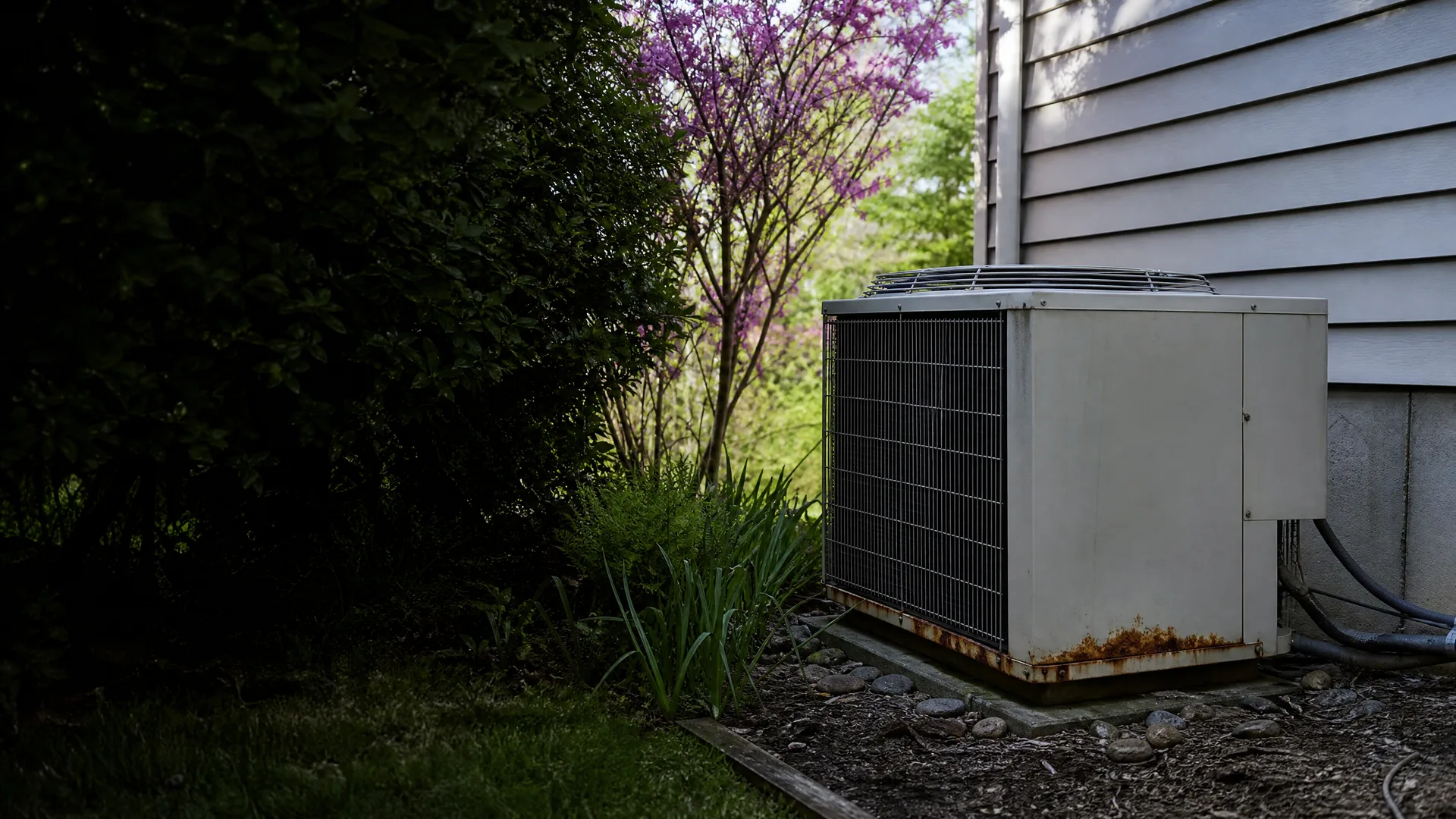
An outdoor air conditioning condenser unit with rust streaks sits on a concrete pad beside a light-colored lap-sided house, surrounded by shrubs, gravel and a flowering tree.

You're out in the side yard in April, coiling up the hose before the heat sets in, and you catch sight of the unit sitting there against the fence. Rust has crept along the base, flaking orange where the metal meets the ground. You crouch down to look closer and press a thumb against it, and it gives a little. This is the same unit that struggled to keep up last August, the one that ran almost nonstop once the dry heat settled in. You straighten up and think about whether it's got another Utah summer in it, or whether you're better off calling someone before the heat comes back and you're stuck waiting on a part.

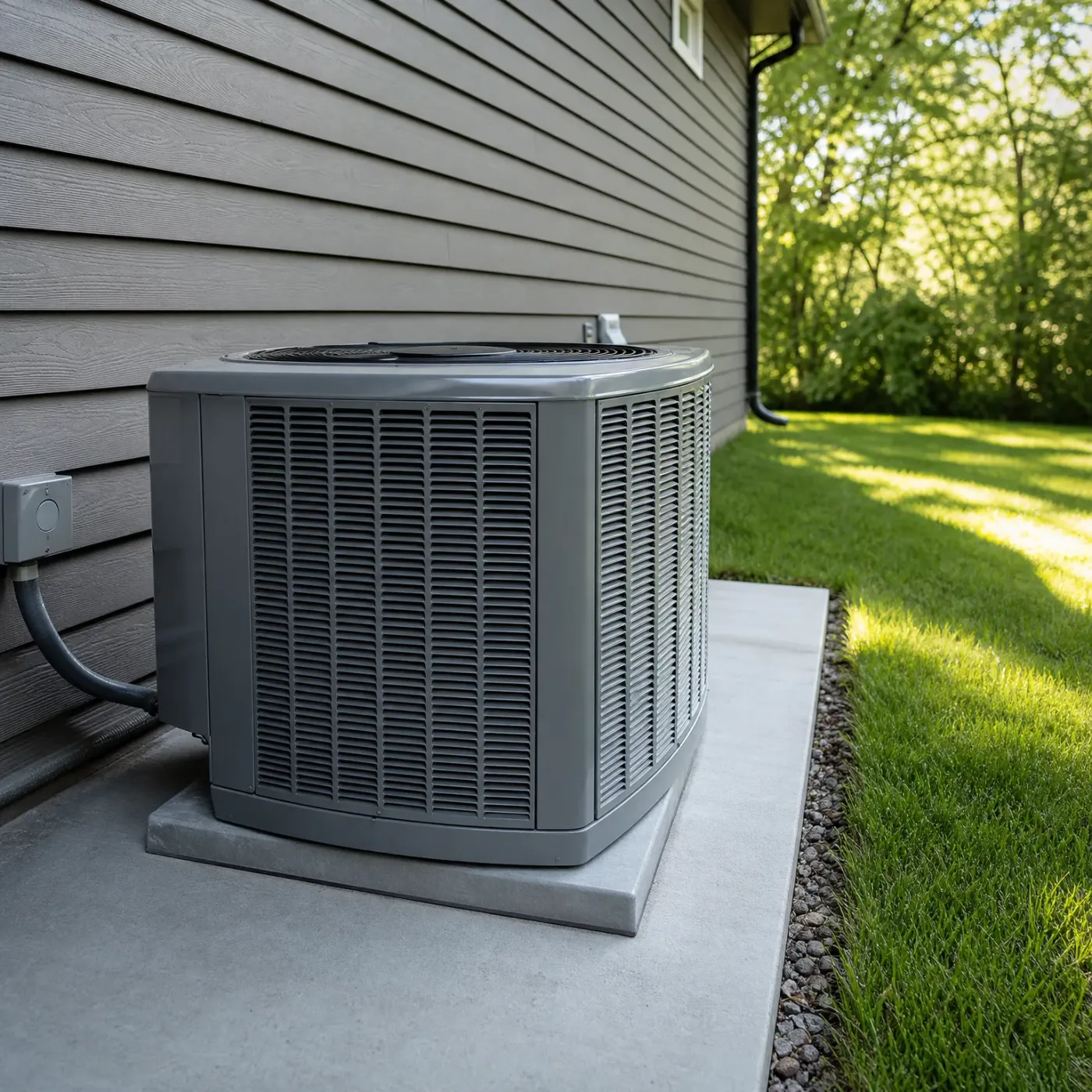
A gray outdoor heat pump unit on a concrete pad beside a house with horizontal lap siding, connected by conduit and a flexible line to a wall-mounted disconnect box, with low shrubs and mulch nearby.
A heat pump running right cycles quietly between heat and cooling without short cycling or tripping its breaker.
An outdoor air conditioner condenser unit on a concrete pad beside a house with horizontal siding above a concrete block foundation, with insulated refrigerant lines and a vertical white pipe on the wall.
Rust at the base, lines rubbed against block, a compressor that groans on startup all point toward replacement.

How a Heat Pump Actually Works

  • A heat pump runs a reversing valve to switch between heating and cooling, and a stuck valve usually means a full replacement of that part.
  • The outdoor unit pulls heat from outside air even in cold weather, so a failing compressor hits hardest in January.
  • Frost on the outdoor coil is normal in winter, but a unit that won't clear itself through a defrost cycle has a bad sensor or control board.
  • A dual fuel setup pairs the heat pump with a gas furnace, switching over automatically once outdoor temperatures drop low enough.
  • The auxiliary heat strips kick in when the heat pump alone can't keep up, and a unit leaning on them constantly is losing capacity.
  • A licensed installer sizes the replacement to your home's square footage and ductwork, not just a swap for whatever is already outside.

A heat pump doesn't make heat the way a furnace does. It moves it. The reversing valve is what decides direction, sending refrigerant one way to cool your home and the other way to pull warmth out of the outside air and push it inside. That valve sees a lot of use since it flips every time the system switches modes, and when it sticks, a contractor is usually looking at replacing the valve outright rather than patching it.

Cold outside air still holds heat the compressor can use, which is why a failing compressor shows up worst in January, right when you need the system most. Frost building up on the outdoor coil during winter is normal and expected. The unit runs a defrost cycle to clear it on its own. If it's not clearing, the problem is usually the defrost sensor or the control board telling it when to run that cycle, not the frost itself.

Since most homes in Utah heat with gas, a lot of heat pumps here run as part of a dual fuel setup, working alongside the furnace and handing off automatically once it's too cold outside for the heat pump to keep up efficiently. Auxiliary heat strips are the backup when the heat pump can't keep pace on their own, and a system that's constantly leaning on them is telling you it's lost capacity somewhere. Sizing a replacement right means accounting for your home's square footage and ductwork, not just matching the unit that's already sitting outside.

A gray-haired man in a dark sweater sits on a light gray sofa in a living room, looking toward a sunlit window with trees outside.
A gray-haired man in a dark blue sweater sits on a light gray sofa in a sunlit living room, looking off to the side, with a potted plant, shelving unit, and large glass doors behind him.
A bearded man with graying hair in a dark green sweater sits on a sofa in a living room, looking off to the side, with a sliding glass door and a dim kitchen doorway behind him.
A gray-haired man in a dark knit sweater sits on a light gray sofa in a living room, looking toward a sunlit window, with houseplants, a lamp, and framed art in the background.
A beige outdoor condenser unit on a gray pad beside a house with gray horizontal siding, with refrigerant lines and an electrical disconnect box on the wall, bordered by dark mulch, a stone retaining wall with shrubs, and a paver walkway.

A pro who works on heat pumps

One installer gets your project, so there's no bidding war over it.

Get in touch with a local installer about a new heat pump.

Reach a local pro

It costs nothing to send, and you don't have to hire anyone.

Is your heat pump telling you something right now

Stand by the outdoor unit for a minute. If it's cycling on and off every few minutes instead of running a steady stretch, that's short cycling, and it wears the compressor down faster than normal use would. Listen for a hard clunk or a buzz when it starts up. Check if one room stays colder than the rest, or if the air coming out doesn't feel as cold as it used to on a hot afternoon. Ice on the outdoor coil in summer means something's wrong with airflow or refrigerant, not the heat doing its job. None of these mean the unit is done, but left alone they usually get worse, and a compressor that's struggling now tends to fail outright later, often on the hottest day of the year.

An outdoor heat pump unit on a concrete pad beside a house corner, with a small electrical box and conduit on the wall, gravel border, grass, and a plain light-colored wall filling the right side.

Why your heat pump works harder here

A heat pump moves heat instead of burning fuel for it, which is why it earns its keep where power is cheap and gas is the usual backup. Summers here are hot and dry, so the outdoor unit spends months pulling heat out of the house and dumping it outside. That's steady work on the compressor and the fan motor, and it's where most of the wear shows up first.

A grey outdoor heat pump unit on a concrete pad beside a white stucco wall and dark siding with a downpipe, with gravel and grass in the foreground.

What a local contractor already knows

A contractor who works on heat pumps in Utah every season has seen what dry heat does to a compressor and what a hard winter night does to a reversing valve. That's the kind of knowledge that shortens a diagnosis instead of guessing at it. Once you're matched, it's one licensed contractor reaching out, local to you, not a handful of companies competing for the callback.

A woman in a cream sweater and jeans stands in the open doorway of a white stucco house, holding the dark door, while a man in a dark quilted jacket seen from behind walks toward the entry past potted plants.

What a failing heat pump costs you in Utah

If your heat pump can't keep up on a hot afternoon, it's not just discomfort. Most homes here heat with gas, so the heat pump is likely doing the cooling work on its own, and if it's struggling, there's no backup system picking up the slack the way a furnace backs up a weak AC. A compressor working harder than it should still shows up on the power bill, even with power priced low here. And a unit that's limping along now is one bad July afternoon from quitting outright, which is a worse day to be without cooling than most.

If it's time to replace rather than patch it again, the install matters as much as the equipment. A heat pump sized wrong for your house, or set up by someone who doesn't account for how hard the outdoor unit works pulling heat from dry summer air here, will cost you in comfort and in the power bill for as long as it's running. Getting matched with a licensed contractor local to Utah, one who installs and services this equipment through the season here and knows what tends to go wrong with it, is worth more than a quick quote from whoever answers first.

A gray upholstered sofa with a matching cushion sits beside a potted plant and a wooden table holding a small green plant in a stone pot, near a curtained window.
A two-story house with gray and light gray siding, white-trimmed windows and a white front door, flanked by deciduous trees, with a partly browned lawn in front under a clear blue sky.

A summer dew point averaging 41°F, figured across June, July and August for where homes sit in Utah, is dry air. It's one reason a heat pump here doesn't fight the sweat a muggier state would give it. The coil isn't pulling moisture out of thick air hour after hour, so it's not straining the same way. But dry air also cools fast once the sun drops, which means your heat pump is cycling between modes more than people expect for a place known for heat. That back and forth puts real wear on the reversing valve over time, more than the dry summer air itself ever would.

NASA POWER T2MDEW county cells weighted by homes

A middle-aged woman with shoulder-length dark hair, wearing a gray cardigan over a cream top, sits in an upholstered armchair and looks toward a sunlit window, with a shelf holding framed pictures and a plant behind her.
A woman and a child wrapped together in a knitted gray blanket on a couch, with the child's head resting on her shoulder and a lit table lamp and houseplant in the background.
A gray outdoor heat pump unit on a concrete pad beside a house with horizontal lap siding, with a conduit running to a wall-mounted disconnect box and a green shrub to the left.

Running the way it should

This unit sits clean on its pad, lines straight to the disconnect box, nothing leaning or rubbed raw. Dry summer air like Utah gets means the coil isn't caked with the grime that comes from fighting humidity. A unit kept like this is worth repairing almost every time.

An outdoor air conditioning condenser unit with dusty coils sits on a concrete pad against light horizontal siding, with an electrical disconnect box and refrigerant lines on the wall and a shrub and mulch at left.

Worn down and showing it

Years of grime have built up over the cabinet, and the ground around it has gone bare where grass used to grow. Lines and conduit crowd the wall with little room to work. At this point a licensed contractor can tell you whether what's inside still matches what you see outside.

Power costs 13.02 cents per kilowatt-hour statewide

At 13 cents a kilowatt-hour, running your heat pump here costs less than it would in most states, since it moves heat instead of burning power to make it. A compressor losing efficiency still shows up on the bill, just a smaller jump than you'd see somewhere with pricier power.

EIA-861 2025 statewide residential average

An outdoor air conditioning condenser unit on a concrete pad beside a house with horizontal lap siding, with a green shrub to the left and a wide concrete slab in the foreground.
Before you get your heat pump installation
A gray outdoor condenser unit on a concrete pad beside a house with horizontal lap siding, with a wall-mounted disconnect box, conduit and insulated refrigerant lines, a shrub at left and gravel at right.
After you get your heat pump installation

Repair

A fix handles the one part that failed and gets you through this season, provided the rest of the unit, including the compressor, is still sound.

Find a licensed heat pump pro

Replace

A new heat pump gets installed correctly from the start, matched to your home, with nothing rusted, rubbed, or limping along underneath it.

Find a licensed heat pump pro

A heat pump that's rusted at the base, groaning on startup, or stuck between heating and cooling is telling you it's done, and a repair at that point just delays the same decision. One that's cycling clean and holding its charge is worth fixing and leaving alone. Either way, you want someone who installs and services these year round in Utah, not just whenever one breaks down, because they've seen what fails first in dry summer heat and what a proper install here actually requires. When you put in a request, it goes to one licensed local contractor who works on this equipment regularly, not a handful of companies competing for the job. That means one call back, from someone who already knows what to look for before they get to your unit.

A gray outdoor air conditioner condenser unit on a concrete pad beside a house with horizontal lap siding, with an electrical disconnect box and conduit on the wall, a downspout, gravel edging and a green lawn with trees to the right.

The right pro for this job

Get one local pro

The pro who reaches out is licensed in Utah.

There's no charge for the request.