








Profile view of a bearded man wearing a black baseball cap and a dark gray t-shirt against a plain white background.

When to replace a heat pump in Tooele, UT

New system or replacementHeat PumpTooele County, UT
Step 1 of 2

What ZIP code is the job in?

Most heat pumps in Tooele last 12 to 15 years, and winter is when you find out which side of that line yours is on. Cold nights make a struggling heat pump work harder to pull heat from outside air, and an aging unit starts falling behind right when you need it most. If yours is running past 12 years, needing repairs more than once a season, or icing up and defrosting on its own more than it used to, those are signs the compressor or the reversing valve is wearing out rather than just having an off day. A heat pump that cycles constantly without getting your house warm is costing you in comfort now and likely heading toward a bigger repair bill soon. Replacing it before it fails outright means you choose the timing instead of finding out on the coldest night of the year, when every other homeowner in Tooele County with the same problem is calling around too.

A gray outdoor condenser unit sits on a concrete pad against a house wall with horizontal siding above a stone veneer base, with an electrical disconnect box and conduit on the wall and a leafy shrub in mulch to the left.
Running fine, holding temperature without long cycles or strange sounds, is reason enough to leave it alone through the cold months.
An outdoor air conditioner condenser unit on a concrete pad beside a house with beige horizontal siding, with conduit running from an electrical box on the wall.
A unit icing up, short cycling, or losing ground on cold nights is telling you it can't keep up anymore.

A heat pump doesn't make heat the way a furnace does. It pulls warmth out of the outdoor air and moves it inside, which takes more effort the colder that air gets. That's why Tooele winters push the system harder than a mild fall day ever would. When the outdoor temperature drops low enough, backup coils kick in to cover the gap, and if your unit leans on those coils more than it used to, that's worth noting. Inside the unit, a reversing valve is what lets it heat in winter and cool in summer using the same equipment. If yours seems fine in summer but weak in winter, the valve is a likely reason. You'll also see the outdoor unit pause and seem to run backward for a few minutes on cold, humid days. That's a defrost cycle clearing frost off the coil, and it's normal. What isn't normal is the compressor turning on and off in short bursts, or the unit struggling because something nearby, a fence, a snowdrift, a stack of firewood, is blocking its airflow.

How a Heat Pump Actually Works

  • A heat pump moves heat from outside air into your home instead of burning fuel to create it, which is why it struggles more as the outdoor temperature drops.
  • Most heat pumps switch on a backup heat source, often electric resistance coils, once the outdoor air gets cold enough that the system alone can't keep up.
  • A reversing valve lets the same unit cool your home in summer and heat it in winter, and a failing valve shows up as weak output in one season but not the other.
  • Frost forms on the outdoor coil during cold, humid stretches, so the unit runs a defrost cycle that briefly reverses operation to melt it off before switching back to heating.
  • A compressor that short cycles, turning on and off in quick bursts, is often losing refrigerant pressure or losing the ability to reach full capacity.
  • The outdoor unit needs clear airflow on all sides, so a fence, snowdrift, or stacked firewood too close to it forces the compressor to work harder for the same heat.
A man in a gray quarter-zip sweater sits with closed eyes and a slight smile in a dark leather armchair in a wood-paneled room, with a window, framed picture, bookshelf and a table holding a mug and papers nearby.
A man with greying hair and a beard, wearing a dark blue sweater, reclines with closed eyes and a slight smile in a brown leather armchair in a room with a bookshelf, houseplant, window, and a folded newspaper on a wooden table.
A man in a dark green sweater reclines with eyes closed in a brown leather armchair beside a wooden table holding a dark mug and a folded newspaper, with houseplants, a framed picture and a bookshelf in the background.
A man in a dark blue sweater reclines with closed eyes in a brown leather chair, beside a side table with a mug and folded newspaper, a potted plant and shelving in the background.

What cold does to an aging unit

A heat pump that's losing efficiency shows it first on the coldest nights. The compressor has to run longer to pull the same amount of heat from outside air, and if it's already worn, that extra strain is what pushes it into a breakdown. That's why most heat pump failures in Tooele happen in January, not July. If yours is past 12 years and you've had a repair call or two already, a hard freeze is a reasonable time to expect another one. Replacing it before that happens means you're not without heat on the night you need it most, and not stuck waiting on a part.

What a new unit changes

A heat pump installed today runs on a different efficiency standard than one from 10 or 15 years ago, and that shows up most in how often the backup heat kicks on. Older units lean on electric resistance heat earlier as the temperature drops, which costs more to run than the heat pump itself. A newer compressor holds its output lower into the cold before it needs that backup, so it's pulling heat the efficient way more of the winter. With power cheap in Tooele, that difference is smaller on the bill than it would be elsewhere, but it still means fewer nights where the system is working harder than it should.

Power here costs 13.46 cents per kilowatt-hour

At 13.46 cents per kilowatt-hour, running a heat pump here is cheap next to gas-only heat with electric backup, but only while the unit is working the way it should. An old compressor or a worn-out set of backup coils pulls more power to make the same heat, and that shows up on your bill before it shows up as a breakdown.

EIA-861 2025

An outdoor air conditioner condenser unit on a concrete pad beside a house with horizontal vinyl siding, with refrigerant lines and an electrical disconnect box on the wall and dry leaves on the ground.
Before you get your heat pump installation
A gray outdoor condenser unit sits on a concrete pad beside a house with horizontal lap siding, with a wall-mounted disconnect box and refrigerant lines, mulched beds and a shrub nearby, and a concrete walkway in the foreground.
After you get your heat pump installation
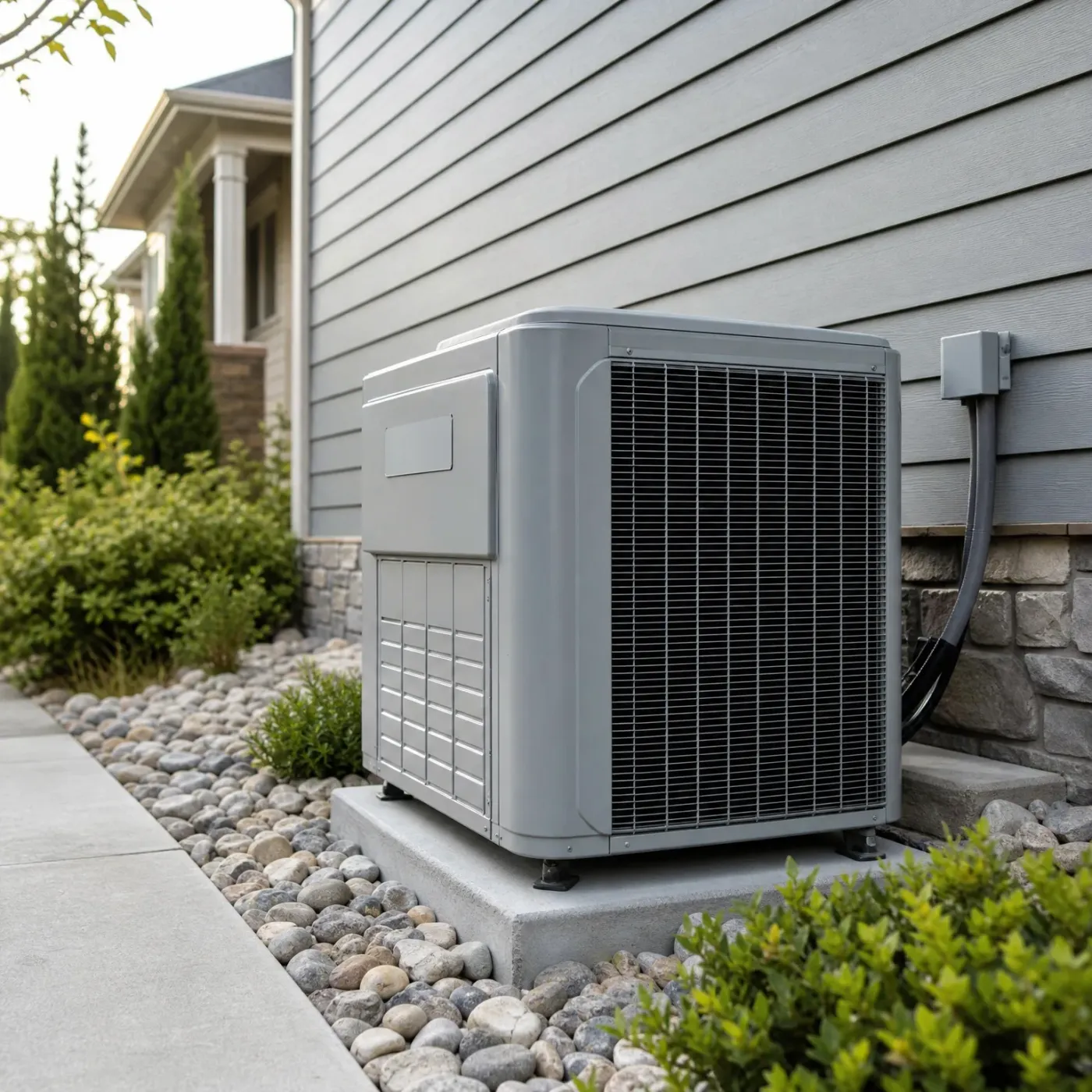
A gray outdoor heat pump unit on a concrete pad beside a house with light gray horizontal lap siding and a stone base, surrounded by river rock and shrubs next to a concrete walkway.

Stop chasing a heat pump pro

Skip the round of in-home estimates for a new heat pump.

One request ends the search for a heat pump installer.

Skip the calls

No fee to send it, and nothing to sign.

How long does your heat pump have to work hard each year?

  • Winter nights average 20°F

    Winter nights here average 20°F, and that's the temperature range where an aging heat pump starts losing the fight.

  • Heat runs October through May

    Heat runs October through May here, eight months of the year your heat pump carries the load on its own.

  • Cooling runs June through August

    Cooling runs June through August, so the same unit works nearly year round with little time off between seasons.

NOAA nClimDiv 1991-2020

A gray outdoor condenser unit on a concrete pad beside a light-colored horizontal-siding house, with a disconnect box and refrigerant line on the wall, ornamental grasses and a shrub in mulch nearby, and a concrete patio in the foreground.

Holding up fine

The outdoor unit sits clean on its pad, lines intact, nothing rattling. It cycles on, runs, and shuts off without strain, even on a 20°F night. A unit that looks like this is doing its job. Leave it be and let it finish out the winter.


An outdoor condenser unit on a concrete pad beside a horizontal-sided house, with insulated refrigerant lines running to a wall-mounted box, surrounded by bare dirt.

Showing its age

Weathered cabinet, a conduit patched more than once, frost that lingers past a normal defrost cycle. This is a unit working harder than it should to keep up. Once a heat pump looks like this, the question isn't if it fails on a cold night, it's when.

An older man with gray hair and a beard, wearing a dark blue fleece zip jacket, leans back in an upholstered chair with his eyes closed in sunlight near large windows, with a potted green plant and bare trees behind him.
A woman in a cream knit sweater sits in an armchair with her eyes closed and head tilted back, beside an open window showing orange and yellow foliage, with a mug on a small round table and a bookshelf behind her.

Where That Leaves You

  • A heat pump holding steady through a 20°F night without strain still has life left in it.
  • One that ices up, short cycles, or leans hard on backup coils is past the point of patching.
  • Twelve to fifteen years is the usual run for a heat pump before it starts losing ground in winter.
  • Cheap power here keeps a working heat pump efficient, but a worn one burns through that advantage fast.
  • Eight months of heat demand a year means a failing unit gets found out sooner rather than later.
  • Sending one form replaces calling around town, repeating the same story, and sorting through quotes yourself.

A heat pump either holds up on a cold night or it doesn't, and by now you know which one yours is doing. Twelve to fifteen years is the normal life for these units, and winter in Tooele is what exposes the ones running past that point. If yours cycles on, holds its temperature, and shuts off without a fight, there's nothing to do but let it keep working. If it's icing up, short cycling, or leaning on its backup coils more than it should, that's not something that gets better on its own, and cheap power only helps a unit that's running the way it's supposed to. A worn compressor or a bad set of coils eats through that advantage fast, and eight months of heat demand a year doesn't give a failing unit much room to hide.

Once you know which side of that line you're on, the next step is finding someone who can look at the unit itself. That usually means calling a handful of contractors, explaining the same symptoms each time, waiting on quotes, and trying to judge which one actually knows what they're looking at. Sending one form here replaces all of that. You describe the problem once, and the work of finding someone qualified to look at it stops being your problem to solve.

Interior corner with a white-trimmed window overlooking green shrubs and trees, a framed artwork on a pale wall, and a woven basket holding a fringed linen throw on a wood floor.
Corner of a white horizontal-siding house with a white downspout running from the roof gutter to a mulched bed of shrubs, beside a mown lawn and leafy trees in low sunlight.
Corner of a house with board-and-batten siding, a shingled roof, and a dark gutter and downspout, with shrubs in the foreground and conifers and bare trees against a hazy sky behind.
A dark round planter holding a white-flowering hydrangea sits on a concrete porch between a stacked stone wall, a wooden post, and a dark vertical board-and-batten wall beside a window.
A dark wood front door with a divided-light glass panel above stone steps, flanked by white columns, shingle siding, a woven basket planter with a draped throw, dried hydrangea blooms, and trimmed shrubs with fallen leaves on the paving.

Send one request and you're done looking

Describe the project once instead of to every installer.

Answer a few questions

Sending the form costs nothing.