



Firewood stacked against the dark vertical wood siding of a building, with a gravel border strip, dry grass, and pine trees under an overcast sky.

Heat Pump Installation in Price, UT

Tell us about the job

Takes about a minute. No obligation.

New system or replacementHeat PumpCarbon County, UT
Step 1 of 2

What ZIP code is the job in?

Gas heats 82.1% of homes in Carbon County, almost all of them. Electricity covers 9.2%, and LP gas another 4.4%. A heat pump works alongside a gas furnace instead of replacing it outright, switching on for milder days and letting the furnace take over when it's cold enough to need it. That pairing is worth asking about if gas is already run to your house. Either way, the installer sizing the system needs to know what's already there before anything else.

9 months
September through May, your system heats
1 months
July through July, it cools
15°F
the average winter night it heats against
80°F
the average summer afternoon it cools against
Isometric cutaway illustration of a two-room house showing an indoor air handler with ductwork connected by lines to an outdoor condenser unit on a pad.
Your system heats September through May and cools July through July.

NOAA nClimDiv, 1991–2020 normals

Heat here runs September through May.

August is the month to get a new system in, before the first cold week makes the call for you.

Half the homes here were built in 1972 or earlier. A heat pump has to fit that house, not a newer one.

Half the homes here were built by 1972
5 hail events from 2015 to 2024
29 winter storms from 2015 to 2024
A standard heat pump works herePrice pays 12.22 cents per kilowatt-hour for electricity, nothing about that calls for an oversized or premium unit

A heat pump has to be sized to the house it's heating and cooling, not picked off a chart by square footage alone. An installer works out how fast the house loses heat in the cold and gains it in the summer, looking at the walls, the windows, the insulation, and how much air leaks in and out. Too big and the unit short cycles, switching on and off before it ever settles into a steady run, which wears the compressor and leaves rooms feeling clammy. Too small and it runs flat out on the coldest days and still can't keep up, leaning hard on backup heat more than it should. The load calculation is what gets this right. It's worth asking whether the installer is running that calculation on your house specifically, or just matching the size of the system you had before.

Any new system here has to clear 14.3 SEER2 and 7.5 HSPF2

Carbon County sits in climate zone 5B, a cool zone where heating is the bigger load. Any split-system heat pump installed here has to meet the federal minimum of 14.3 SEER2 for cooling and 7.5 HSPF2 for heating. Those numbers set a floor, not a standard to build past, and a federal tax credit is available toward a system that meets them.

Find a contractor
A gray heat pump outdoor unit mounted on a concrete pad next to a residential house with lap siding and stone accents.

Sized once, for the house you have

The load calculation already covers this. For a house built in 1972 or earlier, the walls, windows and air leaks it accounts for are doing more work than they would in a newer build, so that number carries more weight than the size of the unit being replaced. Ductwork run for the original furnace is also worth a look. A heat pump moves air differently than a gas furnace does, and ducts sized decades ago may not move what the new system needs.

Ask about the sound rating

A heat pump has an outdoor unit running compressor and fan whenever it's heating or cooling, which is most of the year since it doesn't shut off for winter the way an air conditioner would. Sound ratings vary between models and between compressor stages. Ask what the unit measures at low stage, since that's where it spends most of its time, and ask where the installer plans to place it relative to windows and patios.
Ask what happens below balance point

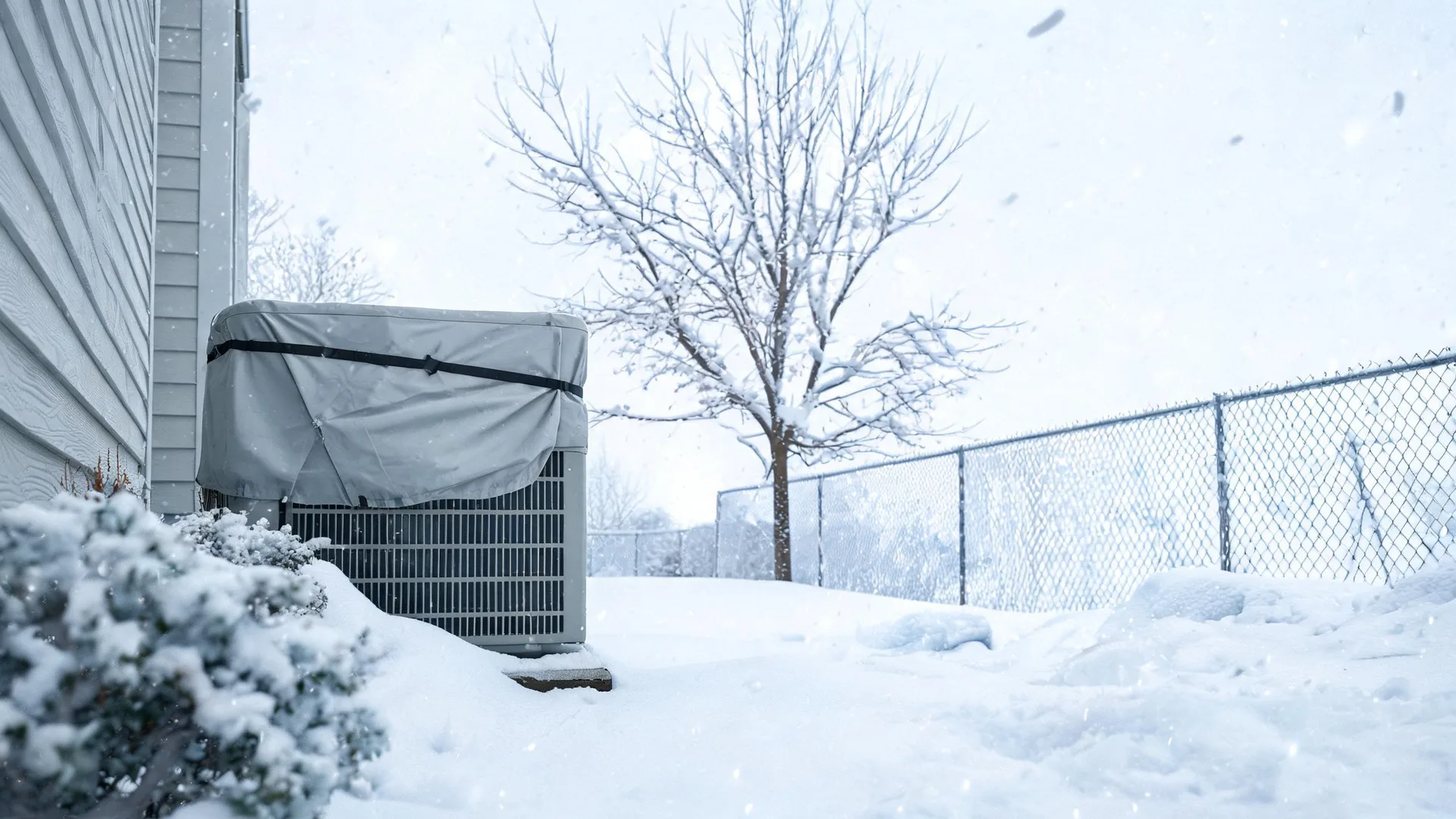
Every heat pump has a temperature where it can no longer pull enough heat from outside air to keep up with the house, called the balance point. Below that, backup heat has to carry the load, either strip heat built into the air handler or a furnace working alongside it. Ask what the installer set as the balance point for this system and how it was calculated, not guessed at.

That SEER2 and HSPF2 floor already covers the cooling and heating sides of the label. The other figure on it is capacity, listed in BTUs, and it means something different. That's not an efficiency score, it's how much heat the unit can move in an hour, and it only means the right thing when it matches the load calculation for the house. A high efficiency rating on a unit that's the wrong size doesn't save anything. It just runs more often, or not enough, at whatever rating it carries. Ask how the numbers on the label were matched to your house, not just whether they clear the minimum.

Install day starts with the equipment already chosen, so most of it is moving and connecting rather than deciding. The outdoor unit gets set on a pad, leveled, and connected by refrigerant lines to the indoor coil. If the ductwork is already there, the installer ties into it. If the air handler is new, that gets set in place and wired to the thermostat. Once the lines are connected, the system gets evacuated to pull moisture and air out before it's charged to the amount that unit calls for. After that it's started up and tested in both directions, heating and cooling, with airflow at the vents checked against what the system is supposed to be moving. A gas furnace staying on as backup gets tied into the controls so it knows when to take over. Expect some of the day spent waiting while the system runs through a test cycle, since that's the only way to catch a problem before the installer leaves.