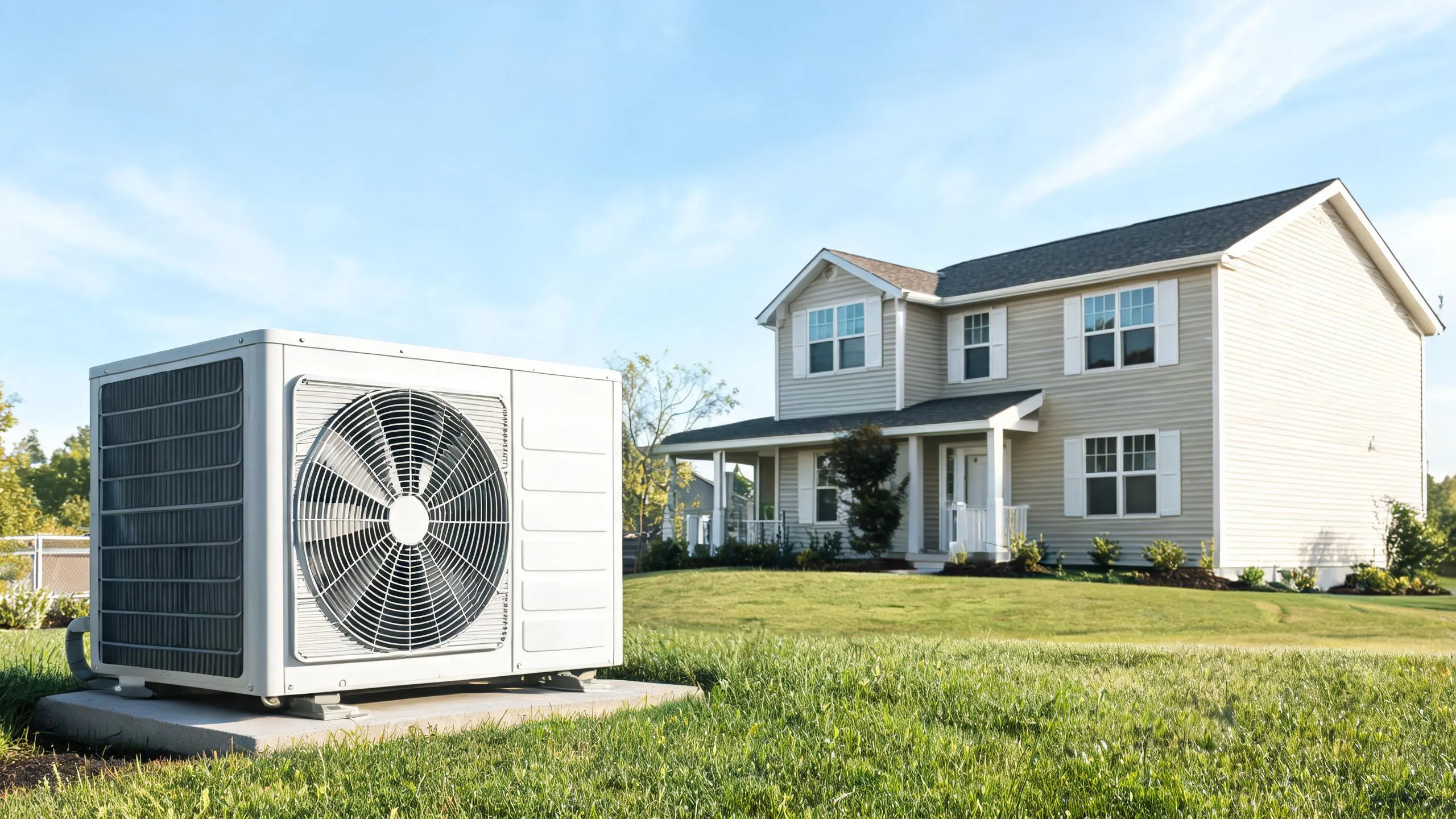




An outdoor heat pump unit mounted on a concrete pad in front of a two-story suburban house.

Heat Pump Installation in Nephi, UT

Tell us about the job

Takes about a minute. No obligation.

New system or replacementHeat PumpJuab County, UT
Step 1 of 2

What ZIP code is the job in?

Gas heats 74.2% of homes in Juab County, more than any other fuel. A heat pump works differently than the furnace already in the house, since it moves heat instead of burning fuel, and it handles cooling too, which a gas furnace never did. Some homeowners pair it with the existing gas furnace as a dual fuel setup, letting the heat pump run most days and the furnace take over when it gets coldest. Others replace the gas system outright and heat the whole house on electricity. Either way, the ductwork already in place matters more than what's fueling the old system, so it's worth having that checked before deciding which route fits.

8 months
October through May, your system heats
3 months
June through August, it cools
20°F
the average winter night it heats against
88°F
the average summer afternoon it cools against
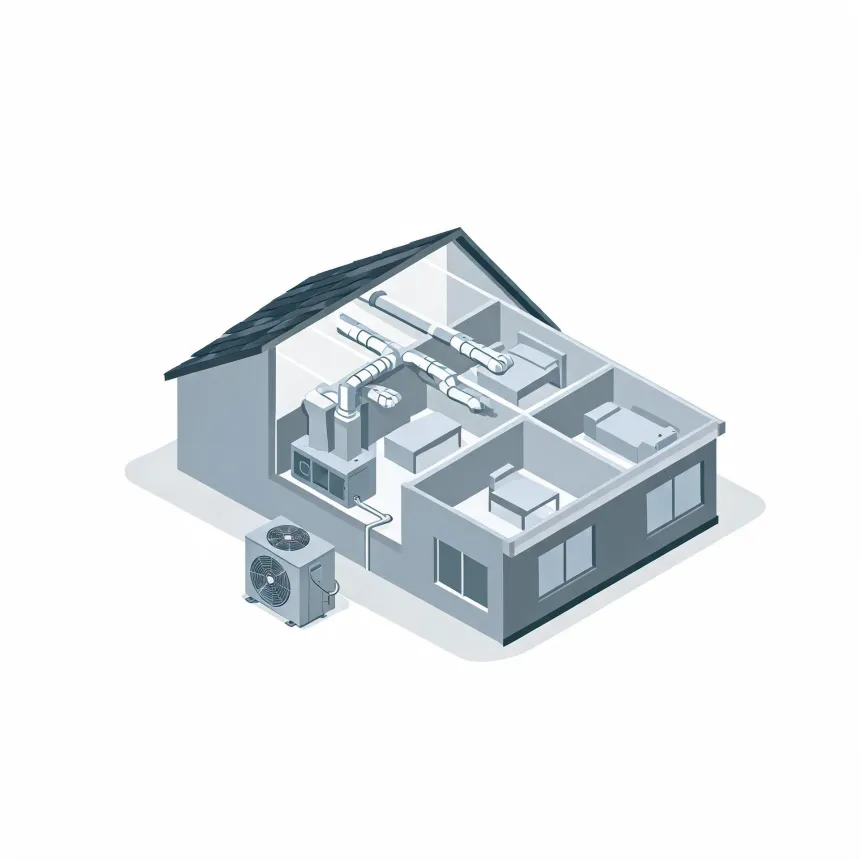
Isometric grayscale illustration of a cutaway house showing interior rooms, ceiling ductwork connected to an indoor air handler, and an outdoor condenser unit beside the exterior wall.
Your system heats October through May and cools June through August.

NOAA nClimDiv, 1991–2020 normals

Heat here starts in October, and cooling starts in June.

A heat pump installed in September or May goes in on your schedule, not in the middle of a cold snap or a heat wave.

Nephi doesn't push equipment bigger or pricier than standard

Power costs 12.22 cents a kWh statewide
48 damaging wind events from 2015 to 2024
72 winter storms from 2015 to 2024

Nothing here calls for oversizing a heat pump or stepping up to a higher-tier unit. Overnight lows average 20°F through December, January and February, cold but not extreme, and a standard system sized to the house handles that range fine. The bigger factor in this county is wind and snow rather than cold. Damaging wind and winter storms both hit Juab County often enough over the past decade that they matter more than the thermometer does. That argues for a contractor who mounts the outdoor unit securely and sets it where drifting snow won't block airflow, not for a larger or pricier system. Size the heat pump to the house, not to the weather.

A heat pump here has to clear 14.3 SEER2 and 7.5 HSPF2

Juab County falls in climate zone 5B, where heating carries the bigger load. Any split-system heat pump installed here has to meet the federal minimum of 14.3 SEER2 and 7.5 HSPF2. A federal tax credit is available toward the cost of a qualifying heat pump.

Find a contractor
A residential heat pump outdoor unit mounted on a concrete pad next to a house with gray vinyl siding.

It runs every day, not just a few weeks a year

A heat pump runs most days of the year, not just a few weeks of extreme weather, so the parts that start and stop the most are the ones that decide the price. The compressor is the big one. Units built to run at a single speed cost less up front, but one that modulates, ramping up or down instead of just switching on and off, costs more and tends to last longer under that kind of daily cycling. The outdoor coil and the defrost control matter too, since a heat pump pulls heat from outside air even in winter and has to shed frost off that coil regularly to keep working. More frequent defrost cycles put more wear on the reversing valve, the part that switches the unit between heating and cooling. None of this shows up on a spec sheet as clearly as the cost does, but it's what that cost is paying for.

The old furnace or AC doesn't have to go

A contractor can pull the old gas furnace and outdoor condenser and haul them off once the heat pump is running, but there's no rule that says they have to. If the plan is dual fuel, the furnace stays in place and gets wired to work with the new heat pump instead of running alone. Only the parts actually being replaced come out.
The refrigerant in the old unit gets recovered, not vented

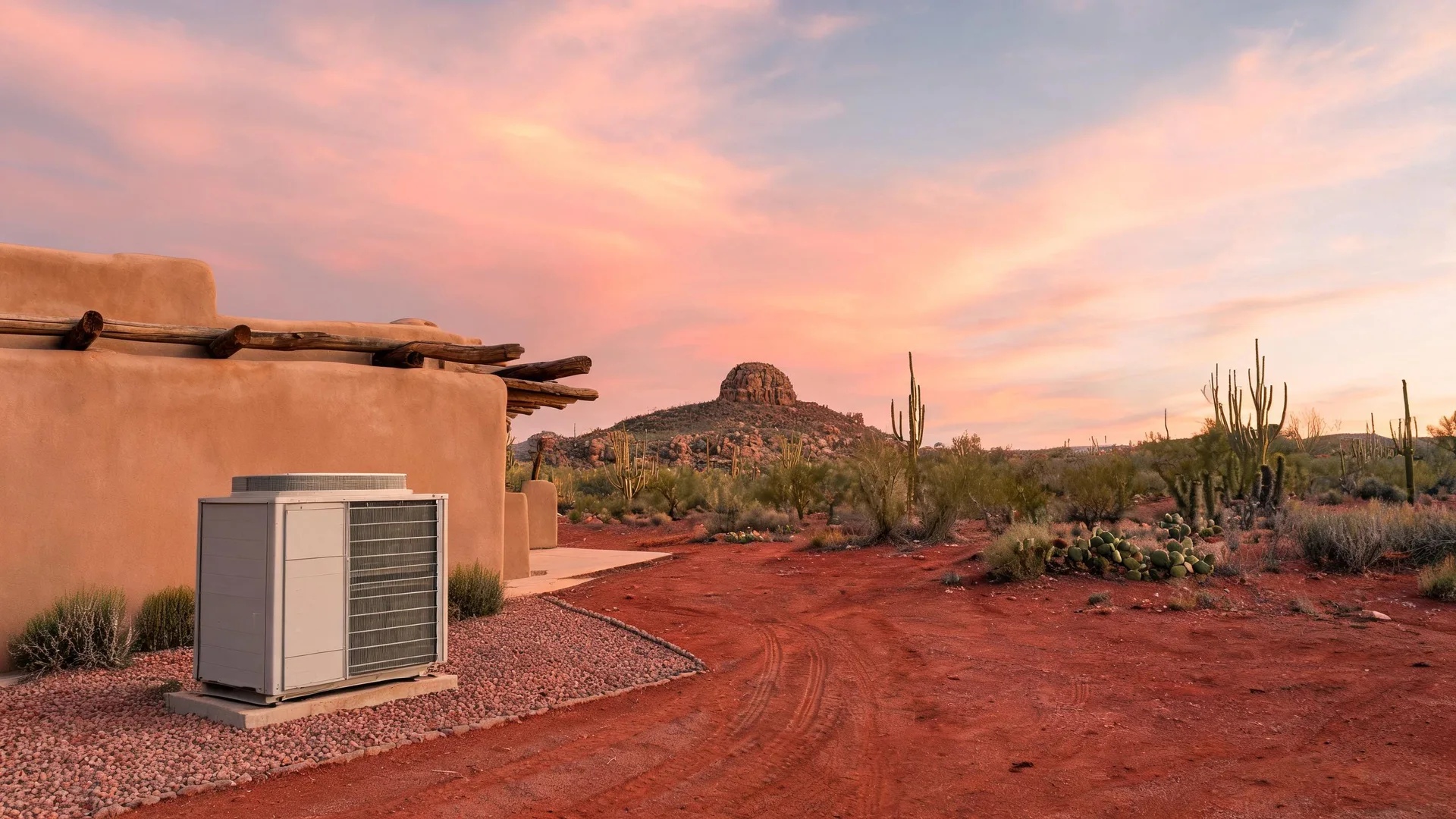
An old air conditioner or heat pump holds refrigerant that can't legally be released into the air. Before the outdoor unit gets disconnected, a technician recovers that refrigerant into a tank and documents it. This is routine, but it's one more reason this isn't a job for pulling the old unit yourself.

Getting the size right starts with a load calculation, not a chart that matches tonnage to square footage. A contractor measures the house. How much wall and window area it has, which way it faces, how much insulation is in the attic, how tight the ductwork is. All of that goes into figuring out how much heat the house actually loses on a cold day and gains on a hot one. A heat pump sized from that number matches the house. Go bigger and the unit short cycles, running in bursts that cool or heat the air fast but shut off before it pulls moisture out or spreads warmth evenly. Go smaller and it runs flat out all day and still falls behind when the weather turns. Oversizing is the more common mistake, since bigger sounds safer, but a heat pump that's too big wears out faster and leaves rooms feeling clammy in summer. The right size is the one the load calculation says, not the one with the biggest number on the box.

SEER2 and HSPF2 are ratios, not a count of how comfortable the house will feel. SEER2 measures cooling output against the electricity it takes to produce it, and HSPF2 does the same for heating. A higher number on either means the unit gets more heating or cooling out of the same amount of power, which shows up as a lower electric bill over time, not as a stronger system. Heat pumps with the same rating can still cost different amounts to run once installed, because ductwork, airflow and sizing all affect what the equipment actually delivers in a given house. The rating describes the equipment, not the installation. Whether the unit is the right size for the house is a separate question, answered by the load calculation, not the label.