




Illuminated timber-frame and stone houses along a residential street at night, with snow-capped mountains visible in the background.

Heat Pump Installation in Kanab, UT

Tell us about the job

Takes about a minute. No obligation.

New system or replacementHeat PumpKane County, UT
Step 1 of 2

What ZIP code is the job in?

Electricity heats 53.6% of occupied homes in Kane County, more than any other fuel. Bottled, tank or LP gas comes next at 22.5%. A heat pump fits right into that picture, since it runs on electricity and can replace an electric furnace or baseboard heat without any new fuel line to run. For a home already set up electric, that makes the installation itself more straightforward.

8 months
October through May, your system heats
3 months
June through August, it cools
23°F
the average winter night it heats against
88°F
the average summer afternoon it cools against
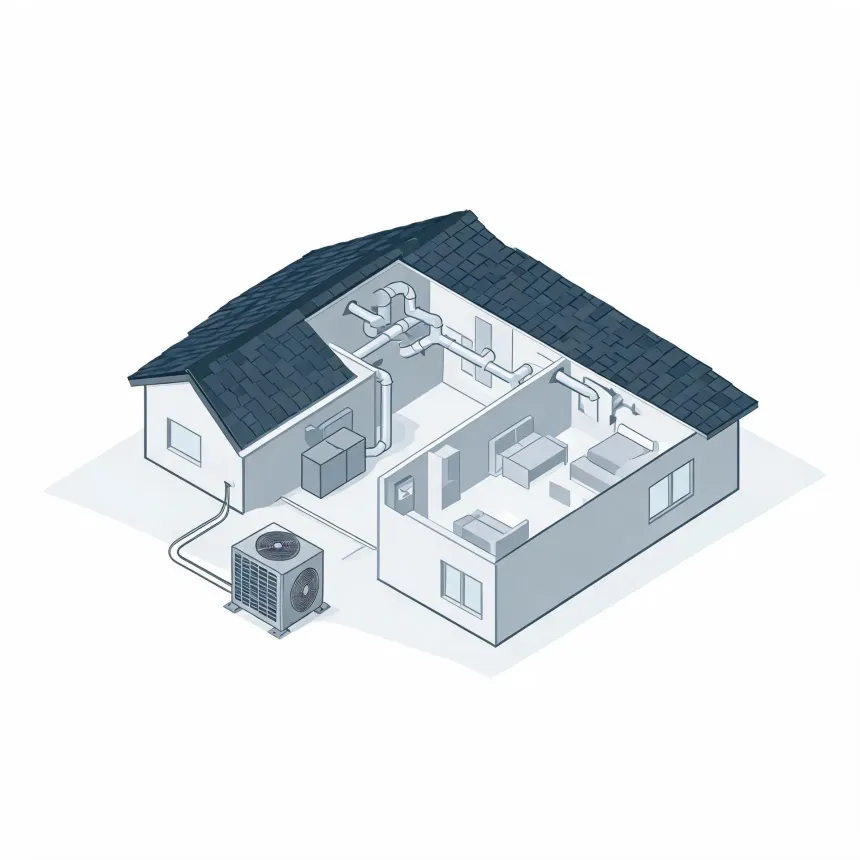
Isometric cutaway illustration of a single-story house showing interior rooms, ceiling ductwork, an indoor air handler, and an outdoor condenser unit connected by lines on the ground.
Your system heats October through May and cools June through August.

NOAA nClimDiv, 1991–2020 normals

Utah electricity ran 12.22 cents per kilowatthour in 2024.

At that rate a heat pump still costs less to run than baseboard heat, but the payback on the priciest, highest-efficiency model takes longer here.

Nine hail events and forty winter storms in nine years is not a hard life for a heat pump

9 hail events from 2015 to 2024
40 winter storms from 2015 to 2024
Winter nights average 23°F

A heat pump in Kane County covers both jobs, heat from October through May, cooling from June through August. That leaves only September with the system idle. With so little downtime, a unit that is on its way out does not give you much warning. Put the new one in during September, before the first cold night, and the installer has time to size it to your house and run it through its paces. Wait until you need heat and you are making that choice with a cold house and whatever is left on the lot.

A new heat pump here has to meet zone 5B's efficiency minimums

Kane County sits in climate zone 5B, where heating carries the bigger load. Any split-system heat pump installed here has to clear 14.3 SEER2 for cooling and 7.5 HSPF2 for heating. That sets a floor on what an installer can put in, and a federal tax credit is available toward a qualifying system.

Find a contractor
A gray air-source heat pump mounted on a concrete pad next to a house with gray vinyl siding, surrounded by gravel and flanked by green shrubs and white hydrangea flowers.

A solid mid-range system is enough

Pick a heat pump for reliability, not for the highest number on the spec sheet. Nothing about hail or snow here argues for the top-tier model. A mid-range system holds up fine under nine hail events and forty winter storms spread across nine years, that works out to only a handful of rough days most years. Put the extra money toward correct sizing and a good installation instead. Those two things matter more to how long the system lasts than which tier you bought.

Ask what it can still do on the coldest night

A heat pump loses heating capacity as the outdoor temperature drops. A spec sheet that only shows output at a mild temperature does not tell you what the unit can do when it matters most. Ask for the capacity at a low outdoor temperature and weigh that against the house's actual heat loss, not just the size stamped on the unit.
Ask how backup heat is controlled

On the coldest nights a heat pump may need help from backup heat, usually electric resistance coils built into the air handler. Ask what temperature triggers that backup and whether it is a hard cutover or a gradual assist. A system that calls on backup heat too soon will run up the electric bill instead of leaning on the heat pump itself.

Whoever installs the new system still has to deal with the old one, and that unit still holds a charge of refrigerant that can't just be vented into the air. A licensed installer recovers it with a pump into a tank before the lines get cut, the same way the original installer charged the system going in. From there the old unit usually gets scrapped, since a heat pump that's reached the end of its life rarely has a second home to go to. If the compressor or coil failed outright, there's nothing left worth salvaging anyway. The one thing worth asking ahead of time is whether removal and disposal are included in the installation quote or billed as a separate line, since it isn't always bundled in.

Installation day starts with the old system coming out. The refrigerant gets recovered first, then the lines are cut and sealed. The outdoor pad gets checked, and replaced if it has shifted or cracked, since the new unit has to sit level and clear of the wall and roofline. Inside, the installer sets the air handler or works with the ductwork already there, and runs new line set if the old lines don't match the new equipment. Once everything is connected, the system gets charged with refrigerant to the manufacturer's spec rather than topped off by feel. Then comes startup. The installer runs the system in both heating and cooling, checks airflow at the vents, and sets the thermostat so backup heat only kicks in where it should.