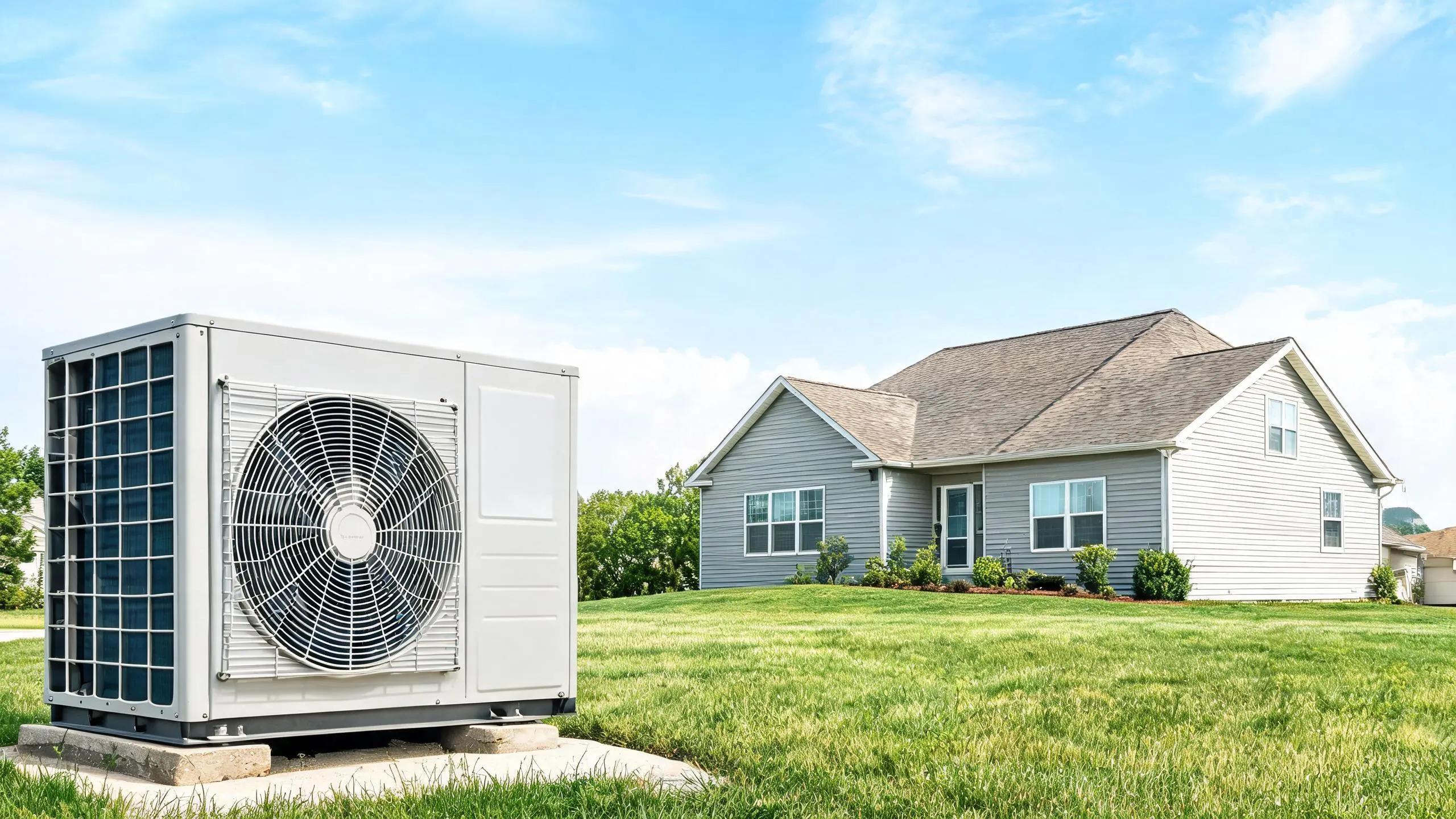






An outdoor HVAC condenser unit on a concrete pad in front of a single-story house with gray siding and a shingle roof.

Heat Pump Installation in Ephraim, UT

Tell us about the job

Takes about a minute. No obligation.

New system or replacementHeat PumpSanpete County, UT
Step 1 of 2

What ZIP code is the job in?

Utility gas heats 76.9% of the homes in Sanpete County, more than any other fuel. A heat pump works differently than a gas furnace, so if you're switching over you're changing how the house gets warm, not just swapping the box in the closet. Some homeowners install a heat pump alongside the gas furnace and let it handle milder weather, with gas taking over once it gets cold enough that the furnace is doing the work instead. Others replace the furnace outright and heat the whole season on the heat pump. Either way, the ductwork already running through the house usually carries heat pump air just fine, but it's worth having a contractor check sizing before you decide which path fits.

10 months
September through June, your system heats
16°F
the average winter night it heats against
78°F
the average summer afternoon it cools against
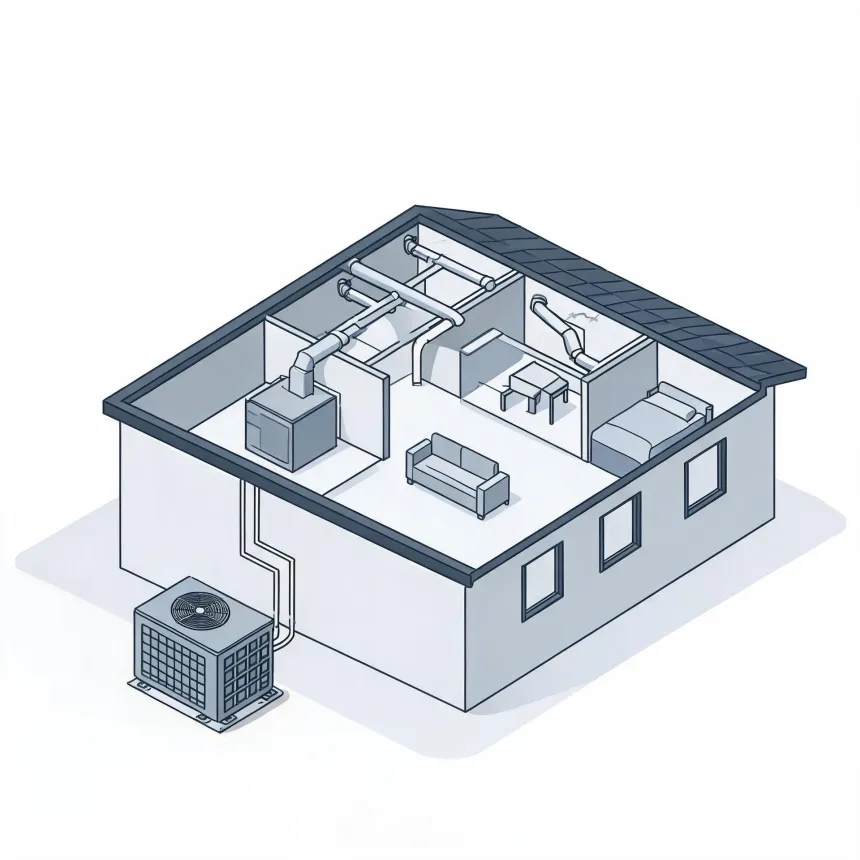
Isometric line illustration of a cutaway single-story house showing interior rooms with ducted air distribution, an indoor air handler, furniture, and an outdoor condenser unit connected by lines outside the wall.

Heat in Sanpete County starts in September.

Get the heat pump installed by August and it's handling the first cold mornings, not a rushed install after the house is already cold.

A standard heat pump handles Sanpete County winters fine

52 winter storms from 2015 to 2024
Winter nights average 16°F
Power costs 12.22 cents a kWh statewide
A standard heat pump handles Ephraim winters fineElectricity here runs 12.22 cents per kilowatt-hour, nothing that calls for an oversized system

Sanpete County falls under zone 5B, a cool, dry climate where the furnace or heat pump does more work than the AC most of the year. Any split-system heat pump sold new here has to meet 14.3 SEER2 for cooling and 7.5 HSPF2 for heating at minimum, since that's the federal standard for units built from 2023 on. That floor is already built into what manufacturers ship, so it's less something to shop for and more something to confirm is on the spec sheet. A system that clears that bar may also qualify for the federal tax credit on heat pump installations, worth checking against the paperwork before you file.

Replace it before the season

Replace it before the season starts, so it happens on your schedule, not in a hurry.

Find a contractor
A man seen from behind in a dark shirt and tan work pants carries a canvas tool bag up stone steps toward a gray panelled front door of a shingled house, with a potted shrub beside the entry.
A white mini-split heat pump outdoor unit mounted on a concrete pad beside a gray-sided house, surrounded by gravel and green shrubs.

Sized for this house, not the last one

A heat pump that's too big cools the house fast and shuts off, then starts again a few minutes later. That cycling is harder on the compressor than running steady, and it leaves rooms farther from the thermostat too warm or too cold because the system never runs long enough to push air evenly through the ductwork. Too small, and it runs constantly on the coldest days, struggling to keep up and leaning hard on the backup heat strip to make up the difference. Sizing isn't a guess. A contractor works it out with a load calculation that accounts for the square footage, the windows, the insulation, and how the house is laid out, room by room. That number, not the size of the unit it's replacing, is what decides the right system.

The outdoor unit is only part of the job

A heat pump installation means a new outdoor unit, but it usually also means a new air handler or coil inside, a line set sized to match the equipment, and a new thermostat that can run both heating and cooling plus backup heat if the system has it. Pulling the old line set and running new is more labor than swapping a like-for-like part, and it's labor that shows up whether the house is simple or not.
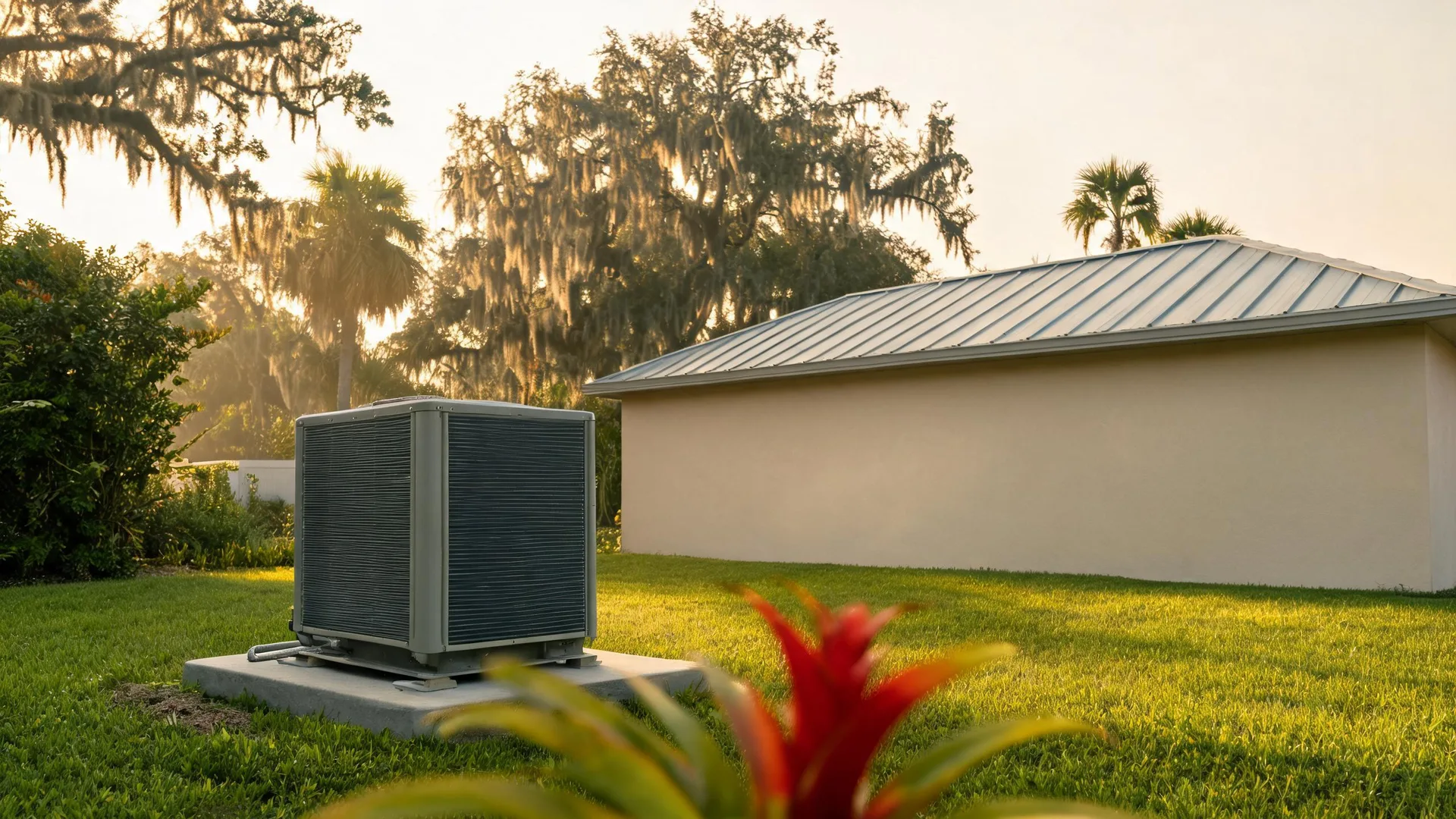
Electrical work is common, not optional extra

Heat pumps draw power for both heating and cooling, year round, so the electrical circuit feeding the unit has to be sized for that. Older homes sometimes need a new breaker or a heavier wire run from the panel before the system can go in at all. A contractor checks this during the estimate, not after the equipment shows up, because it changes what the install actually involves.

Specs on a sheet don't tell you how a contractor plans to install the same equipment, and that's where the real differences show up. Ask what happens to the line set. A reused line set needs to be flushed and pressure tested before it carries new refrigerant, and some contractors skip that step to save time. Ask who sizes the system and how, because a contractor who quotes a number without walking the house and running a load calculation is guessing. Ask what backup heat looks like on the coldest mornings, what triggers it, and whether the thermostat is set up to use it wisely or just leans on it. Ask about the warranty on the compressor separately from the labor warranty, because one often runs out long before the other. And ask who pulls the permit and handles the electrical work, since a heat pump wired wrong will trip breakers or run the backup heat more than it needs to.

Installation day starts with the old equipment coming out, not the new going in. The outdoor unit gets disconnected, the refrigerant recovered, and if the line set isn't being reused, it comes out of the wall too. Inside, the old air handler or coil comes out of the closet or attic space to make room for the replacement. Once the new equipment is set, the line set gets connected, pressure tested, and pulled down to a vacuum to clear out any moisture or air before refrigerant goes in. Electrical and low-voltage wiring get run to the new thermostat, and the system gets powered up and checked running in both heating and cooling before anyone calls it done. Expect most of a day for a straightforward swap, longer if the ductwork, electrical panel, or line set need work beyond a like-for-like replacement.