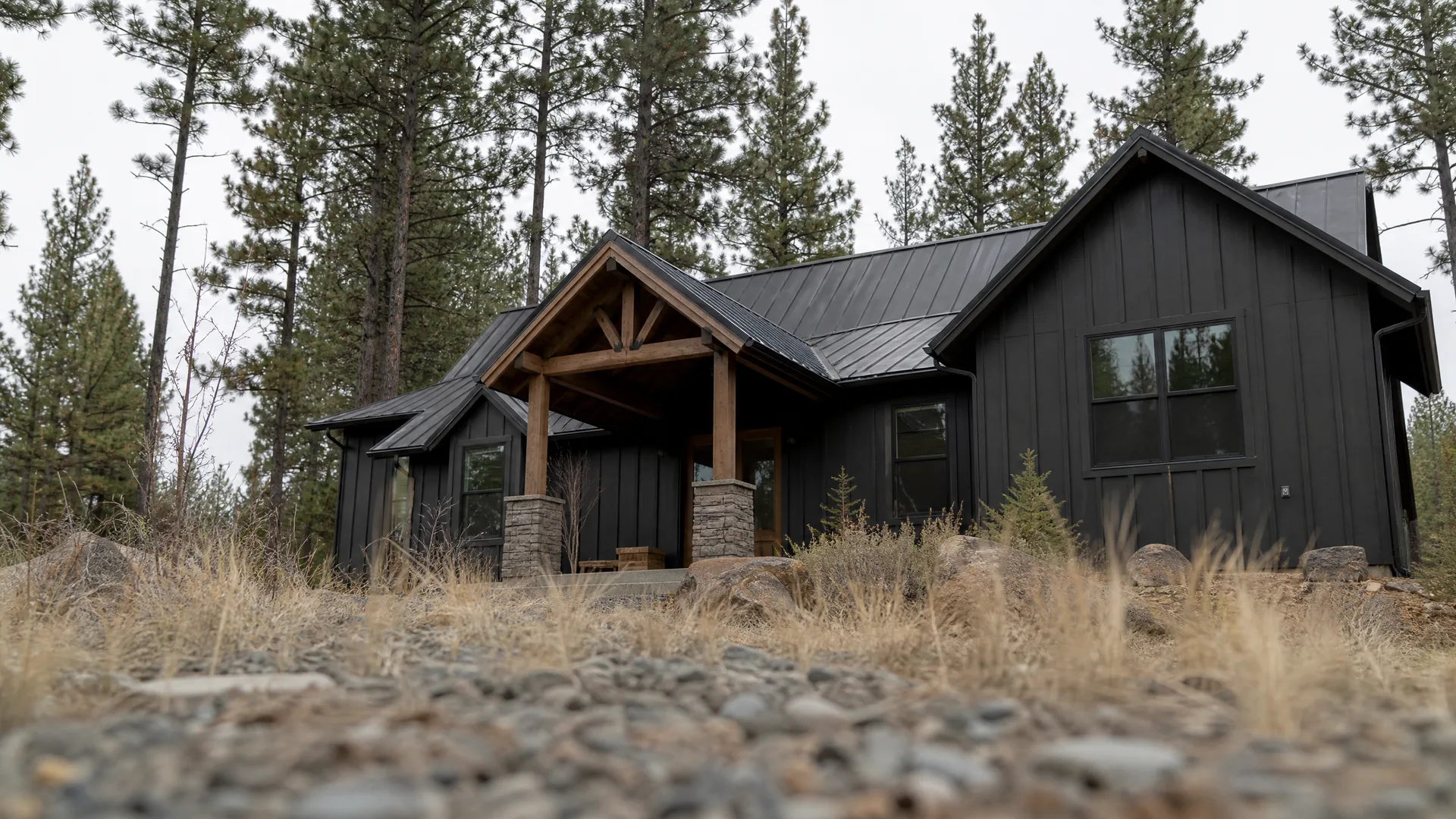





A single-story black board-and-batten house with a dark metal roof, timber-framed entry porch and stone pier bases, set among tall pine trees with dry grass and a rocky gravel foreground.

Heat Pump Installation in Circleville, UT

Tell us about the job

Takes about a minute. No obligation.

New system or replacementHeat PumpPiute County, UT
Step 1 of 2

What ZIP code is the job in?

Utility gas heats 44.7% of homes in Piute County, more than any other fuel, with electricity next at 28.6%. Most furnaces here are built to pair with gas, so a heat pump going into one of these homes usually means a change in how the house gets its heat, not just a new box where the old one sat. A heat pump still has a place in that setup. In a dual fuel system, the heat pump handles the mild days and the gas furnace takes over when it gets cold enough that gas works harder for less. Either way, what's already running the house, gas furnace, electric furnace, or something else, decides what the installer needs to plan around before anything gets swapped out.

10 months
September through June, your system heats
16°F
the average winter night it heats against
77°F
the average summer afternoon it cools against
Isometric cutaway illustration of a house showing interior ductwork, an indoor air handler, and beds, with an outdoor condenser unit connected by lines outside the wall.

Heat here runs September through June, ten months of the year.

August is the one month to get a heat pump installed before the house needs it.

A normal size, sized for this house, is what the cold calls for here

Half the homes here were built by 1976
32 winter storms from 2015 to 2024
Winter nights average 16°F

Electricity in Utah ran 12.22 cents a kilowatt-hour in 2024. That rate doesn't push a case for going bigger or spending more on a higher-efficiency unit than this house needs. A heat pump sized to the house will run on that rate just fine without the extra cost of a bigger compressor or a higher tier of equipment. The sizing comes from a load calculation on the house itself, not from the electric rate. Standard equipment, matched to the house, is what this calls for.

Replace it before the season

Replace it before the season starts, so it happens on your schedule, not in a hurry.

Find a contractor
A gray heat pump outdoor unit mounted on a concrete pad next to the stone-accented exterior wall of a house.

What to ask before you compare systems

A heat pump runs on most days it's installed, not just the coldest or hottest ones. That kind of runtime makes a few questions worth asking before you settle on a system. Ask what the unit's rated output looks like at low outdoor temperatures, not just mild ones. Units can look alike on paper and still perform differently once it gets cold, because the compressor works harder to pull heat from colder air. Ask about the compressor type. A variable-speed compressor adjusts its output to match what the house needs right then, so it cycles less. A single-speed compressor runs full on or full off, and cycles more often to hold a temperature. Ask how the system defrosts itself. The outdoor coil collects frost in cold, damp weather, and the unit has to pause heating to run a defrost cycle. Some handle that more smoothly than others, and it shows up in comfort on the hardest days. Ask what backup heat source the system pairs with and what triggers the switch to it. That changeover point shapes how the system performs more than almost anything else. Ask about the compressor warranty specifically, since that's the part most likely to need attention over the life of the system.

What the rating actually measures

The efficiency rating on a heat pump measures how much heat it moves for the power it uses, averaged across a range of outdoor temperatures. It is not a number that shows up on a power bill, and it does not promise a result. A unit with a higher rating uses less electricity to deliver the same heat as one with a lower rating, but only when both are sized and installed correctly for the house they're in.

Why the rating alone doesn't decide the job

A high rating on a unit that's too big or too small for the house will not show up as savings. An oversized heat pump cycles on and off instead of running steady, and that short cycling wears on the compressor and gives back the efficiency the rating promised. A correctly sized unit with a modest rating will often outperform an oversized one with a high rating, because it runs the way it was built to run.

The old furnace or AC doesn't need to come out before the heat pump goes in. Most installs take it out as part of the same job, since the new system needs the spot and often the same electrical and duct connections. If the old equipment still runs, some owners keep the gas furnace in place and let it serve as backup heat in a dual fuel setup rather than scrapping it. If it's past that point, the installer disconnects the gas line or the old refrigerant lines, pulls the unit, and hauls it off. Refrigerant in an old AC or heat pump has to be recovered properly, not vented, so that part of the removal follows its own set of rules. None of this changes what the new heat pump needs to do its job. It just has to happen before the new unit gets set and wired in.

Sizing a heat pump isn't a matter of picking the biggest unit and calling it safe. Too big, and it blasts the house to temperature fast, then shuts off, then kicks on again a short while later. That cycling is hard on the compressor and it leaves the air feeling uneven, because the system never runs long enough to settle the house. Too small, and it runs constantly on the coldest days and still can't keep up. The right size comes from a load calculation, a room-by-room look at how much heat the house actually loses through its walls, windows and roof, not a guess based on the old equipment or the square footage alone. That number, not habit or what the last system happened to be, is what tells the installer what the new one needs to do.