Most homes here run on gas
Utility gas heats 60.4% of the homes in Beaver County, more than any other fuel. Electricity is a distant second at 24.0%. A gas furnace is still the thing most houses here were built around.
Takes about a minute. No obligation.
Utility gas heats 60.4% of the homes in Beaver County, more than any other fuel. Electricity is a distant second at 24.0%. A gas furnace is still the thing most houses here were built around.
If your home already has gas, adding a heat pump usually means pairing it with the furnace rather than tearing one out. The furnace covers the coldest stretches, and the heat pump handles the rest, including cooling in summer.

NOAA nClimDiv, 1991–2020 normals
Half the homes in Beaver County were built in 1976 or earlier, half after.
A heat pump sized to the house, not the age of it, is what makes the install straightforward.



A heat pump here mostly has to get through ordinary nights and afternoons, not fight the weather. Winter lows average 19°F, which a correctly sized heat pump handles fine alongside a furnace for the coldest stretches. The harder events, damaging wind and winter storms, are what wear equipment down, and Beaver County sees both. That strain comes from storms passing through, not from the daily grind of running the house. Day to day load is lighter here, so a reliable system sized to the home does the job without needing to be the most efficient one available.
A standard heat pump sized to your house is enough here. Beaver County electricity runs 12.22 cents per kilowatt-hour, and nothing about the load here calls for oversizing or paying more for the highest efficiency tier.
Find a contractor
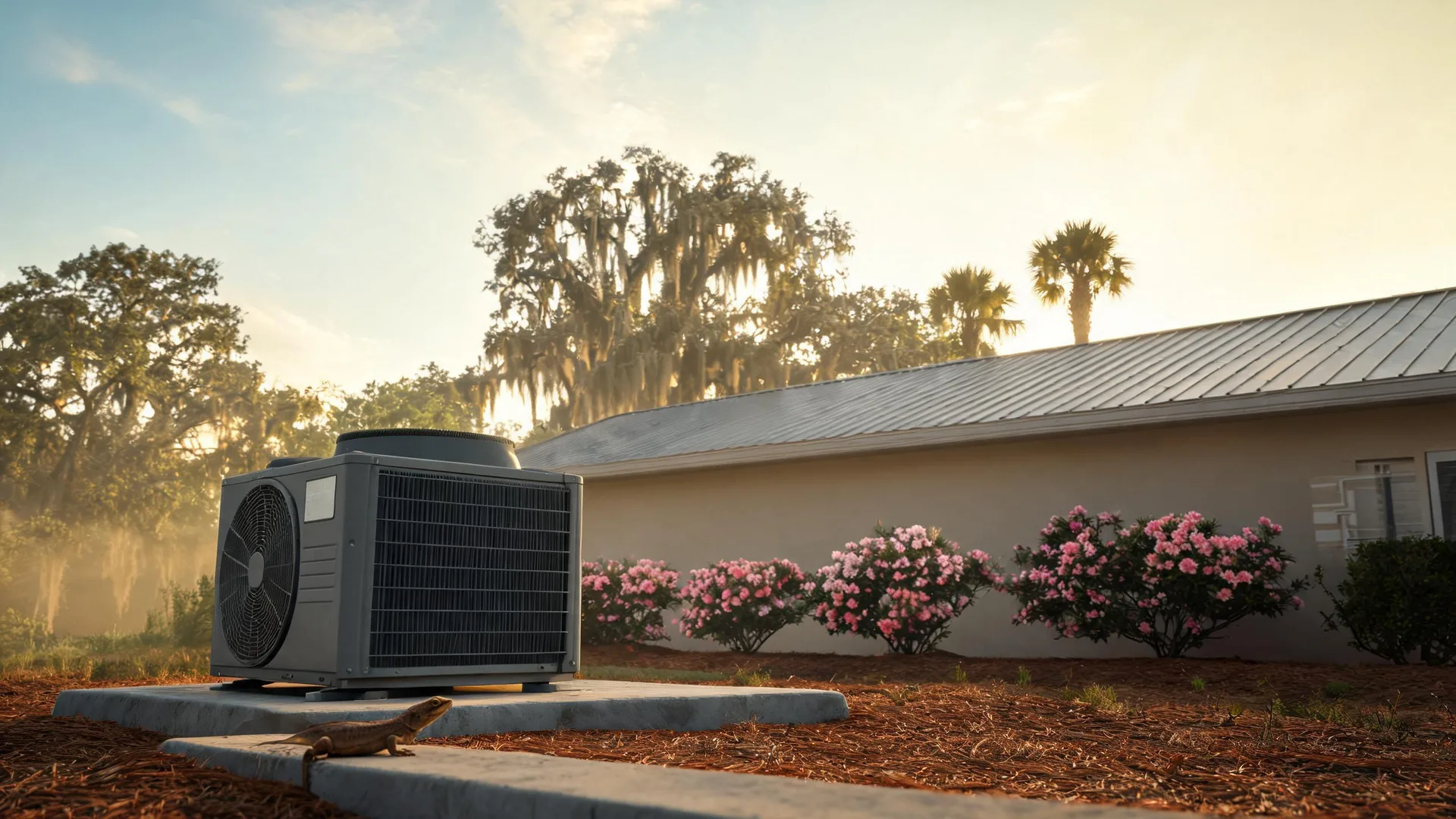
Install day starts outside, setting the new outdoor unit on its pad and running refrigerant lines to where the air handler or coil connects. If a furnace is staying in place, the crew ties new equipment into that existing ductwork rather than starting fresh. They check static pressure and duct size first, because old gas-only runs don't always handle what a heat pump needs to move. Electrical work usually means a dedicated circuit and disconnect box for the outdoor unit. Sometimes the panel needs upgrading if it can't support the new load. Once everything is connected, the system gets charged with refrigerant to the manufacturer's spec, not just topped off by feel. Then it gets tested in heating mode, in cooling mode, and through the changeover to any backup furnace, to confirm it switches at the right point and not before.
When a heat pump goes in alongside an existing gas furnace, there's nothing to haul away. The furnace stays put and keeps doing the coldest-weather work it already did. The install adds equipment outside and a new air handler setup, it doesn't remove what's there.
If the old system being replaced is a straight electric setup, like a failing heat pump or electric furnace, that equipment does come out. The old outdoor unit, the old coil, sometimes the old air handler get disconnected and removed as part of the install, and the new heat pump takes over the whole job.
Ask what happens at the balance point, the outside temperature where the heat pump stops keeping up and the furnace needs to take over. That number depends on the equipment, not just the house, and it's set in how the system is installed and programmed, not fixed by the hardware alone. Ask whether the changeover is automatic or something you'd have to manage yourself. Ask about the sound rating on the outdoor unit if it sits anywhere near a bedroom window. And ask what's happening with the ductwork, because a heat pump moves a different volume of air than a furnace alone, and ducts sized only for gas heat can end up being the weak point in an otherwise good system.
Sizing is a room by room heat loss and heat gain calculation, not a guess based on the old equipment or the square footage alone. A contractor looks at wall and ceiling insulation, window area, and orientation, then works out how much heat the house loses on a cold night and how much it gains on a hot afternoon. Too big and the unit short cycles, running in quick bursts that never let it settle into steady, efficient operation, and that cycling is hard on the compressor over time. Too small and it runs flat out without keeping up, so the house never quite reaches the set temperature on the hardest days. The right size is the one that matches its output to what the house actually loses and gains, nothing added for a safety margin that isn't needed. That calculation also sets how the ductwork needs to handle the airflow, since a heat pump moves air differently than a furnace running alone.