



An unfinished basement containing a forced-air furnace with metal ductwork, exposed wooden ceiling joists, a hanging Edison bulb, and bare concrete floors.

Furnace Maintenance in Vernal, UT

Tell us about the job

Takes about a minute. No obligation.

Tune-up, service, or cleaningFurnace or heatingUintah County, UT
Step 1 of 2

What ZIP code is the job in?

Nine months of heat a year is most of the calendar, not just a cold snap in January. Overnight lows here average 13°F through December, January and February, so a furnace in Vernal isn't cycling on for an hour and resting. It runs long stretches, night after night, from September into May. That kind of runtime puts real hours on an igniter and a blower motor before most of the country has turned its heat on once. Uintah County has seen dozens of winter storms over the past decade, and a furnace that's been running hard for weeks already has less to give when one of those hits.

Most furnaces in Vernal run on gas, not electric heat.

A gas furnace needs its burner and venting checked every year, not just a new filter.

Half the homes here were built since 1992, so a lot of furnaces still have years to protect

Half the homes here were built by 1992
Heat runs September through May
Winter nights average 13°F
Once a year hereGas ran $12.55 per million Btu in Utah in 2024, so a furnace burning it efficiently is worth checking yearly.

Heat starts running in September here, so August is the month to get a furnace looked at. Once the season starts it doesn't let up for a few weeks and then back off. It runs from September straight through May, nine months of nights with the burner cycling on and off. A furnace with a weak igniter or a dirty flame sensor will show it fast once that pattern sets in, and it starts showing it in September, not partway through. Booking the check in August means whatever needs attention gets caught before that first run, not after it.

Have your furnace checked before it has to work harder

A furnace that's been running hard since September has less margin left when a storm hits in January. Get it checked now, before the season puts more hours on it.

Find a contractor
A gray high-efficiency gas furnace installed in an unfinished basement, surrounded by gas lines, a condensate drain, and sheet-metal ductwork.

Skipped maintenance doesn't fail quietly

Skip a year of maintenance and nothing happens right away. The furnace still fires, still heats the house. What changes is underneath. Dust builds up on the flame sensor until it can't tell the burner is lit, and the furnace shuts itself off partway through a cycle. The igniter keeps drawing current to do its job even as it wears thin, until the day it doesn't glow hot enough to light the gas at all. A blower wheel caked with dust moves less air, so the heat exchanger runs hotter than it should, and that shortens its life. None of this announces itself. It shows up as a furnace that short cycles, or one that runs but never quite gets the house warm, or one that trips its limit switch on the coldest night of the year for no reason anyone can see. A yearly check catches the sensor before it's coated, the igniter before it's too far gone, the blower before it's starving for air. Skipped long enough, the same small parts that are simple to clean or swap out end up taking the heat exchanger down with them.

The filter is doing more than cleaning air

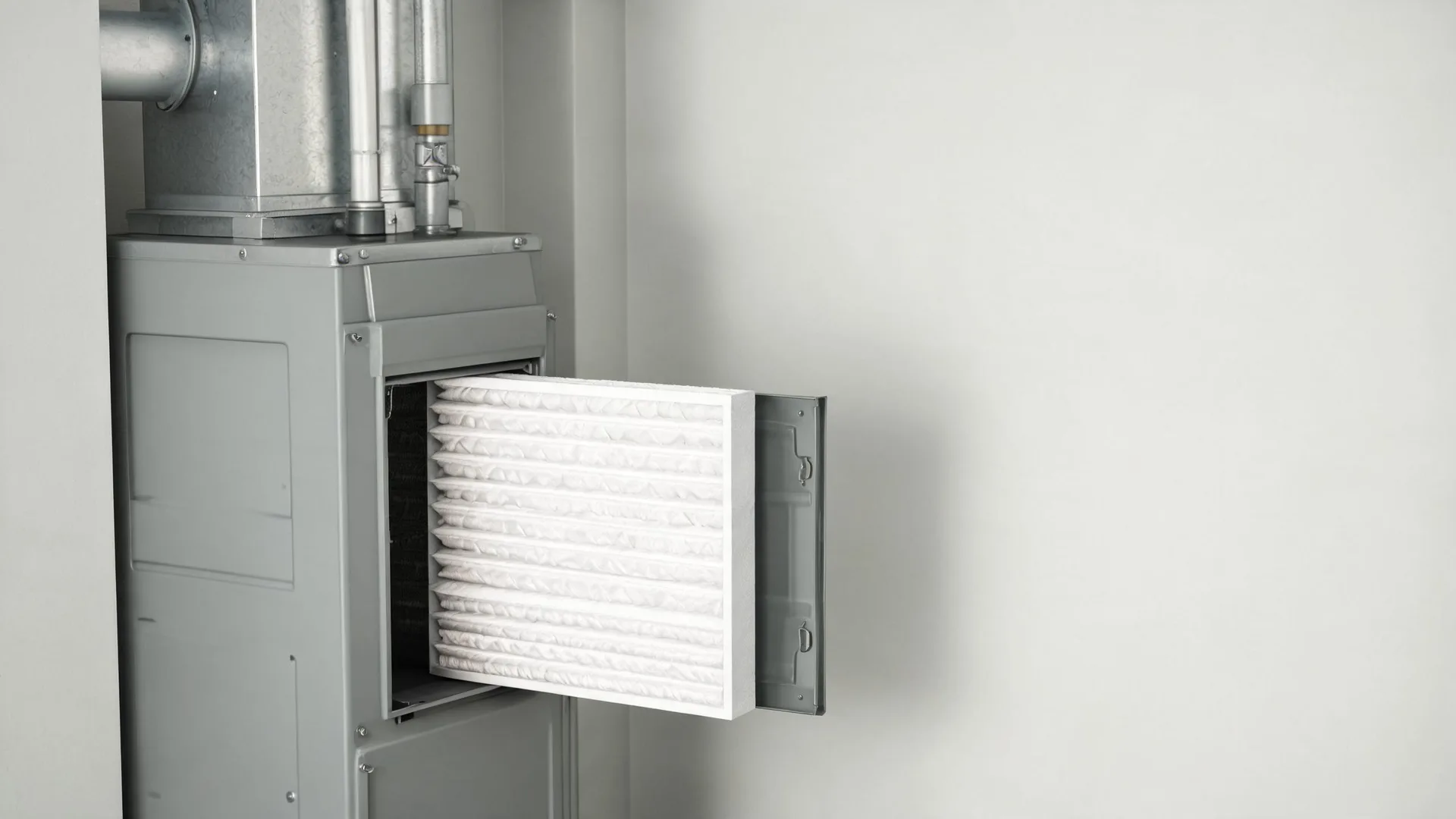
A clogged filter chokes off airflow across the heat exchanger. Starved for air, the exchanger runs hotter than it was built to, and the blower motor strains to push what little air it can through. Furnaces don't usually fail from one bad part alone. They fail because a clogged filter made the blower work harder, and the blower working harder made something else wear out faster.
The drain only matters on certain furnaces, and only in one direction

A high-efficiency furnace condenses moisture out of the exhaust and needs that condensate drain clear to get rid of it. If the drain clogs, the furnace either shuts itself down on a safety switch or, worse, lets water back up into parts that were never meant to sit wet. This has nothing to do with coils or filters. It's a separate thing to check, and only on the furnaces that have it.

A furnace usually tells you before it quits outright. Listen for a boom at startup instead of a soft whump, that's the igniter lighting gas that built up a beat too long. Short cycles, where it fires and shuts off before the house warms up, point to a flame sensor that's lost track of the flame or a limit switch tripping on heat that shouldn't be there. A burner flame should burn blue and steady. Yellow or flickering means it's not burning clean. Rooms that used to heat evenly and now don't, or a blower that sounds like it's working harder than it used to, both mean something's restricting air it used to move freely. Any of these on their own is worth a look before it decides the question for you.

A tune-up starts with the burner. A tech pulls it and cleans off the rust and scale that build up over a season, because a burner that can't breathe right burns yellow instead of blue, and that's incomplete combustion. The flame sensor gets a light scrape to clean the coating off the tip so it can still tell a flame is lit. The igniter gets checked for cracks and for how it glows, since a weak igniter is the most common reason a furnace won't start at all. The heat exchanger gets inspected for cracks, because a cracked exchanger can let exhaust mix into the air the blower pushes through the house. Venting gets checked too, making sure exhaust actually leaves the house instead of backing up. The blower wheel gets cleaned if it's caked with dust, and the motor gets checked for how freely it spins. Each part gets checked against what it should look like and do when it's working right, not guessed at.