Furnace tune-up before winter in Cedar City, UT

One form instead of hunting for a pro who does furnace tune-ups.

Skip the search

Should I get my furnace tuned up before winter in Cedar City?

Nights are already getting cold in Cedar City by the time most people start thinking about this, and once winter sets in here it doesn't let up for months. You don't want to find out your furnace has a problem on the first night you really need it, with Iron County's cold settling in and no easy way to get someone out fast.

Yes, get it checked before the cold sets in

A furnace that sat unused since spring doesn't always start up clean. Dust settles in the burners, the igniter weakens, a safety switch sticks. A tune-up catches those before the first hard freeze asks the furnace to run flat out for days at a time, which is what a Cedar City winter does. Most homes in Iron County heat with gas, and a gas furnace that isn't firing evenly burns more of it to make the same heat. Power here is cheap, but that doesn't offset a furnace working harder than it should. Getting it looked at in October or November, before the real cold arrives, means any repair happens on your schedule instead of during a cold snap when a contractor's calendar is already full.

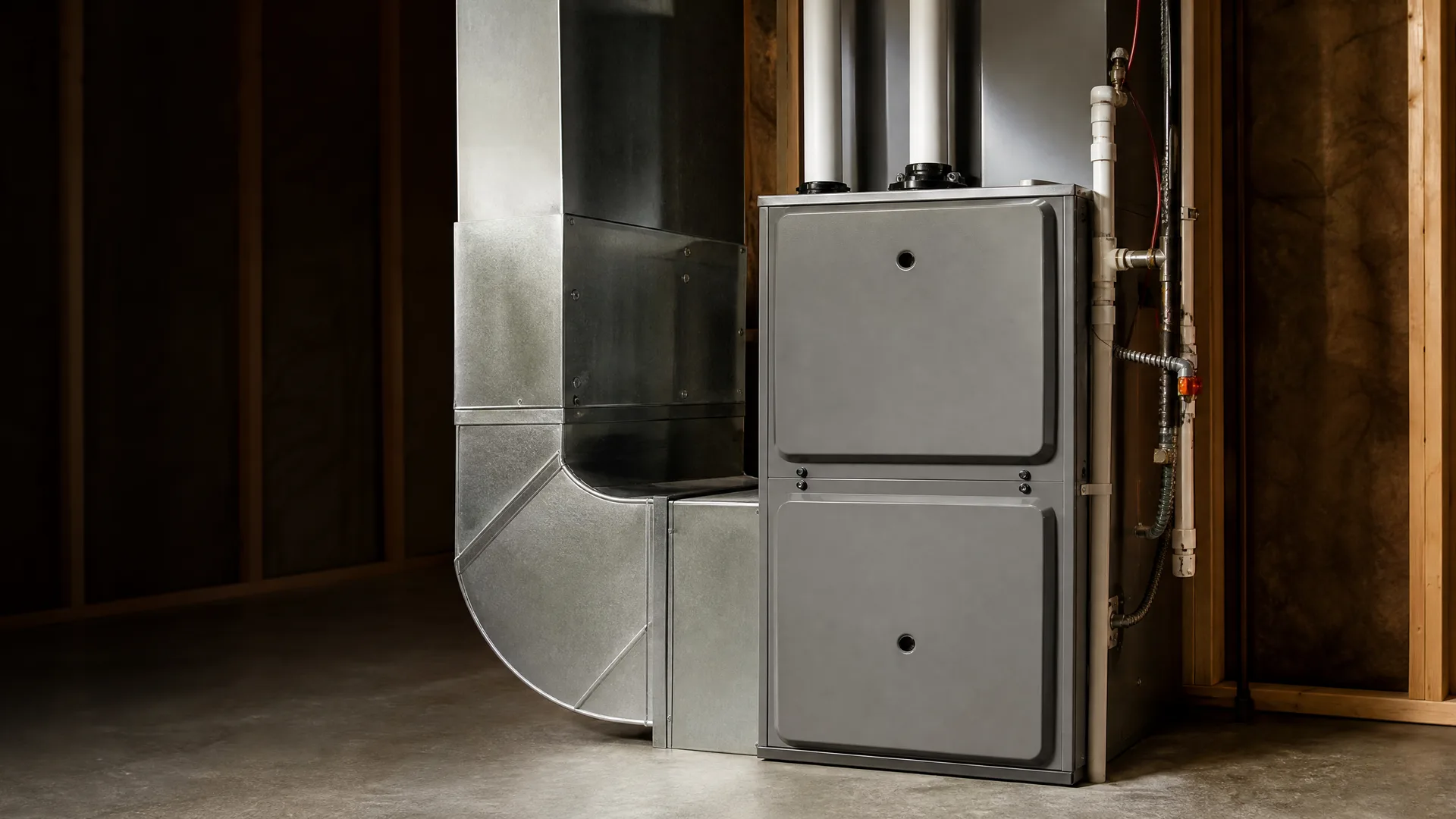
A gray high-efficiency furnace with white PVC vent pipes stands beside sheet-metal ductwork and a water heater in an unfinished basement with concrete walls and wood framing.

After a tune-up

The burners light clean and even, the flame steady blue. Air moves through the ducts at the temperature it should, and the furnace cycles on and off the way it's supposed to. Nothing is straining to keep up, so it runs less to hold the house at the temperature you set.

A beige gas furnace with a metal flue pipe stands in a basement against concrete block walls, beside sheet-metal ductwork, copper and white plastic pipes, and a water heater at right.

Skipping it

A furnace like this can run for years on a cracked igniter or a dirty flame sensor before it finally quits, usually on a night in January when it's needed most. Corrosion builds quietly on old galvanized ductwork and fittings, and a furnace working harder than it should wears out sooner.

What does a Cedar City winter actually ask of your furnace?

  • Winter nights average 20°F

    Nights averaging 20°F mean your furnace runs long stretches just to hold the house steady, not short bursts.

  • Heat runs October through May

    Eight months of heat a year, October through May, is more wear and more chances for a worn part to fail mid-cycle.

  • 66.4% of homes heat with gas

    At 66.4% of homes here, gas heat is the norm in Iron County, and gas furnaces need that yearly check of the burners and venting.

NOAA nClimDiv 1991-2020 · ACS 2020-2024

What a tune-up actually covers

  • A technician pulls the burner assembly and cleans each burner port so the flame lights even instead of lopping to one side.
  • The flame sensor gets wiped down, since a thin film of oxidation on it is the most common reason a furnace shuts off mid-cycle.
  • Amp draw on the inducer motor gets checked against the furnace's rating plate to catch a motor that's starting to fail before it quits.
  • The heat exchanger gets inspected for cracks, because a cracked one can let exhaust mix into the air moving through your ducts.
  • Gas pressure gets measured at the manifold and adjusted if it's drifted outside what the furnace was built to run at.
  • The flue is checked for a clear path outside, since a blocked flue backs exhaust up into the house instead of venting it.

A tune-up is a set order of checks, not a quick look and a sticker on the furnace. It starts at the burners. A technician pulls the assembly and cleans each port, because a port clogged with dust or rust lights crooked, and a crooked flame means the heat exchanger wears unevenly over time. Next comes the flame sensor, a small rod that tells the control board the burners are actually lit. Oxidation builds up on it like tarnish, and once it's coated enough, the board can't get a clean signal and shuts the furnace down mid-cycle, often the first sign anything's wrong. The inducer motor gets its amp draw checked against the number on the furnace's rating plate. A motor pulling more current than it should is usually a bearing on its way out, and catching that now means a repair instead of a no-heat call in January. The heat exchanger gets inspected for hairline cracks, since once exhaust can mix into the air your ducts carry through the house, that furnace needs to come off until it's fixed. Gas pressure gets measured at the manifold, because pressure that's drifted too high or low changes how the burners perform even if the flame still looks fine from the front. Last is the flue, checked for a clear path outside, since a blocked one pushes exhaust back into the house instead of out of it.

A beige high-efficiency furnace in an unfinished basement, with white PVC vent pipes, a yellow gas line, metal ductwork, and exposed wood framing on a concrete floor.
A furnace running clean burns steady and quiet, and holds the house at temperature without laboring through the night.
An older beige furnace with two louvered vent panels stands on a concrete basement floor, connected to galvanized ductwork and a metal flue pipe, with gas piping and flexible conduit on the wall behind.
An old furnace with iron gas pipe and no recent service is the kind that quits on the coldest week of the year.

A furnace that's skipped service tends to show it first at night, when it has to run long and steady against 20°F outside instead of cycling the way it should. You'll hear it in a burner that lights uneven, a clunk or a rattle on startup, or a blower that seems to run longer than it used to just to bring the house up a few degrees. That's wear showing up as a higher gas bill before it shows up as a breakdown. And with eight months of heat a year here, there isn't much of a break between seasons for a weak spot to sit unnoticed. A furnace that quits does it on the coldest night, not a mild one, because that's when it's working hardest and whatever was already failing finally gives out. Pipes can freeze in a house with no heat for even a day in a Cedar City winter. None of that is likely if the furnace got looked at before the season started, with the burners, flame sensor and ignition checked while the weather was still mild enough that a problem found is a problem fixed on your schedule, not the furnace's.

A smiling middle-aged man in a dark green sweater sits at a candlelit table with a glass of red wine and a bowl of salad in the foreground.
A woman in a cream knit sweater reclines on a beige couch with eyes closed and a slight smile, a gray hardcover book resting open on a textured blanket over her lap, with a lit table lamp and a leafy plant in the dim background.

A furnace that sat all summer has had months for dust to settle on the burners and for a mouse or a spider to find its way into the cabinet.

The first cold snap is a bad time to find out, because that's when every furnace in Iron County is trying to light at once and a stuck service call can mean days, not hours.

A smiling woman in a cream knit sweater sits at a marble counter with a glass of red wine, with a dining table, pendant lights, and French doors in the dim background.
A smiling woman with long dark hair in a cream sweater sits in a dimly lit open-plan home interior, with a glass of red wine in the foreground and a dining table, fireplace and shelving behind her.
A woman with long dark hair in a black turtleneck laughs while seated at a light stone counter with a glass of red wine, in a dimly lit interior with a potted plant, framed pictures and a hanging lamp behind her.
A woman in a dark sweater laughs while seated at a white marble counter with a glass of red wine, in a dimly lit open-plan interior with a pendant lamp and dining table behind her.

No calling every shop in Iron County

Finding someone to look at the furnace before the cold sets in usually means a string of calls, explaining the same thing to each one, then sitting with a handful of quotes trying to guess which company actually knows what they're doing. That falls away here. The request goes to one licensed contractor working in Cedar City and the rest of Iron County, someone who services furnaces through these winters every year and knows the burners that light uneven, the flame sensors that get a film on them, the igniters that are on their way out before the first hard freeze. You get one point of contact, not five companies working your phone. With nights already dropping toward 20°F and eight months of heating ahead, the useful move is getting someone qualified looking at the furnace now, before it's the one working through the coldest night of the year with nobody free to come.

Pay for it once in the fall

A scheduled tune-up in Cedar City before the cold sets in costs the same whether the furnace needs much or little. A technician works through the burners, the igniter, the flame sensor and the blower on a morning that suits your schedule, and you're done before the first hard freeze. If nothing's wrong, you've spent an hour confirming the furnace is ready for eight months of steady use. If something is worn, it gets caught while the part is cheap to replace and the furnace is sitting in the driveway, not in a ditch somewhere on a service call.

Pay for it in January instead

Skip the tune-up and the furnace runs on whatever shape it was left in last spring, through nights averaging 20°F with nobody checking the burner flame or the flame sensor in between. If it holds, you've saved the hour. If a part that was already failing gives out during a cold snap, you're calling around for someone who can come out that week, not next month, and paying whatever that takes. The furnace doesn't ask which week is convenient. It fails on the week it's working hardest, and in Cedar City that's usually the coldest one.

An older gas furnace with two louvered front panels stands on a concrete basement floor beside galvanized sheet-metal ductwork, pipes, and a weathered concrete wall.
Before you get your furnace maintenance
A gray high-efficiency furnace in a basement, connected to sheet-metal ductwork on the left and white PVC vent pipes above, with black gas and drain piping and an exposed wood-stud wall with OSB sheathing on the right.
After you get your furnace maintenance
A gray high-efficiency furnace with white PVC vent pipes stands against a concrete basement wall beside sheet-metal ductwork, a small condensate pump on the floor, and exposed wood framing at left.

Working the way it should

A high-efficiency furnace like this vents through PVC pipe, not metal, and the condensate pump at the base keeps pace with what the unit drains all winter. A clean burn and a clear line mean nothing backs up when you need the heat most.

A gray sheet-metal furnace with flue pipe and adjacent ductwork stands against a stone basement wall on a concrete floor, with white PVC and metal pipes running nearby.

Running into trouble

Older furnaces like this often sit on gas lines and fittings that have been there as long as the house has. Stone and block walls around it don't cause a failure, but nobody's checked that gas line or that flex tubing if nobody's been down there since spring.

Winter nights average 20°F

A 20°F night means your thermostat is calling for heat nearly nonstop until morning. That's hours of runtime riding on an igniter and a flame sensor nobody's looked at since last winter. If either one is already failing, a night that cold is when it shows.

NOAA nClimDiv 1991-2020

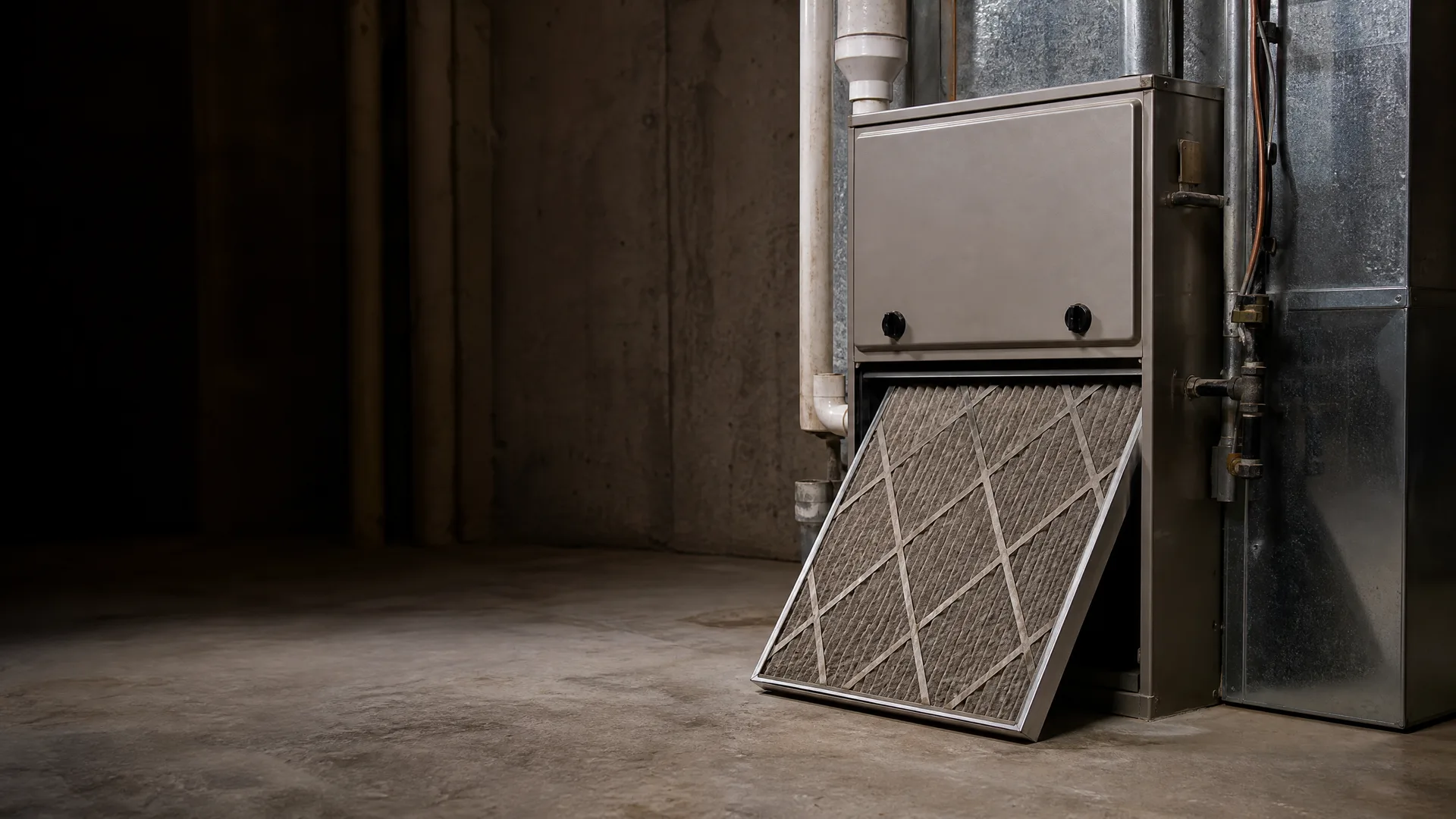
A dirty pleated air filter leans against a furnace with metal ductwork in a dim concrete basement.

You're down in the basement on a Saturday afternoon, the kind of October day in Cedar City where the sun's out but there's already a bite to the air once it drops behind the hill. You pulled the filter to check it before the first cold snap hits, and it slides out grey, matted with a summer's worth of dust. You hold it up to the bare bulb and can't see light through half of it. The furnace sits open next to you, quiet for now. You're doing the math on how long it's been since anyone looked at the burners underneath that filter, not just wiped the dust off the outside.

A closed silver laptop and a light ceramic mug of dark coffee sit on a wooden table, with a window showing a sunset at left and a kitchen counter with a cutting board and potted plant in the background.

Get it looked at before the cold settles in

A tune-up before winter catches what a Cedar City furnace needs caught: dirty burners, a weak flame sensor, a blower that's starting to strain. Done in October, it holds through the months of 20°F nights ahead. Skipped, you're trusting a machine that sat idle all summer to perform on the night you need it most.

Right now that just means finding someone who can do the work, and that's its own chore: calling around, explaining what you need to each one, waiting on quotes, trying to tell which company actually knows furnaces from one that's just free that week. Asking here skips that part. One licensed contractor local to Iron County gets the request, someone who's in furnaces like yours every fall and knows what tends to go first. You still get to decide what happens next. You just don't have to spend your evening finding who to ask.

Interior corner of a living room with a beige upholstered sofa and dark cushion in the foreground, a ceramic vase of leafy branches on a dark side table by a curtained window, a framed picture on the wall, and a wood-surround fireplace at right.
A gray high-efficiency furnace with two white PVC vent pipes stands in an unfinished basement beside galvanized sheet-metal ductwork, with insulated wood-framed walls and piping behind it.

Explain it one time

Tune-up, service, or cleaningFurnace or heatingIron County, UT
Step 1 of 2

What ZIP code is the job in?