









Profile view of a bearded man wearing a dark baseball cap and a dark gray T-shirt against a plain off-white background.

What a furnace tune-up covers before a Utah winter

Tune-up, service, or cleaningFurnace or heatingUtah
Step 1 of 2

What ZIP code is the job in?

What does a furnace tune-up actually cover before winter?

You want to know your furnace will carry you through winter before you're relying on it every day. A tune-up sounds like a vague service until you know what's actually being checked. With gas heat in most Utah homes, the list is specific: a handful of checks that catch the failures that show up once the weather turns cold and the furnace runs for hours at a stretch instead of minutes.

It covers the burner, the igniter, the flame sensor, and the safety controls

A furnace tune-up means a technician checks the parts that cause most winter breakdowns. That includes the burner and igniter, the flame sensor, the blower motor, and the gas pressure, along with the safety switches that shut the furnace down if something runs wrong. The flame sensor gets cleaned since a coated sensor is one of the most common reasons a furnace fires up then shuts itself off a few seconds later. The technician also checks the vent for a blockage, since a blocked vent is a safety issue, not just a performance one. Catching a weak igniter or a dirty sensor in the fall means it gets handled on a mild day, not during a cold snap when you need the heat running.

A gray high-efficiency furnace with two access panels stands in a bare basement corner, connected to sheet-metal ductwork, white PVC vent pipes, and flexible gas and electrical lines.

The flame tells the story

A gas furnace should burn blue, steady, and even across the burner. A yellow or flickering flame points to a combustion problem, and that's worth catching before the furnace runs every day through January. Checking the flame means pulling the burner compartment open and looking at it directly, not guessing from the thermostat or the sound the furnace makes when it kicks on.

A gas furnace with metal ductwork, copper and yellow gas piping stands against a wall in an empty room with a bare concrete floor.

The heat exchanger gets checked

The heat exchanger separates the flame from the air moving through your ducts and into your rooms. A crack in it lets combustion gas mix with that air. It's not something you can see without opening the furnace up, and it's not something most homeowners check on their own. A camera or a visual inspection during a tune-up is usually the only time anyone looks at it all year.

Winter nights average 21°F statewide

At 21°F, your furnace isn't cycling on for a few minutes here and there. It's holding that temperature most of the night, every night, for three months straight. A weak igniter or a dirty burner that barely shows itself in October won't hold up to that kind of steady demand.

NOAA nClimDiv 1991-2020 county normals weighted by homes

Skip the tune-up and the furnace still runs in October. It lights, it blows warm air, nothing seems wrong, because a mild fall doesn't ask much of it.

By January it's running most of the night to hold the house at 21°F, and that's when a cracked heat exchanger or a weak igniter finally shows itself. The same furnace, carrying real weight, fails where it didn't before.

A man in a gray sweater reclines in a brown leather armchair with his eyes closed, beside a wooden side table holding a mug, a folded newspaper and a potted plant, with a bookshelf and sunlit window behind him.
A man with greying hair and a dark sweater leans back on an armchair with his eyes closed and a slight smile, in a living room with a bookshelf, plant, folded newspaper and mug on a wooden table.
A man in a gray fleece jacket sits reclined in a leather chair with his eyes closed, in a room with bookshelves, a table lamp, a window, and a desk holding a folded newspaper and a dark mug.
A bearded man in a gray fleece pullover sits with eyes closed in a brown leather armchair in a living room, with a floor lamp, bookshelf, potted plants, a side table holding newspapers and a dark mug, and a bright window behind him.

What the tech actually checks

  • A tech pulls the burner assembly and cleans each port, since a clogged port is what turns a blue flame yellow.
  • The heat exchanger gets checked with a camera or mirror, looking for the hairline cracks that let combustion gas mix with your air.
  • The flame sensor gets cleaned or swapped, since a coated sensor is the most common reason a furnace shuts itself off mid-cycle.
  • Static pressure gets measured across the blower, which tells the tech if the system is working harder than it should to move air.
  • The igniter gets tested under load, not just looked at, because some fail only once they've been running a while.
  • Gas pressure at the manifold gets set to spec, since too high or too low both shorten the life of the heat exchanger.

Most of a tune-up happens where you can't see it. The burner assembly comes out so each port can be cleaned, because a single clogged port is usually what turns a steady blue flame into a yellow, flickering one. The heat exchanger gets inspected with a camera or a mirror, since the cracks that matter are hairline, not the kind you'd spot by looking at the furnace running. A tech cleans or replaces the flame sensor too. It's a small part, but a coated sensor is the most common reason a furnace fires up and then shuts itself off a few minutes later, which reads to most homeowners as a random, unexplained fault. Static pressure gets measured across the blower, a number that tells the tech whether the system is moving air the way it was designed to or straining against something in the ductwork. The igniter gets tested under an actual load, not just visually checked, because some igniters look fine sitting still and only fail once they've been running steadily for a while. And at the manifold, gas pressure gets set to the furnace's own spec. Pressure that runs too high or too low both wear on the heat exchanger faster than normal, just in different ways. None of this shows up in how the furnace sounds or feels in October. It shows up in January, when the furnace is the only thing standing between you and a cold house.

A beige furnace with two louvered front panels stands on a concrete basement floor beside galvanized ductwork, metal pipes, and a wooden post.
Before you get your furnace maintenance
A gray high-efficiency furnace stands on a concrete basement floor beside galvanized sheet-metal ductwork, with white PVC vent pipes, gas and water lines, and unfinished wood framing behind it.
After you get your furnace maintenance
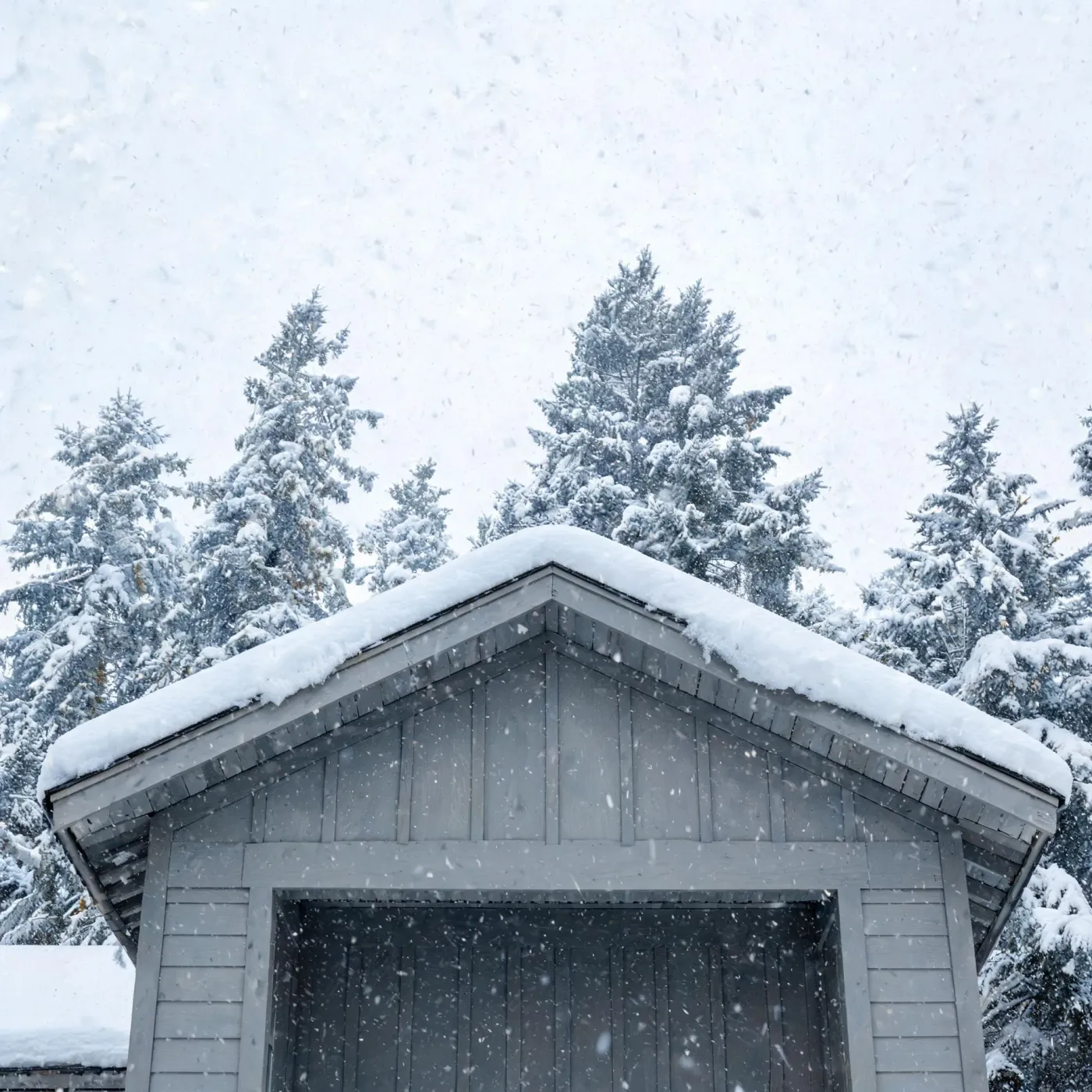
Gable end of a gray wood-clad building with a snow-covered roof and open doorway, backed by snow-laden conifers during falling snow.

Winter nights average 21°F statewide, per NOAA. A furnace that only has to take the edge off a 50-degree afternoon in October is a different job than one holding a house steady against that kind of cold at 2 a.m. in January. That's the stretch where a dirty flame sensor or a cracked heat exchanger stops being a minor flaw and starts being the reason the furnace short-cycles or quits outright, usually on the coldest night it's run all year. Once you send the request, you're not the one tracking down who's available. A local contractor who works on furnaces all winter, not a handful of companies competing for the job, takes it from there.

NOAA nClimDiv 1991-2020 county normals weighted by homes

Stop chasing a furnace pro

You've read what a tune-up checks and why 21 degrees overnight asks more of a furnace than any October afternoon does. The part that's harder to plan for is finding someone to actually do it who knows what that cold does to a furnace here, not just furnaces in general. Submit this and it goes to one local contractor, someone who works on gas furnaces through Utah winters every year and has a good idea which part tends to go first on a system that's been coasting since spring. You're not fielding calls from five different companies trying to figure out who's worth calling back. It's one name, already familiar with what a Utah winter asks of a furnace, looking at yours. That's less work for you right when you'd rather not be doing more of it, with the cold months still ahead and worth getting ahead of now.

A gray high-efficiency furnace in a basement with white PVC vent pipes, sheet-metal ductwork, copper and black piping, a condensate pump, and insulated walls above a concrete floor.

Running the way it should

This is a furnace holding its temperature with no yellow flame, no short cycling, no smell when the blower kicks on. The condensate line drains clear and the ductwork overhead is doing its job quietly. Nothing here is asking for attention, which is what a checked furnace looks like.


A beige residential furnace stands on a concrete basement floor beside galvanized sheet-metal ductwork, a round flue pipe, copper gas piping, and a PVC condensate line, with a wood-paneled wall at right.

Running on borrowed time

This furnace still lights and still blows warm air. But the grime on the cabinet and the age in those gas lines are the kind of thing a tech checks before January, not after. A furnace can look fine in the basement and still be a few weeks from a cracked heat exchanger.

Tuned up vs. skipped before winter

Tuned up

  • The burner ports are clean, so the flame burns blue and even instead of yellow and ragged.
  • The heat exchanger has been checked for hairline cracks before it runs for hours at a stretch.
  • The igniter is tested now, while a tech is already there, instead of failing on a night at 21 degrees.
  • Airflow across the blower is set right, so the furnace isn't working harder than it needs to hold the house steady.
  • A weak part gets found and replaced in October, before it's the only thing standing between the house and January.

Skipped

  • The furnace still lights and blows warm air in October, because a mild fall doesn't ask much of it.
  • A clogged burner port or a yellow flame goes unnoticed until the furnace is running most of the night to hold 21 degrees.
  • A hairline crack in the heat exchanger stays hidden until combustion gas has a chance to mix with the air in the house.
  • A weak igniter that barely shows itself in fall is the same igniter that has to fire every cycle, all night, in January.
  • Whatever is going to fail usually waits until the coldest stretch of the year to do it.
A gray high-efficiency furnace stands on a concrete basement floor beside galvanized sheet-metal ductwork, white PVC vent pipes, copper and black piping, and unfinished wood stud framing.
A furnace like this is doing its job, running quiet with the ductwork and gas lines feeding it the way they're supposed to.
A gray furnace with two access panels stands on a concrete basement floor beside sheet-metal ductwork, with pipes, flexible conduit and an electrical box on the concrete wall to the left.
Same kind of furnace, but nobody's looked at what's behind those access panels since it was installed.

A furnace that skips its tune-up usually seems fine right up until it doesn't. The parts that fail tend to wait for the night they're asked to work hardest, not some mild evening in October. That's the part a lot of homeowners don't plan for. A cracked heat exchanger is a straightforward fix when it's caught early, and a safety problem once it's running for hours at a stretch in January. A weak igniter or a dirty flame sensor can take the whole furnace down overnight, and nobody notices until the house has already cooled off. None of this shows up as a bigger bill right away either. A furnace short cycling or pulling air through a clogged filter works harder to put out the same heat, and that shows up on what you pay even with power as cheap as it is here. Even the condensate line, which drains fine in the fall, can back up once the furnace is running most of the night, and that backup reaches parts of the furnace that were never under any strain before winter.

What waiting costs you

  • A cracked heat exchanger found in a tune-up is a repair now, but missed until January it can mean a furnace shut off mid-winter for your family's safety.
  • An igniter weak enough to fail will usually do it on the coldest night, not the mild one, because that's when the furnace runs longest.
  • A dirty flame sensor left alone can shut the furnace down overnight, leaving the house to cool toward freezing before anyone wakes to it.
  • Short cycling from a bad part means your gas furnace works harder for less heat, and you pay for that even though power here is cheap.
  • A blower pulling air through a dirty filter or restricted duct strains components that were never a problem when the furnace barely ran in October.
  • A condensate line that drains clear in fall can back up once it's running for hours a night, and that backup reaches the furnace itself.
A gray-haired man in a blue quarter-zip sweater sits in an armchair with his eyes closed, beside a large window with bare trees outside and a potted plant and lamp nearby.
A woman in a cream knit sweater sits in an armchair with her eyes closed and head tilted back, beside a window showing orange autumn foliage and a wooden side table with a mug.

A tune-up before winter comes down to this: clean burner ports, a heat exchanger checked for cracks, an igniter tested while someone's already in front of it. Those are the things a mild October hides and a cold January exposes. You've seen what that cold does to a furnace that skipped the check and what it looks like when nothing was missed. The furnace sitting in your house has a model number and a set of parts that fail in predictable ways, and a tech who works on furnaces around Utah all winter has seen most of those failures before they happen. One licensed contractor, local to you, gets your request, not a handful of companies working the same lead. You won't be the one tracking down who's available and who isn't. That part is off your plate once you send it.

A curving paver walkway runs alongside a house with beige lap siding and a white-trimmed window, bordered by low shrubs, grassy plants, and trees in sunlight.
A dark-framed casement window with divided upper panes set in a stucco wall beside a stone-clad section, with hydrangeas, hostas and trimmed shrubs in a mulched bed above a lawn.
White horizontal lap siding wall with a single six-pane double-hung window, above a mulched bed of hydrangea shrubs with browning blooms, bordered by mown grass in low sunlight.
Interior corner with tan plaster walls, a potted olive tree in a large terracotta urn beside a floor-to-ceiling window, and a wooden bench with a beige cushion on a herringbone brick floor partly covered by a woven jute rug.
A wooden bench beneath a window holds a green linen cushion and a fringed cream throw, with a woven basket stored underneath on a wood plank floor.

Send one request and you're done looking

Your request stays with one local pro.

Send my request

There's no charge for the request.







