How a furnace heats your home
- A furnace heats in cycles, not one steady burn, so the thermostat tells it when to fire and when to rest.
- The igniter heats up first, the gas valve opens, and the burners light off that heat instead of a standing pilot.
- Once the heat exchanger warms up, the blower motor kicks on to push air across it and out through your ducts.
- A flame sensor checks that the burners actually lit, and shuts the gas off within seconds if they didn't.
- The heat exchanger is what separates the flame from the air moving through your house, and it's the part that fails when a furnace dies for good.
- Dust and corrosion build up on these parts slowly, year after year, long before the furnace stops working.
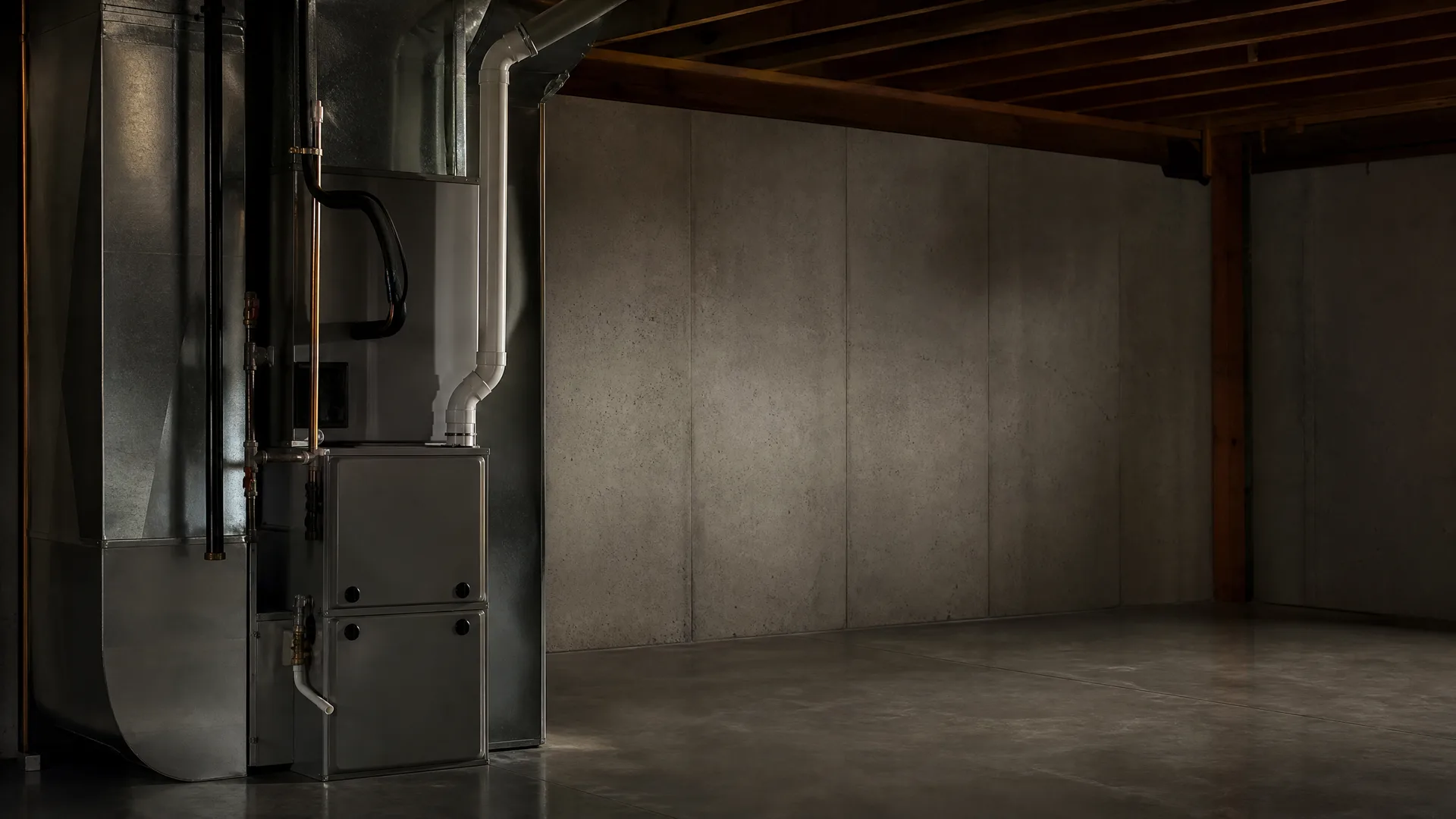
Your furnace isn't running constantly all winter. It cycles on when the thermostat calls for heat and shuts off once your house reaches that temperature, then waits for the next call. Each time it fires, the igniter heats up first. Once it's hot enough, the gas valve opens and the burners light directly off that heat. There's no standing pilot sitting lit all day waiting for this. The flame sensor is watching that whole process, and if it doesn't detect a flame within a few seconds of the gas valve opening, it shuts the gas off before the house fills with unburned gas. Assuming the burners did light, the heat exchanger starts warming up, and once it reaches temperature, the blower motor switches on to push air across it and send warm air out through your ducts. That heat exchanger is doing the one job that matters most: keeping the flame and combustion gases completely separate from the air moving through your home. Every part in this sequence collects dust and a little corrosion with age, and that buildup happens slowly, over years, without you noticing it. The furnace keeps firing through all of it until the heat exchanger itself finally cracks or corrodes through, which is usually what ends a furnace's life for good rather than any single part failing all at once.