Nine months of heat
Furnaces in Carbon County run from September through May. That's most of the year the burner and blower are working, not just a few cold snaps.
Takes about a minute. No obligation.
Furnaces in Carbon County run from September through May. That's most of the year the burner and blower are working, not just a few cold snaps.
Overnight lows average 15°F through December, January and February, so the furnace is cycling on hard, cold nights for months straight. A furnace that runs this much shows wear earlier than one that only kicks on now and then.
Gas heats 82.1% of homes in Carbon County.
A maintenance visit on a gas furnace has to check the burner and venting, not just swap a filter.



Furnaces in Carbon County start running in September. August is the month to get one looked at, before it's carrying the house through the nine months it'll run this year. A furnace that sits idle all summer can be slow to prove itself when it's finally asked to run hard, and September is when that happens here. Checking the burner, the igniter and the venting while the weather is still warm catches wear before the furnace has to work through its first cold stretch. Once heat season starts here it runs clear through May, so whatever gets missed in August has months to turn into a bigger repair.
Get the furnace checked before September. Once the cold sets in here it doesn't let up until May, and a part that's starting to go will show it fast on a 15 degree night. A look now catches that while there's still time to fix it without the house going cold.
Find a contractorIf the furnace came with the house, a yearly check is how it gets looked at before anything shows up on its own. Half the homes in Carbon County went up in 1972 or earlier, so a lot of furnaces here are old enough that nobody's checked them since they were new. A yearly visit puts eyes on the burner and the igniter every year, not just the year something finally quits.
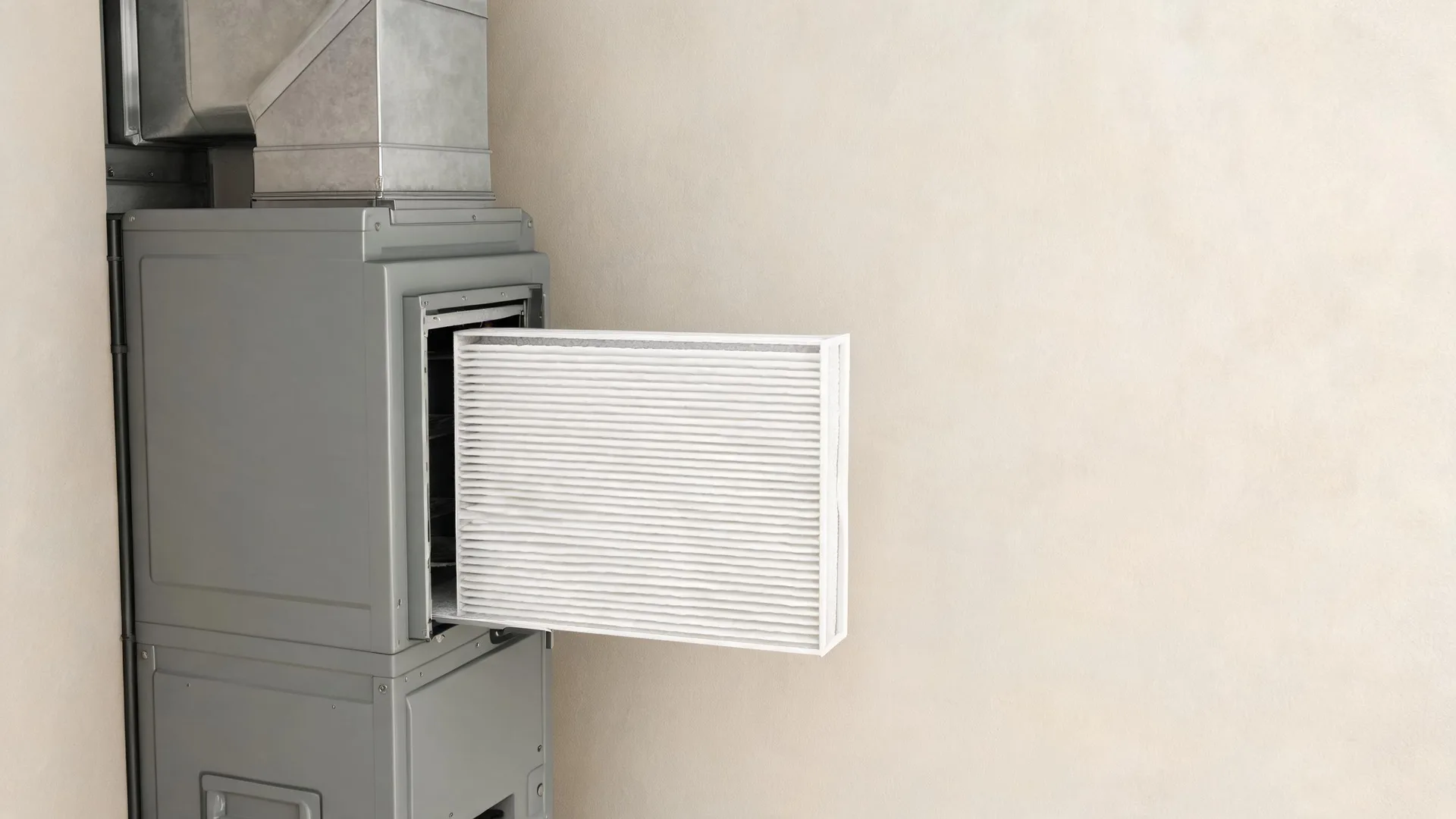
A dirty filter chokes airflow across the heat exchanger, and that's the one job that's yours between visits. Hold it up to a light. If light doesn't pass through, swap it. A furnace starved for air runs hotter than it should and shuts itself down more often than it needs to.
The burner, the igniter and the flame sensor need a trained eye, not a homeowner with a screwdriver. Opening the cabinet to look is fine. Cleaning or adjusting anything inside it isn't. If the flame looks yellow instead of blue, or the furnace short cycles, that's what the next visit is for.
A tune-up gets inside parts of the furnace a homeowner never sees running. The flame sensor is a small rod sitting in the burner flame, and over time it builds up a coating that keeps it from sensing the flame at all. When that happens the furnace shuts off a few seconds after starting, over and over, and most people assume the whole unit is failing when it just needs that rod cleaned. The heat exchanger gets checked for cracks, which don't show themselves until they're letting exhaust mix into the air the blower pushes through the house. The igniter gets tested under load, because one that's cracked or weakening can still glow and still fail to light the burner. None of this shows up by looking at the furnace from across the room, and none of it waits for a convenient time to go wrong.
A tune-up also covers the parts that move air and carry exhaust, not just the ones that make fire. The blower motor gets checked for bearing wear, since a motor starting to go will run hot or pull harder than it should before it ever stops outright. The venting gets inspected for a solid connection all the way out, because a joint that's worked loose lets exhaust spill into the house instead of outside it. Gas pressure gets measured at the valve, since pressure that's too high or too low throws off the burn and can scorch the heat exchanger from the inside. The blower wheel itself gets looked at for dust buildup, which throws it out of balance and makes it work harder to move the same air. Each of these fails quietly, and a furnace can run for a while on a problem like this before it finally shows up as a breakdown.