

An unfinished basement interior showing a gray furnace unit beneath a bare incandescent bulb, surrounded by exposed joists, concrete walls, cardboard boxes, and utility pipes.

Furnace Maintenance in Nephi, UT

Tell us about the job

Takes about a minute. No obligation.

Tune-up, service, or cleaningFurnace or heatingJuab County, UT
Step 1 of 2

What ZIP code is the job in?

Your furnace in Nephi runs about eight months a year, October through May. That's most of the calendar spent heating a house against overnight lows that average 20°F in December and January. Parts don't get much of a rest before the next stretch of cold asks something of them again. Juab County has had dozens of winter storms over the past decade, heavy snow and ice that push a furnace to run longer and harder than a mild day ever would. A worn igniter or a weak flame sensor tends to show itself early in the season, right when you need the heat most.

74.2% of homes in Juab County heat with gas.

A gas furnace needs its burner, venting and safety controls checked, not just a new filter.

One checkup before October covers the stretch to May

Heat runs October through May
Winter nights average 20°F
72 winter storms from 2015 to 2024
A newer furnace still needs a yearly checkHalf the homes in Juab County were built in 1982 or later, and a newer furnace still deserves a yearly check.

September is the month to get this done in Nephi. Heat starts up in October and once it does, the furnace doesn't get a break again until May. A problem that shows up in the first cold week is one that was already there in September, just not running yet. Checking the burner and igniter before that first long stretch means they're caught sitting still, not mid-cycle on the coldest night of the year.

Get it checked before the furnace runs eight months straight

Eight months of heat, October through May, doesn't leave much of a break between one season and the next. Get the furnace looked at before that stretch starts.

Find a contractor
A gray high-efficiency gas furnace installed in an unfinished basement, surrounded by gas lines, a condensate drain, and sheet-metal ductwork.

What you can watch between checkups

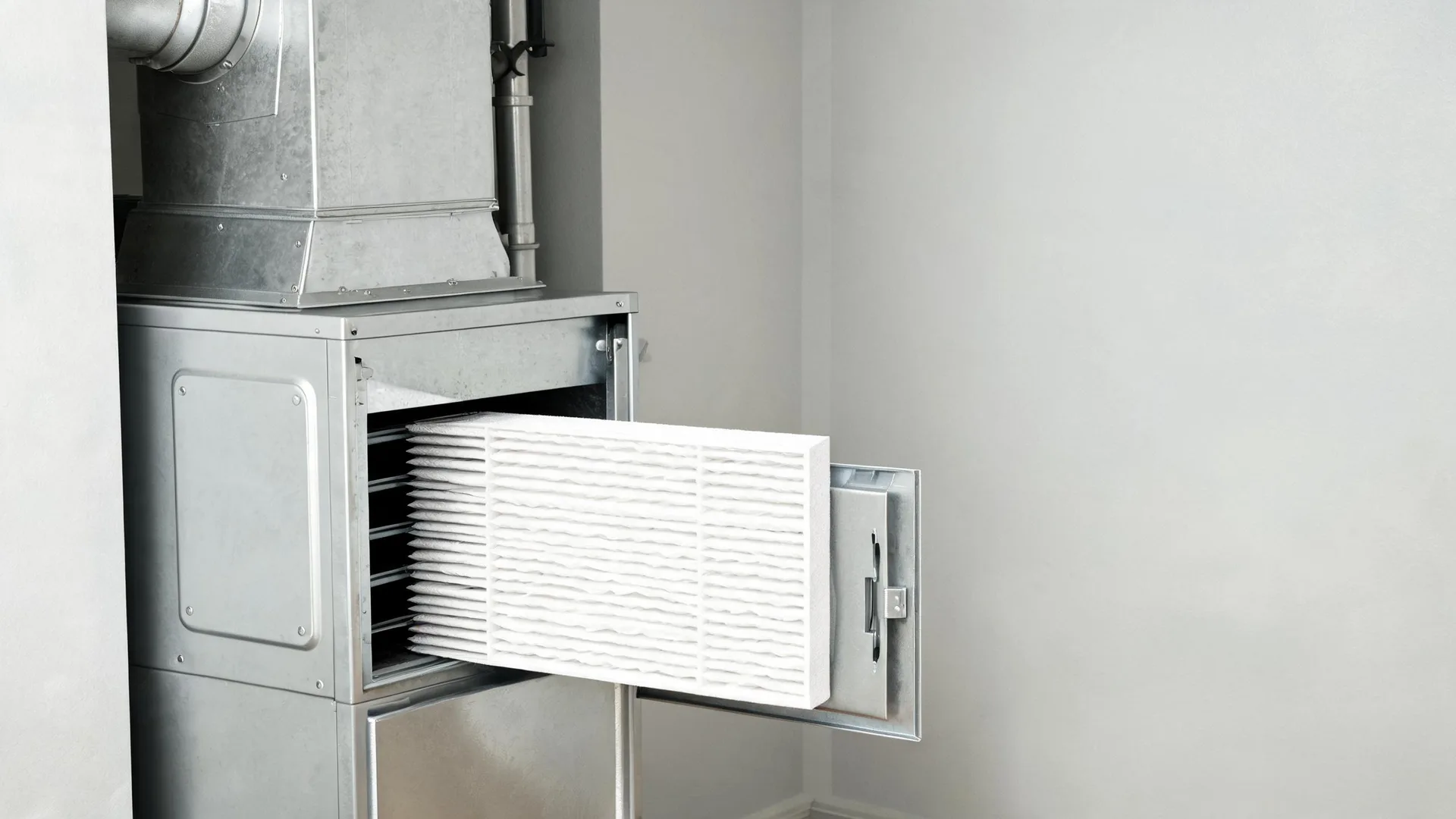
Between visits, the filter is the one thing worth checking yourself. A dirty filter chokes airflow. A furnace starved for air runs hotter and longer than it should. Pull it out, hold it up to a light. If you can't see through it, swap it. Keep an eye on the vent hood outside too. If snow piles up against it, or a bird builds a nest in it, the furnace can't breathe right. Walk past the return air grilles in the house and make sure nothing is stacked in front of them, boxes, furniture, rugs. Inside, listen for anything new. A rattle. A screech on startup. A burning smell that doesn't fade after the first few minutes running. None of that is something to fix yourself. It's something to mention at the next check, or call in sooner if it's loud or it doesn't quit.

A furnace that hesitates before it lights

If the burner clicks and clicks before it finally catches, or doesn't catch at all, the igniter or the flame sensor is wearing out. That part doesn't fail on a mild afternoon. It fails on the coldest night, mid-cycle, when the furnace has been asked to work hardest.
Short cycling is a safety switch doing its job

A furnace that fires up, runs briefly, then shuts off and starts again is overheating and tripping its limit switch. Usually that traces back to a dirty flame sensor, a blocked vent, or airflow that's choked somewhere. Worth catching before the part doing the straining actually gives out.

A quick visit is a filter swap and a glance at the flame through the sight glass. A thorough one opens the cabinet. The burners come out and get brushed clean, because a burner caked with dust or rust burns uneven and runs hotter than it should. The flame sensor gets pulled and polished, not just looked at, since a film builds up on it that you won't see from across the room. Amp draw on the inducer motor gets checked against what it should be, not just whether it spins. The heat exchanger gets inspected for cracks, because a crack there is a safety issue, not a performance one. If the visit takes less time than it takes to eat lunch, most of that list got skipped.

A tune-up also means pulling the pressure switch tubing and checking it for kinks or water sitting in the line, since a blocked tube reads as a pressure fault and stops the furnace from firing at all. The gas valve gets checked for a steady inlet and outlet pressure, not just whether the burners light, because a valve running rich or lean wears the heat exchanger faster than normal use would. Belts aren't part of this, most furnace blowers drive the fan directly, but the blower wheel itself gets looked at for dust buildup on the blades, which throws it off balance and strains the motor bearing over time. The condensate line, if the furnace has one, gets flushed so it isn't sitting ready to clog the first cold snap it's asked to drain hard. Thermostat response gets tested too, calling for heat and watching how long the burners take to answer, since a slow response can point back to the same ignition parts already on the list.