Ten months of heat a year
Furnaces in Heber run from September through June, and overnight lows average 14°F through December, January and February. That's most of the year asking a lot of the same igniter, blower motor and heat exchanger.
Takes about a minute. No obligation.
Furnaces in Heber run from September through June, and overnight lows average 14°F through December, January and February. That's most of the year asking a lot of the same igniter, blower motor and heat exchanger.
Wasatch County saw 104 winter storms between 2015 and 2024, heavy snow and ice included. A furnace that's been quietly wearing down tends to quit on the coldest night, not the mildest one.
Half the homes in Wasatch County were built in 2005 or later.
A furnace that age still has years in it, and a yearly check is what keeps it that way.


Gas heats 79.4% of homes in Wasatch County, more than any other fuel. A gas furnace adds a burner and a flue to the list of things that can go wrong, on top of the igniter and blower motor. Maintenance on a gas furnace means checking the burner flame, the venting, and the safety controls that shut the system down if something's off, not just swapping the filter. Electricity heats another 13.9% of homes here, and those furnaces skip the gas checks but still need the blower and heat exchanger looked at. Either way, a yearly check catches what's wearing thin before the first cold night finds it.
Heat starts running in September and doesn't let up until June. Get the furnace checked before then, while a worn igniter or a weak blower motor is still an easy fix instead of a cold-night emergency.
Find a contractorSkip a year and nothing happens right away. A furnace doesn't fail on a schedule, it fails when the one worn part finally gives out, and most of what wears is slow enough to hide. Dust builds on the blower wheel a little at a time. A hot surface igniter gets a hairline crack and still glows for months before it doesn't. The furnace keeps answering the thermostat, so there's nothing telling you to look. What maintenance actually catches is the gap between still running and running right, and that gap is where a cracked heat exchanger or a dying blower motor spends most of its life before anyone notices.
A heat exchanger can crack in a spot the flame never reaches and the furnace will keep running like nothing's wrong. Nobody sees it without pulling the burner assembly and looking with a light and a mirror, sometimes a camera. Left alone, it's how exhaust ends up somewhere it shouldn't.
A clean gas flame burns steady and blue. Let the burner get dirty or the gas mixture drift and the flame turns yellow or starts lifting off the burner, a sign of incomplete combustion long before the furnace fails outright. Most homeowners never lift the panel to look, so that flame just keeps burning wrong all season.
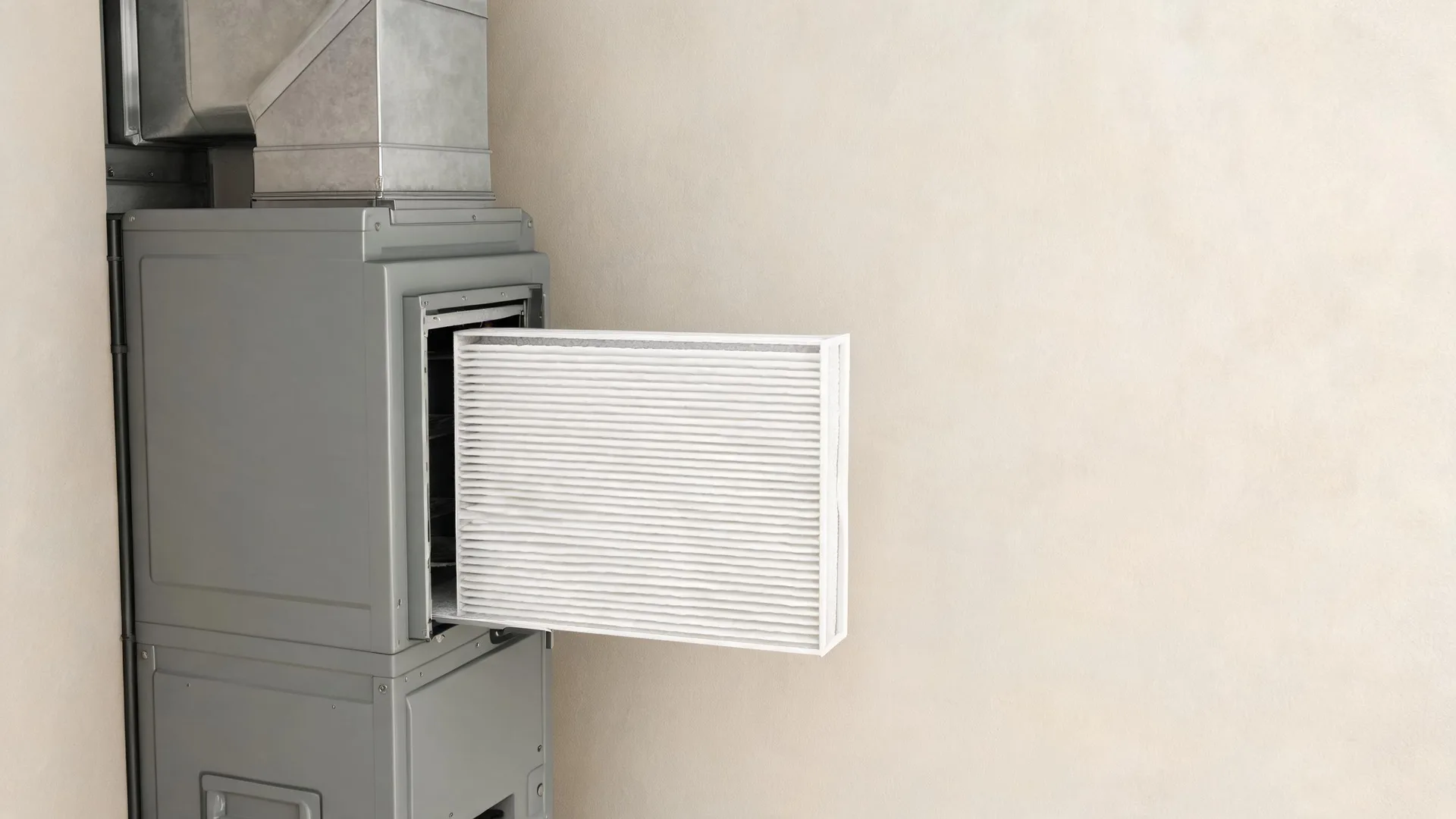
Between visits, the filter is the one thing worth checking yourself. A dirty filter chokes airflow, and the furnace works harder to push air through it, which stresses the blower motor and can cause the heat exchanger to run hotter than it should. Look at it in good light. If you can't see through it, change it. Keep the area around the furnace clear too, nothing stacked against the cabinet or blocking the return air grille. If you smell gas, hear a new rattle or banging, or see the burner flame flickering yellow instead of steady blue, that's not a wait-and-see. Shut it down and get it looked at.
A tune-up starts before the panel even comes off. A tech checks the thermostat calls for heat properly, then pulls the burner assembly to inspect the flame and clean off any rust or dust that's built up since last year. The igniter gets tested, not just glanced at, since a hot surface igniter weakens slowly and can pass a quick look while still being close to failing. The blower motor and wheel get checked for wear and cleaned if dust has built up on the blades, because a dirty blower wheel throws off airflow even when the motor itself is fine. The heat exchanger gets inspected for cracks or corrosion, since that's the one part that turns a furnace from safe to dangerous if it fails. Gas pressure gets checked against the furnace's rating, and the venting gets looked at to make sure exhaust is actually leaving the house instead of backing up. Safety controls, the ones that shut the furnace down if something runs too hot or the flame goes out, get tested too, not assumed to work because they worked last year.