





Illuminated timber-frame and stone houses along a residential street at night, with snow-capped mountains visible in the background.

Furnace Maintenance in Circleville, UT

Tell us about the job

Takes about a minute. No obligation.

Tune-up, service, or cleaningFurnace or heatingPiute County, UT
Step 1 of 2

What ZIP code is the job in?

Your furnace in Circleville runs about ten months a year, September through June. That's most of the year on, not just a cold snap in January. Overnight lows average 16°F across December, January and February, so when it's running, it's working to cover a real gap between inside and outside. Parts that would last longer with lighter use wear down faster under that kind of load. A cracked igniter or a weak flame sensor tends to show up right when the season starts, not in the middle of summer when nobody's watching.

Furnaces in Piute County start working hard in September, the first month of the season.

Have yours checked in August, before it has to carry ten months of heat.

44.7% of homes here run on gas, and that means a burner to check, not just a filter

44.7% of homes heat with gas
Heat runs September through June
Winter nights average 16°F
One checkup covers itHalf the homes here were built in 1976 or earlier, half later. Either way, once a year covers it.

A furnace that's skipping or struggling to light still runs, just longer than it should to make the same heat. That extra runtime shows up on the gas bill, and gas here isn't cheap. Utah homes paid $12.55 per million Btu for natural gas in 2024. Spread that waste across a season this long and it adds up faster than it would somewhere the furnace only runs a few weeks a year. A tune-up catches the igniter or flame sensor before it starts costing you for heat you're not getting.

Have it looked at before the season starts

Get the furnace checked before September, before it has to carry ten months of heat through a winter that averages 16°F overnight. A worn igniter or flame sensor is easier to catch now than after the season has already started.

Find a contractor
A man in a dark shirt and brown pants carries a worn canvas tool bag up concrete steps toward a gray-blue front door of a house with horizontal siding and a potted shrub.
A gray high-efficiency gas furnace installed in an unfinished basement, surrounded by gas lines, a condensate drain, and sheet-metal ductwork.

What gets checked that you'd never spot yourself

A burner can look fine and still burn unevenly, the flame leaning or forking instead of sitting steady and blue. A technician pulls the panel and checks the heat exchanger for hairline cracks. They check the flue for a solid draft pulling exhaust out rather than letting it linger. They check the pressure switch, and they check the wiring at the control board, because a connection can work loose after months of the furnace cycling on and off. None of that shows up as a smell or a sound from the living room. The furnace just keeps running, less safely or less efficiently than it should, until something finally gives out partway through the season.

Small problems don't stay small

A furnace that skips maintenance doesn't fail all at once. A dirty flame sensor starts by making the burner shut off a few seconds early, then a few minutes early, then not light at all. Dust on a blower wheel throws it off balance, and the motor bearing wears faster carrying that imbalance every time it spins. By the time you notice, the small fix has become a bigger one.
The furnace can't tell you what's wrong

You find out from the house, not the furnace. Rooms that used to heat evenly start running cold in the corners. The system cycles more often, or runs longer each time, because a clogged burner or a failing igniter makes it work harder for the same heat. None of that sounds like a warning. It just keeps going that way until something finally gives out.

Between visits, the filter is the one thing worth checking yourself. A dirty filter chokes airflow, and a furnace starved for air runs hotter and longer to push the same heat through the house. Hold it up to a light. If you can't see light through it, swap it. Keep the area around the furnace clear too, nothing stacked against the cabinet, no boxes blocking the return. It needs open air in and open air out to breathe. Past that, leave the cabinet closed. The burner, the flame sensor, the pressure switch are not something to open up between checkups.

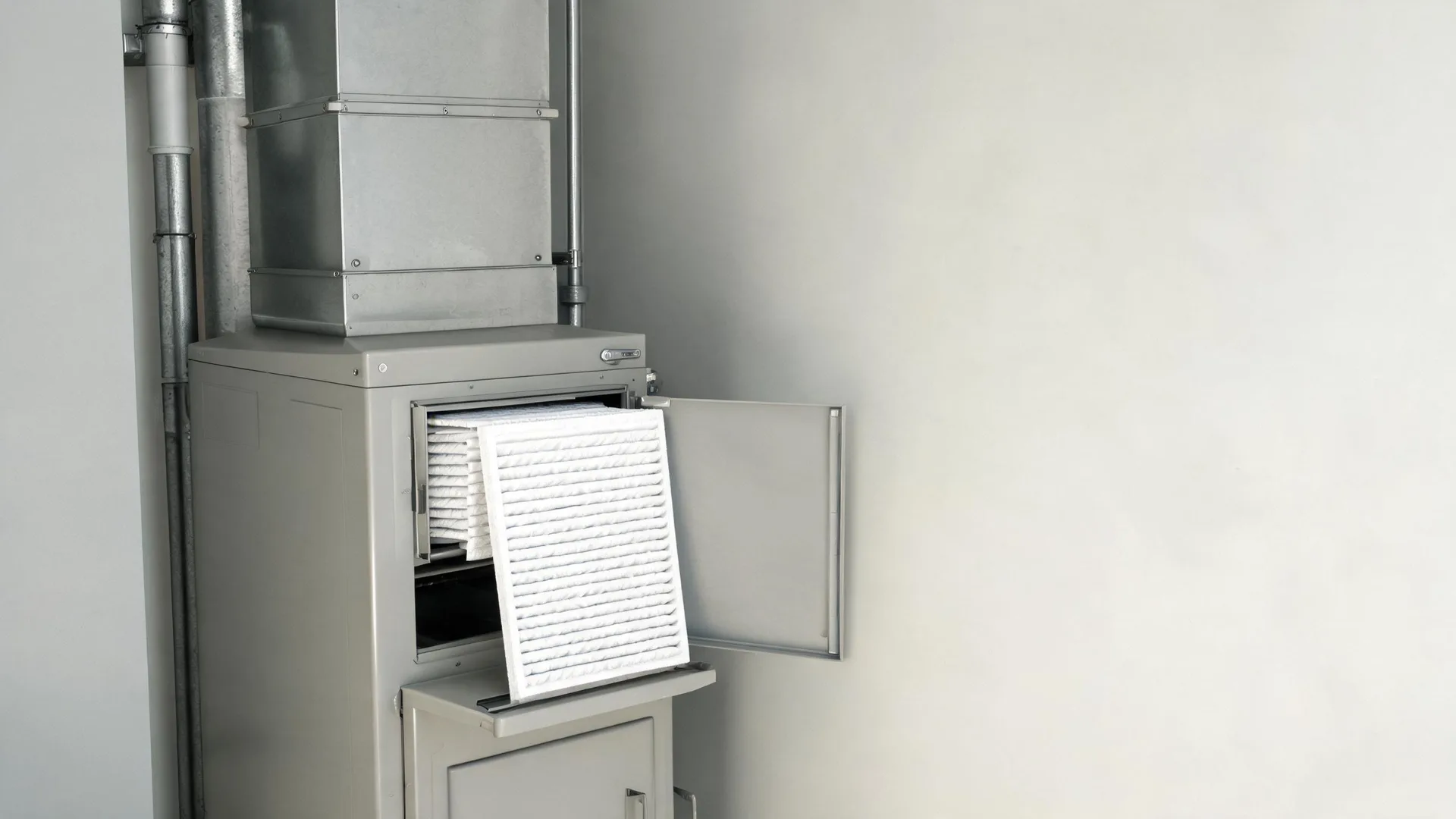
A tune-up starts with the burner, not the filter. A technician pulls it and cleans off the rust and scale that build up over a season, then checks that the flame sits even across every port instead of leaning or forking to one side. They test the igniter for a weak glow and the flame sensor for a coating of residue, both common reasons a furnace tries to light and gives up. The blower wheel gets checked for dust buildup, since even a light coating throws it off balance and strains the motor bearing. They check the capacitor that gets the blower motor spinning, since a weak one makes the motor struggle to start. Last, they check the thermostat is calling for heat correctly and the furnace is answering the way it should.