Eight months of work a year
Furnaces in Beaver County run from October through May, with overnight lows averaging 19°F through December, January and February. That is a long stretch of cold for a furnace to answer every night.
Takes about a minute. No obligation.
Furnaces in Beaver County run from October through May, with overnight lows averaging 19°F through December, January and February. That is a long stretch of cold for a furnace to answer every night.
Beaver County saw 35 winter storms between 2015 and 2024, the kind with heavy snow, ice and blizzard conditions. A furnace that's already worn has no easy nights to recover on before the next one hits.
Gas heats 60.4% of homes in Beaver County, more than any other fuel.
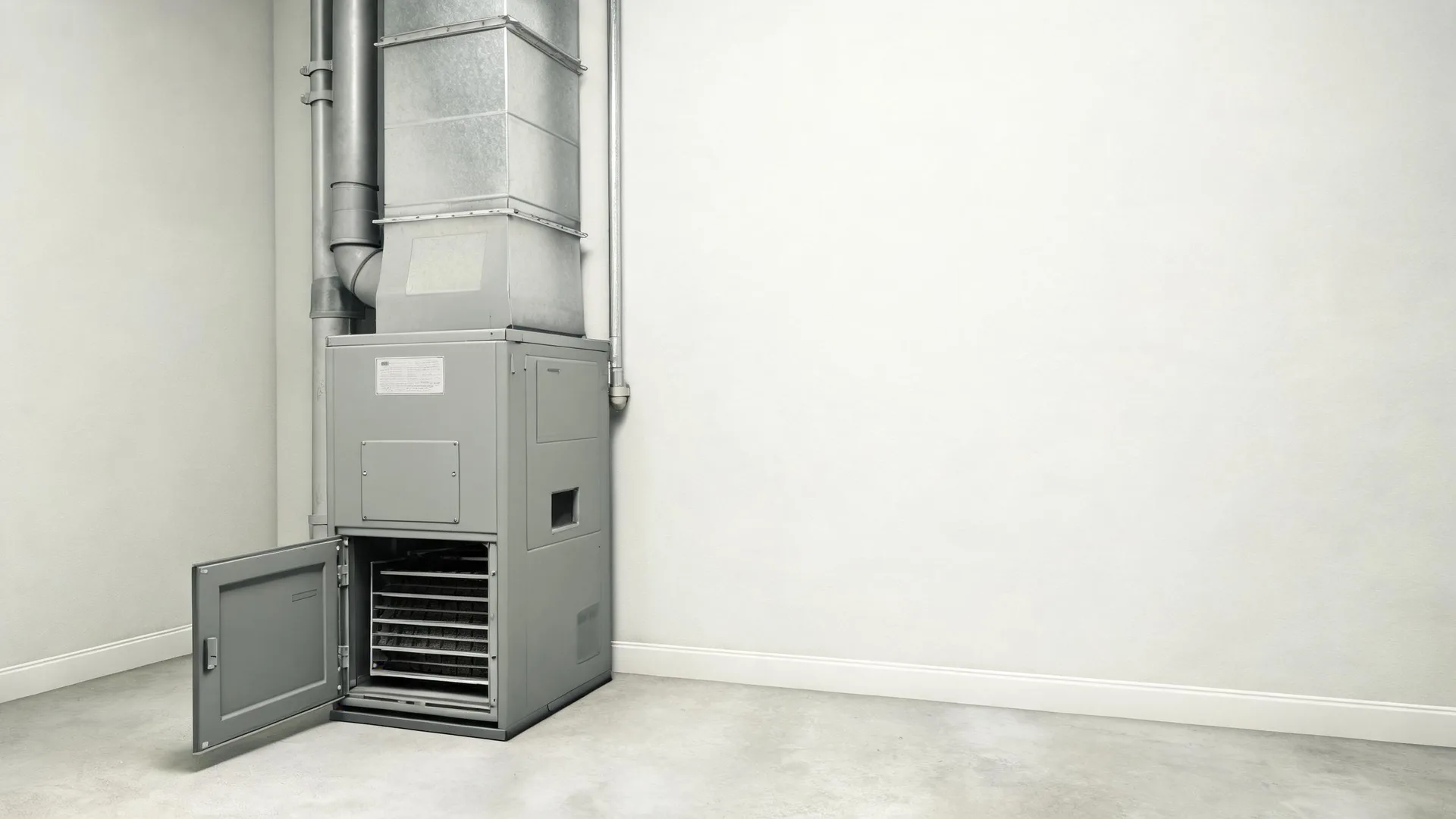
A gas furnace needs its burner, venting and safety controls checked every year, not just a new filter.



Furnaces here start working for real in October. September is when one is still sitting idle, which makes it the month to have it looked at. Once the cold sets in, this furnace runs for eight months straight, October through May, with no real break to catch a problem partway through. A weak igniter or a cracked heat exchanger shows up in the first hard week of cold, not later in the season. Checking it in September means finding that out before the furnace has to prove it.
Gas costs what it costs, whether the furnace burns it cleanly or not. A burner that's out of tune wastes some of that on every cycle. One visit a year is what it takes to check the burner and venting before the cold settles in, and there isn't a second one built into the season. The visit before winter is the one that counts.
Find a contractor
Get the furnace looked at before October, not after. Once it's running every night through May, there's no slow week to catch a weak igniter or a cracked heat exchanger before it has to perform. A technician can check those parts while the furnace is still sitting idle, which is the only time checking them is easy.
A furnace rarely fails without warning. It short cycles, running a few minutes and shutting off before the room warms. It struggles to light, clicking several times before the burner catches. The blower runs but the air coming out feels barely warm. Any of these means something inside is already failing, even though the furnace is still technically working.
A weak flame sensor or a cracked heat exchanger doesn't always show up as cold air. Sometimes the only sign is a burner flame that burns yellow instead of blue, or a faint odor when the furnace kicks on. Those point to combustion problems that a visual check from across the room won't catch, and they're the reason a technician opens the cabinet instead of just listening to it run.
A tune-up gets inside places a homeowner never opens. The burner comes off its mounts so the technician can see the flame pattern up close, not just glance at color from across the room. The heat exchanger gets checked for hairline cracks that don't show smoke or smell but let combustion gases mix with the air the blower pushes through the house. The flue and venting get checked for a blockage that would send those gases back inside instead of up and out. The flame sensor gets cleaned of the oxidation that builds on it quietly, the kind that makes a furnace shut off seconds after it lights, long before the owner would call that a failure. None of this shows up from the thermostat. The furnace can sound fine and still be doing one of these badly.
A tune-up starts before anything gets touched. The technician pulls the furnace's own history first, checking the igniter's resistance and the inducer motor for noise or wobble, since a motor on its way out usually hums or hesitates before it quits outright. The gas pressure gets measured at the manifold, because too much or too little changes how clean the burner flame actually runs. Belts aren't part of this on most furnaces built in the last few decades, the blower motor drives the wheel directly, so that check is about bearings, not tension. Electrical connections get snugged down, since a loose wire at the control board causes the same short cycling as a bad flame sensor and the only way to tell them apart is to look. The filter gets checked last, not first, because a dirty filter can mask or mimic almost everything above it.