







When to replace a furnace in Tooele, UT

Let a pro reach out

A furnace that's failing in a Tooele winter doesn't leave much room for waiting around. When nights are cold and a system is on its last legs, you need someone who can look at it and tell you straight whether it's worth fixing or time to put in a new one. Send the form and the search is over. You're matched with one licensed, local contractor, not a handful of companies all calling at once. Someone who works on furnaces in this county all winter, who's seen what usually gives out first in homes around here and what a straight replacement looks like when it comes to that. No more sorting through listings or guessing who's legitimate. That part is handled. You get to go back to your day while someone who knows this equipment takes it from here.

When should I replace my furnace instead of repairing it?

Your furnace just quit, or the repairman gave you a number that made you wince, and now you're trying to figure out if this is the year you replace it instead of patching it again. Winters in Tooele don't give you much room to think it over slowly. You want to know if fixing it one more time makes sense, or if you're throwing money at a furnace that's already on its way out.

Replace it once the furnace is past 15 years old and needs a repair, not before

A gas furnace that's 15 years or older and breaking down has usually earned its retirement. The heat exchanger and other parts wear out together, so one failure this year often means another next winter, and each repair bill is money that doesn't go toward a new system. A furnace under 10 years old is usually worth fixing almost every time, especially if it's something small like an igniter or a flame sensor. Between those two ages, the question is what broke. A cracked heat exchanger or a failed blower motor on an older unit costs enough to repair that putting that money into a new furnace instead makes more sense, particularly with Tooele winters cold enough that you don't want to gamble on a unit that keeps failing.

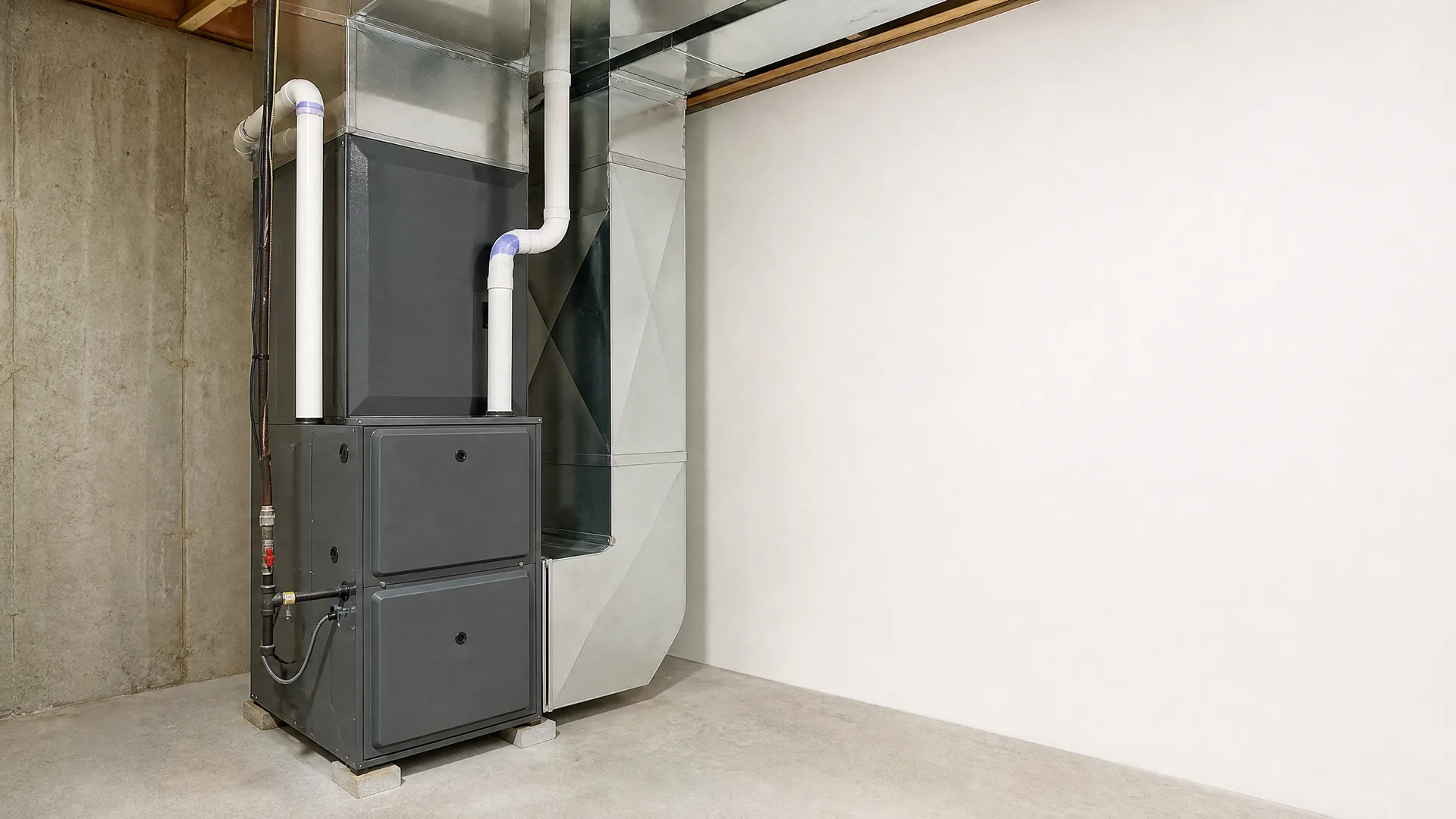
A dark gray high-efficiency furnace with white PVC vent pipes stands against a concrete basement wall, connected to sheet-metal ductwork running along the ceiling joists.

How old is too old

Most gas furnaces last 15 to 20 years. Past that range, the heat exchanger has had thousands of heating cycles behind it, and that's the part that matters most. A cracked heat exchanger can let combustion gas into your air supply, and once a furnace reaches that age, a contractor will usually recommend replacement over repair even if the furnace is still running. Check the age against when your system was put in, not when the house was built.

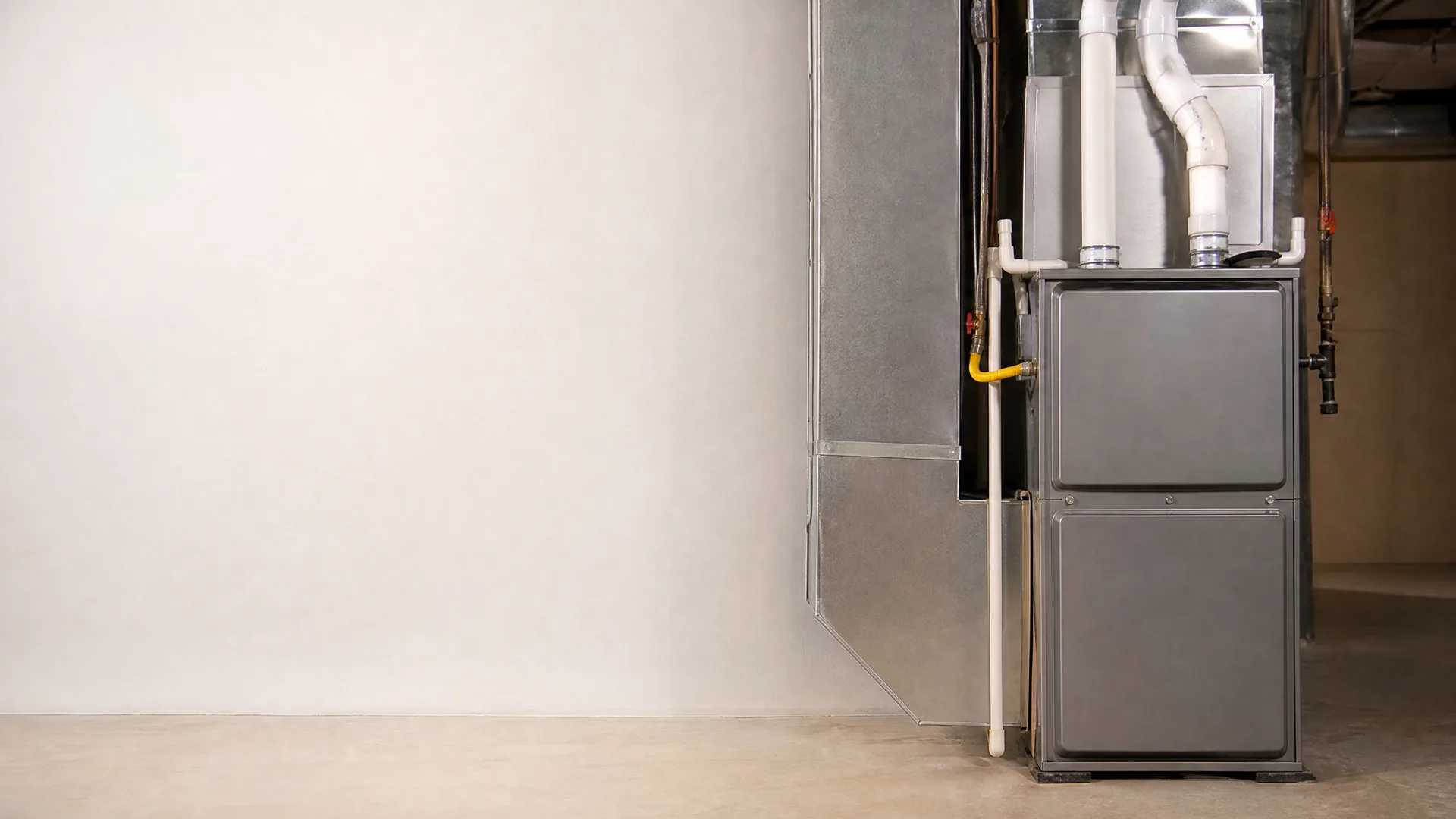
A gray high-efficiency furnace with white PVC vent pipes, a yellow gas line and metal ductwork stands against a plain light wall in a basement with a concrete floor.

What a repair bill tells you

A cracked heat exchanger, a failed inducer motor, or a control board that's gone bad each cost enough on their own to make replacement the better math once a furnace is past 15 years old. Two failures in a couple winters is the pattern worth watching. A furnace that's needed a service call every season isn't getting more reliable, and in a Tooele winter, a furnace that quits on the coldest week is the one you can't afford to gamble on again.

How cold does it actually get, and how long does your furnace run?

  • Winter nights average 20°F

    Overnight lows average 20°F through December, January and February, so a furnace that can't hold a steady temperature on those nights is already behind.

  • Heat runs October through May

    Heat runs here from October through May, about eight months of the year, which is a long stretch to get through on a unit that's struggling.

  • 77% of homes heat with gas

    77% of homes in the county heat with gas, so most of the furnaces failing right now are the same kind, and a local contractor sees this failure pattern every week.

NOAA nClimDiv 1991-2020 · ACS 2020-2024

How your furnace actually fires

  • A gas furnace fires in stages: the thermostat calls, the inducer motor starts, the igniter glows, then gas valves open to light the burners.
  • The flame sensor checks that burners actually lit within seconds, and shuts the gas valve if it doesn't see a flame.
  • Warm air only moves once the blower motor kicks in, which is why a furnace can run its burners but still blow cold air for a short stretch.
  • A furnace that short cycles, turning on and off every few minutes, is often a sign the heat exchanger or flame sensor is failing, not just dirty.
  • Ignition problems show up as repeated attempts to light before the furnace locks out, which reads to the homeowner as clicking followed by silence.
  • A furnace near the end of its life often needs more repair visits per winter even when each individual fix is minor.

A gas furnace doesn't just flip on. The thermostat calls for heat, and the inducer motor starts first, clearing the exhaust path before anything lights. Once that's confirmed, the igniter glows hot enough to light the burners, and the gas valve opens. Within a few seconds, the flame sensor has to see a flame there, or the valve shuts again. That sensor is a safety check, not a formality. It's the reason a furnace will sometimes click, try to light, and go quiet rather than run.

Warm air takes a moment longer. The blower motor doesn't kick in until the heat exchanger has warmed up, so a furnace can have burners lit and still be pushing cold air through your vents for a short stretch. That's normal. What isn't normal is a furnace that shuts off a few minutes after starting, then tries again, over and over. Short cycling like that usually points to the heat exchanger or the flame sensor, not just a buildup of dust.

If your furnace has been locking out mid-cycle, or you've noticed it needing a visit for one small thing and then another a few weeks later, that pattern matters more than any single repair. A furnace near the end of its life tends to fail in stages like this, one part covering for another until something doesn't. Knowing where in that sequence things are breaking down is often what tells a contractor whether it's worth repairing again.

A gray high-efficiency furnace with white PVC venting pipes stands on blocks in a basement next to sheet-metal ductwork, with exposed wood framing on the left and a concrete wall and floor.
A furnace cycling on and off without strain, holding a steady temperature through a cold Tooele night.
An older gas furnace with two white PVC vent pipes stands on a concrete basement floor beside galvanized sheet-metal ductwork, flexible conduit, and piping along a wall.
An older furnace with a worn metal cabinet, the kind that's logged enough cycles to be near the end.
A man in a blue sweatshirt reclines with his eyes closed in an armchair in a living room, with a folded newspaper and ceramic mug on a side table and bookshelves and a couch behind him.
A bearded man in a navy sweater leans back in a brown leather armchair with his eyes closed and a slight smile, beside a window and a side table holding newspapers and a lamp.
A man in a dark gray sweater reclines with closed eyes and a slight smile in a brown leather armchair in a living room with bookshelves, a sofa, a lamp, large windows, and a folded newspaper on a round wooden table.
A man in a gray fleece pullover sits in a leather armchair with his eyes closed and a slight smile, beside a table with newspapers and a lamp, with a window, potted plant and bookshelves behind him.

One request and it's handed off

A furnace on its last legs in Tooele doesn't get kinder with another cold snap. Once the heat exchanger is cracked or the cabinet is rusted through, no amount of patching buys you more than a few weeks, and you're left guessing whether the next cold morning is the one it doesn't start. A local contractor who works on these systems every winter can tell you in one visit whether what you're hearing or smelling is a part worth fixing or a furnace that's done. That's a different conversation than the one you'd have with someone who only sees your address once. Send the request and someone who actually knows Tooole winters and the furnaces that run through them takes it from there. You stop troubleshooting a machine you can't see inside, and you get a straight answer about whether it's time.

What an aging furnace costs you

A furnace nearing the end runs longer to make the same heat, and that shows up on your power bill even with cheap rates here. The burners cycle more to cover for a cracked heat exchanger or a cabinet that's lost its seal, and the rooms farthest from the furnace fall behind first. You might notice the thermostat says 68 but the back bedroom feels colder than that. Some mornings the furnace struggles to catch up at all before the house has to get moving. None of this fixes itself. It gets worse through the months the furnace runs hardest, which here is most of the winter.

What's actually at risk

The real risk isn't comfort, it's what a cracked heat exchanger can put into your air. Combustion gas has no business mixing with the air a vent blows into your bedroom, and a furnace old enough to have that problem won't announce it. A carbon monoxide detector matters more with an aging furnace than a new one. There's also the chance of it failing outright on a night when lows are sitting around 20°F, which leaves you without heat until someone can get out and look at it. A furnace that quits in a cold snap doesn't wait for a convenient morning.

An older gas furnace with louvered panels sits on a concrete pad in a basement, connected to sheet-metal ductwork and PVC and metal pipes, with a water heater and wooden stair framing in the background.
Before you get your furnace installation
A gray high-efficiency furnace with white PVC vent pipes stands beside galvanized sheet-metal ductwork in a basement with a concrete floor, with a wooden staircase and railing at left.
After you get your furnace installation

A thermostat that's out of calibration makes the furnace short cycle, and that wears the igniter down faster than it should. Efficiency fades with age too, about 1 to 2 percent a year, so a furnace from the mid 2000s is already burning more gas than it used to for the same heat. Rust at the base of the cabinet is worth a look. It usually means moisture has been sitting in the blower compartment longer than it should. If the heat exchanger has cracked, replacing it costs close to a new furnace anyway, since the cabinet has to be taken apart to reach it. Either way the install is worth doing right. A furnace sized correctly for your house runs around 20 minutes a cycle, not straight through a cold night, and an installer sizing a new one will check more than the unit itself. The vent pipe slope and the gas line size both get checked during a proper install, because getting either wrong undoes the rest of the work.

What a furnace installer checks

  • A thermostat that's lost its calibration will short cycle the furnace, which wears the igniter faster than normal use would.
  • Furnaces lose roughly 1 to 2 percent of their efficiency every year they run, so a 15 year old unit is burning more gas for the same heat.
  • A cabinet that's rusted through at the base usually means moisture has been getting into the blower compartment for a while.
  • Replacing a cracked heat exchanger costs close to what a new furnace costs, since the cabinet has to come apart to get to it.
  • A furnace that's sized right for your house should run close to 20 minutes per cycle, not nonstop through a cold night.
  • Installers check the vent pipe slope and the gas line size during a new install, not just the furnace itself.
An older man with gray hair in a green quarter-zip sweater leans back on a couch with his eyes closed and head tilted up, in a sunlit room with windows, houseplants, a lamp, and a cushion behind him.
A woman in a cream knit sweater sits with eyes closed in a light upholstered armchair beside a window showing autumn foliage, with a ceramic mug on a side table and a lit lamp and shelves in the background.
A gray furnace with sheet-metal ductwork, PVC vent pipes and a yellow gas line stands on a concrete basement floor beside wooden stair framing.

Running the way it should

This is what a furnace looks like doing its job. The burners fire, the ductwork carries heat through the house, and the flue vents exhaust gas outside. Nothing rattles, nothing smells off, and the cabinet shows no rust or wear.


An older gas furnace with a louvered front panel stands on a concrete basement floor beside galvanized sheet-metal ductwork, a metal flue pipe, gas piping and a flexible conduit along a concrete wall.

Running on borrowed time

This one still turns on, but the signs are there. A gray, worn cabinet, pipes that have seen years of use, and a furnace working harder than it should to keep up. At this point a straight answer on repair versus replacement matters more than another patch job.

Winter nights average 20°F

At 20°F, your furnace is running close to flat out most of the night to keep up. An aging unit that can still manage mild days may not hold a steady temperature when it's that cold outside until morning.

NOAA nClimDiv 1991-2020

A furnace past 15 to 20 years, running longer than it used to, showing rust on the cabinet or a scorch mark near the burners, is telling you what it needs. If yours is holding steady through a cold Tooele night without strain, there's no reason to touch it. If it's doing any of the things laid out above, waiting only costs you another cold morning wondering if it'll start. A local contractor who works on these furnaces all winter has seen which parts give out first in this weather, and when a repair is worth it and when it isn't. You'll be matched with one licensed contractor, not a handful of companies competing for your callback, so the person who shows up already has a sense of what's likely wrong before they open the cabinet. That's the whole decision: is the furnace still doing its job, or is it near the end of what it can do. You already know which one is true for yours.

A dark gray high-efficiency furnace with two white vent pipes and connected sheet-metal ductwork stands in an unfinished basement with concrete walls, a support pole, and a small window.

Done looking for a furnace pro

New system or replacementFurnace or heatingTooele County, UT
Step 1 of 2

What ZIP code is the job in?