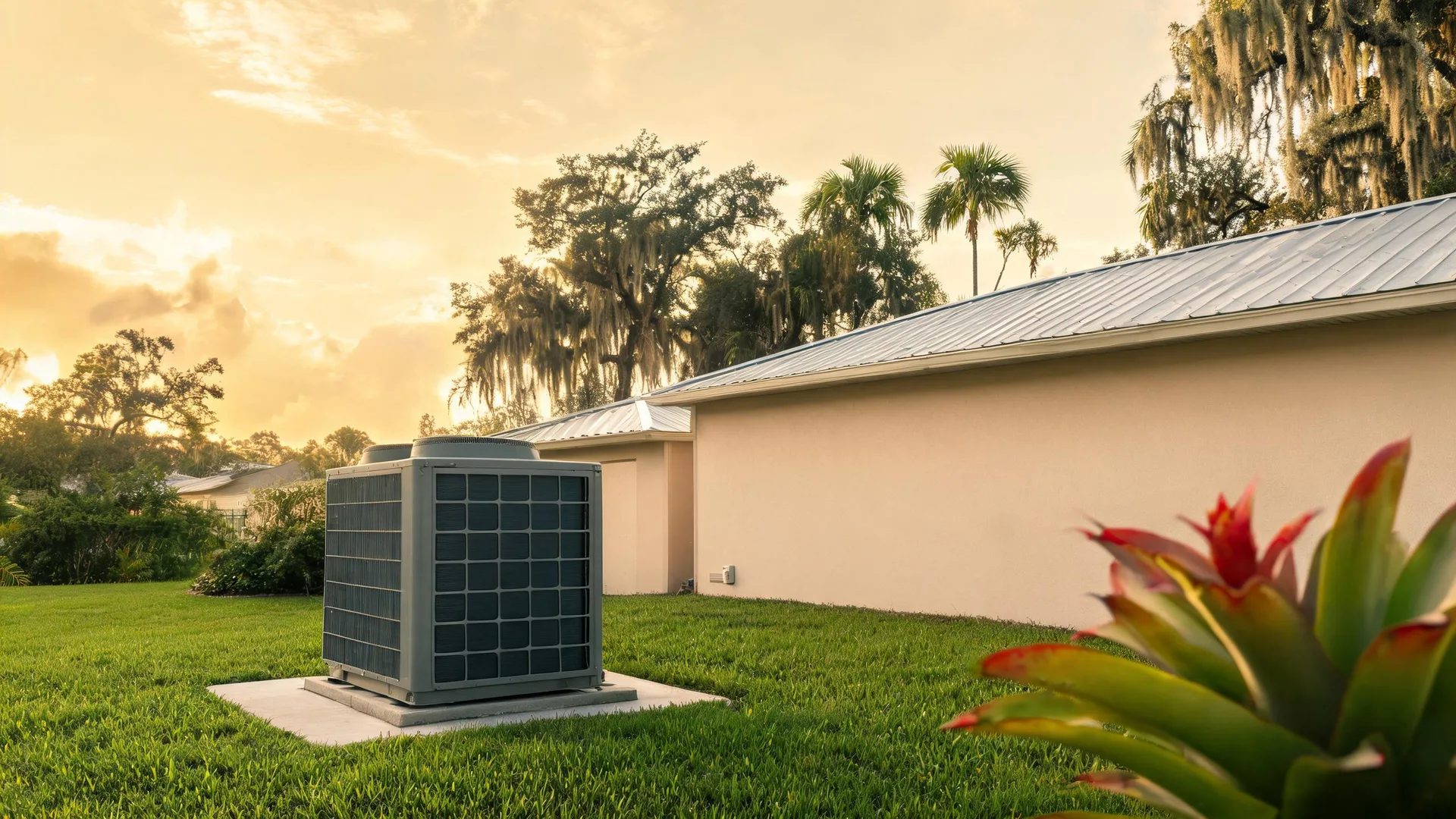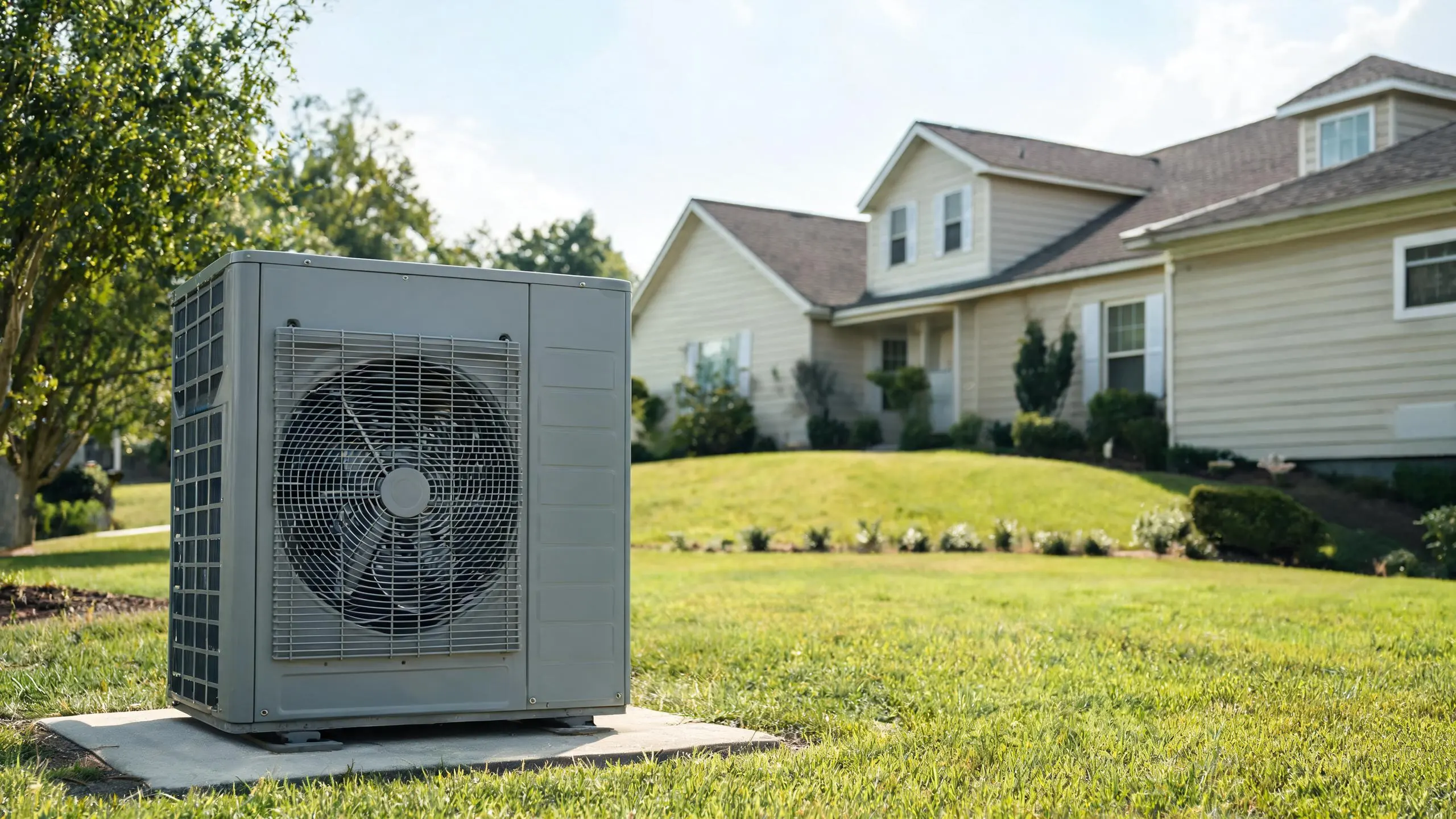
A gray outdoor HVAC condenser unit mounted on a concrete pad in the front yard of a two-story suburban house.

Heat Pump Repair in Park City, UT

Tell us about the job

Takes about a minute. No obligation.

RepairHeat PumpSummit County, UT
Step 1 of 2

What ZIP code is the job in?

Winters here are cold, not strange

Park City's overnight low averages 12°F through December, January and February, and winter storms roll through often. A heat pump is built to run in weather like this. Cold on its own doesn't mean something is wrong with it.


Look for the usual cause first

When a heat pump struggles here, it's almost always a normal problem. Low refrigerant charge. A failing defrost control. A dirty coil. The job is finding which one it is, not blaming the cold for it.

11 months
August through June, your system heats
12°F
the average winter night it heats against
72°F
the average summer afternoon it cools against
Isometric cutaway illustration of a small house showing ducted air distribution, an indoor air handler, and an outdoor condenser unit connected by lines, with a sofa and bed in the rooms.

Heat pumps in Summit County run almost eleven months a year, August through June.

July is the only real break, so whatever is wrong with yours now has to get fixed before the next long stretch starts.

Electric heat, so efficiency matters hereUtah homes paid 12.22 cents per kilowatt-hour in 2024, and a heat pump running on a bad charge or dirty coil burns through more of it.

Half the homes in Summit County were built in 1995 or later. A house that age could still have its original heat pump, or it could have been replaced once already, there's no way to know from the house alone. Worth checking the unit itself, or asking the contractor to tell you its age when they come out. If it's not that old, a breakdown is usually one specific thing failing, a bad capacitor, a stuck reversing valve, a control board going bad, not the whole system wearing out. That's worth knowing before you decide whether to repair it or replace it.

Get the usual fix

Nothing about this area is especially hard on it. It's most likely the usual problem with the usual fix.

Find a contractor
A man in a cap, gray T-shirt and brown work pants carries a worn leather tool bag up wooden porch steps toward a dark paneled front door, with a potted shrub to the left.
A gray outdoor HVAC unit mounted on a concrete pad beside a house with gray lap siding and a stone foundation.

It usually tells you before it quits

A heat pump that runs almost year round doesn't get much of a break to show you something's wrong, so it tends to tell you in small ways before it quits outright. Short cycling is one. It turns on, runs a few minutes, shuts off, and starts again instead of running a normal stretch. That's often a bad capacitor or a refrigerant charge that's off. Ice on the outdoor unit that doesn't clear during the defrost cycle is another. You should see it frost up in cold weather and then shed that frost on its own a few times an hour. If it stays covered, the defrost control or a sensor has failed. Air coming out the vents that's noticeably cooler than it used to be on the same setting points to a weak charge or a compressor losing capacity. Listen for it too. A new rattle, a hard clunk when it switches between heating and cooling, or a hum with no airflow at all usually means a motor, valve, or contactor is on its way out. None of these fix themselves, and a system that's already struggling doesn't get easier on itself the longer it runs that way.

Check the filter first

A clogged filter starves the system of airflow, and the outdoor unit can ice over or the indoor coil can freeze because of it. Pull it out and hold it up to a light. If you can't see light through it, that alone could be the whole problem, and it rules out the simplest cause before anyone comes out.

Check the thermostat and the breaker

Make sure the thermostat is set to heat and the setpoint is actually above room temperature, especially if anyone in the house uses a schedule or a phone app to control it. Then check the breaker panel for the outdoor unit and the air handler. A tripped breaker or a dead thermostat battery looks exactly like a failed heat pump from the inside, and either one takes a minute to rule out.

A heat pump fails the same handful of ways no matter where it's installed. The reversing valve is a common one. It's what switches the system between heating and cooling, and when it sticks, the unit runs but stops doing what the thermostat asked for. Capacitors wear out from the strain of starting the compressor and fan motors over and over, and a weak one causes hard starts or short cycling before it quits for good. Refrigerant charge is another. A heat pump doesn't use up refrigerant, so a low charge almost always means a slow leak somewhere in the line set or coil, and it keeps getting worse until it's found and sealed. The defrost control and its sensor fail too, and when they do the outdoor coil ices over and stays that way instead of clearing itself a few times an hour like it should. Contactors pit and stick from the current they carry, and when one fails the outdoor unit may not start at all.

Once you know what's actually wrong, the question is whether it's worth fixing. What's failing matters more than how old the unit is. A control board, a contactor, or a capacitor is a contained repair on a system that otherwise runs fine, and replacing that one part is usually the right call no matter how old the unit is. It's different when the compressor itself is failing, or when the coil has corroded through and is leaking refrigerant from more than one spot. Those aren't single-part fixes, and chasing them with repairs tends to just delay the same decision. Worth asking the contractor to be specific about which one it is rather than a general sense that the system is old or tired. A unit that keeps needing a service call for something new, even when each repair is small and reasonable on its own, is telling you something too.