






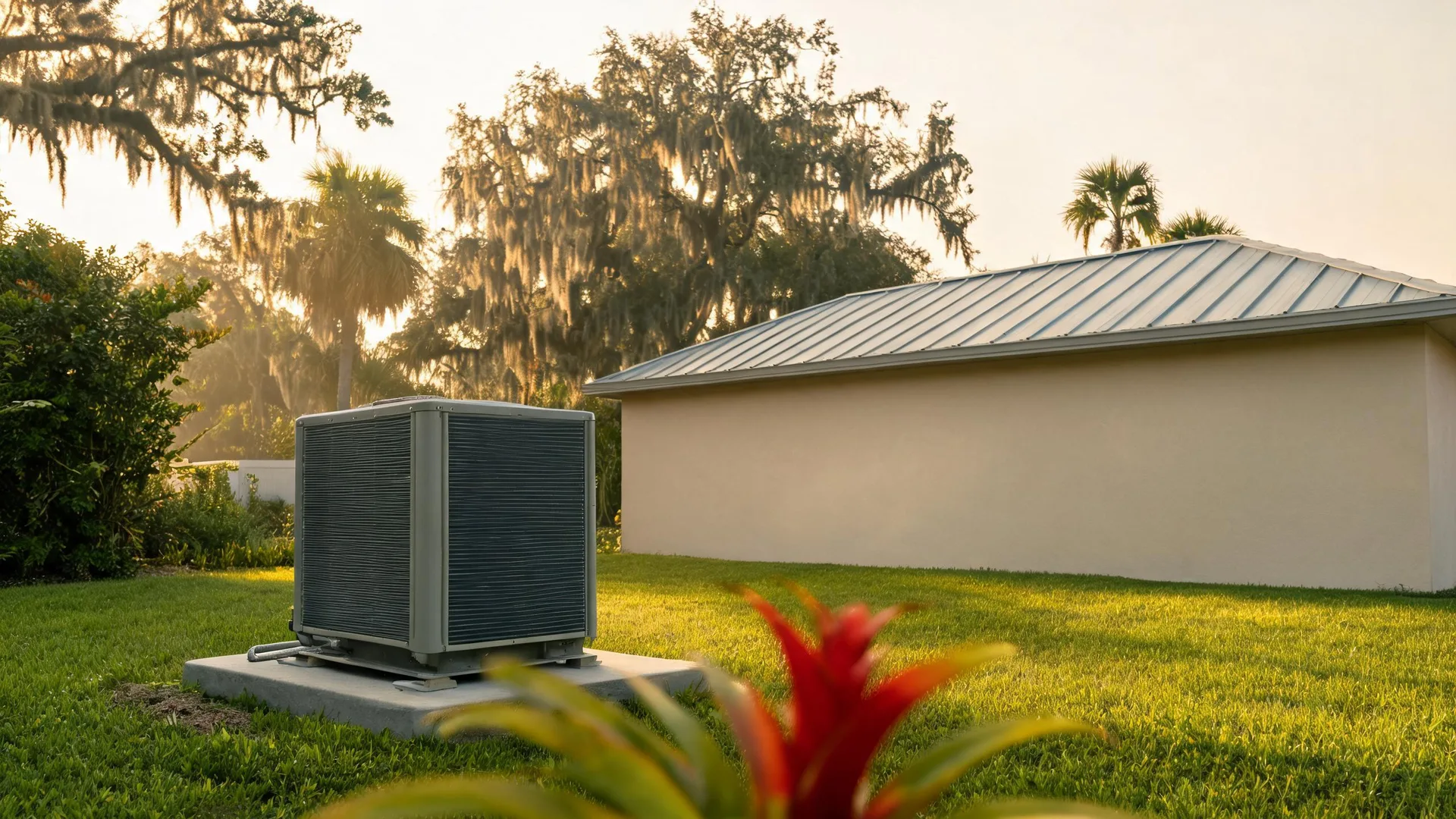
A grey heat pump outdoor unit mounted on a concrete pad against the exterior wall of a house with grey siding and stone veneer.

Heat Pump Repair in Ogden, UT

Tell us about the job

Takes about a minute. No obligation.

RepairHeat PumpWeber County, UT
Step 1 of 2

What ZIP code is the job in?

Your heat pump in Ogden deals with real winter cold, with overnight lows averaging 19°F through December, January and February. That's within what the system is built for. Heat pumps pull heat from outside air even when it's cold out, down to well below freezing, so a system working correctly should keep up through the season. If yours is short cycling, running constantly, or blowing air that's not warm enough, that points to a specific problem like a low refrigerant charge, a failing defrost control, or a reversing valve stuck in the wrong position. It's not the cold working against the equipment. It's something in the system that needs a tech to find and fix.

10 months
September through June, your system heats
2 months
July through August, it cools
19°F
the average winter night it heats against
81°F
the average summer afternoon it cools against
Isometric cutaway illustration of a single-story house showing interior ductwork, an indoor air handler and furnace unit, and an outdoor condenser connected by a line, on a white background.
Your system heats September through June and cools July through August.

NOAA nClimDiv, 1991–2020 normals

Heat here switches on in September, after August warms the system up for nothing.

A heat pump that struggled in August often fails outright in its first cold week.

Half the homes in Weber County were built in 1984 or later

Half the homes here were built by 1984
81 damaging wind events from 2015 to 2024
60 winter storms from 2015 to 2024
Fixed right, it costs little to runUtah homes paid 12.22 cents per kilowatt-hour in 2024, so a repaired heat pump stays cheap to run

A heat pump that's working right warms up fast and holds a steady temperature at the vents. When something's wrong, you'll feel it before you can name it. Air coming out lukewarm instead of hot, even though the system is running. The outdoor unit icing over and not clearing itself during defrost cycles, so you see frost building up instead of melting off. Short cycling, where it kicks on, runs a few minutes, shuts off, and starts again, is a sign something's forcing it to stop early, often a pressure or sensor issue. A unit that runs nonstop and never seems to catch up usually has a refrigerant leak or a compressor that's losing capacity. Odd noises matter too. A hard clunk when the reversing valve switches, or a grinding sound from the outdoor fan, are both worth having a tech listen to before they turn into bigger failures.

Get the usual fix

Nothing about this area is especially hard on it. It's most likely the usual problem with the usual fix.

Find a contractor
A white mini-split heat pump outdoor unit mounted on a concrete pad beside a gray-sided house, surrounded by gravel and green shrubs.

What you can rule out yourself

Before anyone comes out, check the simple things. Look at the thermostat first. Make sure it's set to heat, not cool, and the set point is actually above room temperature. Check the circuit breaker for both the indoor air handler and the outdoor unit, since a tripped breaker on either side will stop the system cold. Pull the air filter and hold it up to a light. If you can't see through it, that's enough to choke airflow and cause icing or weak heat at the vents. Walk outside and look at the outdoor unit. If it's buried in leaves, snow, or debris, clear a foot of space around it so air can move through the coil. A little frost on the coil in cold weather is normal, but thick ice that doesn't melt off during the day means the defrost cycle isn't doing its job. Check that every vent in the house is open and unblocked by furniture or rugs. None of this takes tools or experience, and if the system still isn't heating right after you've checked it, the problem is inside the equipment and it's time to get a tech on it.

Most failures start outside

The outdoor unit does the hard work in winter, pulling heat from cold air, and it takes the brunt of wear. Contactors burn out from constant cycling. The defrost sensor or control board can fail and leave frost built up on the coil instead of clearing it. The reversing valve, which switches the system between heating and cooling, can stick in one position after years of use. Any of these will stop the system from heating right even though the indoor blower still runs fine.
Low refrigerant rarely means a leak just happened

A system low on charge usually got that way slowly, from a small leak at a fitting or coil that's been losing refrigerant for a long time. By the time you notice weak heat or a unit that won't shut off, the charge is often down well below what the system needs. Finding the actual leak point, not just adding refrigerant back in, is what keeps the same problem from coming back in a few months.

A heat pump that's struggling will keep trying to hit the set point no matter what's wrong inside it, and that's the problem. Low refrigerant means less heat moved per cycle, so the system runs longer to make up for it, and that extra runtime is what pushes a failing compressor the rest of the way out. A reversing valve stuck halfway wears at itself every time it's asked to switch, until it stops switching at all. Ice that isn't clearing during defrost keeps building through the night, blocking more airflow across the coil each hour the unit runs, which makes the icing worse, not better. A dirty filter starves the system of airflow, and a starved system runs colder on the coil than it should, which is exactly what triggers more icing. Left alone, a small fault doesn't stay small. It runs the compressor harder, for longer, until the part that was struggling is the part that fails.

At some point the question isn't what's wrong, it's whether fixing it makes sense. A compressor is the heart of the system, and it's also the one part that isn't practical to replace on its own. If a tech tells you the compressor has failed, that's usually a sign to replace the unit rather than repair it. Most other parts are a different story. A reversing valve, a defrost control board, a contactor, even a coil can be swapped out and the system goes back to running like it should. Age matters too, though not in the way people think. It's not that an older unit wears out on a schedule. It's that the parts inside it have had more cycles, more time for a fitting to loosen or a sensor to drift, so problems show up closer together instead of years apart. A system calling for a tech every so often for the same kind of issue is telling you something different than one that's needed a handful of unrelated repairs in a short stretch. That pattern, more than any single repair, is what tells you whether you're fixing a system or just delaying the same conversation.