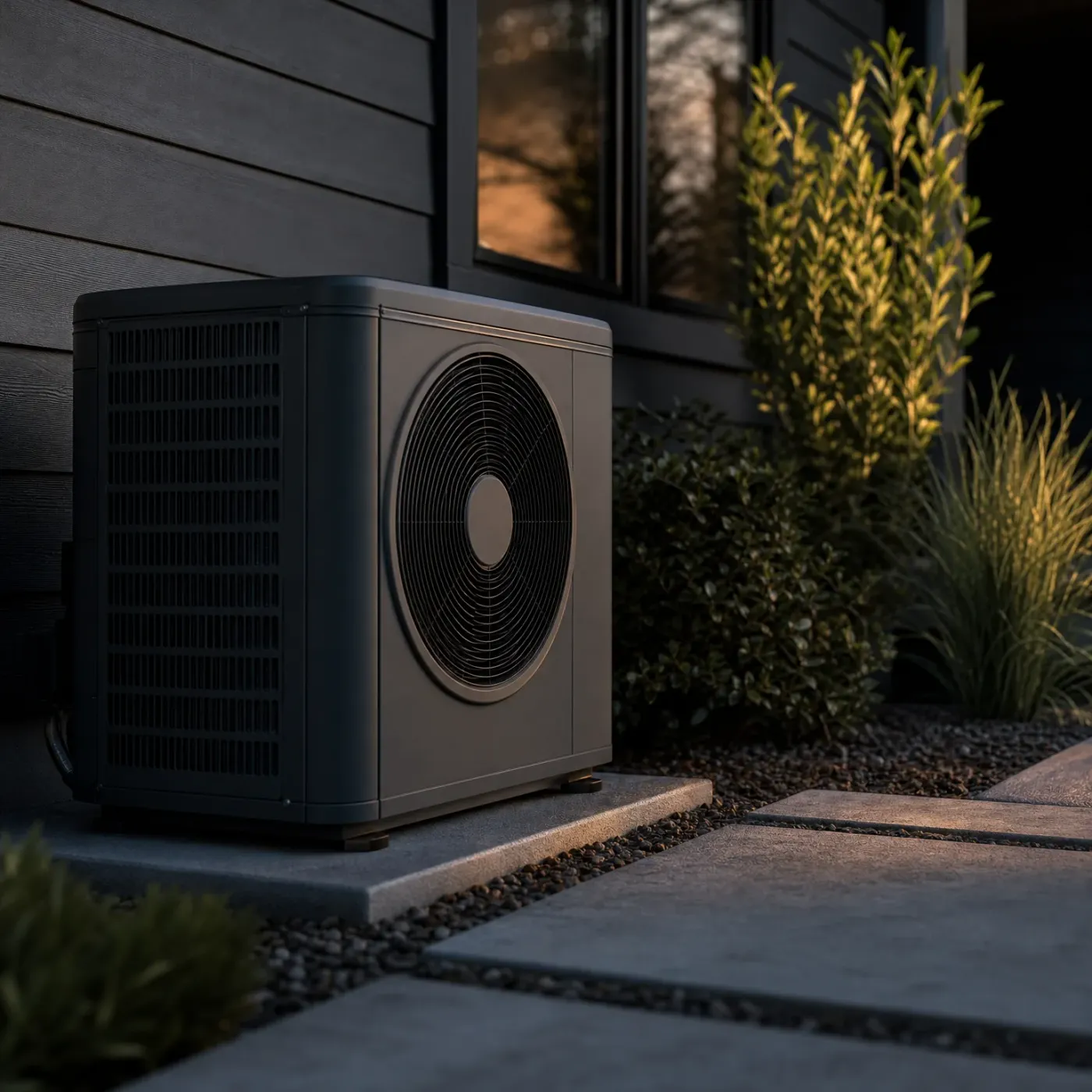
A dark grey outdoor condenser/heat pump unit with a front-facing circular fan grille sits on a concrete pad beside a house with horizontal dark siding and windows, next to gravel, paving slabs, shrubs and ornamental grasses in low evening light.

It's off your list after this

Heat pump frozen over in Ogden, UT

A heat pump with ice building up on the outdoor unit usually means it's stuck in a defrost cycle that isn't finishing, or it can't get enough airflow to begin with. Below is what's behind it and when it needs a repair call. Send the form once and stop chasing down who's free in Weber County.

Hand off my repair

A heat pump covered in ice during a Weber County winter is usually stuck running its defrost cycle wrong, not just cold weather doing its job. Every heat pump frosts over some in freezing temperatures, and it's supposed to switch into defrost mode on a timer or sensor, warm the outdoor coil, melt the ice, then go back to heating. When that cycle fails to kick in, or kicks in but can't finish, ice builds layer on layer until the coil is sealed solid. A dirty coil, a stuck reversing valve, a bad defrost control board, or a fan that's slowed down all keep that cycle from doing its job. Once the coil is iced over, the unit can't pull heat from outside air at all, so your house loses heat right when you need it most. Running it longer won't melt the ice. It needs a repair before the next cold stretch.

A gray outdoor condenser unit on a concrete pad beside a house with horizontal lap siding, with an electrical disconnect box and insulated refrigerant lines on the wall, gravel in the foreground and a planting bed at left.

Normal winter operation

A thin layer of frost is normal on a cold morning. The unit runs its defrost cycle, the coil clears, and the fan keeps moving air through the garden bed side of the yard without trouble. You might not even notice it happening.

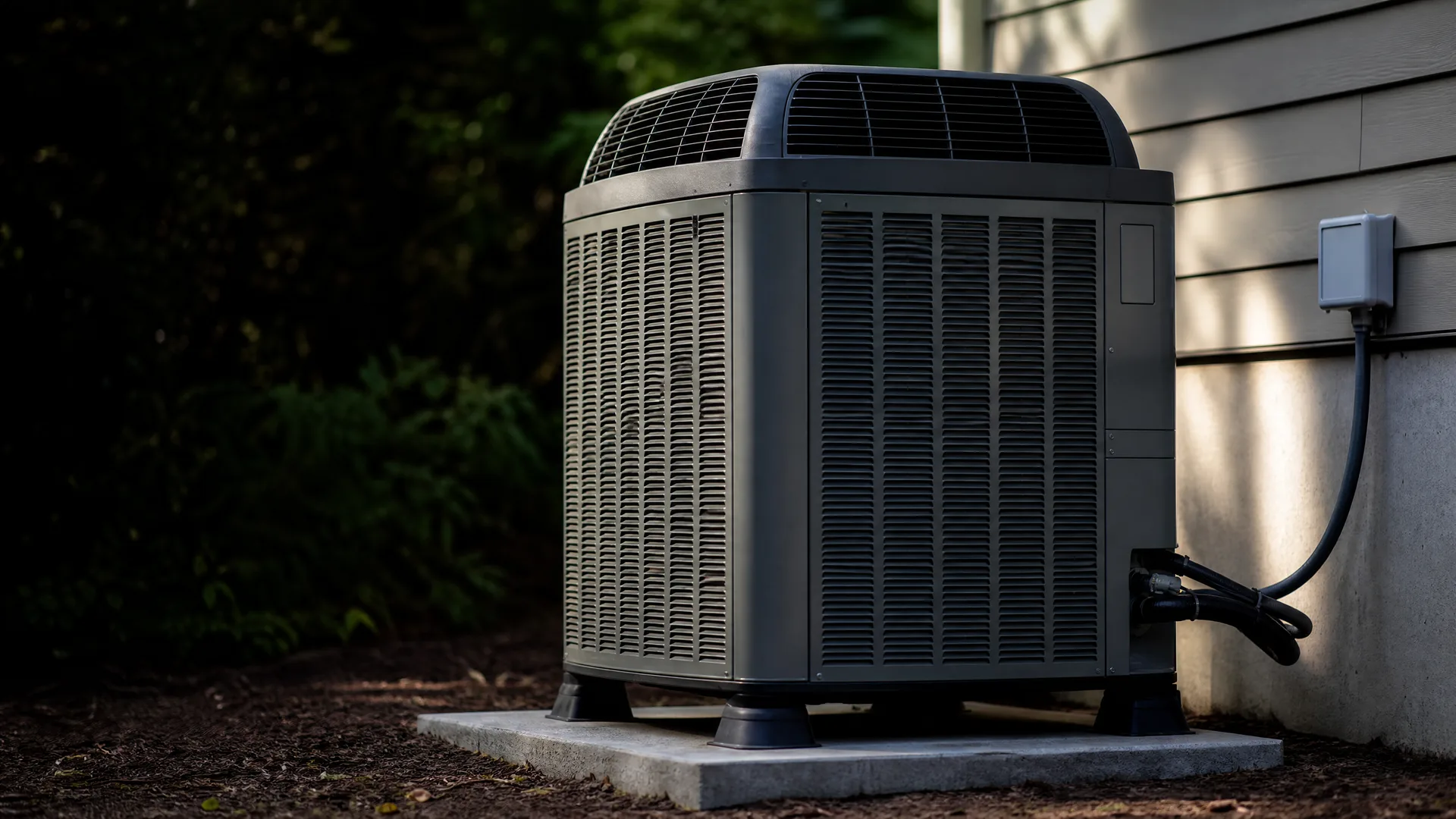
An outdoor air conditioner condenser unit on a concrete pad beside a house with horizontal lap siding, with refrigerant lines and a gray electrical disconnect box on the wall, surrounded by bare dirt.

Stuck and iced over

When the coil guard and fan grille disappear under a thick coat of ice, the defrost cycle isn't finishing. Airflow drops, the coil can't shed heat, and the unit keeps running without doing its job. Left alone, this strains the compressor.

Why does a Weber County winter work your heat pump so hard?

  • Winter nights average 19°F

    Overnight lows average 19°F through December, January and February, cold enough that your unit is defrosting often, and often is where the cycle can fail to finish.

  • Heat runs September through June

    Heat runs here from September through June, about ten months a year, so a heat pump that can't shed ice reliably is a problem for most of the year, not just a few weeks.

  • Cooling runs July through August

    Cooling only runs July and August, two months, which means the heat pump spends far more of the year in the mode where frost and defrost problems actually show up.

NOAA nClimDiv 1991-2020

An outdoor condenser unit beside a horizontally sided house, encased in thick ice with hanging icicles, on a snow-dusted ground at sunset with bare trees in the background.

Six-thirty in the morning and still dark, and you go out to the side yard to grab the trash can before the truck comes through. The outdoor unit catches your eye because it looks wrong, a block of ice built up over the coil and down onto the grille, thick enough that you can see it from the gate. Your breath shows in the air, maybe 19 degrees, the kind of cold that sits on Ogden most January mornings. The fan isn't turning. No hum, no airflow, nothing moving under all that ice. You stand there a second with the trash can in your hand, looking at it, before you go back inside to check if the house still feels warm.

Is this just frost, or is your unit actually iced over?

Go look at it straight on. A little white frost on the coil in the early morning is nothing. Ice is different: it's clear or gray, it has thickness to you, and it's built up over the fins, down into the grille, maybe onto the ground underneath. You'll likely hear the fan struggling or not hear it at all, since ice on the blades can stop it from turning. If the unit's been like this more than a few hours, the compressor inside is working against that ice and can take damage it won't recover from. Left alone through a cold night, that's a repair bill that didn't need to happen.

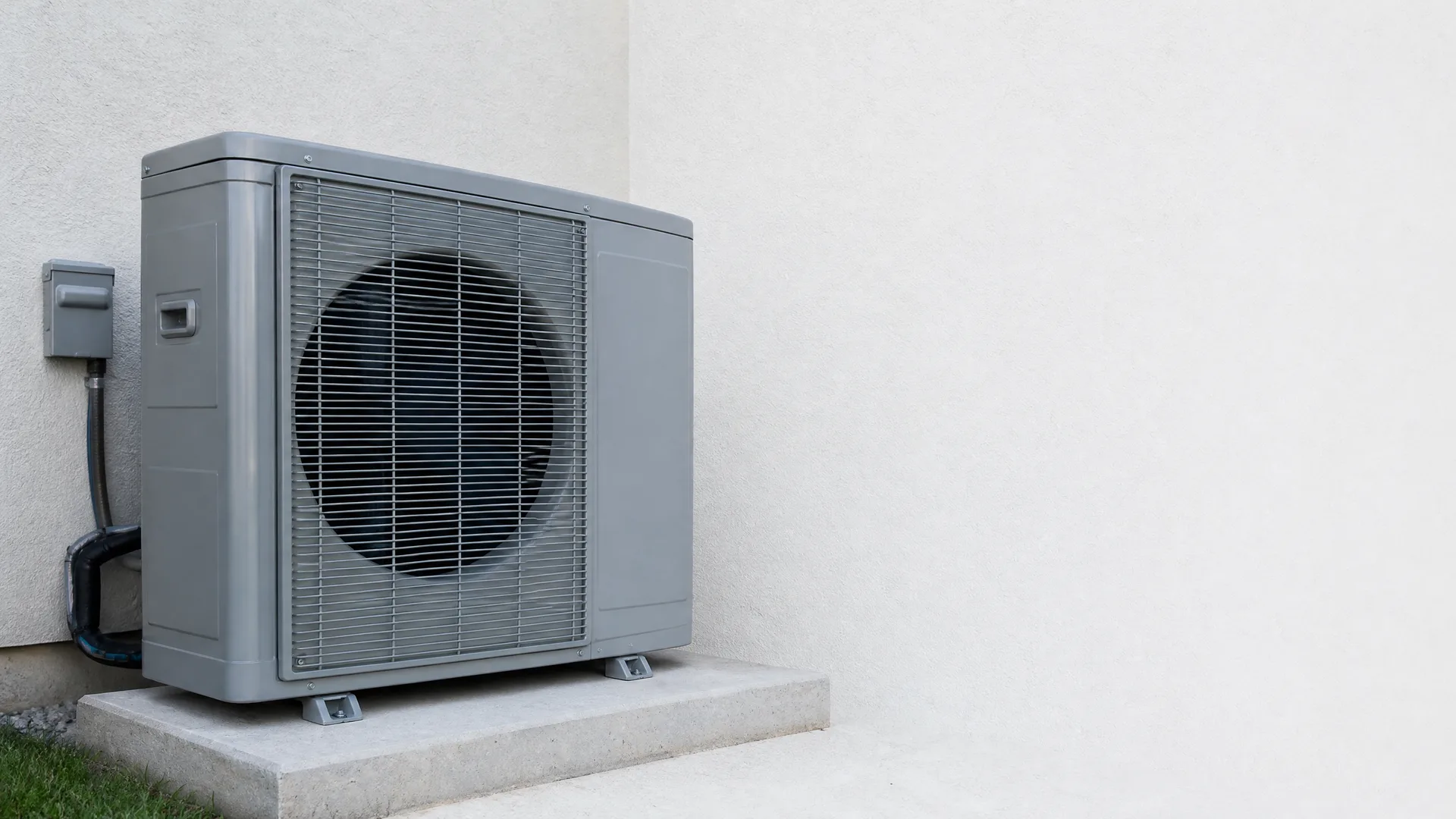
A gray outdoor heat pump unit on a concrete pad against a light stucco wall, with an electrical disconnect box and conduit on the wall to its left.

How the defrost cycle works

A heat pump reverses itself for a few minutes every so often, sending warm refrigerant through the outdoor coil to melt off whatever frost has built up. The fan outside stops during this, and heat that would be going into your house gets used to clear the coil instead. A sensor or a timer is what tells the system to start and stop this. When that sensor reads wrong or the control board doesn't get the signal to end the cycle, the unit can stay in regular heating mode and keep piling frost on top of frost.

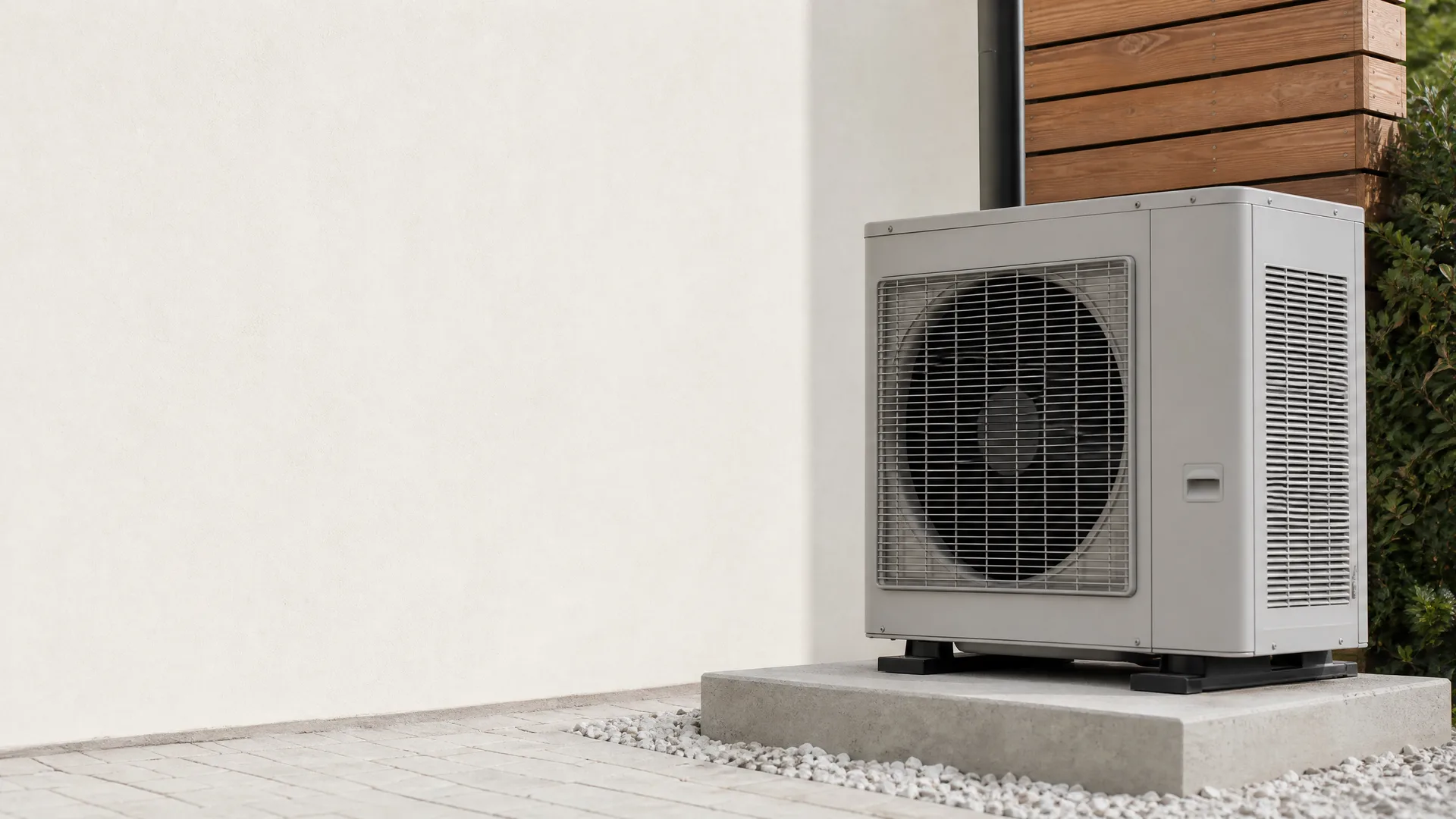
A gray outdoor heat pump unit with a large fan grille sits on a concrete pad beside a pale stucco wall, with horizontal wood cladding and a green shrub behind it and paving stones and gravel in front.

Why airflow decides the outcome

The outdoor coil needs air moving across it to work at all, in defrost or otherwise. A fan that's slowed down by a failing motor, or a coil already half-blocked by ice, pulls less air through with every pass. Less airflow means the coil runs colder, and a colder coil ices faster than it melts. That's how a unit goes from a thin morning frost to a solid block over a few days, especially once nights are routinely dropping into the upper teens.

Power here costs 13.52 cents per kilowatt-hour

At 13.52 cents a kilowatt-hour, running the heat pump through a frozen coil costs you more than the defrost cycle it's supposed to use. A stuck cycle means the unit draws power fighting ice instead of heating your house, and that shows up on the bill before anyone looks at the outdoor unit.

EIA-861 2025

Waiting it out yourself

You can shut the unit off and let the ice melt on its own, which might take most of a day depending on how thick it's gotten. Pouring hot water on the coil or chipping at the ice risks bending the fins, and a bent coil moves less air than before. Meanwhile your gas furnace or backup heat has to carry the house alone. If the ice comes back once you switch the heat pump on again, waiting didn't fix anything. It just told you the defrost board, the sensor, or the fan motor still isn't working right.

Getting a contractor out

A contractor can tell you in one visit whether this is a failed defrost control board, a bad sensor, low refrigerant, or a fan motor that's stopped pulling its weight, instead of you guessing while ice keeps building. That's one call instead of searching around, explaining what the unit looked like to three different companies, and weighing quotes against each other. Once the form goes in, finding someone to look at it stops being on your plate. The unit gets fixed instead of just thawed, and you're not back out in the side yard next week looking at the same block of ice.

A smiling man in a dark green shirt over a white t-shirt sits at a kitchen counter with a dark mug, looking off to the side, with shelves, plants and a bright living area behind him.
A man in a gray long-sleeve waffle-knit shirt smiles and looks off to the side in a kitchen with open shelving, a refrigerator, a wooden sideboard with a potted plant, and a glass door to the right.
A man in a dark green ribbed sweater stands smiling and looking off to the side beside a stone kitchen counter with a ceramic mug, with a dining table, pendant lights, and large windows in the background.
A bearded man in a gray long-sleeve shirt stands smiling and looking off-camera beside a kitchen counter with a white mug, with a living room, fireplace and wall-mounted television behind him.

Hand off the search today

A frozen heat pump in Weber County usually isn't going to fix itself before the next cold morning, and by then the coil has iced over worse and the house has gone longer without even heat. Right now you could start calling around, explaining what the unit looks like to whoever picks up, waiting on callbacks, then doing it again with the next company because the first one can't come for days. That's hours you don't have while the house sits cold and the ice keeps building. Send the form once and that search is done. One contractor who works on heat pumps in this area gets your information and reaches out, and from there it's someone who actually knows what a defrost cycle stuck mid-run looks like deciding what your unit needs. You stay in the house where it's warm instead of standing out by the side yard trying to figure out what's wrong with it yourself.

What's Actually Controlling the Ice

  • A reversing valve switches the refrigerant flow so the outdoor coil gets hot enough to melt the frost off.
  • A defrost control board reads a sensor on the outdoor coil and times how long the cycle runs before switching back.
  • While defrost runs, the outdoor fan shuts off so it isn't blowing cold air across a coil that's trying to heat up.
  • A stuck reversing valve leaves the unit heating your house on one side while ice keeps building on the other.
  • A failed defrost sensor can tell the board the coil is warm when it's still frozen, so the cycle never starts.
  • Low refrigerant drops the coil temperature further than normal, so frost forms faster than a working defrost cycle can clear it.

The system behind defrost has three parts working together, and any one of them can be the reason your unit is stuck under ice. The reversing valve is what lets the heat pump run backward for a few minutes, sending hot refrigerant out to the coil instead of into your house, which is the only thing that actually melts frost off the fins. A defrost control board decides when that needs to happen. It reads a sensor clipped to the outdoor coil, and once that sensor reports cold enough for long enough, the board kicks off the cycle and keeps time on it until the coil's warm again. The outdoor fan shuts off for those few minutes too, because a fan blowing outside air across a coil that's trying to warm up would undo the whole point of running defrost in the first place.

When one piece fails, the other two don't know it. A reversing valve that won't switch keeps the system heating your house while the outdoor coil never gets its turn to warm up, so ice just keeps building on that side no matter how often the board tries to call for defrost. A sensor that's failed can report a warm coil when it's still frozen solid, which means the board never starts the cycle at all. And refrigerant that's low changes the math entirely: the coil runs colder than it's supposed to, frost forms faster, and a defrost cycle timed for normal conditions can't keep up with it.

An outdoor air conditioner condenser unit with rust spots on its top grille sits on a concrete pad beside a house with light horizontal siding, with conduit lines and an electrical box on the wall and a mulch bed to the right.
Before you get your heat pump repair
A gray outdoor air conditioner condenser unit on a concrete pad beside a house with horizontal lap siding and a stone veneer base, with a conduit running to a wall-mounted disconnect box and shrubs and evergreen trees to the left.
After you get your heat pump repair
A gray outdoor condenser unit on a concrete pad beside a house with horizontal lap siding, with a metal disconnect box and refrigerant lines on the wall, river rock and mulch to the sides, and a green shrub at right.

Running clean

The cabinet is free of grime, the fins show through clean, and the fan turns without resistance. Air moves through the coil the way it was built to. Dust buildup like this doesn't happen on its own when the unit is defrosting and draining the way it should.

An outdoor air conditioner condenser unit on a concrete pad beside a house with horizontal siding, with conduit, cables and an electrical box on the wall and mulch beds at either side.

Choked with buildup

Dust and grime cake the cabinet and pack into the fins where air is supposed to pass through. That buildup blocks airflow the same way ice does, and a coil that can't breathe struggles to finish a defrost cycle. The lines and disconnect box still look fine. The coil underneath doesn't.

A bearded man in a navy t-shirt sits on a beige sofa, laughing while looking toward a laptop screen visible in the lower foreground, with a houseplant, shelves, and a framed picture behind him.
A man with graying hair and a beard in a plaid flannel shirt stands indoors looking out a frosted window at snow-covered trees, with a ceramic mug on the sill.
A closed laptop and a ceramic mug on a wooden table in front of a kitchen with green cabinets, marble counter, black pot, cutting board, wooden bowl, and a white vase with greenery.

A heat pump stuck in ice needs a repair, not a thaw

A thin coat of frost on a January morning is nothing. Ice built up thick over the coil, down into the grille, with the fan barely turning or not turning at all, means the defrost cycle isn't finishing. The reversing valve, the defrost control board, or the sensor that tells the board when to switch back can all be behind it, and none of them clear up on their own overnight. Letting it sit just means more ice by the next cold morning and a house that's gone longer without heat.

You don't have to spend the day on the phone with contractors, describing the ice and the fan and what the unit sounded like before this started, then doing it again with the next name on the list. Send the form once and that part is done. Someone licensed to work on it takes it from there, and you're not the one chasing it down anymore.

A gray upholstered sofa with a textured cushion sits beside a dark round side table holding a vase of green foliage, with a table lamp and sheer-curtained window behind.
An outdoor air conditioning or heat pump condenser unit on a concrete pad beside a house with horizontal siding, with a wall-mounted disconnect box and refrigerant lines, and dark shrubs to the left.

Stop chasing a heat pump pro

RepairHeat PumpWeber County, UT
Step 1 of 2

What ZIP code is the job in?