Logan's homes are young
Half the houses in Cache County were built in 1992 or later. A heat pump that came with a house that age still has a reasonable amount of life to give.
Takes about a minute. No obligation.
Half the houses in Cache County were built in 1992 or later. A heat pump that came with a house that age still has a reasonable amount of life to give.
When the system is newer, a broken part is just a broken part. There's no reason to treat it like the whole unit is on its way out.

NOAA nClimDiv, 1991–2020 normals
A heat pump that blows air but doesn't warm the house is losing refrigerant or losing the reversing valve.
Either one calls for a licensed tech. Neither gets better on its own.




A repair makes sense when the failure is one part doing one job badly. A contactor, a capacitor, a defrost sensor, a reversing valve stuck in one position. Swap the part and the system goes back to working the way it did before. Replacement starts to make more sense when the compressor itself is the problem. It's the most expensive part in the unit, and when it's failing, everything downstream of it keeps straining no matter what else gets fixed. The other thing worth weighing is how many separate repairs a unit has needed. One failed part is bad luck. A string of different parts failing over a short stretch usually means the whole system is getting old at once, even if each fix looked small on its own.
If your heat pump came with a house built in 1992 or later, it's not old enough to write off. Get the broken part looked at before anyone talks about replacing the unit.
Find a contractorA heat pump that's low on refrigerant doesn't just move less heat, it starts running longer to make up for it. That extra runtime pulls liquid refrigerant back toward the compressor instead of letting it fully turn to gas first, and a compressor that keeps swallowing liquid wears out fast. A failing capacitor tells a similar story. It makes the compressor or fan motor draw harder to start each cycle, and that extra draw heats windings that weren't built to run that hot. Ice on the outdoor coil follows the same pattern. A little frost melts off during the defrost cycle same as always. But if something's stopping that cycle from working, the ice keeps building, blocks airflow across the coil, and forces the system to run longer to move the same amount of heat. None of this fixes itself by letting the unit keep cycling. Every hour it runs in that state is an hour closer to the compressor itself going out, and that's a different repair than the part that started the problem.
Make sure it's set to heat, not cool, and that the set temperature is actually above room temperature. Check the batteries if it has a screen that's dim or blank. If it's a smart thermostat, check that it didn't get switched to a schedule or hold setting overnight.
Walk outside and check if the unit is covered in ice or buried in snow. Clear away anything blocking airflow into the sides of the cabinet. Check the breaker panel for a tripped breaker before assuming the problem is inside the unit itself.
Most heat pump failures trace back to one of a handful of parts. The reversing valve is a common one. It's what switches the system between heat and cooling, and when it sticks, the unit keeps running but stops doing the job it was told to do. The capacitor is another. It gives the compressor and fan motor the jolt they need to start, and once it weakens, those motors strain on every cycle until one of them gives out. Refrigerant leaks show up slowly, usually at a fitting or coil, and the system keeps running while doing less and less with the power it's using. The defrost control board is the other usual suspect, since it's what tells the unit to clear frost off the outdoor coil on a schedule. When it fails, ice just keeps building instead of melting off like it should. None of these parts are rare failures. They're the ones that do the most work, so they're the ones that wear out first.
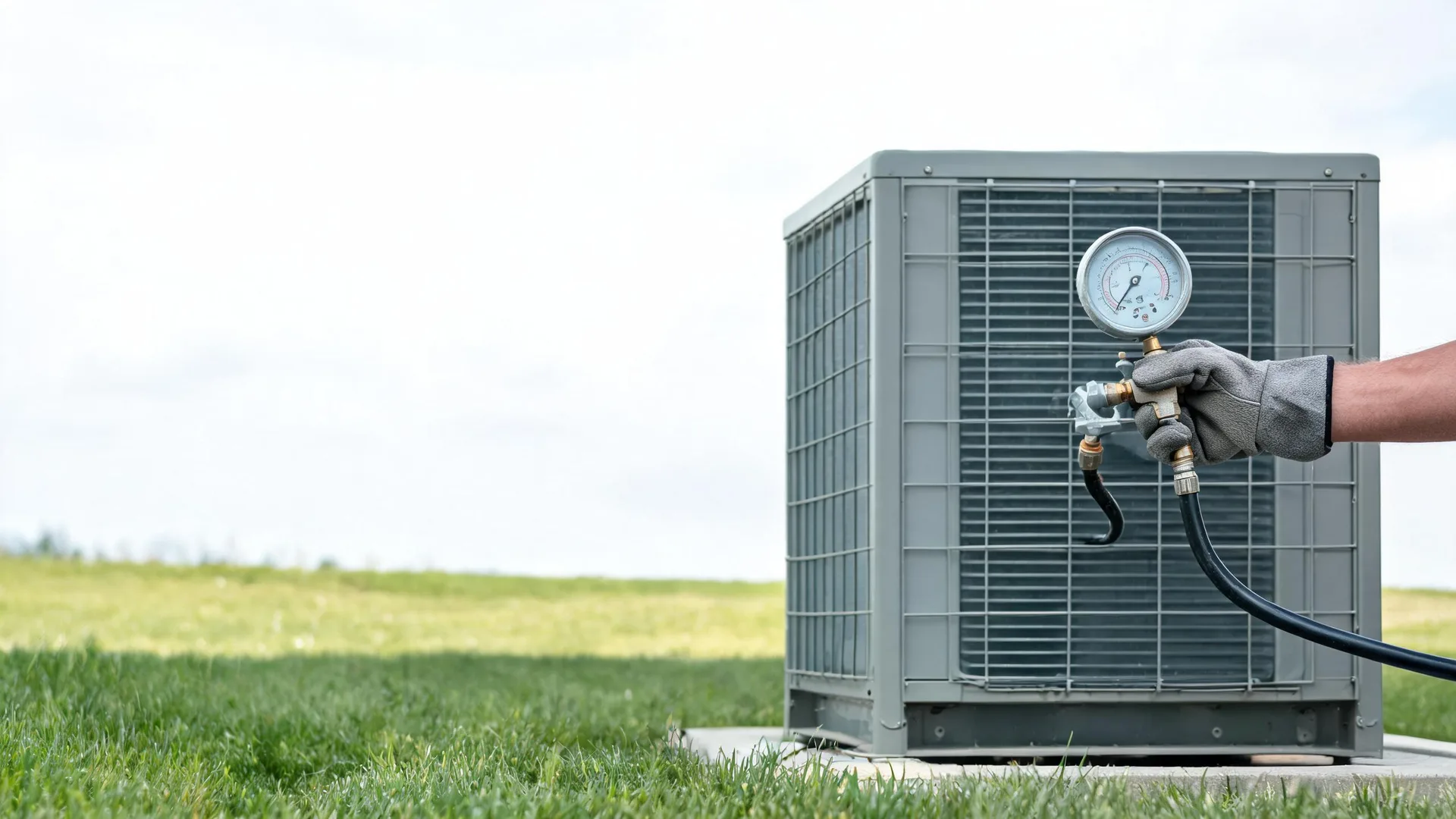
A diagnostic visit starts outside, not with a wrench. A tech watches the outdoor unit run through a cycle, checks refrigerant pressures at the service valves, and reads the temperature split between the air going into the system and the air coming out. Low pressure on one side points toward a leak. A split that's smaller than it should be points toward the reversing valve or a weak compressor. From there it's a multimeter on the capacitor and the motor windings, checking that each one draws power the way it's supposed to instead of straining. The defrost board gets checked too, since a bad sensor or relay there can look like a refrigerant problem from the outside even though the charge is fine. Most of this happens before any part gets replaced, because swapping parts without knowing which one failed just means paying for a guess.