




A stack of split firewood in a black metal rack sits on a gravel bed against the dark vertical board siding of a house, with dry grass, pines and an overcast sky beyond.

Heat Pump Installation in Tooele, UT

Tell us about the job

Takes about a minute. No obligation.

New system or replacementHeat PumpTooele County, UT
Step 1 of 2

What ZIP code is the job in?

Gas heats 77 percent of homes in Tooele County. If that's your setup now, you've likely got ductwork already in place, and that changes what a heat pump installation looks like here. A lot of homeowners in gas-heated homes go with a dual fuel setup instead of pulling the furnace out. The heat pump handles the mild months and the furnace kicks in when it gets cold enough that gas makes more sense. It's worth asking a contractor to walk through both options against what you've got in the house now.

8 months
October through May, your system heats
3 months
June through August, it cools
20°F
the average winter night it heats against
89°F
the average summer afternoon it cools against
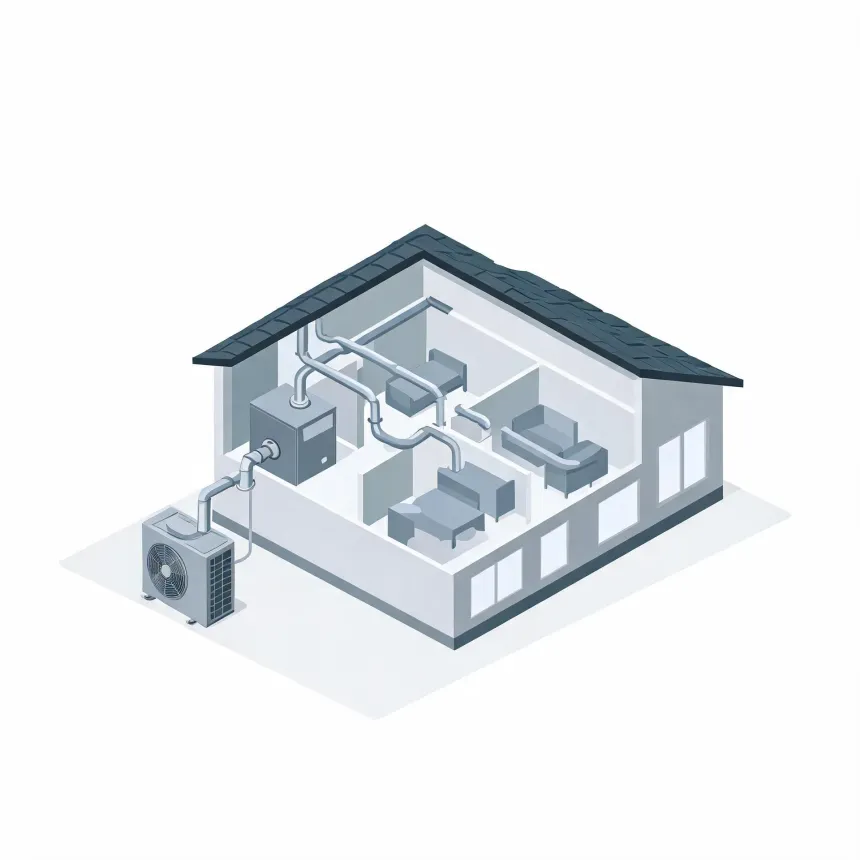
Isometric cutaway illustration of a single-story house showing an indoor air handler, branching ductwork through rooms with furniture, and an outdoor condenser unit connected by a line outside the wall.
Your system heats October through May and cools June through August.

NOAA nClimDiv, 1991–2020 normals

Winter nights here average 20°F, and a heat pump still has to carry the house through them.

A standard system sized for this county handles that fine. Nothing here calls for going bigger.

A standard heat pump handles Tooele winters fine

Power costs 12.22 cents a kWh statewide
497 damaging wind events from 2015 to 2024
14 winter storms from 2015 to 2024
Get it in before SeptemberHeat here starts in October. Install before September and it's running from day one, not day two.

Tooele County falls under zone 5B, a cool, dry climate where heating carries more of the load than cooling does. Any split-system heat pump installed here has to meet a federal minimum efficiency, set for units built from 2023 on. That floor is set for the climate, not just the equipment. A unit rated for a milder zone won't be enough here. Contractors sizing a system for this county are already working above that line, not up to it. A federal tax credit is also available on qualifying heat pump installations, worth asking a contractor about when comparing systems.

A standard setup is the right call here

Tooele County sees its share of wind and the occasional winter storm, but none of that changes what a heat pump needs to do here. A standard system sized for this county's winters holds up fine without upgrading to a bigger or pricier unit.

Find a contractor
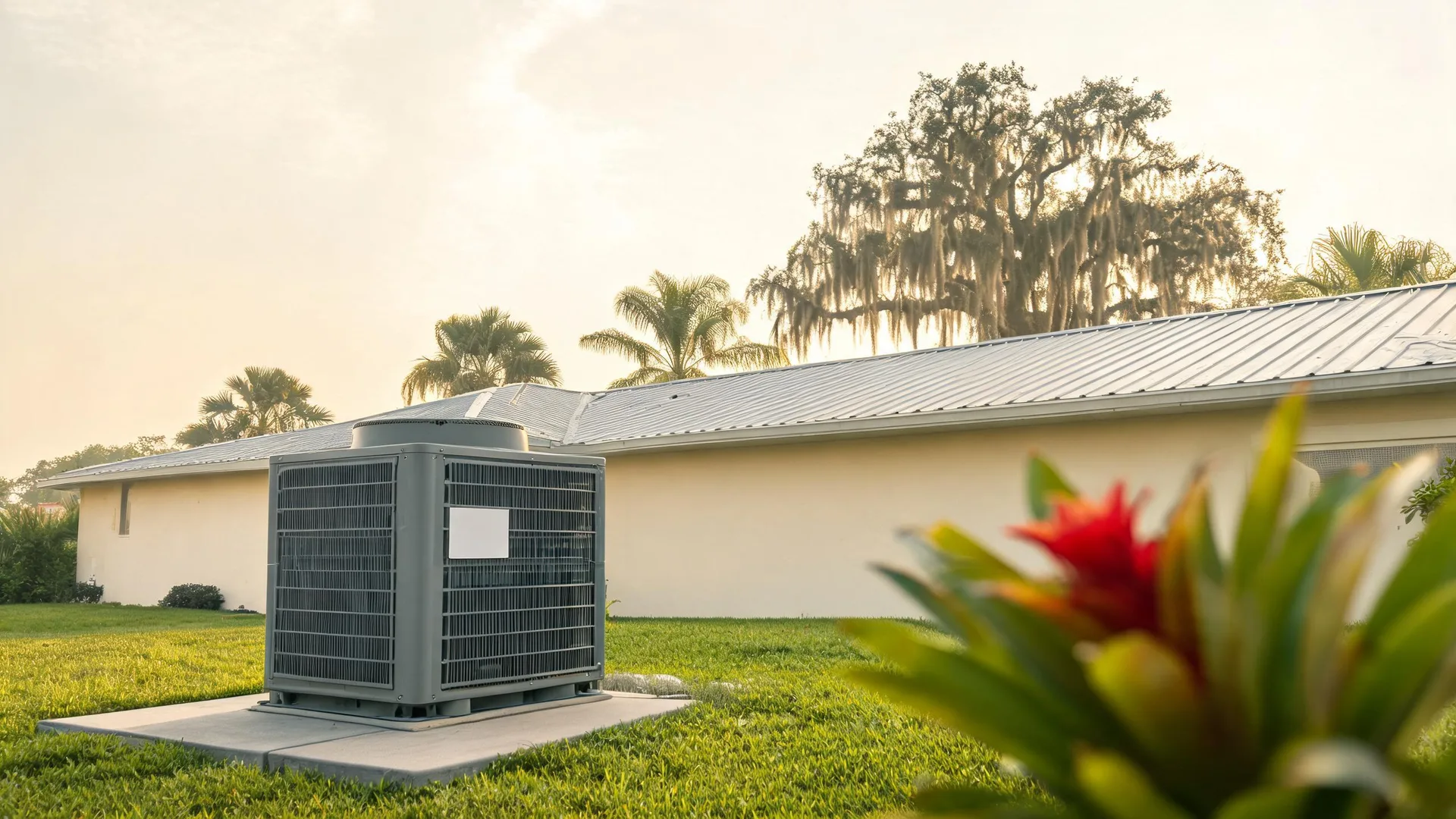
A dark gray heat pump unit mounted on a concrete pad next to a house with gray siding and a stone veneer wall.

What happens to what's already there

If the old furnace still runs, a contractor can leave it in place and tie the new heat pump into the same ductwork. That's the dual fuel setup. If it's on its way out anyway, most jobs call for pulling it instead of working around it. A furnace near the end usually shows it first, longer burn cycles to reach the same temperature, a burner that cycles more than it used to, rust around the flue. An old AC condenser tends to just stop, often on the day it's working hardest. Whatever comes out gets hauled off once the new system is in and running. The refrigerant gets recovered first. It can't go out with the unit.

Sizing comes from a load calculation, not the old system's rating

A contractor works out heat loss and heat gain room by room, looking at square footage, window area, insulation and how the house is laid out. The number that comes out of that calculation is what sizes the equipment. Matching the new heat pump to whatever the last furnace or AC was rated for skips that step, and if that old system was never sized right, the mistake just carries forward.
Oversized and undersized both cause problems, in different ways

A heat pump that's too big cools or heats the air fast and shuts off before it's pulled the moisture out of the air or run long enough to distribute heat evenly, so rooms end up clammy or uneven. One that's too small runs constantly during the coldest or hottest stretches and still can't quite catch up. Either way the fix isn't a bigger unit, it's the right one for the house.

A few things move the price on a heat pump job before the unit even gets picked. Ductwork is one. If what's there is sealed and sized right, a contractor connects to it and moves on. If it's leaky or undersized for the new system, that gets fixed or replaced, and that's labor the equipment price doesn't show. Electrical is another. Heat pumps run on a dedicated circuit, and if the panel doesn't have room or the wiring to the outdoor unit isn't there, that's additional work. Where the outdoor unit goes matters too, how far the lines run from the panel and from the indoor coil. A straightforward swap in roughly the same spot costs less than a setup that needs new line sets run through walls or a long trench. None of this is optional or padded in. It's what the house actually needs to run the system correctly.

Install day starts with the old equipment coming out, if there is any, and the new outdoor unit and indoor coil going in. A contractor runs the line set between them, ties into the ductwork or sets the air handler, and wires the new circuit back to the panel. Once everything's connected, the system gets charged with refrigerant to the manufacturer's spec, not just topped off and left. Then comes startup testing, checking static pressure in the ducts, airflow at the registers, and temperature split between the air going in and the air coming out. A contractor won't call the job done until those numbers check out, because a heat pump that's low on charge or starved for airflow will run harder than it should from day one.