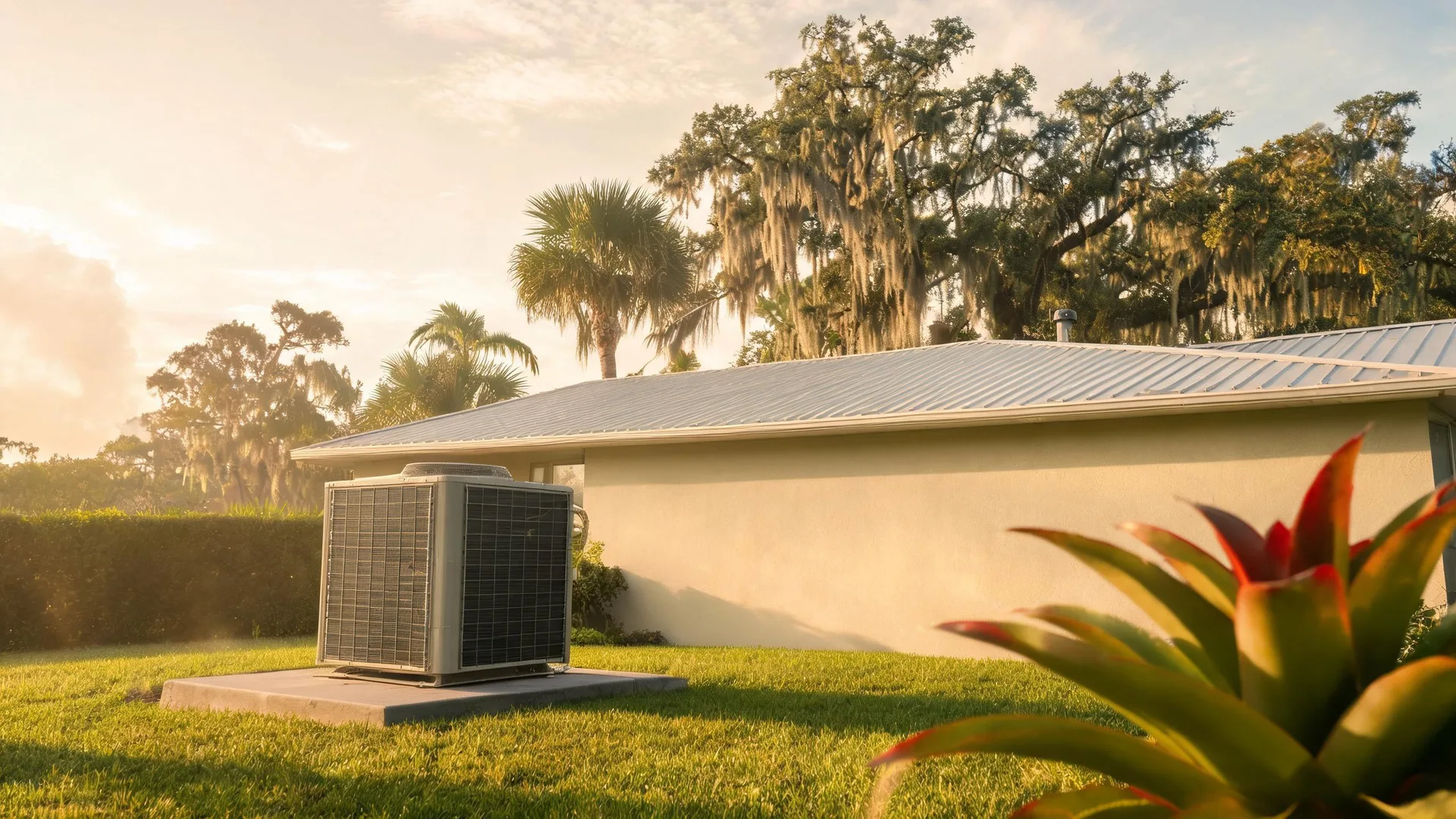
Gas heats almost every home here
Utility gas heats 91.4% of occupied homes in Morgan County. Electricity accounts for only 4.9%. A furnace is still the baseline most houses were built around.
Takes about a minute. No obligation.
Utility gas heats 91.4% of occupied homes in Morgan County. Electricity accounts for only 4.9%. A furnace is still the baseline most houses were built around.
Installing one here usually means adding equipment and ductwork sized for it, not swapping a gas furnace for an electric one piece for piece. Whoever bids the job should walk the house and size it for this climate, not just the square footage.

NOAA nClimDiv, 1991–2020 normals
A heat pump here runs on regular household power, at 12.22 cents per kilowatt-hour.
A standard size and efficiency fits this job. Nothing about Morgan pushes you toward bigger or pricier equipment.




Morgan County sits in zone 6B, a cold, dry climate with a long winter. Any split-system heat pump installed here has to meet federal minimums for cooling and heating efficiency. That sets the floor for what a contractor can legally install, no matter the brand. A system meeting those minimums is built to handle the cold here without anything added on top. There's also a federal tax credit available for qualifying heat pump installations, worth checking against whatever equipment gets bid.
A standard size and efficiency fit fine here. There's no local reason to go bigger or pricier.
Find a contractorA heat pump does not run the way a furnace does. A furnace fires, blasts heat, and shuts off. A heat pump cycles on for longer stretches at lower output, holding the house steady instead of chasing the thermostat. Ask what compressor is in the unit and what the warranty covers on it specifically, apart from the rest of the system, since that part carries the job day after day. Ask about the defrost cycle too. In cold weather the outdoor coil frosts up, and the unit has to reverse itself now and then to clear it before going back to heating. Some designs handle that step more smoothly than others. Also ask how the system handles the coldest nights, since every heat pump loses some capacity as it gets colder outside, and a good install plans for that rather than leaving the house short.
A heat pump carries a cooling rating and a heating rating, and they don't move together. A unit can perform well on one and only middling on the other. In a cold climate, the heating rating is the one that matters most to what you pay to run it, even though the cooling rating is often printed first on the label.
The rating on a heat pump comes from a test run at a fixed indoor and outdoor temperature, the same test for every unit sold. It lets you compare one system against another. It doesn't tell you what that system will actually use once it's installed, since that depends on how cold it gets outside, how tight the ductwork is, and how the thermostat gets set day to day.
If the old system is a furnace, most of it comes out. The furnace itself goes, along with the flue if it vented one. An outdoor condenser gets set where the old one stood, or close to it, and the line set and electrical get run to match. If there's existing ductwork, a contractor can often reuse it, though a heat pump moves a different volume of air than a furnace did, and that sometimes means changes to a return or a few runs to keep the airflow right. The gas line itself usually just gets capped off, not torn out. Anything still tied to the old equipment, like a thermostat wired for a single-stage furnace, gets replaced too, since it won't run the new system properly.
Installation day starts with the old equipment coming out before anything new goes in. The indoor coil gets set in the plenum, the line set gets run out to where the condenser will sit, and the electrical gets pulled to both. Once the condenser is in place, the lines get connected, and the whole system gets evacuated to pull out air and moisture before refrigerant goes in. That step matters more than people expect. Any moisture left in the lines turns to acid over time and shortens the life of the compressor. After charging, the contractor checks refrigerant pressures against the manufacturer's numbers for the conditions that day, then runs the system in both directions, cooling and heating, to confirm the reversing valve switches cleanly. Last comes the thermostat, set up for the stages this system actually has, not left on whatever settings the old one used.