





An outdoor air conditioning condenser unit mounted on a concrete pad in front of a single-story suburban house.

Heat Pump Installation in Loa, UT

Tell us about the job

Takes about a minute. No obligation.

New system or replacementHeat PumpWayne County, UT
Step 1 of 2

What ZIP code is the job in?

Electricity heats more homes in Wayne County than any other fuel, 36.2% of them. Bottled or LP gas comes next at 19.0%. A heat pump runs on electricity, so it fits right into what's already set up here, no new fuel line or tank to deal with. That's one less thing standing between you and getting it installed.

8 months
October through May, your system heats
3 months
June through August, it cools
21°F
the average winter night it heats against
87°F
the average summer afternoon it cools against
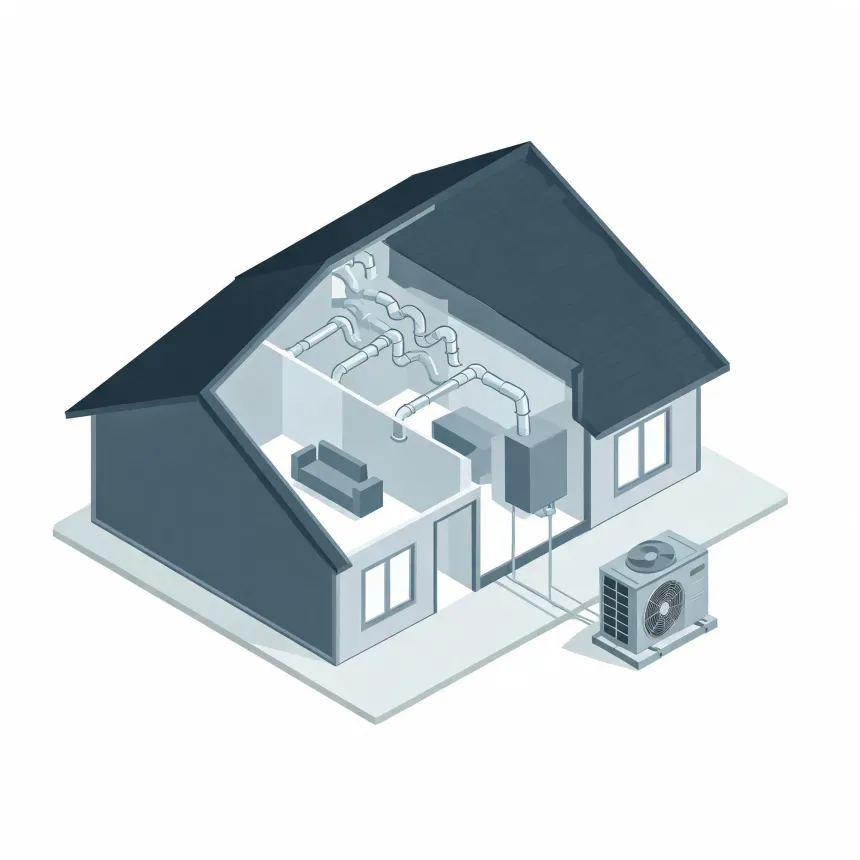
Isometric cutaway illustration of a house showing interior ductwork, an indoor air handler unit, and an outdoor condenser unit beside the building.
Your system heats October through May and cools June through August.

NOAA nClimDiv, 1991–2020 normals

Heat here runs October through May, eight months out of the year.

September is the month to get a heat pump installed, so it's heating your home on day one instead of partway through.

Loa doesn't need an oversized heat pump, just one that holds up to winter

32 winter storms from 2015 to 2024
Winter nights average 21°F
Power costs 12.22 cents a kWh statewide

Wayne County sits in zone 5B, a cool climate where heating matters more than cooling. Any split-system heat pump installed here has to meet the federal minimum tied to that zone, 14.3 SEER2 for cooling and 7.5 HSPF2 for heating. That heating number is the one that counts for a place that runs cold most of the year. It's a floor, not a ceiling, so equipment can still clear it by different margins depending on what you choose.

Pick it for the winters, not the power bill

Electricity here runs 12.22 cents a kilowatthour, cheaper than most of the country. That makes the running cost less of the deciding factor than it is elsewhere. What matters more in Loa is whether the unit holds up through a Wayne County winter. Weigh reliability and the right fit for this climate over chasing the highest efficiency number.

Find a contractor
A man in a dark shirt and brown pants carries a worn canvas tool bag up concrete steps toward a gray-blue front door of a house with horizontal siding and a potted shrub.
A gray air-source heat pump mounted on a concrete pad next to a house with gray vinyl siding, surrounded by gravel and flanked by green shrubs and white hydrangea flowers.

What actually sets the price of a heat pump install

Sizing is the first thing that sets the price. A heat pump that has to work harder in the cold needs a bigger compressor and more coil to pull heat out of cold air, and that costs more than a unit built mostly for cooling. Ductwork is next. If the existing ducts are the right size and in good shape, installation goes faster and costs less. If they're undersized, leaky, or missing in part of the house, that work gets added to the job. Electrical capacity matters too. Some panels can take a heat pump as is, others need upgrading to handle the load, and that's not something you find out until someone looks at the panel itself. Backup heat is its own decision. A heat pump that relies on strip heat for the coldest days is simpler to install than one paired with a furnace for dual fuel, but the dual fuel setup can be easier on the system over a long winter. None of this is about the brand on the unit. It's about what the house already has and what the climate asks the equipment to do.

Ask for the heat output at low temperature, not just the rated capacity

Every heat pump loses capacity as the air outside gets colder. The spec sheet that matters shows how many BTUs the unit still puts out once it's actually cold, not just what it does in mild conditions. Units can carry the same name and size but perform very differently once winter sets in.

Ask what happens on the coldest nights

Below a certain outdoor temperature, a heat pump alone may not keep up, and something has to take over, either strip heat built into the air handler or a furnace working alongside it. Find out which one is part of the quote, because that choice changes how the system is wired, how it's controlled, and how it feels to live with on the hardest nights of winter.

Sizing a heat pump starts with a load calculation, not a guess based on square footage. A contractor measures the house room by room, accounting for window area, insulation, and how the space is laid out, then works out how much heat it loses on the coldest day. Too big and the unit short cycles, running in bursts that never quite even out the temperature or pull moisture from the air. Too small and it runs flat out without catching up when it's coldest, the exact moment you need it most. The compressor and coil both get sized off that load number, so getting it right shapes everything else about how the system performs once it's in.

Install day starts with the equipment already sized and the ducts already looked at, so the crew isn't making those calls on the fly. The outdoor unit goes on a pad or bracket, the indoor coil ties into the air handler or existing furnace, and refrigerant lines run between them, get brazed, then get pressure tested before anything is charged. A tight system matters more with a heat pump than with straight air conditioning, since it's moving heat in both directions and any leak shows up as weaker heat on the coldest days, not just a sluggish cooling complaint in summer. Once the lines hold pressure, the system gets evacuated to pull out moisture and air, then charged to the weight the manufacturer specifies, not just until the gauge looks close. Electrical work usually runs alongside the mechanical work, a dedicated circuit and disconnect for the outdoor unit, and wiring to whatever thermostat or control board runs the system. Before anyone leaves, the unit gets run in both heating and cooling and checked against its airflow and temperature targets, so anything wrong shows up that day instead of on the first real cold night.