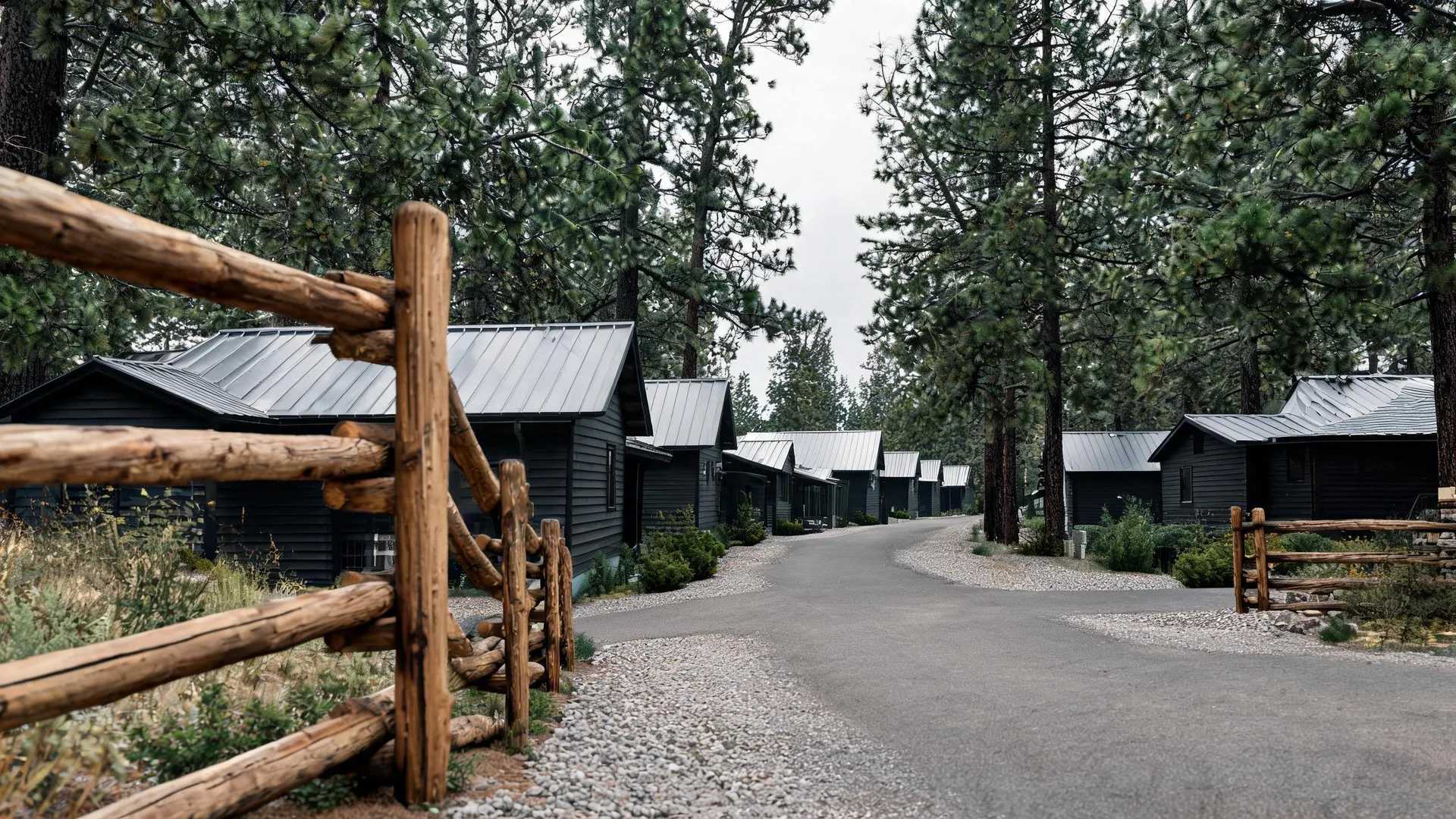






A paved lane lined with gravel shoulders passes a row of dark-sided cabins with metal gable roofs, bordered by a peeled-log fence in the foreground and tall pine trees under an overcast sky.

Heat Pump Installation in Garden City, UT

Tell us about the job

Takes about a minute. No obligation.

New system or replacementHeat PumpRich County, UT
Step 1 of 2

What ZIP code is the job in?

A standard heat pump, sized to your home's square footage, is the right call in Garden City. Nothing about this place asks for oversized equipment or a premium efficiency tier. Get the sizing right and the unit runs steady, warming or cooling without short cycling. Get it wrong, in either direction, and you pay for it on the power bill. Utah homes paid 12.22 cents per kilowatt-hour in 2024, and that rate applies whether the unit is matched to the house or not. A unit that's too big costs more to buy and still runs less efficiently than one sized correctly.

10 months
September through June, your system heats
11°F
the average winter night it heats against
76°F
the average summer afternoon it cools against
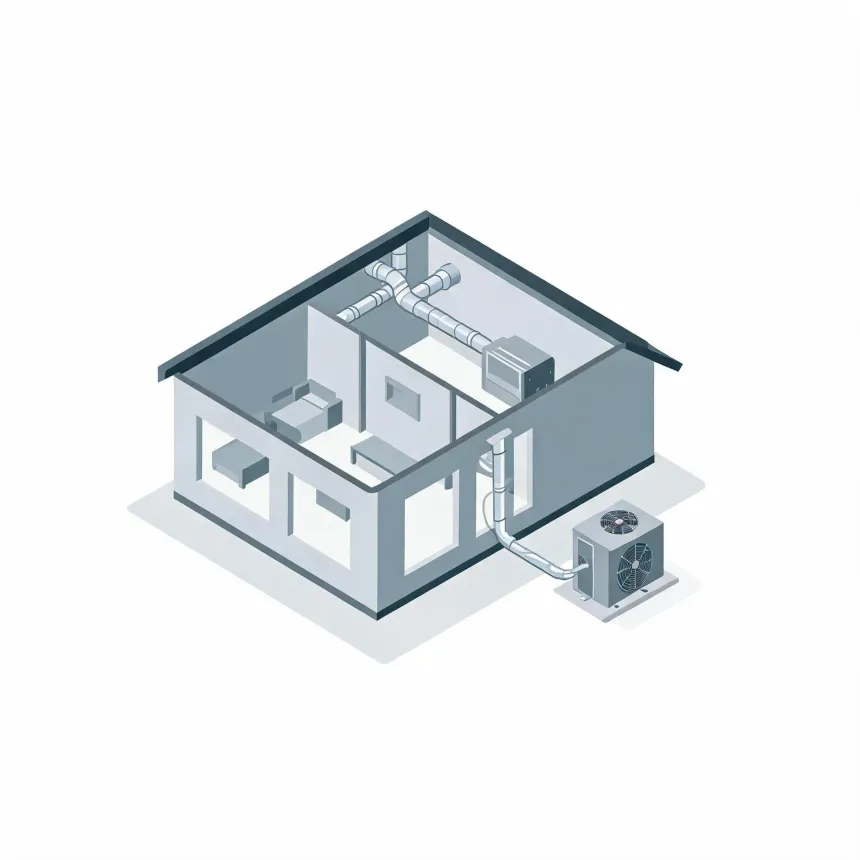
Isometric illustration of a cutaway house showing interior rooms, ceiling ductwork and an air handler, connected by lines to an outdoor condenser unit on a pad beside the building.

A load calculation sizes the heat pump, not the rating on the unit it replaces.

The calculation weighs the walls, windows and layout of the house, so the new system matches the rooms it has to heat and cool.

Heat runs September through June here. Install before September and it starts the season on your schedule.

Heat runs September through June
43 winter storms from 2015 to 2024
Winter nights average 11°F
Built for Rich County wintersOvernight lows average 11°F here in December, January and February.

Rich County falls in climate zone 6B, cold with heat running most months of the year. Any split-system heat pump installed here, if manufactured from 2023 on, has to clear federal minimums of 14.3 SEER2 for cooling and 7.5 HSPF2 for heating. That floor applies everywhere, not just here, so it's not a reason to pay more for this install than one in a milder state. A unit that meets these numbers and is sized to the house is what the code asks for. Nothing about Rich County's climate pushes you toward a higher tier than that.

Go with the standard fit

A standard size and efficiency fit fine here. There's no local reason to go bigger or pricier.

Find a contractor
A man in a cap, dark long-sleeved shirt and tan work pants, seen from behind, carries a canvas tool bag up concrete steps toward a dark blue front door flanked by white columns and a potted shrub.
A residential heat pump outdoor unit mounted on a concrete pad next to a house with gray vinyl siding.

What happens to the old unit

Whatever is getting replaced does not just vanish. A contractor has to recover the refrigerant out of the old system before touching the lines. That is the law. It gets reclaimed, not vented into the air. After that the unit comes apart. The compressor, the coils, the sheet metal cabinet, most of it is scrap metal and gets recycled. If the old line set does not match what the new heat pump needs, that gets replaced too rather than reused. Worth checking before install day is where the old condenser sits and whether the new one can go in the same spot. Keeping it close by means less line and wire has to be run.

What the rating measures

SEER2 measures cooling efficiency and HSPF2 measures heating efficiency, both over a full season rather than at any one moment. A heat pump pulls both numbers because it does both jobs. Neither number says how big a unit is or how much heat or cold it can move. That's capacity, a separate figure entirely, and it comes from the load calculation, not the rating label.
Why a higher number isn't automatically worth it

A heat pump only earns its efficiency rating when it's sized right and installed well, matched refrigerant charge, correct airflow, ductwork that can actually move the air it's pushing. Pay for a higher tier on a system that's oversized or poorly matched to the house and that unit still won't perform to its number. The rating is a ceiling, not a guarantee.

Ask what happens on the coldest nights. Every heat pump loses capacity as the outdoor temperature drops, and at some point the compressor can't pull enough heat from the outside air to keep up alone. Ask how the system covers that gap. Some installs pair the heat pump with a backup heat source that kicks in automatically. Others rely on strip heat built into the air handler. Ask where the balance point is set, the temperature where backup takes over, and what that choice does to the heating bill on the coldest stretch of the year. Also ask about the thermostat itself. A thermostat built for a heat pump manages that backup heat so it only runs when needed. An ordinary thermostat can call for backup heat too early, and that runs up the cost of every cold night without you knowing it.

Installation starts with the old system coming out and the new one going through a pressure test before anyone touches the refrigerant. The line set gets checked for leaks, then evacuated to pull out moisture and air before any charge goes in. Refrigerant gets weighed in to the manufacturer's spec, not just topped off until the gauge looks right. The air handler or indoor coil gets matched to the airflow the ductwork can actually handle, and that gets checked too, not assumed. Once it's running, a tech checks temperatures at the vents against what the unit is pulling in, confirming the system is moving the heat it's supposed to. The thermostat gets set up last, programmed for how a heat pump actually runs rather than how a furnace does.