Furnace on but house still cold in Utah

Tell a local repair pro what your furnace is doing.

Match me with a pro

The blower running with no warm air coming out usually means the furnace is trying to heat but can't finish the job. A clogged filter can choke off airflow until the unit overheats and shuts the burners down early, leaving just cold air moving through the vents. A failed igniter or flame sensor will let the blower run on a timer while no flame ever lights. Low gas pressure or a bad thermostat signal can do the same thing, telling the fan to go while the burner stays quiet. Sometimes it's simpler: a thermostat set to "on" instead of "auto" will run the fan constantly between heat cycles, which feels like cold air blowing all day. None of these clear up on their own, and running the furnace while it cycles like this can wear down the parts further. Worth having it looked at before a cold night turns into no heat at all.

  1. Thermostat calls for heat and signals the control board.

  2. Inducer motor starts to clear the heat exchanger.

  3. Igniter heats up or the pilot lights the burners.

  4. Burners fire and begin warming the heat exchanger.

A woman in a gray turtleneck sweater stands by a window looking outside at snowy ground, with a dimly lit living room containing a sofa, shelves, lamp and a lit candle behind her.
A woman in a cream cable-knit turtleneck sweater stands in a warmly lit living room with a fireplace and shelves behind her, looking out a window toward snow-covered trees and a railed deck.
A woman in a cream knit turtleneck sweater stands by a window looking out at snow, with a lit fireplace, sofa and lamp in the room behind her.
A woman in a gray knit sweater sits by a window looking out at falling snow, with a dimly lit living room containing a sectional sofa, pillows, a lamp and houseplants behind her.

Why gas furnaces short cycle

A furnace that fires, runs for a minute or two, then shuts off before the house warms up is usually protecting itself. The flame sensor reads the burner flame to confirm it's burning clean. A coating of soot or oxidation on that sensor can make it misread a good flame as no flame, so the control board cuts gas to the burners rather than let gas run unburned. A cracked heat exchanger can trip the same shutdown through a different safety switch. Either way, the furnace keeps trying and keeps stopping, and the blower may keep pushing air that never gets properly heated.

What the thermostat can tell you

Check the thermostat setting against the room temperature before anything else. If the thermostat reads 70 but the room is at 65, the furnace isn't satisfying the call for heat, which points toward airflow or a weak flame rather than the thermostat itself. If the thermostat display is blank or dim, the furnace may not be getting power at all, which is a different problem from one that fires but can't keep the house warm. Utah winters put a furnace through months of steady runtime, so a small sensor or ignition issue that would pass unnoticed in October tends to show up as a real problem by January.

An older beige furnace with a louvered vent panel stands on a concrete basement floor beside galvanized sheet-metal ductwork, a metal flue pipe and vertical pipes along a concrete wall.
Before you get your furnace repair
A beige high-efficiency furnace with white PVC vent pipes stands beside galvanized sheet-metal ductwork in a basement with a concrete floor, exposed wood studs, and metal piping along the wall.
After you get your furnace repair

Troubleshoot It or Call for Repair

Fix it yourself first

  • Swap the filter if it's been more than a few months, since a clogged one can choke airflow and trip the limit switch.
  • Check the thermostat is set to heat and the temperature is actually set above room temperature, not just displaying it.
  • Make sure the furnace switch, the one that looks like a light switch near the unit, hasn't been bumped off.
  • Look at the breaker panel, since a tripped breaker will stop the blower or inducer motor without any other warning.
  • Open every supply vent in the house, since closed vents in unused rooms can starve the system of airflow it needs.

Call for repair

  • The burners light, then the furnace shuts off within a minute or two, which points to a flame sensor or limit switch problem a tech needs to test.
  • The blower runs constantly but the air coming out is barely warm, which can mean a failing igniter or a gas valve not opening fully.
  • You smell gas near the furnace, which means shutting off the gas supply and getting a contractor out rather than troubleshooting further.
  • The furnace has tripped its breaker or blown a fuse more than once, since that points to an electrical fault inside the unit.
  • Resetting the switch or breaker brings it back on for a few minutes before it cuts out again, which usually means a part is failing, not a fluke.
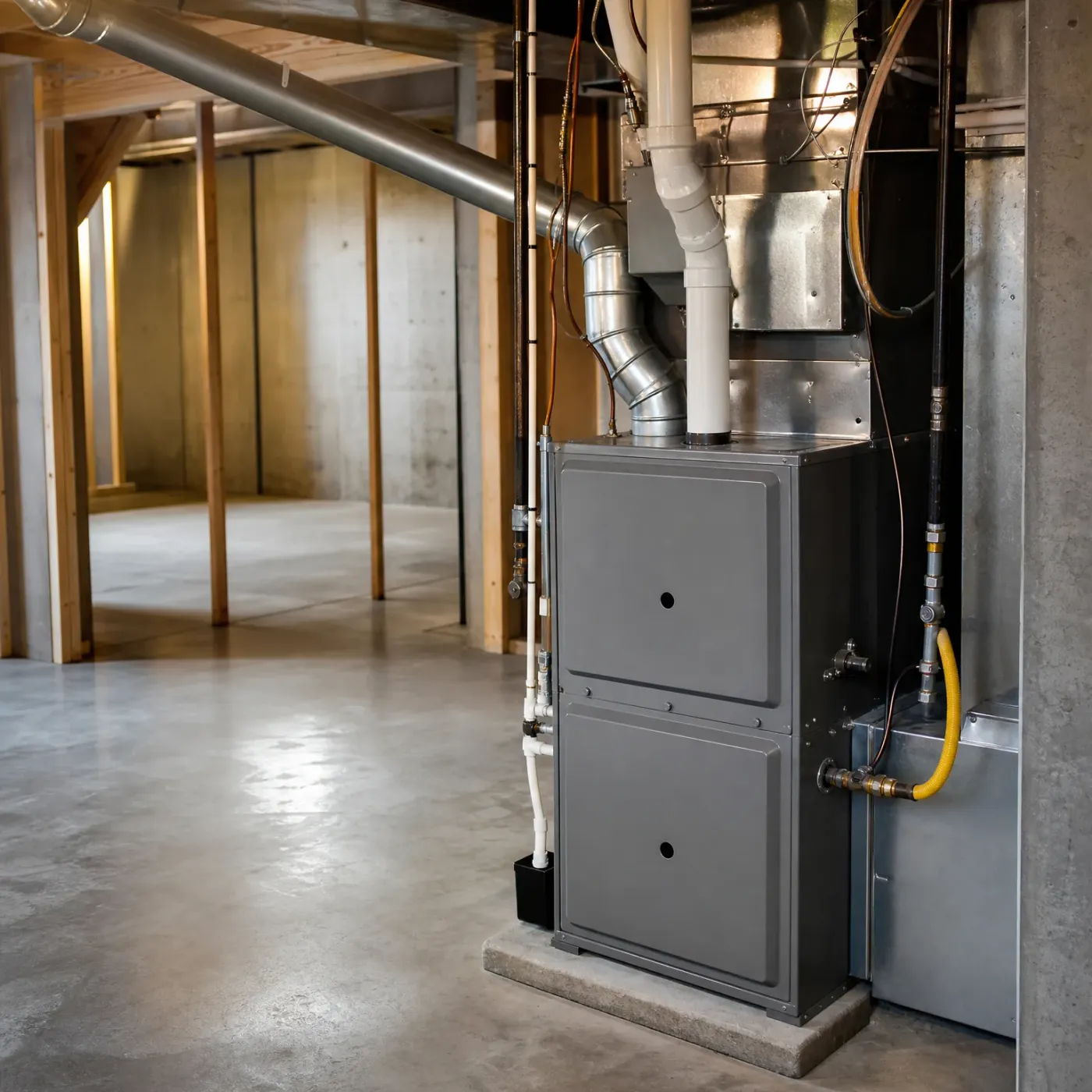
A gas furnace with two gray access panels stands against a plain wall in a basement, connected to sheet-metal ductwork, white PVC vent pipes, and a yellow gas line.

Rooms that never catch up

When a furnace short cycles or the blower runs without heat, the rooms furthest from the furnace fall behind first. A bedroom over the garage or a room at the end of a long duct run can sit five or ten degrees colder than the thermostat reading. You end up running space heaters, closing vents, or layering blankets while the thermostat insists the house is at temperature.

A gray high-efficiency furnace in a basement corner with white PVC vent pipes, copper and black gas piping, and sheet-metal ductwork beside a plain white wall and wooden stair framing.

What keeps running in the meantime

A furnace that cycles on and off all day is drawing gas each time it fires, even if it shuts down before the house warms up. The blower motor and inducer motor are also starting and stopping more than they should. None of that gets you a warm house. It just means the parts are working harder for a result you're not getting, with Utah's cold stretch from November through February still ahead.

Why is my furnace blowing cold air instead of heat?

You stand at the vent and feel air moving, but it's not warm, and the house is getting colder instead of warmer. The furnace sounds like it's running, so it's confusing when nothing comes out of the ducts but room-temperature or cold air. You want to know what's actually happening inside the unit before deciding whether this is something to check yourself or call someone about.

The burners shut off but the blower kept going

The blower and the burners are controlled separately, and the blower runs on its own timer once it starts. If the igniter fails to light the burners, or the flame sensor can't confirm a flame and cuts the gas, the control board stops the heating part of the cycle but the blower often keeps moving air that was never heated. A dirty flame sensor is a common reason for this in gas furnaces, since it reads the flame to prove it's burning clean and shuts things down if it can't get a clear signal. With gas this common across Utah, a furnace that runs but won't light is one of the more frequent calls a repair tech gets in the winter months.

A bearded man in a blue and brown plaid flannel shirt stands indoors looking out a window at snow-covered trees, with a ceramic mug on the windowsill.
A man in a blue T-shirt sits on a light gray sofa, laughing while looking at an open laptop in the foreground, with a framed picture, lamp and potted plant behind him.
A gray gas furnace on a concrete pad in an unfinished basement, connected to sheet-metal ductwork, white PVC venting, and a yellow gas line, with concrete walls and wood framing in the background.

A local pro for your furnace repair

Send the request and finding a pro stops being your problem.

A local pro who knows furnaces gets your details and gets in touch.

Send my request

No charge to send it. You decide if you hire them.

A gray high-efficiency furnace with two PVC vent pipes stands in an unfinished basement beside sheet-metal ductwork, a framed and plastic-covered wall, and a bare concrete wall with vertical pipes.
A furnace like this fires right up, runs its full cycle, and sends warm air through every duct in the house.
A gray furnace cabinet in a basement, connected to galvanized sheet-metal ductwork and white PVC pipes, against a concrete wall with exposed metal piping and insulation overhead.
This one sits unhooked up on a pallet, a sign it's being swapped out instead of coaxed through another winter.
A dark interior hallway with a dim window at the end, a wooden floor, a stair railing on the right, and a bench or rug in the foreground.

You wake up because the room feels wrong before you know why. The clock says 2 a.m. Out in the hallway the vents aren't pushing anything, not even a whisper of air, and when you crouch down and put your hand over one there's nothing. The window at the end of the hall has frost crawling up the inside of the glass. Everything is lit in that flat blue that comes off snow outside with no other light on. You can hear the furnace down below, or think you can, but whatever it's doing isn't reaching the second floor. Your feet are cold on the floor through your socks. Outside it's the kind of January night Utah gets, the air dry and sharp enough to hurt.

Winter nights average 21°F statewide

With nights averaging 21°F across December, January and February, your furnace can't take a night off. If it's short cycling or blowing cold while that kind of cold sits outside, a room can lose its heat fast.

NOAA nClimDiv 1991-2020 county normals weighted by homes

A gray furnace cabinet in a basement with sheet-metal ductwork, white PVC vent pipes, and black gas piping against a concrete wall and wood-framed partition on a bare concrete floor.

Running the way it should

A furnace like this sits on a solid base, hooked to the duct and the gas line with no rust creeping in. It fires, runs its cycle, and warms the whole house evenly. The metal is clean and the connections are tight, which is what lets it do that.

A gray metal furnace with two white PVC vent pipes stands on a concrete floor beside galvanized sheet-metal ductwork in a basement or utility space with wood framing.

Rust and age working against it

Surface rust on the cabinet and plenum like this often shows up after years of condensation or a slow leak nearby. It doesn't mean the furnace quits that day, but it can mean a cracked heat exchanger or a failing part is close behind, and the house stops holding its heat.

What are you noticing right now in your house

You can hear the furnace running, maybe feel air moving at the vents, but the rooms aren't warming up. Some rooms might feel fine while others stay cold no matter how long the furnace runs. The thermostat could say it reached the set temperature when the house clearly hasn't. You might notice the furnace cycling on and off more often than it used to, or running longer stretches without the house catching up. If this goes on, pipes in unheated spaces like a garage or crawlspace are at more risk once outdoor temperatures drop well below freezing, and a furnace working harder than it should tends to wear out the parts carrying that extra load.

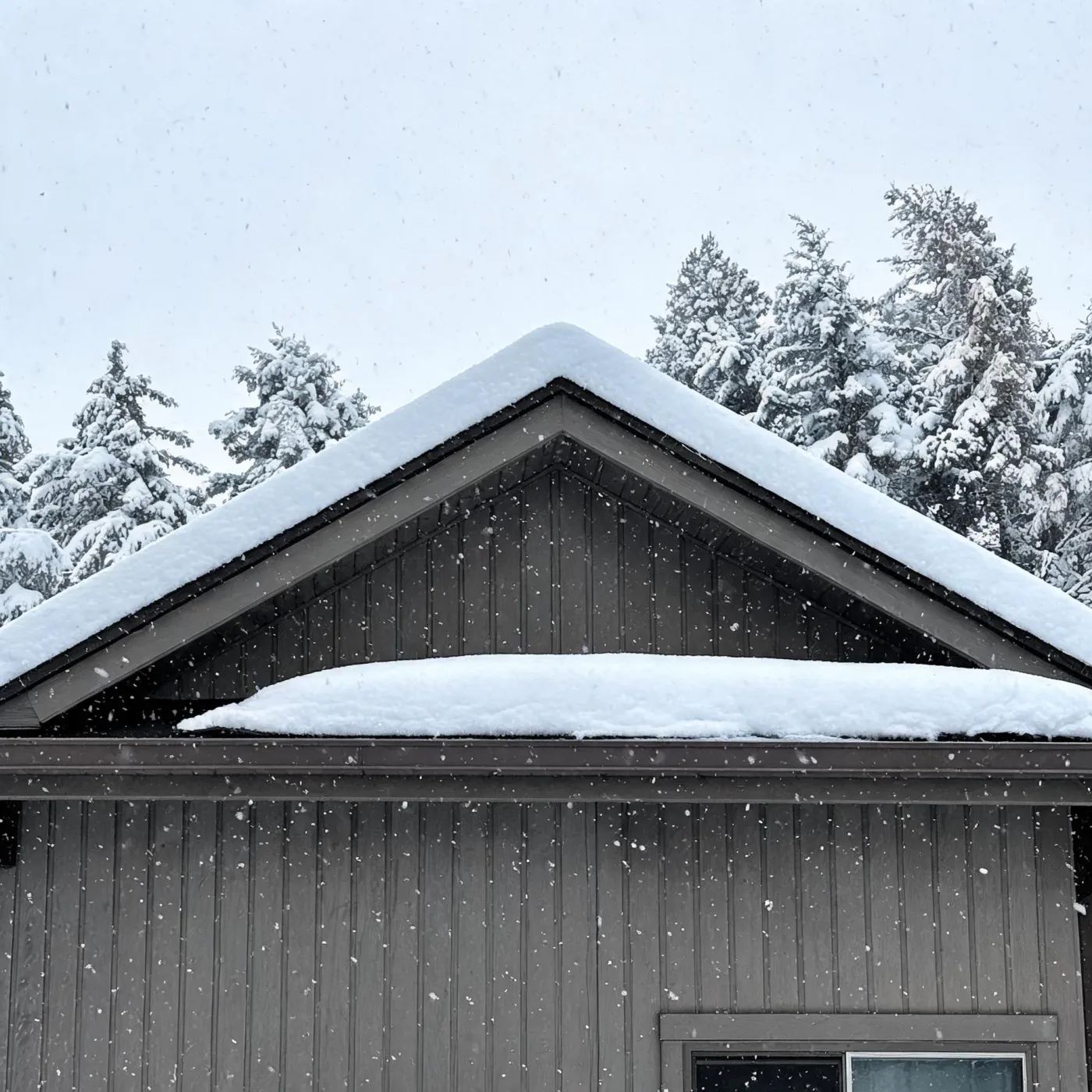
Snow-covered gable roof of a dark brown vertical board-and-batten house during falling snow, with snow-laden conifers behind it under a pale gray sky.

Statewide, winter nights average 21°F, according to the National Weather Service. At that temperature a furnace that's running fine is already working hard just to keep up, cycling on and off most of the night to hold the house at setpoint. One that's short cycling or losing airflow doesn't have the room to recover between cycles. A bedroom or a room at the far end of the ductwork can drop noticeably before morning, and you'll feel it first in your hands and feet even if the thermostat still reads close to normal.

NOAA nClimDiv 1991-2020 county normals weighted by homes

A man in a dark blue shirt stands in an open front doorway of a stucco and wood-clad house, facing a blond woman seen from behind in the foreground on a stone walkway.

Furnace running, house still cold

A furnace that runs but doesn't warm the house has a reason, and it's almost always one of a handful of things: a dirty filter choking airflow, a flame sensor too coated to hold a flame, a limit switch tripping from overheating, or a blower that's lost its nerve. None of these fix themselves by waiting. The furnace will keep cycling the same way tomorrow night, at the same 21°F outside, until the actual part gets looked at.

You don't have to figure out which one it is before you do anything. A contractor who works on furnaces in Utah homes sees this same call all winter and knows which part to check first. Once you send the form, the search is done on your end. Someone who handles this for a living takes it from here and reaches out to sort out what your furnace needs.

A living room corner with a beige sofa and cushion, a round wooden coffee table holding a pale ceramic vase of eucalyptus stems and a wooden bowl, and a curtained window with a potted plant above a latticed radiator cover in the background.
An empty basement with bare concrete walls and floor, exposed wooden joists and pipes overhead, and a dark furnace with sheet-metal ductwork and vent pipes in the right corner.

Get the right pro for your furnace

After this form, you can stop searching for a furnace pro.

RepairFurnace or heatingUtah
Step 1 of 2

What ZIP code is the job in?