One check a year covers it
Your furnace runs eight months here, October through May. A single maintenance visit before that stretch starts is enough to catch a weak igniter or a cracked heat exchanger before the cold sets in.
Takes about a minute. No obligation.
Your furnace runs eight months here, October through May. A single maintenance visit before that stretch starts is enough to catch a weak igniter or a cracked heat exchanger before the cold sets in.
Overnight lows average 20°F through December, January and February. That's the stretch your furnace has to run without a problem, which is why the check belongs in fall, not in the middle of winter.
Furnace season in Tooele County starts in October and runs eight months, through May.
September is when the check belongs, before the furnace has to carry that whole stretch.

Gas heats 77% of homes in Tooele County, more than anything else. That's a burner, not just a blower and a filter. A yearly check means a tech cleans the burner, checks the flame sensor and igniter, and tests the venting and the safety controls that shut the furnace down if something's wrong. That matters more here than in a county running mostly electric heat, where there's no flame or exhaust to check at all. Electric heat, at 18.5% of homes here, doesn't carry that risk. If your furnace runs on gas, the venting and controls are worth a tech's time every year, not just the filter.
Gas cost $12.55 per million Btu in Utah in 2024. That's what runs through the burner all winter here. One visit a year is what it takes to know the burner and venting are doing their job before the cold months ask the most of them.
Find a contractorHalf the homes in Tooele County were built in 1998 or later. If yours is one of them, the furnace likely has years of work left in it, and a yearly check is what keeps it on track. Catching a weak igniter or a cracked heat exchanger early matters more when there's that much life still ahead of the furnace.
A tech pulls the burner and looks at the flame. It should burn blue and even across every port. A yellow, lazy flame or one that rolls away from the burner means it's not getting the right air mixture, and that can mean carbon monoxide going somewhere it shouldn't. From the basement or a hallway, you can't see the flame at all.
The heat exchanger is the one part a visual check from outside won't tell you about. A crack in it lets exhaust mix into the air your furnace blows through the house, and it won't smoke or smell different when it starts. A tech checks it with a camera or a combustion analyzer, tools that look for what the crack lets through, not for the crack itself.
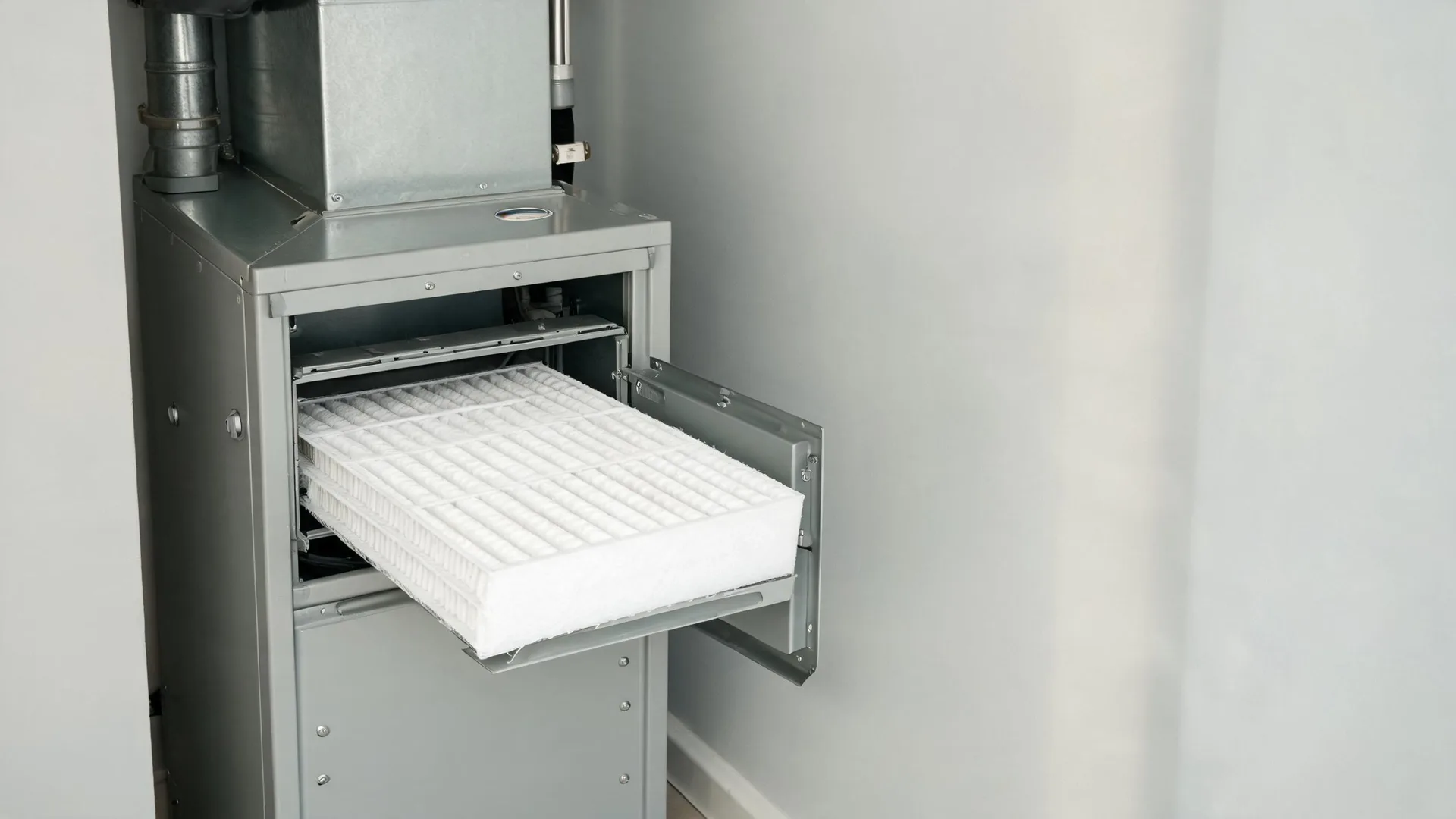
Between visits, the filter is the one thing that's on you. A dirty filter chokes airflow, and a furnace starved for air runs hotter than it should and shuts off before it's satisfied. Check it monthly and swap it when it's gray, not just when it looks solid black. Keep the area around the furnace clear, nothing stacked against it, nothing blocking the return vent. If you smell anything like rotten eggs, leave the house and call the gas company, that's not a maintenance item, that's an emergency. And if the furnace short cycles, or the flame looks yellow instead of blue, that's not something to wait on until the next scheduled check.
A tune-up starts before the burner gets touched. A tech pulls the filter and checks the blower wheel for dust, since a caked wheel moves less air no matter how clean the filter is. Then comes the burner assembly. It gets cleaned and inspected, and the flame sensor gets wiped down, because a coated sensor is one of the most common reasons a furnace lights and then shuts right back off. The igniter gets checked for wear. The pressure switch and limit switch get tested. The venting gets inspected end to end for blockage or corrosion. Last is a check that the thermostat is calling for heat correctly and the furnace is cycling the way it should. Skip this for a while and the small stuff, a sensor, a switch, turns into the reason you're calling for a repair instead.