




Illuminated timber-and-stone houses line a residential street at dusk, with evergreen trees in the foreground and a silhouetted mountain range behind them.

Furnace Maintenance in Provo, UT

Tell us about the job

Takes about a minute. No obligation.

Tune-up, service, or cleaningFurnace or heatingUtah County, UT
Step 1 of 2

What ZIP code is the job in?

Skip maintenance long enough and a furnace doesn't just get less efficient, it starts working against itself. Dust builds up on the burners and they stop burning clean, so the flame sensor reads a weak signal and shuts the whole thing down to be safe. A dirty filter chokes airflow across the heat exchanger, and that exchanger runs hotter than it should, which is exactly the part you don't want stressed year after year. The igniter wears out faster when it's firing against a dirty burner assembly. None of this announces itself. The furnace still turns on, still blows warm air, right up until the week it doesn't, usually the coldest week it's been asked to work the hardest.

A furnace tune-up checks the burners, the flame sensor and the heat exchanger in one visit.

One visit a year catches the wear before it becomes a shutdown in Provo's coldest week.

Wind and winter storms hit Utah County every year, and your furnace runs through all of it

203 severe weather events from 2015 to 2024
7% of homes statewide lost power a day or more in 2024
111 damaging wind events from 2015 to 2024

Furnaces in Utah County start their season in September and keep running clear through May. That's nine months of the year leaning on the same burners and igniter. August is when a tune-up does the most good, because it catches a weak flame sensor or a cracked igniter before the first cold morning asks everything of them at once. Wait until the furnace is already firing every day and it's working whatever problem was there from the start. Book it in August, before the season starts, not after.

Most homes here run on gas. Get the burner checked.

Gas heats 80.5% of homes in Utah County, more than any other fuel. That means a burner, a flame sensor and a heat exchanger doing the work, and none of those get touched by a fresh filter. A tune-up checks the parts a filter never reaches.

Find a contractor
A man in a gray polo shirt and tan work pants carries a worn canvas tool bag up porch steps toward a closed gray front door, with a potted shrub beside the entry.
A gray high-efficiency gas furnace installed in an unfinished basement, surrounded by gas lines, a condensate drain, and sheet-metal ductwork.

A newer furnace still needs the yearly check

Half the homes in Utah County were built in 2001 or later. If yours is one of them, the furnace is likely well within its working life, not pushing toward the end of it. That's exactly the furnace worth keeping on a yearly check. Catching a weak flame sensor or a sticking igniter early means the furnace stays reliable for the years it has left in it, instead of losing ground to problems that build up unnoticed year after year.

A quick visit checks that it runs

A fast tune-up looks at whether the furnace turns on, fires, and blows warm air. That tells you it worked that day. It doesn't tell you the flame sensor is reading weak, or that the burner flame has gone ragged and yellow instead of steady and blue.
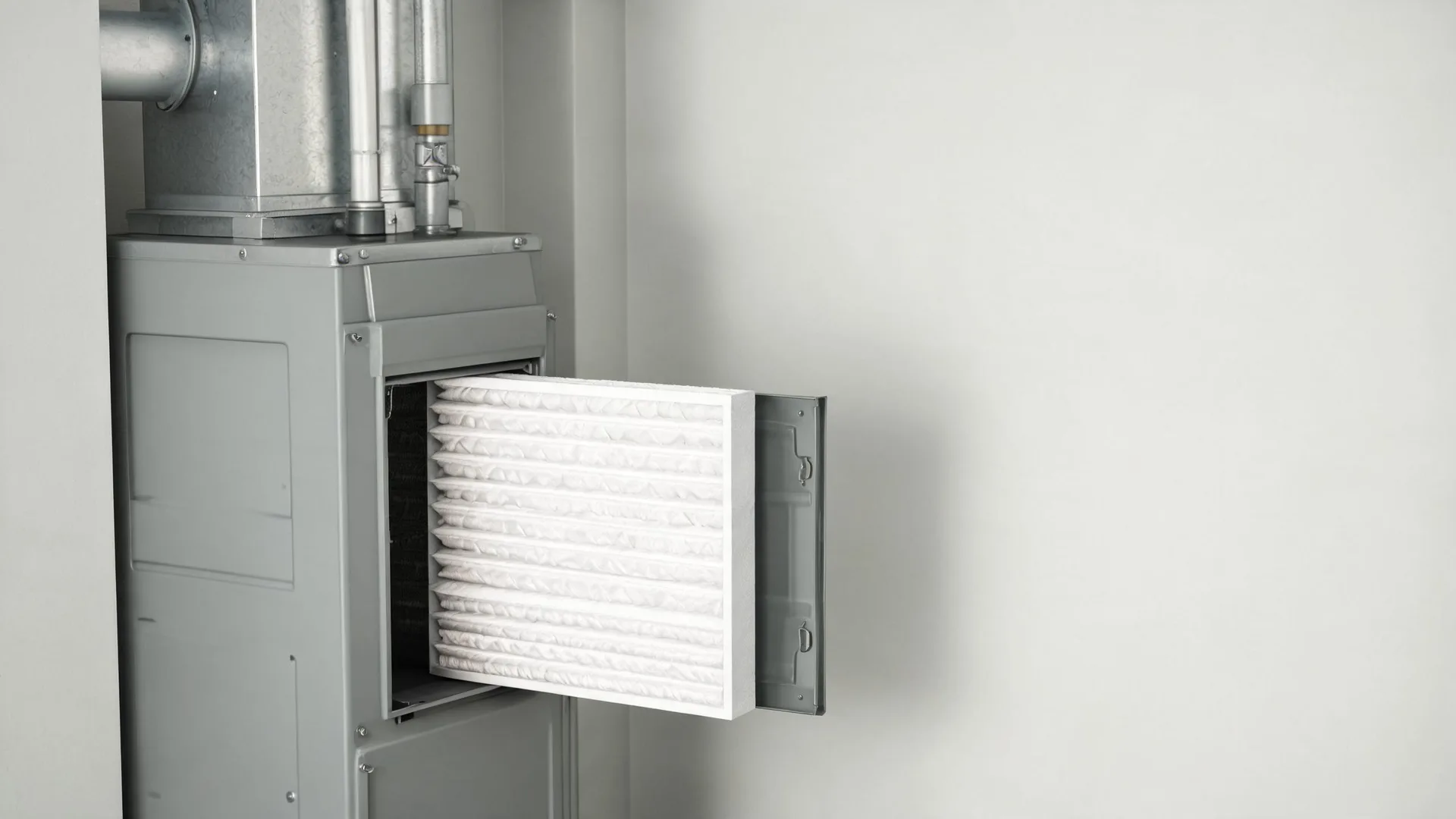
A thorough one checks why it runs well

A real tune-up pulls the burner assembly to clean it, tests the flame sensor's actual signal strength, checks the igniter's resistance, and looks at the heat exchanger for cracks or hot spots. That's the difference between a furnace that starts today and one that still starts right on the coldest morning of the season.

A furnace usually tells you before it quits, if you know what to listen for. A burner flame that's gone yellow and flickering instead of steady blue means it's not burning clean. A furnace that short cycles, running for a stretch then stopping before the room warms up, is often a flame sensor losing its signal. An igniter that clicks and struggles to catch is wearing out. Banging or popping from the ducts when the furnace first fires is metal expanding against dust and buildup it shouldn't have to push through. A burning smell that doesn't fade once the furnace has been running a while is worth a look, not a shrug. Any one of these is reason enough for a check, even if the furnace still turns on every time you ask it to.

A tune-up starts with the burners pulled and cleaned, not just looked at, because dust packs into the ports and changes how the flame burns. The flame sensor gets tested for actual signal strength, not just wiped down, since a sensor can look clean and still read weak. The igniter gets a resistance check, because igniters fail by degrees long before they stop working outright. The heat exchanger gets inspected for cracks and hot spots, the one part that can turn a furnace from an appliance into a hazard. The blower gets checked for the amp draw it's supposed to pull, since a motor working harder than it should is usually fighting dirt somewhere in the system. Gas pressure gets checked at the valve, because too high or too low both wear the burner in different ways. Last comes a check of the vent run and draft, making sure what the furnace burns actually leaves the house instead of backing up into it.