An unfinished basement interior showing a gray furnace unit beneath a bare incandescent bulb, surrounded by exposed joists, concrete walls, cardboard boxes, and utility pipes.

Furnace Maintenance in Ogden, UT

Tell us about the job

Takes about a minute. No obligation.

Tune-up, service, or cleaningFurnace or heatingWeber County, UT
Step 1 of 2

What ZIP code is the job in?

A longer flame or a burner that won't stay lit

A healthy burner flame is steady and mostly blue. If the flame is flickering, yellow, or won't stay lit without several tries at the igniter, that points to a dirty burner or a venting problem worth a look before it fails outright.

Small signs come before a breakdown

A furnace that's starting to struggle still runs, so it's easy to leave alone. But a cracked heat exchanger or a clogged flue usually shows itself first as a faint smell, a flame that looks wrong, or a furnace that cycles more than it used to. A check now catches it while it's still just a sign.

Furnaces in Weber County start running in September.

Get yours checked in August, before it has to work.

Half the furnaces here are younger than yours might be

Half the homes here were built by 1984
Heat runs September through June
Winter nights average 19°F

Gas heats 82.9 percent of homes in Weber County, and that's the furnace type most contractors here work on every day. A gas furnace draws its heat from a burner, and that burner has to stay clean and vent properly to run safe. Maintenance on one means checking the burner flame, the igniter, and the flue, not just swapping the filter. Electricity heats another 14.6 percent of homes, and those furnaces skip the burner and venting checks entirely since there's no flame to maintain. If yours runs on gas, the venting is the part most worth having looked at before the weather turns.

One visit a year covers it

Gas in Utah ran $12.55 per million Btu last year, so a furnace that's burning clean and venting right is worth keeping that way. A yearly check on the burner and flue does that. No need for more than once.

Find a contractor
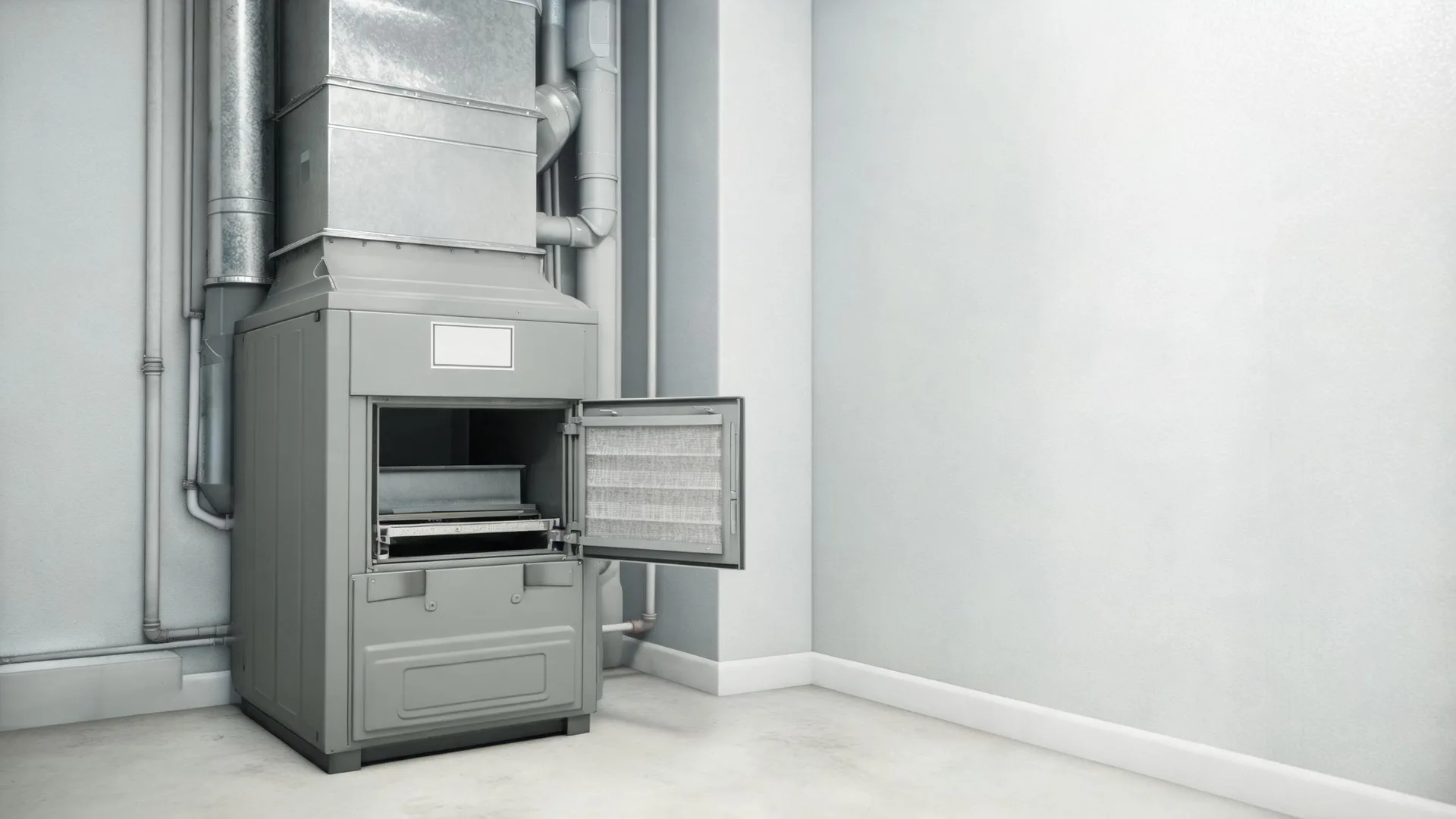
A gray residential gas furnace installed in an unfinished basement, connected to sheet-metal ductwork and PVC pipes.

Between visits, the filter is yours to watch

The filter is the one thing worth checking without waiting for a visit. Pull it and hold it up to a light. If you can't see light through it, it's choking airflow and it's time for a new one. Beyond that, keep the area around the furnace clear. Boxes, paint cans, laundry piled against the cabinet block the air it needs to breathe and some of what's stored near a furnace shouldn't be near an open flame at all. Check that the vent pipe outside hasn't been blocked by anything nested against it or buried under debris. Listen for a furnace that's cycling more than it used to, or a burner flame that looks different through the sight glass than it did last season. Those are things to notice and mention at the next visit, not things to fix yourself. Opening the cabinet, adjusting gas pressure, or working near the heat exchanger is a job for someone trained to do it safely.

The filter protects the heat exchanger, not just the air

A clogged filter chokes airflow across the heat exchanger, and that metal surface heats up more than it should on every cycle it runs restricted. Over time that extra heat stress is what leads to a crack. Swapping the filter regularly is less about dust and more about keeping that one part from wearing out early.

The drain only matters if your furnace makes condensate

A high-efficiency furnace cools exhaust enough to pull condensate out of it, and that water has to clear through a drain line and trap. If that line clogs, the furnace can shut itself down rather than let water back up into the cabinet. A standard furnace venting straight out through metal flue pipe doesn't have this line at all, so there's nothing there to check.

A tune-up gets inside the furnace in ways a homeowner never does. The technician pulls the burner assembly and looks at the flame pattern up close, not just through a sight glass, checking that every port is burning even instead of leaning to one side. They'll test the flue draft with an actual draft gauge rather than guessing from a smell. The heat exchanger gets inspected with a light and a mirror, looking for the hairline crack that won't show any other way until it's gone too far. Amp draw on the blower motor gets checked against what it should be, since a motor pulling too many amps is wearing out before it ever makes a noise about it. None of this shows up from the thermostat or from watching the furnace run. It only shows up when someone opens the cabinet and looks.

Gas pressure is the other thing a tune-up checks that nobody notices from the thermostat. Too high and the burner runs hotter than the heat exchanger was built for. Too low and the flame can't heat the air properly, so the furnace runs longer to make up for it. A technician sets this with a manometer against the furnace's rating plate, not by eye. The ignition sequence gets tested too, watching the igniter glow and the gas valve open in the right order, because a delayed ignition is what causes that small bang some furnaces make on startup. Wiring connections at the control board get checked for looseness, since a connection that's barely hanging on can cause a furnace to shut down mid-cycle for no reason anyone can see from outside the cabinet. Capacitors on the blower motor get tested under load as well, because a weak capacitor still starts the motor most of the time right up until the day it doesn't.