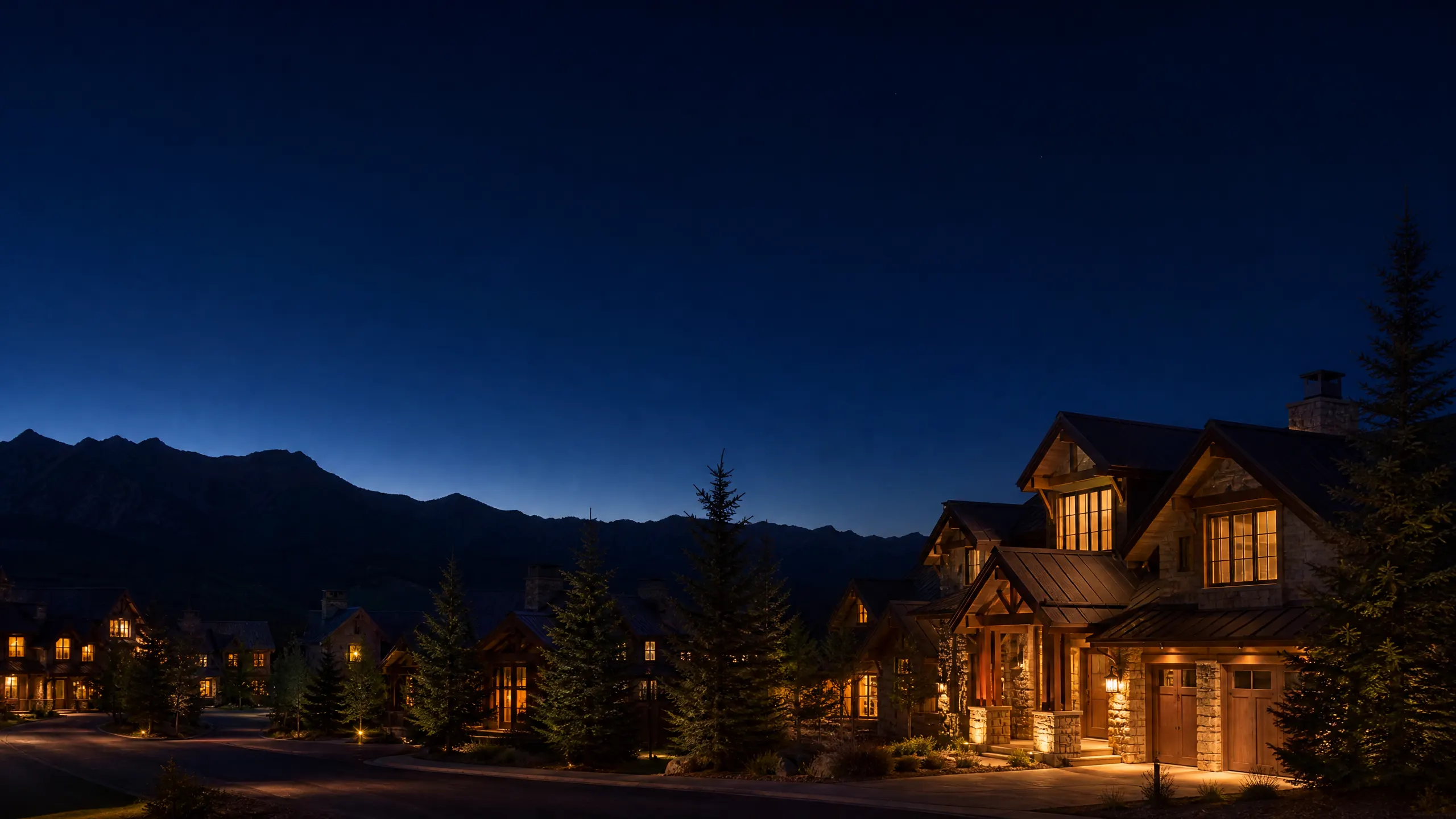


Illuminated timber-and-stone houses line a residential street at dusk, with evergreen trees in the foreground and a silhouetted mountain range behind them.

Furnace Maintenance in Layton, UT

Tell us about the job

Takes about a minute. No obligation.

Tune-up, service, or cleaningFurnace or heatingDavis County, UT
Step 1 of 2

What ZIP code is the job in?

A furnace filter has one job. It keeps dust out of the blower and off the heat exchanger. When it loads up, the blower has to work harder to pull the same air through, and that strain lands on the motor. A dusty heat exchanger also sheds heat slower, so the furnace runs longer to hit the same temperature on the thermostat. None of this shows up right away. It shows up later as a motor that burns out early or a furnace that shuts off mid cycle because it's overheating inside. Checking the filter on a regular basis is the simplest way to keep that strain off the system.

Furnaces in Layton start working in October.

Have yours checked in September, before it has to run hard.

October through May is one long run, so check it once before it starts

Heat runs October through May
Winter nights average 22°F
48 winter storms from 2015 to 2024

Gas heats 86.4% of homes in Davis County, and that changes what maintenance actually means. A gas furnace has a burner, a flue, and a set of safety controls that a filter change doesn't touch. The burner needs to light clean and even, not yellow or lopsided. The flue needs a clear path to carry exhaust out of the house. The flame sensor and limit switch need to be checked, because those are what shut the furnace down if something goes wrong inside it. A tech who services the burner and venting is covering ground a filter never reaches.

Newer furnace, more years to protect

Half the homes in Davis County were built in 1993 or later, which puts a lot of furnaces well inside their working life. A yearly check on a furnace that age is what keeps it there, catching the small wear before it turns into a burner or blower problem.

Find a contractor
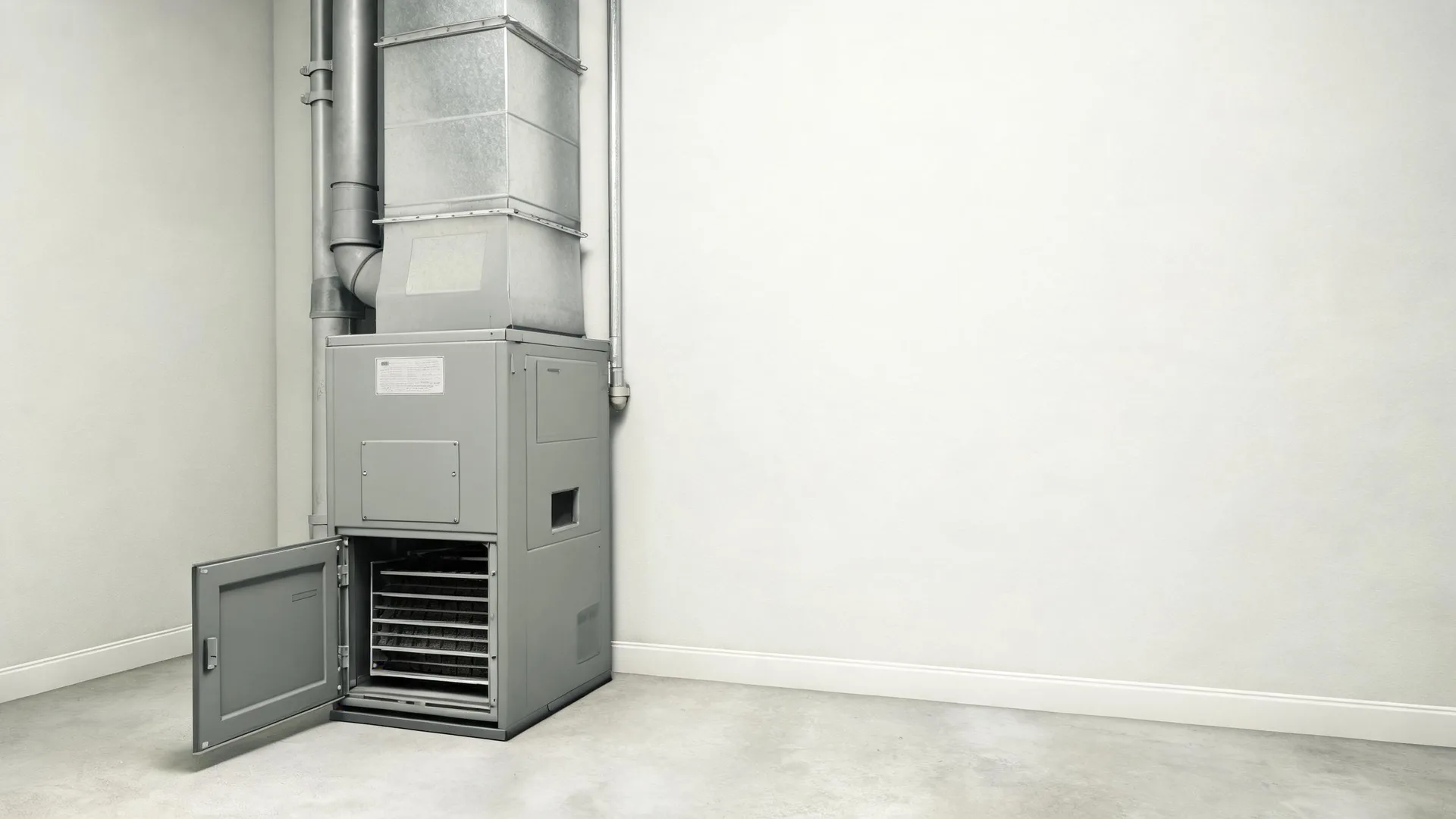
A gas furnace with attached ductwork, gas piping, and condensate lines installed in a concrete-block basement.

Eight months of heat, run against a 22°F night

Heat runs here from October through May, eight months straight. Overnight lows average 22°F through December, January and February, so the furnace isn't just running often, it's working against real cold when it does. Davis County has also seen winter storms, heavy snow, ice, blizzards, dozens of times over the past decade, the kind that keep a furnace cycling for days without a break. That stretch wears on a blower motor and a burner assembly faster than a mild climate ever would. A furnace that's never been looked at goes into that stretch with whatever shape it's already in.

The furnace doesn't tell you first

A cracked heat exchanger or a worn igniter doesn't announce itself. The furnace keeps lighting, keeps blowing air, right up until a safety control trips or a part finally gives out mid cycle. By the time you notice something is wrong, the wear has usually been building for a while.
Small jobs now, bigger ones later

A yearly check catches small things. A flame sensor gets wiped clean. A limit switch gets tested. The burner flame gets looked at and adjusted if it's burning uneven. Skip that for a few years and those same small issues don't go away on their own. They sit there and get worse, so the eventual repair is a cracked exchanger or a seized motor instead of a sensor wipe.

A tune-up gets inside the furnace in ways a homeowner never does. The tech pulls the panel and checks the flame itself, looking for a steady blue burn instead of one that's yellow, lifting off the burner, or leaning to one side. Any of those point to a burner that isn't combusting clean, which can mean soot building up where you can't see it. The heat exchanger gets inspected for cracks or corrosion, something no amount of filter changes will ever catch, because that part sits downstream of the filter entirely. Amp draw on the blower motor gets checked against what it should be, since a motor pulling more current than it used to is a motor working harder than it should and headed toward failure. The flame sensor gets cleaned of the oxidation that builds up on it over a season of use, because a dirty sensor is one of the most common reasons a furnace fires up and then shuts itself back off. None of this is visible from the thermostat or from standing in the room listening to it run.

A tune-up also covers parts that only show their wear when they're moved. The igniter gets looked at, since a hot surface igniter gets more brittle every time it heats up and cools down, and a hairline crack in it won't show until it finally snaps mid cycle. Gas pressure to the burner gets measured and set to spec, because pressure that's drifted too high or too low changes how clean the flame burns no matter how new the burner is. Electrical connections get checked for anything loose, since a connection that's vibrated loose over a season of blower cycling can arc or cut power to a control board at random. The inducer motor gets tested too, the one that pulls exhaust out through the flue before the burner is even allowed to light. If that motor is weak, the furnace may refuse to start at all rather than run unsafely.