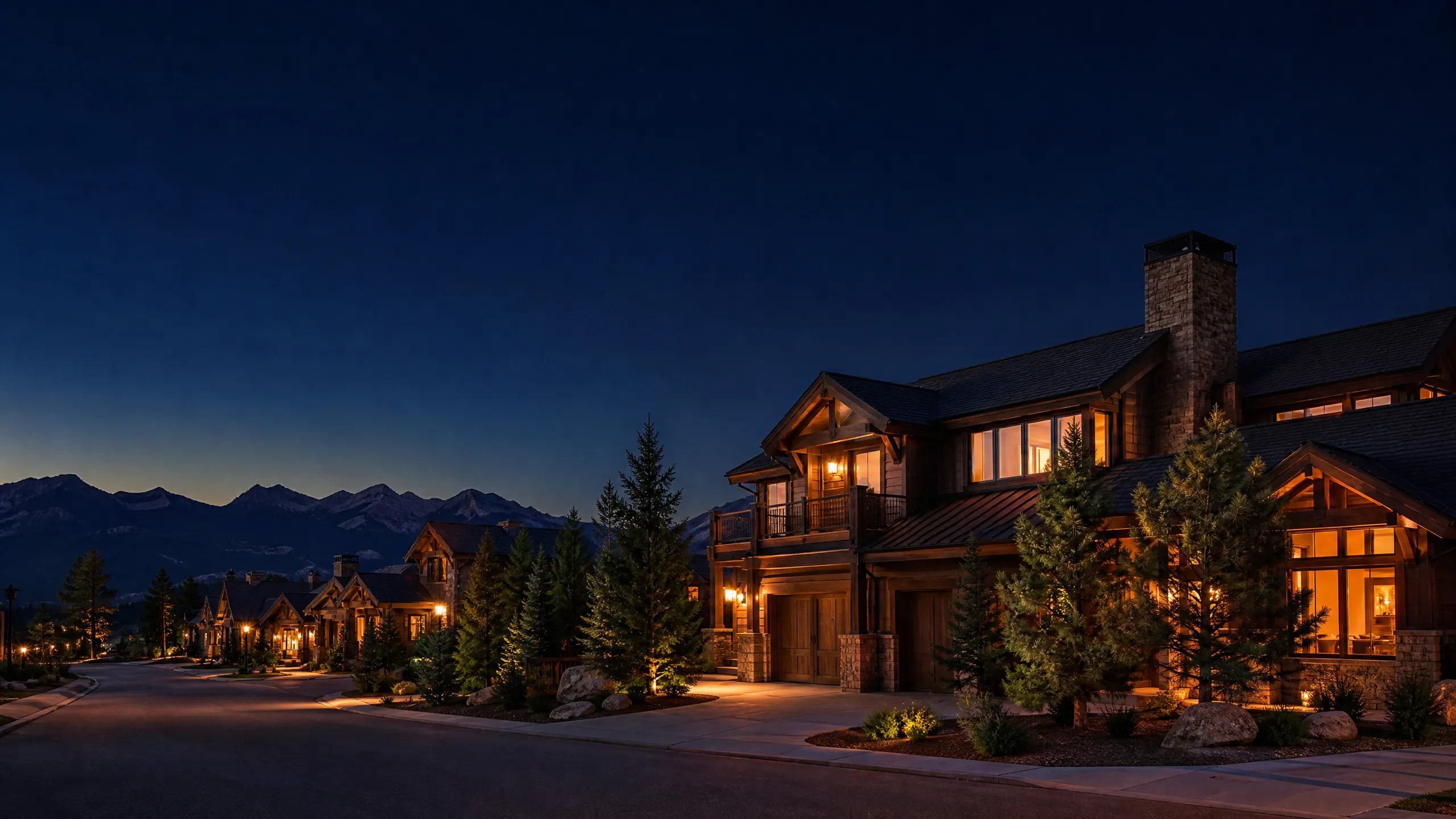
Illuminated timber-and-stone luxury homes along a residential street at dusk, with snow-capped mountains visible in the background.

Furnace Maintenance in Garden City, UT

Tell us about the job

Takes about a minute. No obligation.

Tune-up, service, or cleaningFurnace or heatingRich County, UT
Step 1 of 2

What ZIP code is the job in?

The furnace gets opened up, not just glanced at

A thorough tune-up means the burner assembly comes out for a real look, the flame sensor gets cleaned or tested, and the heat exchanger gets checked for cracks with a light or a camera. A quick visit checks that the furnace fires up and calls it done, without ever pulling a panel beyond the one covering the filter.


What gets skipped shows up as a breakdown later

Skip the flame sensor and the furnace starts shutting off on its own mid-winter. Skip the blower wheel and airflow drops without any warning sign until the heat exchanger overheats. The parts that take the most time to check are the same parts that cause a no-heat call when nobody checked them.

Furnaces in Rich County start working hard in September.

Book the tune-up in August, before that first cold month puts a bad part to the test.

Ten months of heat a year wears parts down faster than a mild climate ever would

Heat runs September through June
Winter nights average 11°F
Climate zone 6B

A furnace doesn't have a drain. That job belongs to the air conditioner side of the system. But the filter still decides how hard the furnace works. A dirty filter chokes airflow, so the blower has to spin longer and work harder to push heat through it. That heat has nowhere to go but back into the heat exchanger, and metal that overheats again and again starts to crack. The coil sits nearby in the attic or the closet with the air handler, and it collects dust the same as the filter does. A tech checking the furnace looks at that coil too, because weak airflow on either side wears the furnace down the same way.

Get it checked before the ten months of heat start

Heat runs here from September through June, ten months most years, with overnight lows averaging 11°F in December and January. That kind of stretch wears a furnace down faster than it would in a milder place. Get it looked at before the cold sets in and a worn part gets put to the test.

Find a contractor
A man in a dark t-shirt and tan work pants, seen from behind, carries a worn canvas and leather tool bag up concrete steps toward a dark gray front door, with a potted flowering plant to the right.
A gray residential gas furnace installed in an unfinished basement, surrounded by ductwork, a metal flue pipe, and a gas supply line.

Skipped maintenance doesn't break a furnace. It wears it down until something else does.

A furnace that never gets opened up still runs. It just runs worse every year instead of all at once. Dust builds on the blower wheel blade by blade, and a wheel caked with dust moves less air even at full speed. The motor doesn't know that, so it keeps drawing the same power to spin a wheel doing less work. The flame sensor coats over the same slow way, until the flame can't prove itself to the control board anymore and the burner shuts off mid-cycle. None of this shows up as a single bad moment. It shows up as a furnace that runs longer to do the same job and quits sooner than it should have.

Keep the area around the furnace clear

The furnace needs room to pull in air and push it back out. Boxes stacked against it or a closet door kept shut can starve the burner of combustion air it needs to run clean. Give it the space it had when it was installed.

Watch how it sounds and how long it runs

A furnace that bangs on startup, hums before it fires, or runs noticeably longer than it used to is telling you something changed. None of that is something to open the furnace and fix yourself, but it's worth writing down so the next tech knows where to look first.

Most furnaces give some warning before they quit outright. A burner that used to light with a soft whump now takes a few tries, or lights with a bang. The blower runs louder than it used to, or it cycles on and off more often than one long run. A room that used to hold its heat fine now feels like the furnace can't keep up, even though nothing else changed. Some furnaces give off a faint burning smell the first time they fire after a long break, and that's normal, but a smell that lingers past the first few minutes is not. Short cycling, a weak flame, a burner that won't stay lit, these are the furnace telling you a part is already struggling. A checkup catches that part before it picks the coldest night to fail.

A tune-up starts with the burners and works outward. The burner assembly comes out so the ports can be checked for rust or blockage, because a burner that doesn't burn clean puts soot on the heat exchanger instead of heat into the house. The ignitor or pilot gets tested under load, not just looked at, since a part can look fine and still fail to hold a flame. The blower wheel gets pulled and checked for dust buildup, and the motor bearings get checked for play. Gas pressure gets measured at the manifold, because too much or too little changes how clean the burners fire. The flue and venting get checked for a solid connection, since a loose joint lets combustion gas go somewhere other than outside. Every electrical connection gets snugged down, because a loose wire under a furnace's vibration is how a hard shutdown starts.