

A gas furnace and sheet-metal air handler unit installed in an unfinished concrete basement.

Furnace Maintenance in Blanding, UT

Tell us about the job

Takes about a minute. No obligation.

Tune-up, service, or cleaningFurnace or heatingSan Juan County, UT
Step 1 of 2

What ZIP code is the job in?

Your furnace in Blanding runs about eight months of the year, October through May. That is most of the calendar spent with the burner firing and the blower pushing air through the house. Overnight lows average 23°F through December, January and February, so the system is not just running often, it is working against real cold when it does. San Juan County has had dozens of winter storms over the past decade, heavy snow and ice that keep a furnace running longer than normal just to hold the house steady. With that kind of use, an igniter or a blower motor wears down faster than it would somewhere milder.

Half the homes in San Juan County were built in 1986 or later.

A furnace that age still has years in it, and a yearly check keeps it that way.

Heat starts in October here. Have it checked in September.

Heat runs October through May
Climate zone 5B
Winter nights average 23°F

Utility gas heats a third of the homes in San Juan County, more than any other fuel, with propane close behind at 16.6%. That means a lot of furnaces here have a burner, a gas valve and a flue, not just a heating element. A yearly check should include the burner assembly and the venting, not only the filter. A cracked heat exchanger or a flue that is not drafting right will not show up by looking at the thermostat. If your furnace runs on propane, worth checking the tank level before the cold sets in too.

Get the furnace checked before the snow does

A furnace that runs eight months a year through winters this cold does not get much of a break to show you what is wrong with it. Get it looked at before the storms start stacking up.

Find a contractor
A gray gas furnace with attached ductwork and piping installed in an unfinished concrete basement.

What you can watch, and what to leave for the technician

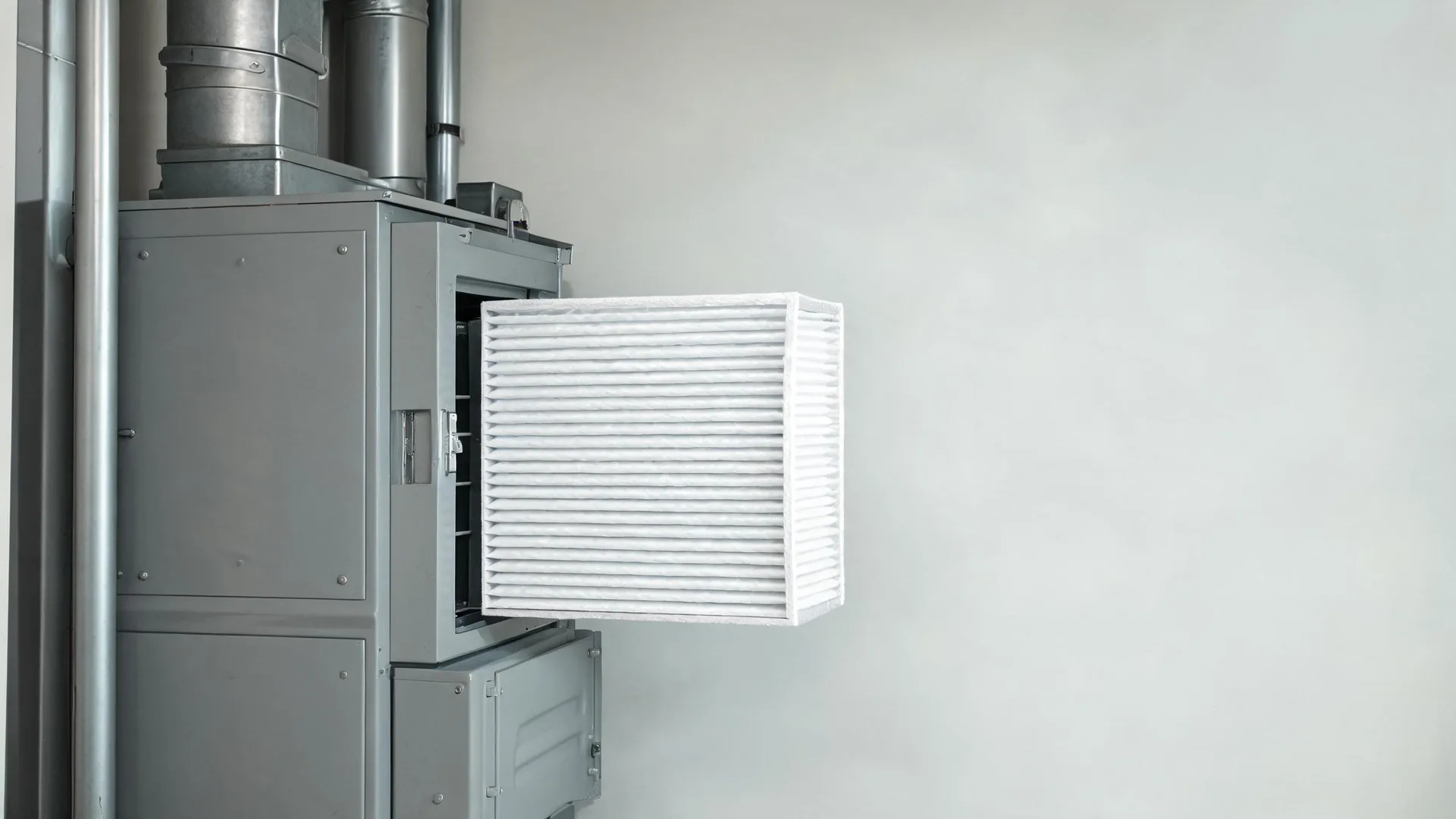
Between visits, the filter is the one thing worth your attention. A dirty filter chokes airflow, and a furnace starved for air runs hotter than it should and can shorten the life of the heat exchanger. Check it every month during the season and swap it when it looks gray and packed instead of waiting for a set schedule. Keep the area around the furnace clear too. Boxes or stored stuff too close to the cabinet can block the air it needs to pull in and burn cleanly. Walk past the vents and registers now and then and make sure none are shut tight or blocked by furniture, since closing off too many forces the system to push against pressure it was not built for. Beyond that, leave it alone. Opening the burner compartment, adjusting the gas valve, or poking at the flame sensor is a job for someone trained to do it safely, not something to try between checks.

Dirt does the damage slowly

A dirty flame sensor stops reading the flame and shuts the burner down, even though nothing is actually wrong. A clogged filter forces the blower to work harder and can let the heat exchanger run hotter than it should. None of this happens the day the filter clogs. It builds over a season until the furnace finally quits or starts short cycling.
A skipped check shows up later

A furnace that never gets opened up will still run, right up until a part that was already failing finally gives out, usually on the coldest night it has to work hardest. A yearly check catches a cracked heat exchanger or a weak igniter while the furnace is sitting idle, not after it leaves the house without heat.

A technician opens the burner compartment and looks at the flame itself. A clean burn is steady and blue. A yellow or flickering flame points to a burner that is not getting the right mix of air and gas, often before that shows up anywhere else. They will pull the flame sensor and clean off the coating that builds up on it over a season, since that coating is what causes the random shutoffs a homeowner usually blames on the thermostat. Inside the heat exchanger, a hairline crack does not smoke or smell. It takes a light and a mirror, or a camera, to find one, and it is the one thing in the furnace you do not want to miss. They also check the pressure switch and the inducer motor, since a furnace that is drafting wrong will still light and still run, just not safely.

The gas valve and pressure switch get checked for the right readings, not just a glance. The blower wheel comes off or gets cleaned in place, since dust packed into the blades throws off airflow even when the motor itself is fine. A technician checks the amp draw on the blower motor against what it should be, because a motor pulling too many amps is wearing out even while it still runs. Belts are not part of this on most furnaces anymore, since the blower motor drives the wheel directly, but bearings and the capacitor that starts the motor still wear and still get tested. The ductwork connection at the furnace gets a look too, since a loose seam there leaks heated air into a space nobody is trying to warm. Last, the whole furnace runs through a full cycle, start to shutdown, so a problem that only shows up partway through the run does not get missed.