


A gray forced-air furnace with sheet-metal ductwork stands in an unfinished basement with exposed wooden joists, concrete walls, and a hanging incandescent bulb.

Furnace Installation in Price, UT

Tell us about the job

Takes about a minute. No obligation.

New system or replacementFurnace or heatingCarbon County, UT
Step 1 of 2

What ZIP code is the job in?

Ask every contractor the same question. What size furnace are they putting in, and how did they land on that number. A furnace that's too big will short cycle, heating the house fast then shutting off before it pulls moisture out of the air or warms things evenly. One that's too small will run constantly and still leave you cold. The honest answer comes from a load calculation, not a guess based on the old unit. Ask about the vent pipe too, and whether your current venting works with the new furnace, since a higher efficiency unit often vents differently than an older one. Ask what happens to the ductwork. A new furnace moved into old ducts that were never sized for it won't perform the way the brochure says it will.

9 months
September through May, your furnace is on duty
15°F
the average winter night it heats against
82%
of homes here heat with gas, so most furnaces here burn gas
80% AFUE
the federal minimum any new unit must meet
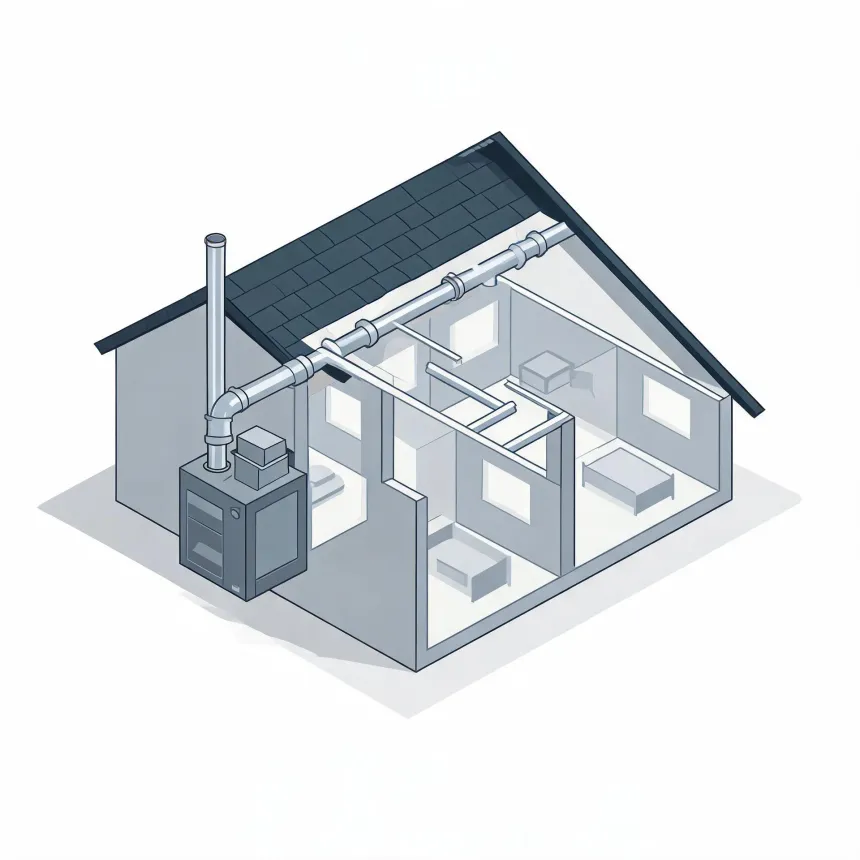
Isometric cutaway illustration of a small house showing interior rooms, ductwork running through the attic, and a furnace unit with a vertical flue pipe on the exterior wall.
Your furnace works hardest from November through April.

NOAA nClimDiv, 1991–2020 normals

Half the homes in Carbon County were built in 1972 or earlier.

A furnace going into a house that old needs sizing and venting that match the house, not the unit that came out of it.

A furnace sized for this house, nothing more

Heat runs September through May
Winter nights average 15°F
Climate zone 5B

Gas heats 82.1% of occupied homes in Carbon County, almost all of them. Another 4.4% run on bottled or LP gas, so the real split is gas against everything else. If your old furnace burned gas, the new one almost certainly will too, and the contractor's job is sizing and venting it right for this house, not talking you into a different fuel. Electric furnaces heat 9.2% of homes here, usually where gas lines never reached. That's a narrower question with its own answer, and most homes in the county won't be asking it.

Fit it to your house

If you're replacing a system in an older house, the new one has to fit the house you have.

Find a contractor
A man in a dark long-sleeve shirt and tan work pants, seen from behind, climbs wooden porch steps toward a navy front door while carrying a canvas tool tote, with a potted flowering plant beside the entry.
A gray residential gas furnace installed in an unfinished basement, connected to sheet-metal ductwork and PVC pipes.

Heat runs September through May, so beat it to August

Furnaces here run September through May. That leaves summer as the slow season, the stretch when a contractor can take the time to do a load calculation, check the venting against the new unit, and sort out whatever the ductwork needs before anything is hooked up. August is the last month before homes start running heat again. Wait past it and a failed furnace gets replaced in a hurry, with whatever fits and whatever's on the truck. Replace it in August instead and the schedule is yours, not the weather's.

The load calculation looks at the whole house

A load calculation adds up window area, wall insulation, ceiling height, air leakage and how the rooms connect, then works out how much heat the house actually loses on a cold day. Square footage alone doesn't answer that. Houses the same size can need different size furnaces depending on how they're built.

Oversized wears the system out faster

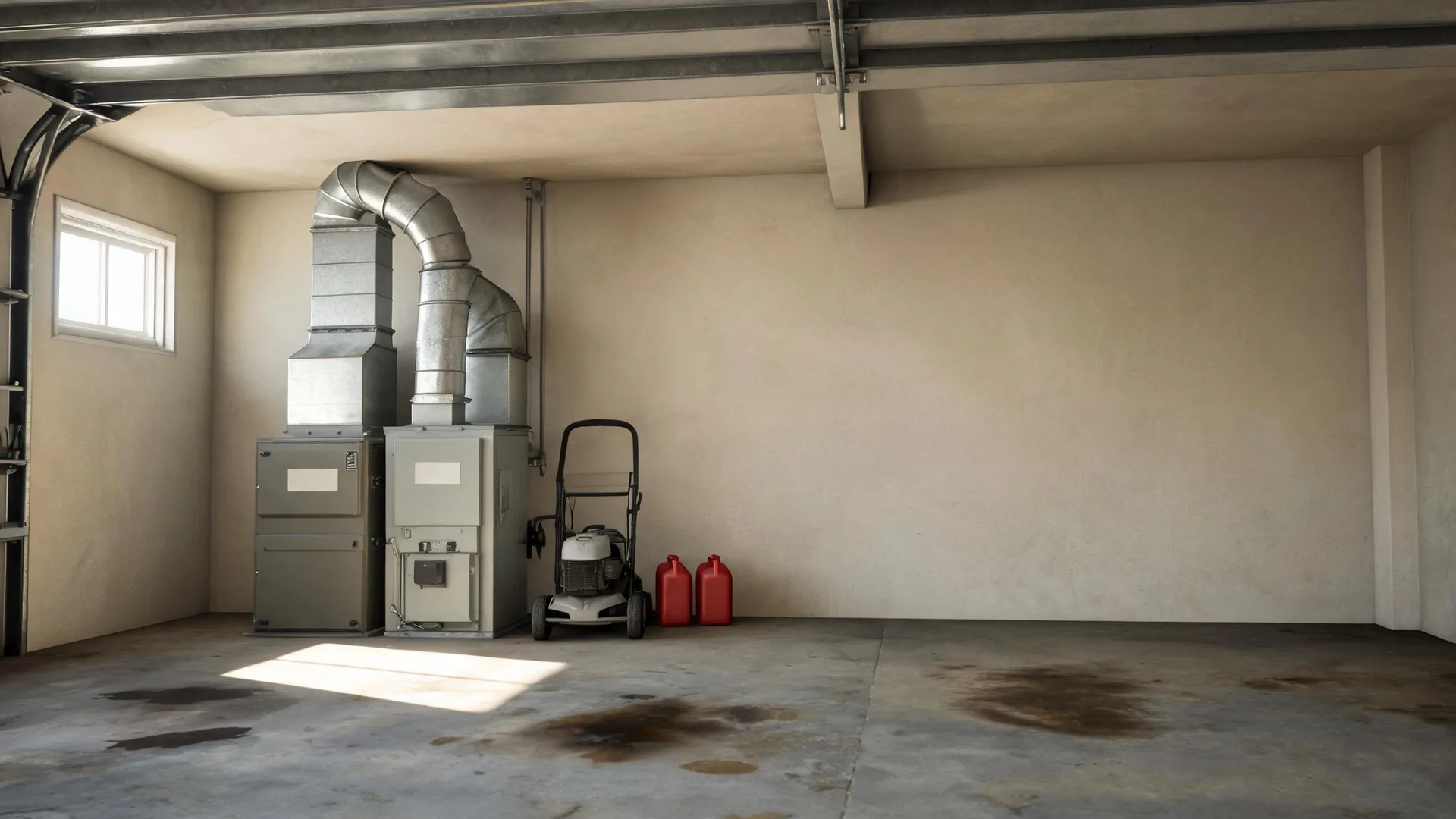
A furnace that's bigger than the house needs reaches temperature fast and shuts off, then starts again a few minutes later. That short cycling wears on the ignition system and the blower motor, since both start up more often than they should. It also leaves rooms far from the furnace colder than rooms close to it, because the system never runs long enough to push heat evenly through the ducts.

An unfinished basement featuring exposed ceiling joists, a metal HVAC unit with round ductwork, a hanging light bulb, and scattered boxes and debris along the left wall.

A high-efficiency gas furnace would save about $110 a year to run in Carbon County compared with a gas furnace.

  • A high-efficiency gas furnace$540 a year
  • A gas furnace$650 a year

Estimates for a typical Carbon County home, from EIA household energy data, Utah fuel prices and NOAA climate normals. Your home will differ.

Installation day starts with the old furnace coming out. Gas and power get shut off first, then the ductwork, vent pipe and gas line disconnect from the unit. Pulling it out of a basement or a closet can take real care, especially in a tight space. Once the old one's gone, the new furnace connects to the existing ducts and vent, and this is where a mismatch from the old setup gets caught and fixed instead of ignored. The gas line gets pressure tested before anything is lit. Then the contractor checks the flame, the draft and the temperature rise, and watches the cycle to confirm the furnace is running the way the load calculation said it would.