
What size furnace a Utah home needs
There's no single furnace size for every Utah home. The right size comes from a heat load calculation, which weighs your square footage against your insulation, window count, ceiling height and how the house is laid out. Two homes the same size can need different furnaces if one has more glass or a drafty attic. Sizing matters more here because winters push a furnace hard for months at a time, and a unit that's too small will run constantly without keeping up on the coldest nights, while one that's too big cycles on and off so often it wears out early and leaves rooms heated unevenly. A contractor doing the installation should run that calculation on your specific house rather than go by square footage alone or match whatever size is already in there. If your current furnace has always struggled to keep certain rooms warm, or runs nearly nonstop in January, that's often a sign it was undersized from the start.


A furnace that fits your house is worked out room by room, not pulled from a chart that only asks square footage. The calculation looks at how much heat your windows, walls and roof let escape, then sizes the furnace to replace that on the coldest day of the year. Get it wrong one way and the furnace oversized for the space will cycle on and off too fast to heat evenly, and all that starting and stopping wears parts down sooner than they should. Get it wrong the other way and an undersized furnace runs long stretches trying to catch up, so the rooms at the far end of the ductwork stay cooler than the rest. Ceiling height feeds into the number too. A room with nine foot ceilings has more air in it to heat than the same floor space under an eight foot ceiling. Windows count as much as walls. A wall of west facing glass behaves differently than a solid interior wall, and the calculation accounts for that difference rather than averaging it away.
Why Sizing Takes More Than Square Footage
- A heat load calculation, often called a Manual J, works through your home room by room rather than guessing from square footage alone.
- It weighs how much heat escapes through your windows, walls and roof against how much heat your furnace needs to replace on the coldest day.
- A furnace sized too big for the house will short cycle, switching on and off before it warms the air evenly, which wears out parts faster.
- A furnace sized too small will run long stretches without catching up, leaving rooms farthest from the vents colder than the rest of the house.
- Ceiling height matters because a room with a 9 foot ceiling holds more air to heat than the same floor space with an 8 foot ceiling.
- Window count and orientation change the number too, since a wall of west facing glass loses heat differently than a windowless interior wall.


Matched to your furnace job
Skip collecting and comparing quotes for the new furnace.
A local installer who puts in furnaces gets your project.
No fee to send it, and nothing to sign.
Why does one room never get warm enough?
If a furnace is the wrong size for your house, you feel it room by room. One that's too small runs almost constantly and still leaves the room over the garage or at the end of a long duct run cold, especially once temperatures drop into the teens. One that's too big cycles on and off fast, blasting a room near the thermostat while others lag behind, and that short-cycling wears on the heat exchanger and igniter over time. You might also notice higher gas bills than a neighbor with a similar-sized house, or a furnace that sounds like it's working harder than it should. These are signs the unit was never matched to your home in the first place.
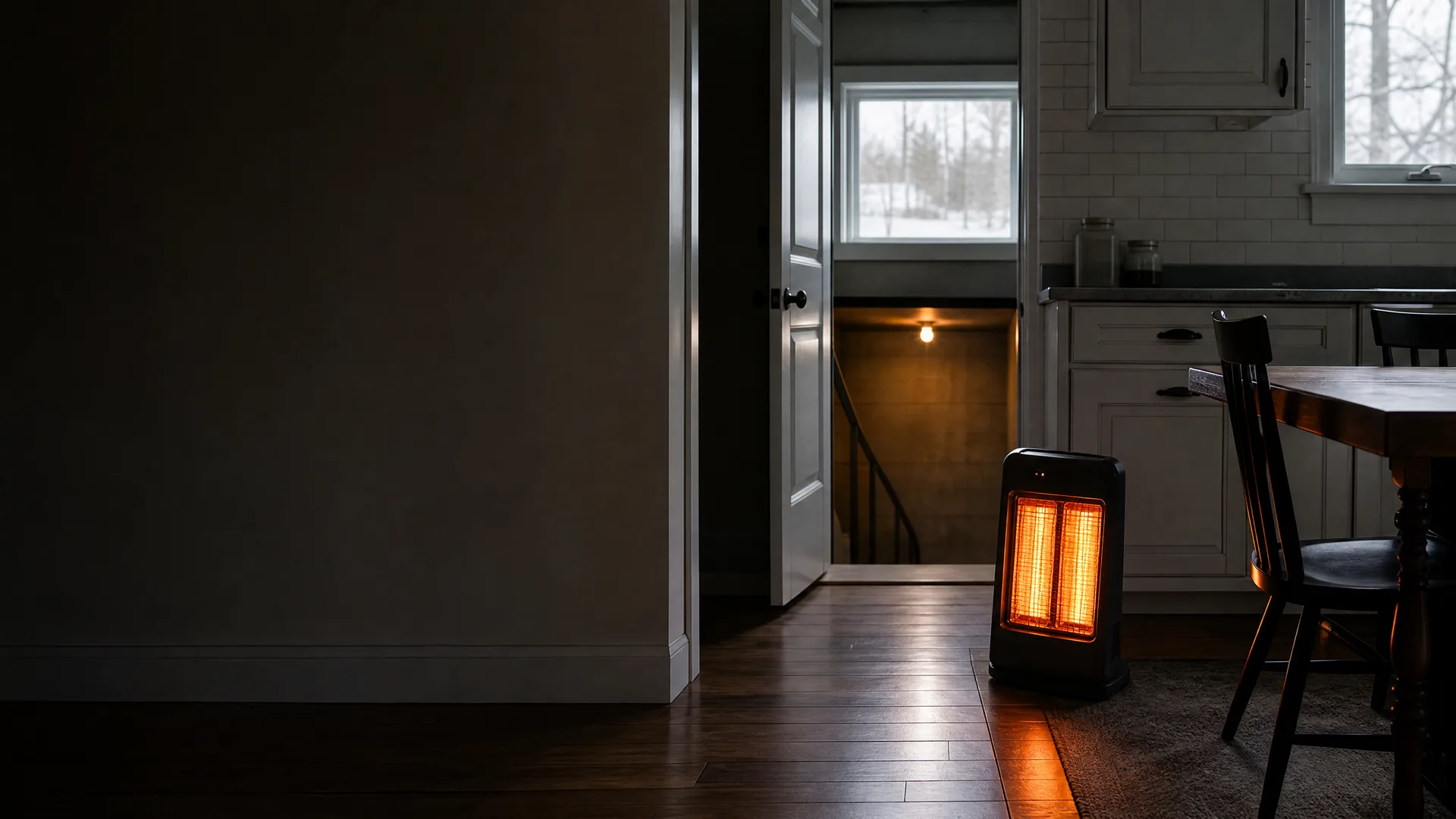
It's just past seven and the kitchen window is still dark blue. You've got the space heater pulled up by the table, close enough that the backs of your legs feel it while the rest of the room doesn't. The basement door behind it sits open an inch, the way it's been since the furnace started short-cycling, like leaving it open might help the heat find its way up. Your coffee's gone lukewarm faster than it should. Down the hall you can hear the furnace kick on again, running hard for a few minutes before it cuts out. You pull your sleeves over your hands and wait for the kitchen to catch up before anyone needs to get ready for school.
Winter nights average 21°F statewide
At 21°F on a January night, your furnace is working against a 50 degree gap to hold 71 inside. That gap is what the heat load calculation sizes for, not the square footage on your listing.
NOAA nClimDiv 1991-2020 county normals weighted by homes
Getting the Size Right
- The right furnace size for your home comes from a room by room heat load calculation, not a square footage chart.
- Oversized and undersized furnaces both show up as the same thing: a house that heats unevenly and a furnace that cycles more than it should.
- A contractor who sizes the job correctly accounts for your windows, insulation and layout, not just the number on your listing.
- Getting that calculation done right the first time means skipping the back and forth of comparing bids that may not be sizing your home the same way.
- You don't have to track down contractors, explain your house twice and sort through quotes to find someone who sizes a furnace properly for a Utah winter.
- Once you know what the calculation actually weighs, you know what to expect from an installer who does it correctly.
Furnace size isn't a guess, and it isn't the number stamped on the unit that's already in your house. It comes from a room by room calculation that weighs your windows, your insulation and how your house is laid out against the cold Utah throws at it in January. Skip that step and you end up with one of two problems: a furnace too big for the house, or one too small for it. Both show up the same way, as uneven heat and a furnace that won't settle into a normal cycle.
Getting it right the first time is worth more than it sounds like. Without it, you're the one calling around, describing your house to three or four contractors, then trying to work out whether their bids even priced the same job. One installer's number might reflect a real heat load calculation. Another's might just be a square footage guess with a price attached. You'd have no way to tell without asking the right questions yourself, every time.
A contractor matched to the job already knows what to ask and what to measure before a number gets written down. You don't have to explain your house twice or sort through quotes that aren't sizing the same thing. The calculation itself doesn't change. What changes is whether you're the one chasing it down or whether it gets handled by someone who already knows what a Utah winter asks of a furnace.
A furnace pro near you
Skip the round of in-home estimates for a new furnace.
Sending the form costs nothing.