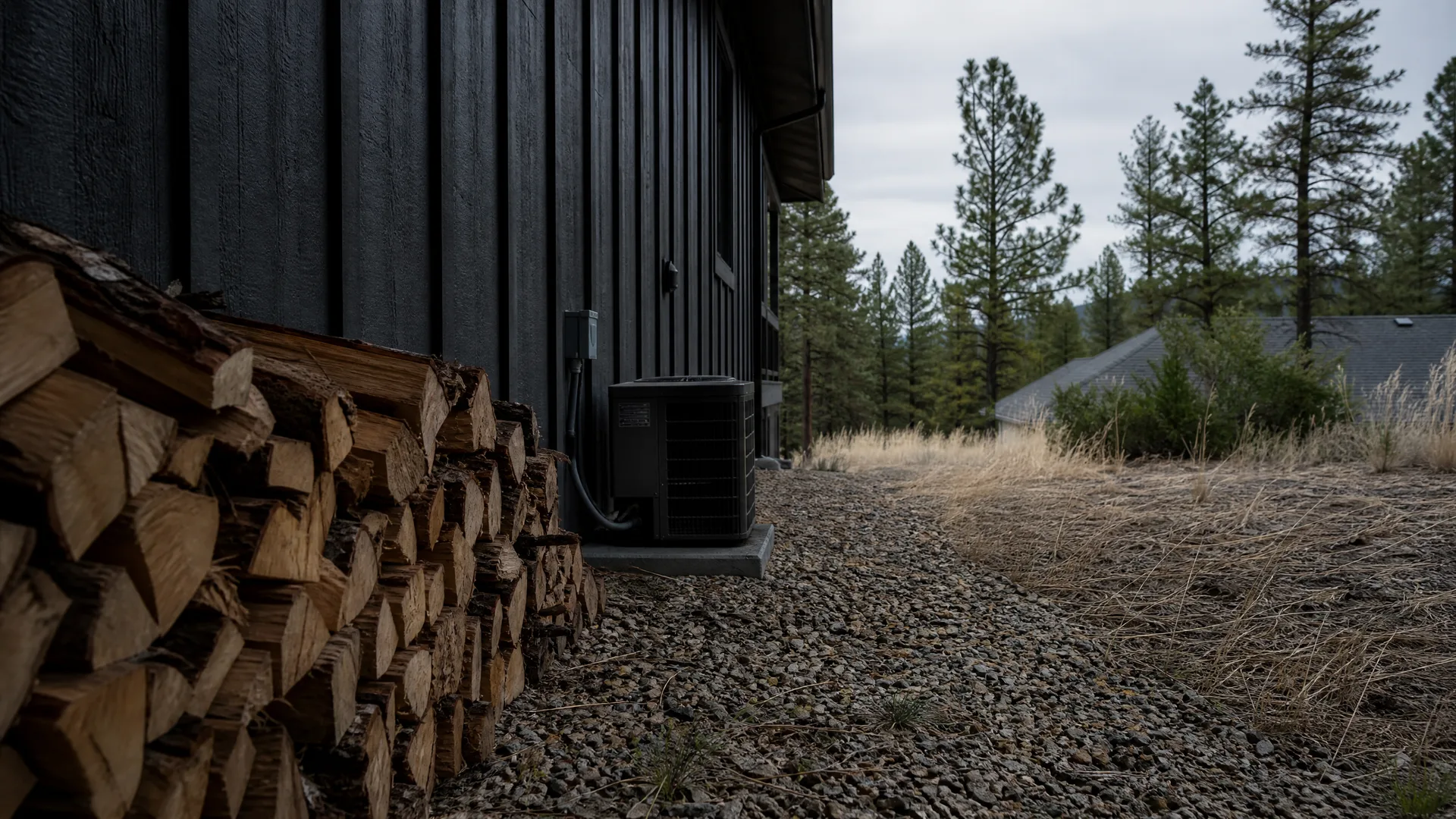





A stacked woodpile beside a dark vertical-board house exterior with an outdoor air conditioning condenser unit on a concrete pad, gravel ground, dry grass and conifer trees under an overcast sky.

Furnace Installation in Ephraim, UT

Tell us about the job

Takes about a minute. No obligation.

New system or replacementFurnace or heatingSanpete County, UT
Step 1 of 2

What ZIP code is the job in?

Natural gas ran $12.55 per million Btu in Utah homes in 2024. That's the fuel cost behind every therm your furnace burns, no matter who installs it. A furnace that converts more of that gas into heat instead of sending it out the flue pipe gives you more warmth for the same price. Over a winter of steady use, that difference in efficiency is the difference you'll see on the bill. Ask what AFUE rating any system you're considering actually carries, since that number tells you how much of your gas dollar turns into heat in your house.

10 months
September through June, your furnace is on duty
16°F
the average winter night it heats against
77%
of homes here heat with gas, so most furnaces here burn gas
80% AFUE
the federal minimum any new unit must meet
Isometric line illustration of a cutaway building interior showing a furnace unit with a flue pipe and ductwork running along the ceiling, plus adjacent rooms with simplified furniture.
Your furnace works hardest from November through April.

NOAA nClimDiv, 1991–2020 normals

Utility gas heats 76.9% of occupied homes in Sanpete County.

A gas furnace replacement here is standard work, not a special order.

Ten months of heat means little room for a furnace to be down

Heat runs September through June
Winter nights average 16°F
52 winter storms from 2015 to 2024

Ask the contractor for the AFUE number on each unit you're quoted, and write it down next to the price. That number tells you how much of every gas dollar turns into heat in your house, and how much goes out the flue pipe instead. At $12.55 per million Btu, a furnace that wastes less of that gas keeps showing up on your bill all winter, not just during a cold snap. Two furnaces can carry the same price tag and different AFUE ratings. Only one of them is actually cheaper to run.

The minimum efficiency a new furnace has to clear here

Any furnace installed here has to meet Zone 5B's minimum, 80 percent AFUE. That floor holds until December 2028, when new furnaces have to hit 95 percent. A federal tax credit is available on qualifying high-efficiency equipment, worth checking against whatever unit you're quoted.

Find a contractor
A man in a cap, gray shirt and tan work pants walks up steps toward a dark front door, carrying a worn canvas and leather tool bag, with a potted shrub to the right.
A gray residential gas furnace installed in an unfinished basement, surrounded by ductwork, a metal flue pipe, and a gas supply line.

What holds up under steady use and what doesn't

When you're comparing units, ask what the heat exchanger is made of and how long the manufacturer stands behind it. That part carries the flame, and it's the one piece you can't inspect or replace cheaply once it's in the cabinet. Ask about the blower motor too. A variable-speed motor ramps up and down with demand instead of switching on and off at full blast, which means less wear over a long run of cold months. Ask how the ignition works, whether it's a hot surface igniter or something else, since that part fails more than almost anything else in the cabinet when a furnace gets worked hard. None of this shows up on the price tag, but it decides whether the unit you pick is still running strong when the one beside it needs a service call.

The old furnace gets disconnected, not left in place

Pulling the old unit means capping the gas line, disconnecting the vent or flue pipe, and separating it from the ductwork and the electrical. A furnace closet or basement spot can't run both systems at once, so the old one comes out before the new one goes in. Most of that cabinet is sheet metal and a heat exchanger, and scrap haulers take it as metal.

The new furnace has to match more than the old one did

The replacement isn't a straight swap of one box for another. Whoever installs it has to size the new furnace to the house, check whether the existing ductwork can handle its airflow, and confirm the vent pipe works with its exhaust. A higher-efficiency furnace often vents differently than the one it's replacing, which can mean new venting instead of reusing what's there.

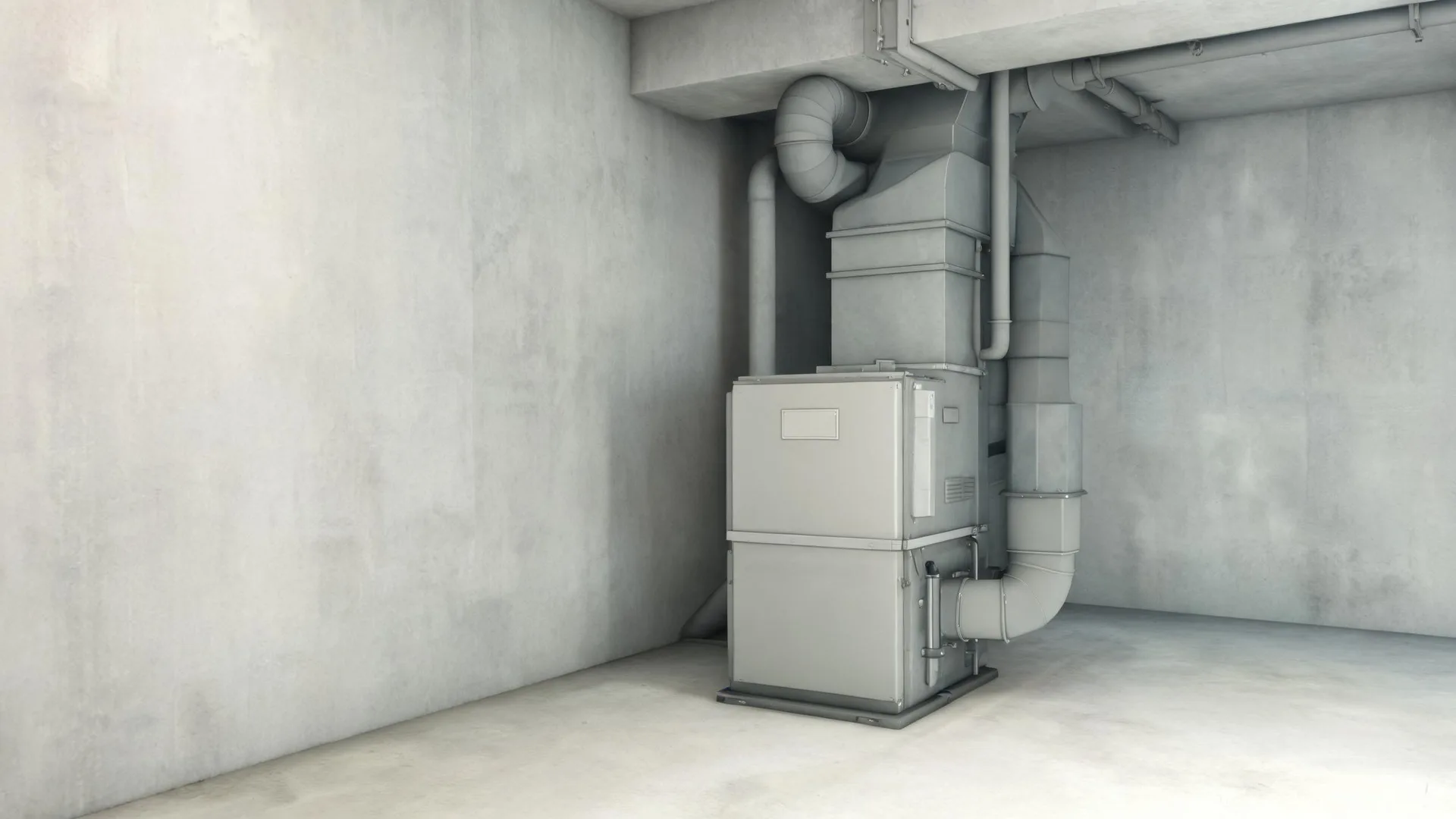
An empty unfinished basement containing a forced-air furnace with overhead ductwork, exposed ceiling joists, and a single hanging light bulb.

A high-efficiency gas furnace would save about $110 a year to run in Sanpete County compared with a gas furnace.

  • A high-efficiency gas furnace$550 a year
  • A gas furnace$660 a year

Estimates for a typical Sanpete County home, from EIA household energy data, Utah fuel prices and NOAA climate normals. Your home will differ.

Installation day starts with the old furnace coming out and the space sitting empty for a stretch before the new one goes in. The installer sets the new cabinet, runs the gas line to it, and connects the vent pipe before anything gets fired up. Ductwork gets attached and sealed at the connections, since a loose seam there leaks the air you just paid to heat. Once it's wired and the gas is on, the furnace gets a test run through a full cycle, checking the flame, the blower, and the temperature rise against what the manufacturer specs for that model. The installer should also check static pressure in the ductwork, since a furnace pushing against too much resistance runs hotter and wears faster than it should. Expect the crew to walk you through the thermostat and the filter slot before they leave, since that filter is the one thing you'll touch all season.