

Why the cold matters more than the price here
Winter is the real question in Duchesne County. The heat runs ten months a year, September through June, and the overnight low averages 12°F in December, January and February. That is the normal night, not a cold snap. A standard heat pump starts falling short of its rated output below 40°F and often needs backup heat below about 35°F. Here, every night that drops to freezing or below, about 185 of them a year, is already past both marks.
That changes how to read the running-cost numbers. The $1.63 for a heat pump against $1.57 for a furnace comes from the heat pump's federal minimum seasonal rating, with nothing added for backup heat on a cold night. In this county, nights below freezing are more than half the nights in the ten months the heat runs. A standard heat pump leaning on backup heat that often will cost more to run than that figure shows.
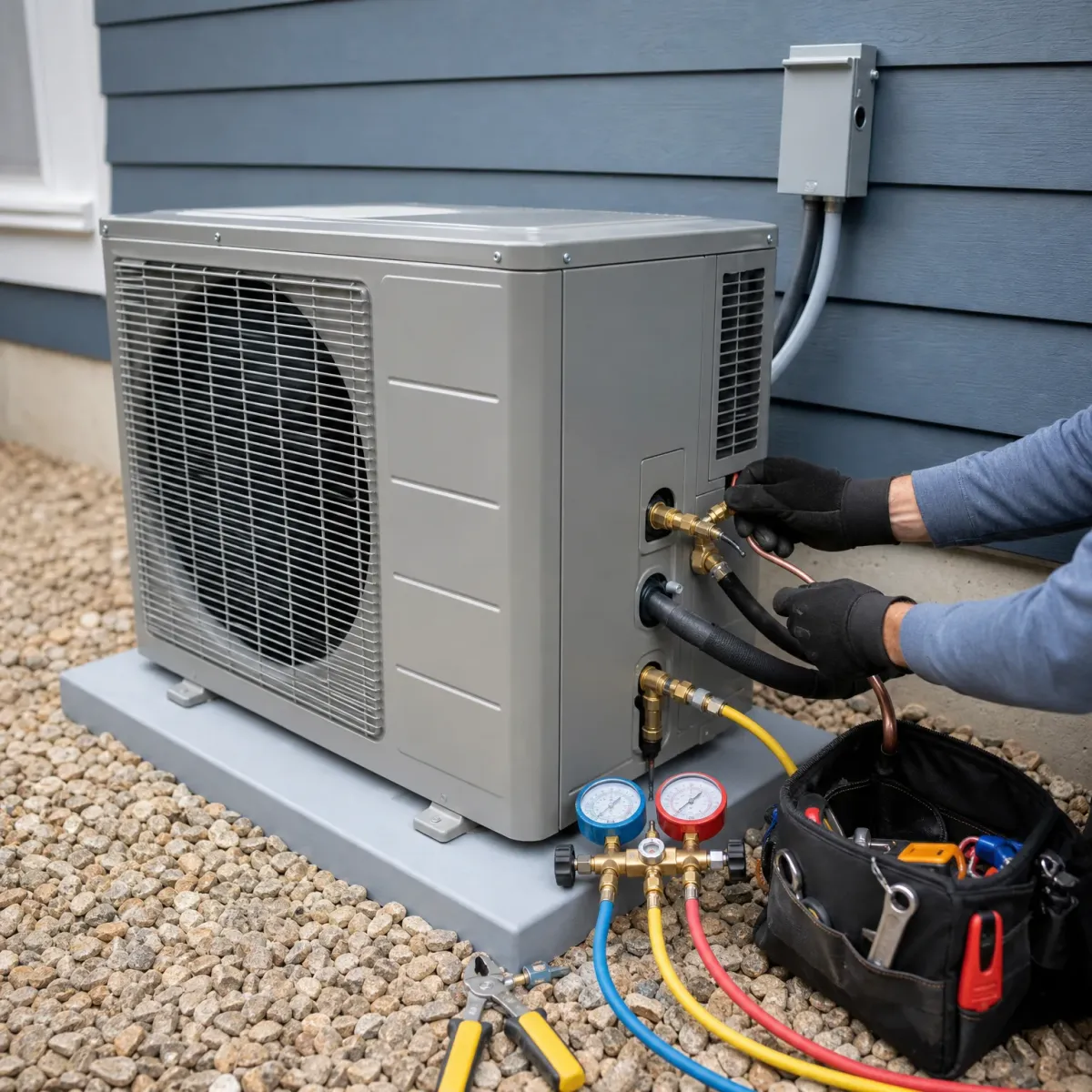
A cold-climate heat pump is a different machine on paper. To carry that label, it has to deliver at least 1.75 units of heat per unit of electricity at 5°F and hold onto 70 percent of its warm-weather capacity at that temperature, verified by outside testing, not the manufacturer. In a two-winter field test of prototype cold-climate heat pumps in occupied homes, backup heat covered only a small share of the load between 0°F and 35°F, and the unit ran on backup alone only rarely even above 0°F. Duchesne County hits 0°F or below about 17 nights a year, a small share of its 185 freezing nights. That is the range a cold-climate heat pump is built to handle. A standard one is not.