


Heat pump vs furnace in Iron County, Utah

Get My Quote

Installers who work in Iron County

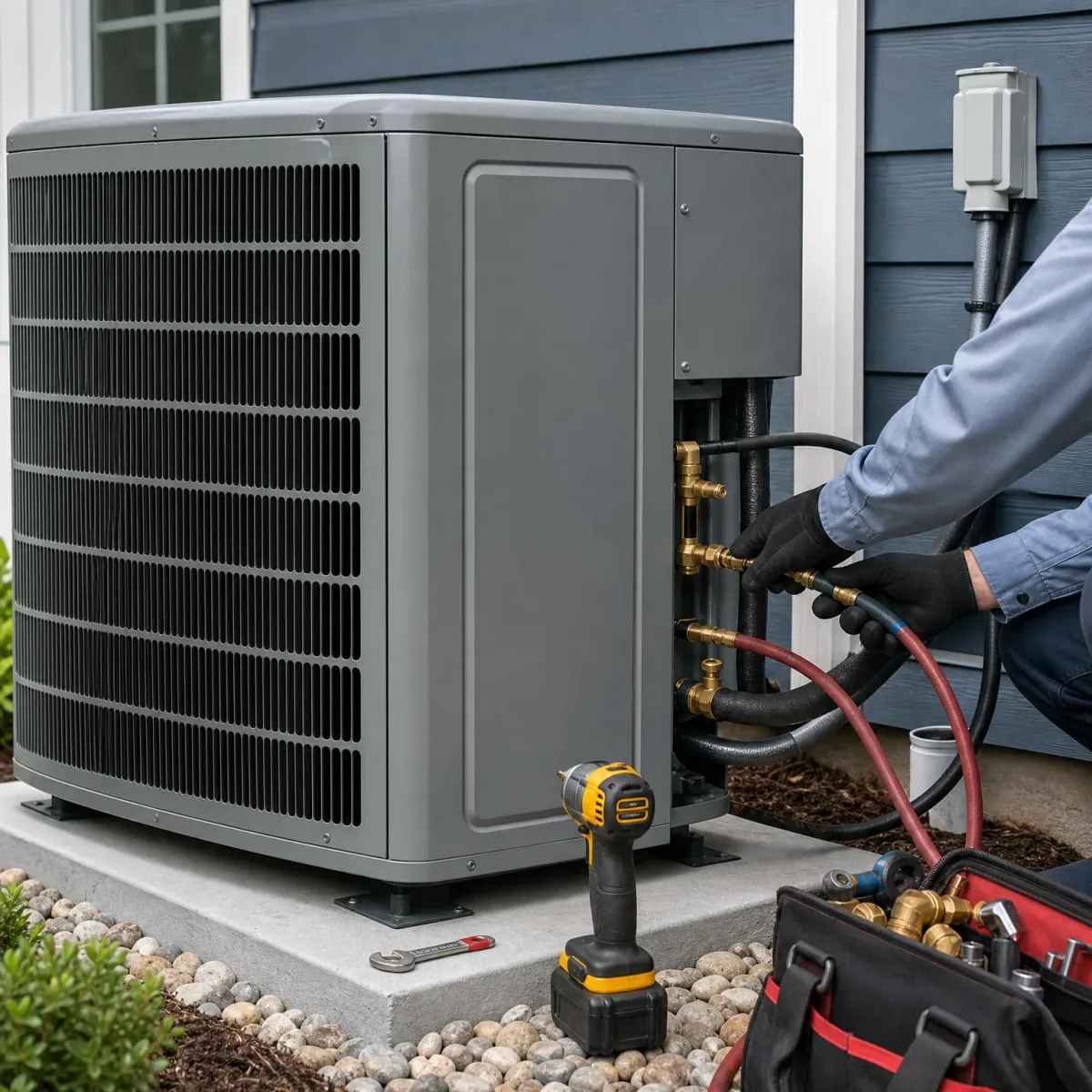
A person in a blue shirt and black gloves works on refrigerant line connections at the side of a gray outdoor air conditioning condenser unit on a concrete pad, with a cordless drill, wrench, and open tool bag nearby.

Tell us about the job

Takes about a minute. No obligation.

New system or replacementIron County, UT
Step 1 of 3

What kind of equipment?

Which costs less to run in Iron County?

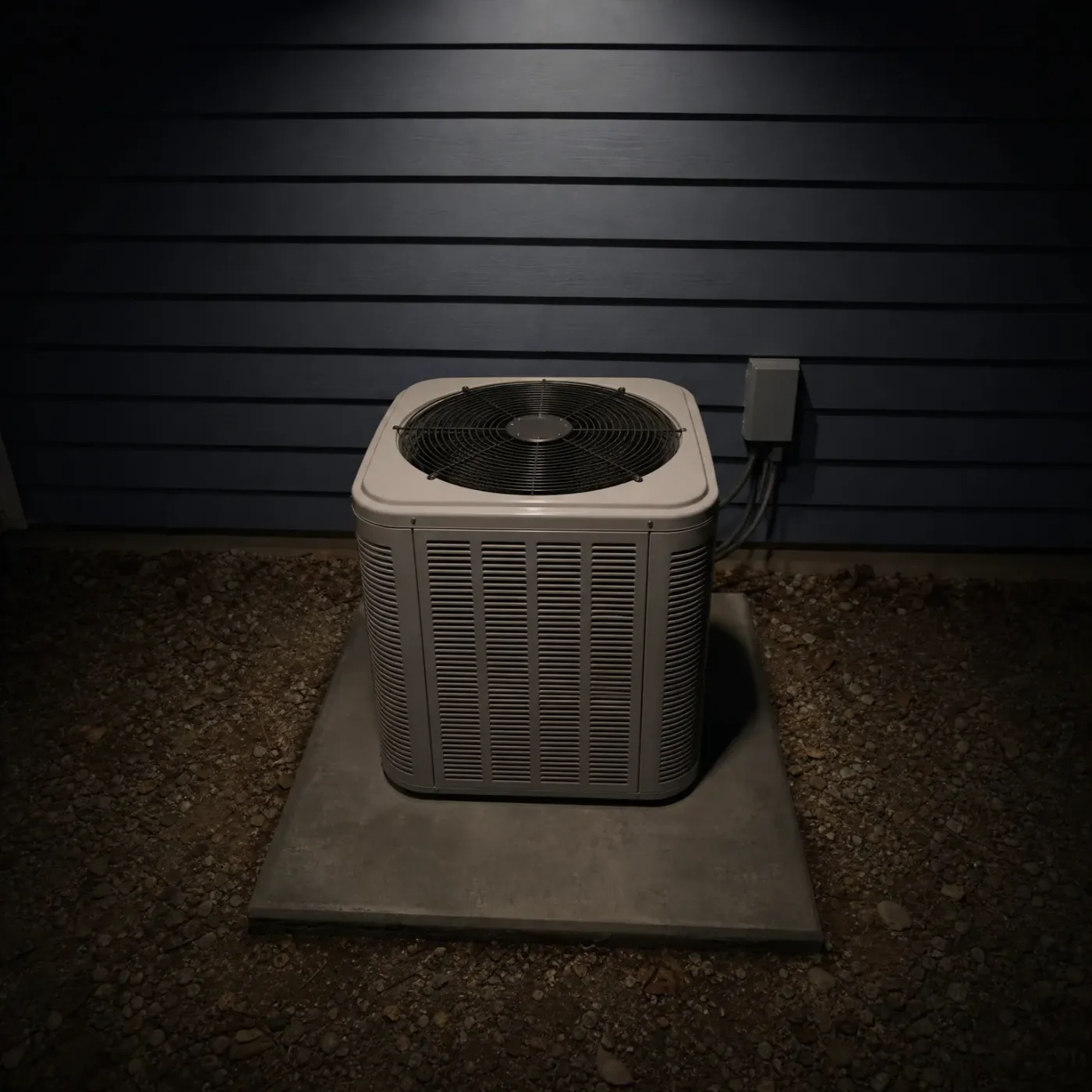
An outdoor air conditioning condenser unit on a concrete pad surrounded by gravel, against dark horizontal lap siding with a wall-mounted disconnect box and conduit, lit from above at night.

Heat pump

To heat your home here$1.63per 100,000 Btu

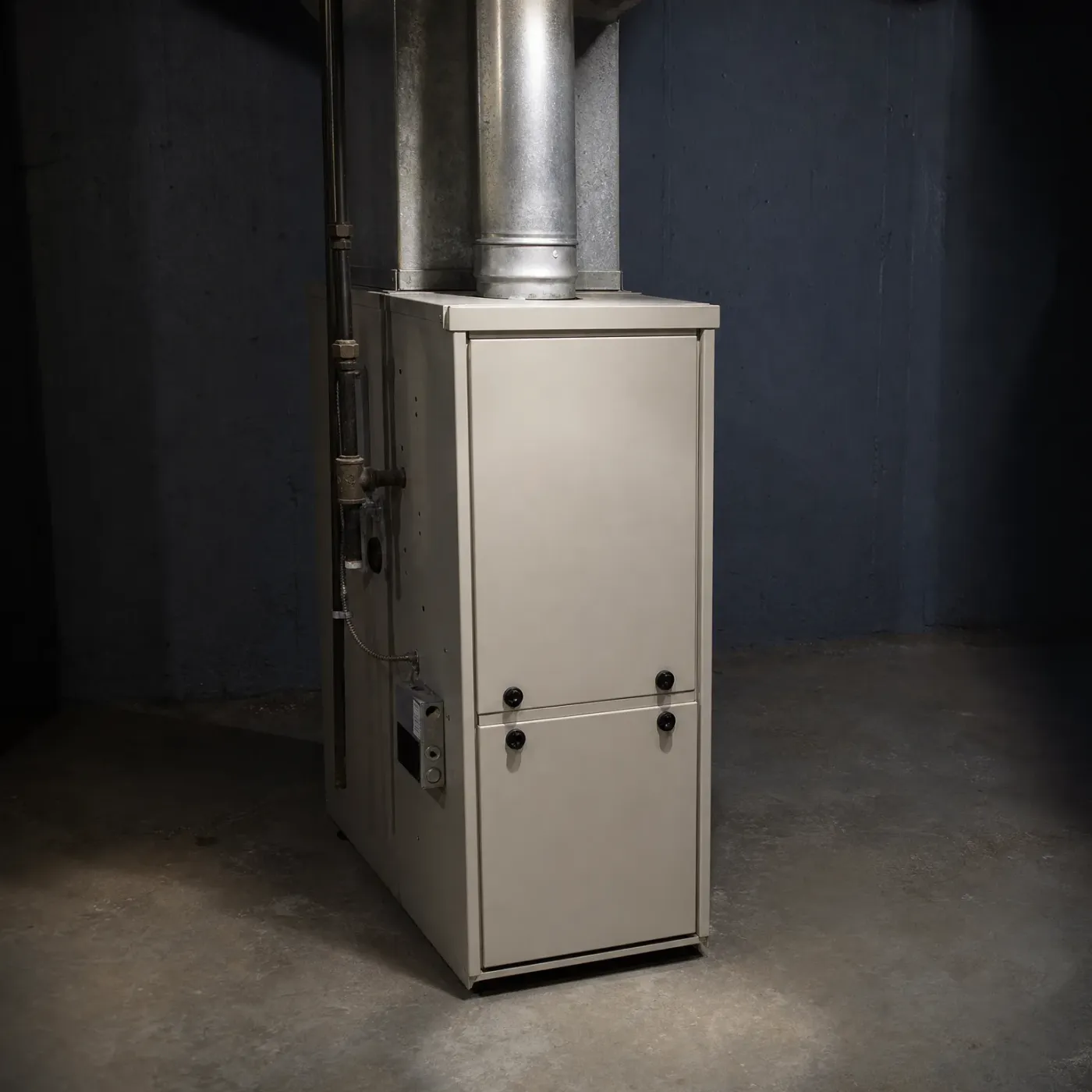
A beige sheet-metal furnace with two latched access panels stands on a concrete floor in a dim basement, with metal flue ducts rising from its top and a vertical pipe along the wall behind it.

Furnace

To heat your home here$1.57per 100,000 Btu

At Utah's gas and electricity prices, a heat pump and a gas furnace cost about the same to run here.

Btu stands for British thermal unit, the standard measure of heat energy.

Where does a heat pump shine?

  • No gas line, nothing burning in the house

    There's no gas line to the unit and no flame anywhere in it. Carbon monoxide isn't part of the picture.

    Kitchen with blue-grey shaker cabinets, a grey speckled stone island holding a stainless kettle on a black induction cooktop, a bowl of green apples, glass pendant lights, a stainless refrigerator, and a seating area visible through a doorway.
  • Heats and cools in one system

    Winter and summer are covered by the same outdoor unit. That's one machine to service instead of two.

    A cream sofa with navy and light blue cushions and a blue fringed throw sits beneath a white sash window overlooking a green garden, with a dark built-in bookshelf at left, a potted plant in a woven basket at right, and a wooden coffee table holding a vase of white flowers, books, and a mug.
  • Steady, even comfort

    A heat pump runs long and low instead of blasting on and off. Rooms hold an even temperature all day.

    A golden-haired dog sleeping on a patterned rug in front of a gray armchair with an open book and knit throw, beside a lit wood stove and a window showing snow outside.

Where does a furnace shine?

  • Strong, steady heat in hard cold

    Overnight lows average 20°F across December, January and February here. A furnace puts out hot air from the start and keeps it coming no matter how cold it gets outside.

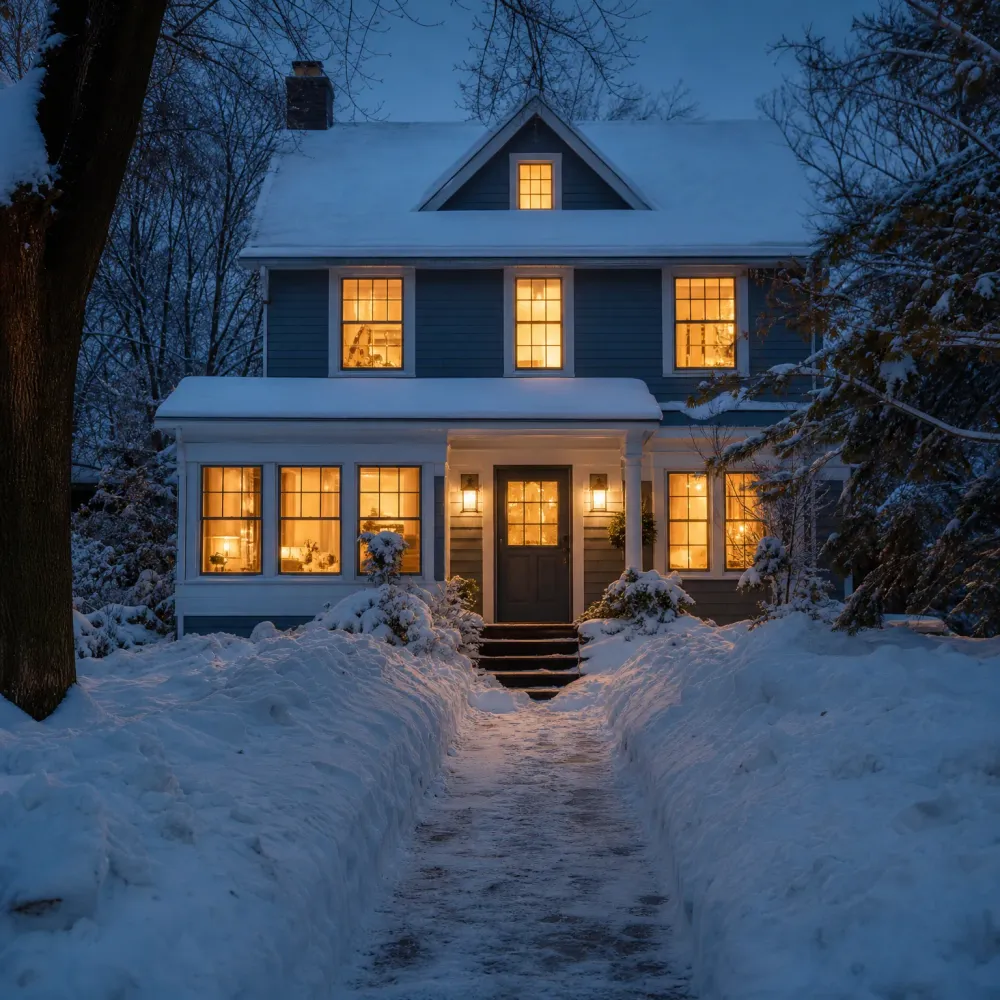
    A two-story dark blue house with white trim and lit windows at dusk, with a snow-covered roof and a shoveled path leading through deep snow to the front steps.
  • Runs on the gas most homes here already use

    Most homes in Iron County already heat with utility gas, so the line running to your house is likely already there. A furnace just uses what's already hooked up instead of asking you to add anything new.

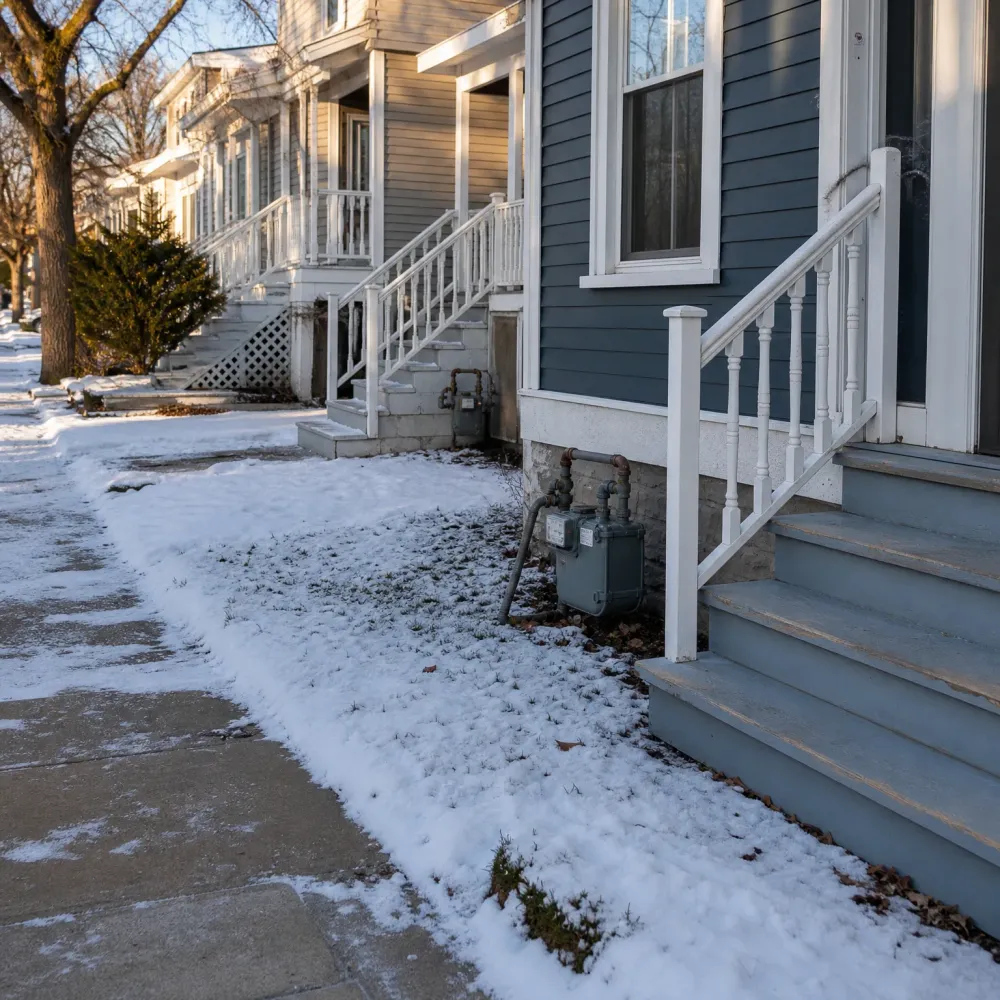
    A row of houses with blue and gray horizontal siding and white porch railings along a snow-covered sidewalk, with a gas meter and pipes at the base of the nearest house.
  • Proven, simple, easy to get serviced

    Gas furnaces have heated homes for generations. Almost every HVAC tech knows them inside and out.

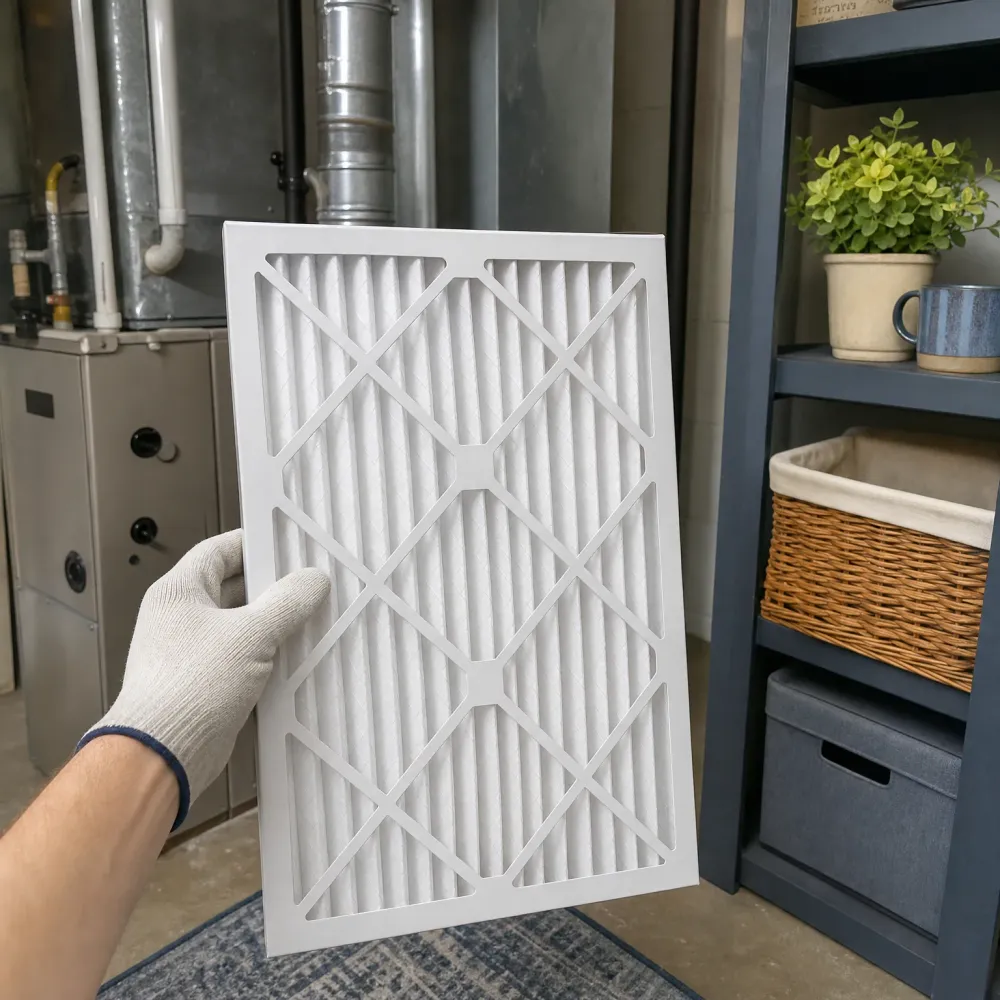
    A gloved hand holds a white pleated air filter in front of a furnace and ductwork, with a shelving unit holding a potted plant, mug, wicker basket and storage box at right.

What the cold does to a heat pump here

Heat runs eight months a year in Iron County, October through May. The overnight low averages 20°F across December, January and February, and about 165 nights a year drop to freezing or below.

A standard heat pump doesn't hold its rated output in cold like that. Below 40°F it puts out less heat than its rating says. Below about 35°F it typically needs backup heat to make up the difference. The average winter night here, 20°F, is below both marks. Every one of those 165 freezing nights is below both marks too.

That makes backup heat a regular part of winter here, not a rare event for a few nights a year. Most winter nights fall cold enough to need it.

There is an exception: heat pumps built and tested for cold climates. To carry the ENERGY STAR Cold Climate mark, a unit has to produce at least 1.75 units of heat per unit of electricity at 5°F and hold onto 70 percent of its 47°F capacity at that same temperature, checked by independent testing. In a two-winter field test of these units in occupied homes, backup heat covered only a small share of the load between 0°F and 35°F, and running on backup alone was rare above 0°F. Iron County only sees about 5 nights a year that cold.

So a standard heat pump here will lean on backup heat most winter nights. A cold-climate heat pump should handle nearly all of them on its own, with backup reserved for the handful of nights near 0°F.
A dark gray house with a covered wooden porch, gray railings and steps dusted with snow, stacked firewood beside the front door, and snow-covered conifers in the background.

What it costs, and what's already in the house

At Utah's own fuel prices the two machines land close together: $1.63 per 100,000 Btu for a heat pump at its federal minimum rating, $1.57 for a gas furnace at its federal minimum rating. The furnace is cheaper, but not by much, and the heat pump figure assumes no backup heat is needed. For a standard unit here, that assumption does not hold on most winter nights.

Two in three homes in Iron County heat with gas already. That doesn't decide the question, but it means the gas line a furnace needs is the normal setup here, not something new to run.

Cooling is the shorter season by far, about two months, July and August, with afternoons reaching 90°F or above on only about 35 days a year. A furnace only heats, so for the cooling months it sits idle while a separate air conditioner runs. A heat pump heats and cools from the same system, which counts for more in a place with a long cooling season than in one where cooling is this short.

So the choice splits on what you are optimizing for. A furnace is the steadier, cheaper-to-run bet in a county this cold, and it fits the gas line most houses here already have. A heat pump buys you one system instead of two, but only a cold-climate model is built to carry real heat through a winter this cold without leaning on backup most nights.

Sources: NOAA nClimDiv · NOAA 1991–2020 seasonal normals · EIA SEDS 2024 · 10 CFR 430.32 · PNNL Building America guide · PNNL-37127 field study · ENERGY STAR product criteria · Census ACS 2020–2024

A blue-sided house with white trim, a covered porch and stone-clad columns, its roof covered in deep snow, flanked by snow-laden evergreen trees with snow-covered mountains and clear blue sky behind.

Common questions about heat pumps and furnaces

  • Can a heat pump heat a house through a Utah winter?

    A standard heat pump will struggle to do it alone. Below 40°F it puts out less than its rated capacity, and below about 35°F it often needs backup heat, and that covers more than half the nights here, the ones at or below freezing. A cold-climate heat pump holds onto more of its capacity in that range, which is why it's usually paired with backup heat for the few nights a year that reach 0°F.

  • Do I need backup heat with a heat pump here?

    Most homes running a standard heat pump here will need it. The overnight low averages 20°F across December through February, well below the 35°F mark where a standard heat pump often needs help, and below 40°F its heat output already falls short of its rating. A cold-climate model backed by a furnace or electric strip heat covers the nights a standard heat pump can't.

  • Can I keep my furnace and add a heat pump?

    Yes, and in this climate it solves a real problem. The heat pump handles the milder nights on its own, and the furnace carries the house once it drops below about 35°F, which is most nights here from October through May. You get the furnace's strong heat for the cold snaps and the heat pump's cooling in July and August from one system.

  • Is a heat pump cheaper to run than a furnace in Iron County?

    No, a gas furnace runs a little cheaper here: $1.57 against $1.63 per 100,000 Btu of heat. The gap is small at Utah's current fuel prices, close enough that it isn't the reason to pick one system over the other. What tips the decision is more often whether gas already runs to the house and how the two handle the cold here.