






An outdoor heat pump unit mounted on a concrete pad beside a house with beige siding and a landscaped garden bed.

Heat Pump Repair in Provo, UT

Tell us about the job

Takes about a minute. No obligation.

RepairHeat PumpUtah County, UT
Step 1 of 2

What ZIP code is the job in?

Provo winters bring plenty of cold nights, with lows averaging 18°F in December through February. That's normal heat pump weather, not a reason for one to fail. Utah County sees its share of wind and winter storms, but nothing here is hard enough on outdoor units to cause breakdowns on its own. When a heat pump stops keeping up or starts running nonstop, the cause is usually something ordinary. A low refrigerant charge. A failing defrost control. A reversing valve stuck in one position. A contractor can check these in a single visit and tell you which one it is.

9 months
September through May, your system heats
2 months
July through August, it cools
18°F
the average winter night it heats against
83°F
the average summer afternoon it cools against
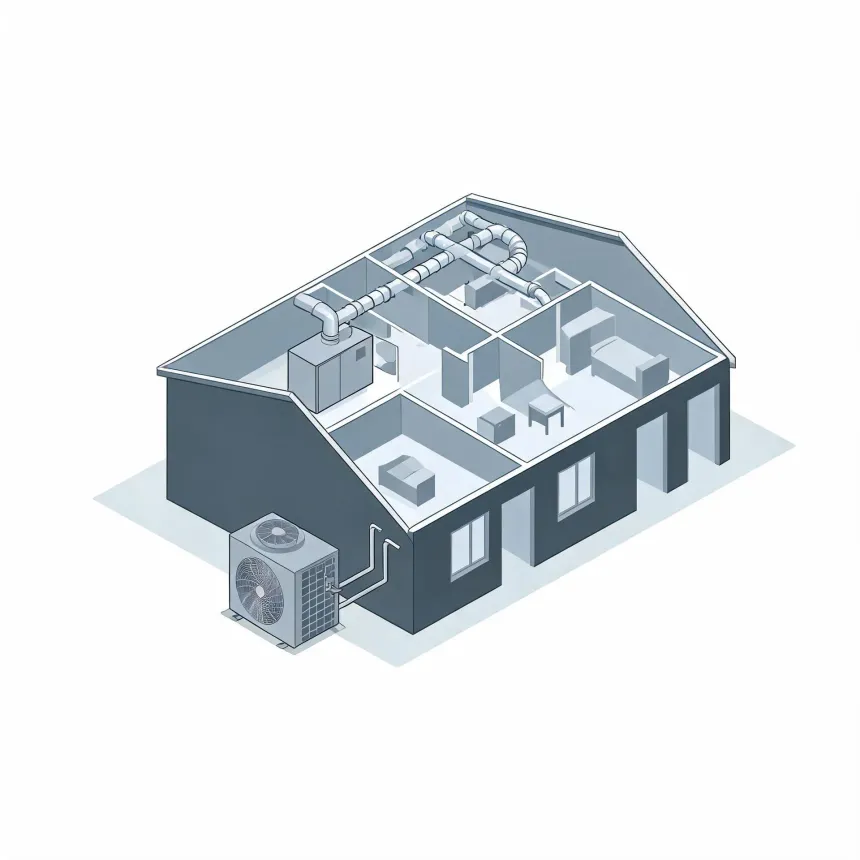
Isometric cutaway illustration of a single-story house showing interior rooms, attic ductwork and an air handler, with an outdoor condenser unit connected by lines along the exterior wall.
Your system heats September through May and cools July through August.

NOAA nClimDiv, 1991–2020 normals

Heat pumps in Provo run nine months a year, September through May.

August is when a weak part gets found out, right before the load hits it.

Provo gets its share of storms. None of them are why your heat pump quit.

203 severe weather events from 2015 to 2024
7% of homes statewide lost power a day or more in 2024
111 damaging wind events from 2015 to 2024
Built in 2001 or later, half of itA newer heat pump is usually worth repairing, not replacing.

A heat pump that is undersized or losing efficiency costs more to run every month, since electric resistance backup kicks in more often to make up the difference. Utah homes paid 12.22 cents per kilowatt-hour in 2024, so a system working harder than it should shows up on the power bill before anything fails outright. That is worth knowing before you decide whether a repair or a bigger fix makes sense. A contractor can measure the refrigerant charge and airflow and tell you whether the unit is running the way it was designed to.

A newer system is worth fixing, not replacing

If your heat pump came with the house, repair is usually the right move. Get the part that's failing diagnosed and fixed rather than planning around a replacement.

Find a contractor
A man in a dark cap, dark jacket and tan pants walks up gray porch steps toward a dark front door, carrying a worn brown leather duffel bag, with a potted shrub at left.
A gray heat pump condenser unit mounted on a concrete pad against the gray lap-siding exterior wall of a house.

Keep running it, and the small part takes out the big one

A heat pump that is struggling doesn't fail all at once. Low refrigerant charge makes the compressor work harder to move the same heat, and that extra strain shows up as wear long before the unit quits outright. A reversing valve stuck halfway lets refrigerant bypass where it shouldn't, so the compressor runs constantly trying to hit a setpoint it can't reach. A failing defrost control has the same effect from a different angle. If it doesn't trigger a defrost cycle when ice builds on the outdoor coil, airflow drops, the system pulls harder to compensate, and the coil can ice over completely. None of these get better on their own. The part that's struggling keeps struggling every hour the system runs, and the compressor is what absorbs the damage.

It's blowing air that isn't warm or cold enough

Put your hand at the vent. If the air feels close to room temperature instead of clearly warm or cool, the heat pump is running but not doing its job. That points to low refrigerant charge or a compressor that isn't keeping up, not a thermostat setting.
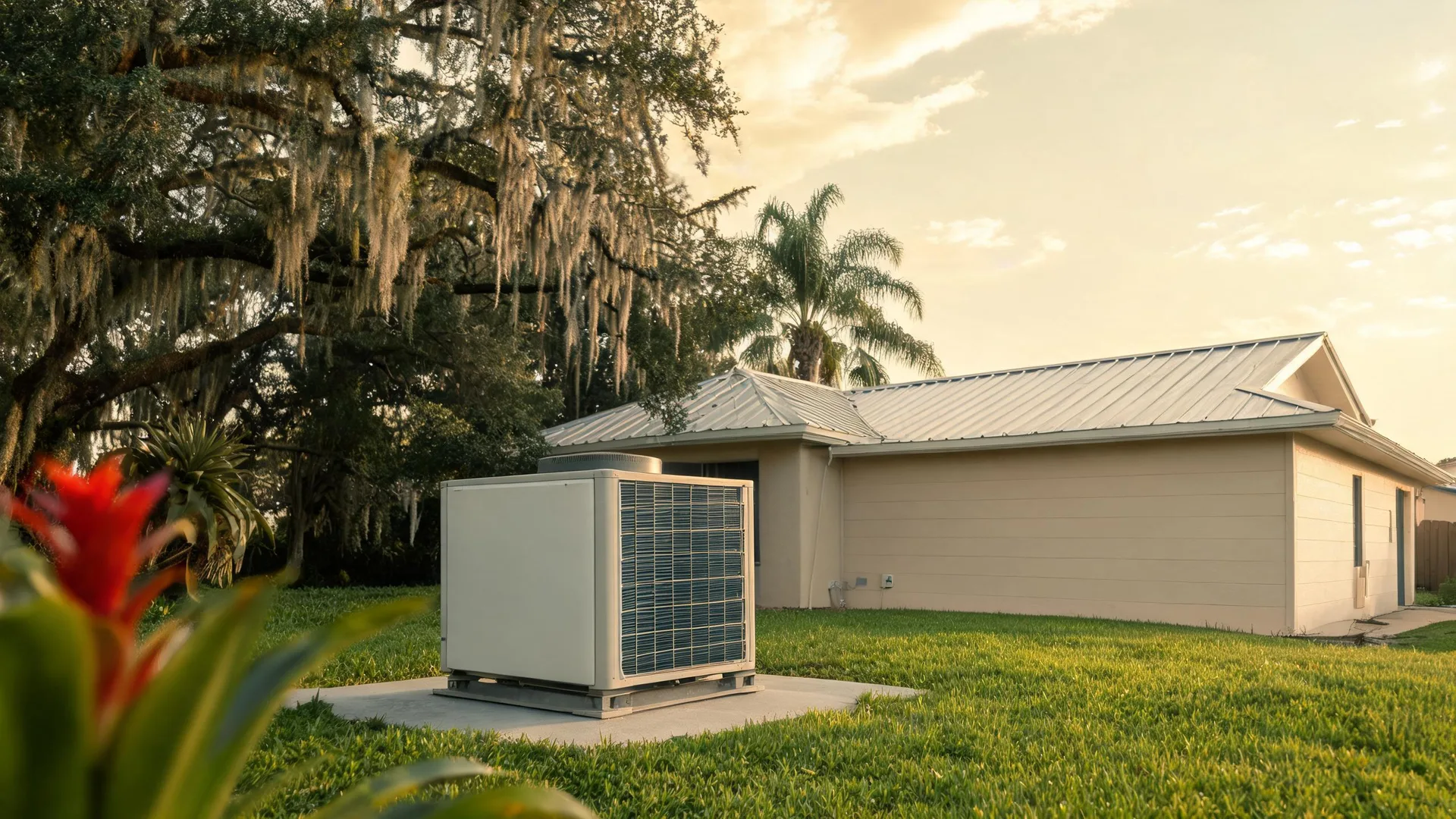
It's icing over and not clearing itself

Some frost on the outdoor unit in cold weather is normal. The system should melt it off on its own every so often through a defrost cycle. If you're seeing thick ice that builds up and stays, the defrost control isn't triggering when it should, and that ice will keep cutting off airflow until the unit can't move heat at all.

Before you call, check the easy things first. Look at the thermostat and make sure it's set to heat or cool, not just fan, and that the setpoint actually calls for what you want. Go outside and check the outdoor unit for anything blocking it, leaves, a snowdrift, a cover left on by accident. Check your breaker panel for a tripped breaker, since a heat pump that won't start at all sometimes just lost power. Inside, pull the air filter and hold it up to a light. If you can't see light through it, swap it or clean it, because a clogged filter starves the system of airflow and can trigger the exact symptoms that look like bigger problems. None of these take tools or experience, and ruling them out first means the contractor who comes out is chasing the actual problem, not a dirty filter.

A diagnostic visit starts with questions. When did it start acting up, is it blowing warm, cold, or nothing at all, does it run constantly or short cycle. Then the contractor checks pressures and temperatures with gauges on the refrigerant lines, because that tells them whether the charge is right and whether the compressor is moving heat the way it should. They'll check amp draw on the compressor and fan motors against what the unit is rated for. Electrical connections get checked too, since a loose wire or a failing capacitor can mimic a refrigerant problem. Outside, they'll look at the reversing valve and defrost board, since those fail in ways that look like other things from inside the house. Most of this gets done with the system running, because a heat pump often behaves differently under load than it does sitting still.