A row of illuminated timber-frame and stone houses photographed at dusk, with evergreen trees and a mountain range in the background.

Heat Pump Repair in Moab, UT

Tell us about the job

Takes about a minute. No obligation.

RepairHeat PumpGrand County, UT
Step 1 of 2

What ZIP code is the job in?

Winter nights are the real test

Overnight lows in Grand County average 20°F through December, January and February. A heat pump leans hardest on its defrost cycle and backup heat in that range. A unit that struggles here is usually showing a problem it already had, not damage from the cold itself.

Find the cause before replacing parts

A heat pump that runs constantly, blows cool air, or trips its breaker has a specific cause. It might be a low refrigerant charge. It might be a failed defrost sensor. It might be a dirty coil restricting airflow. Diagnosing which one it is first means the repair fixes the actual problem instead of guessing.

8 months
October through May, your system heats
3 months
June through August, it cools
20°F
the average winter night it heats against
89°F
the average summer afternoon it cools against
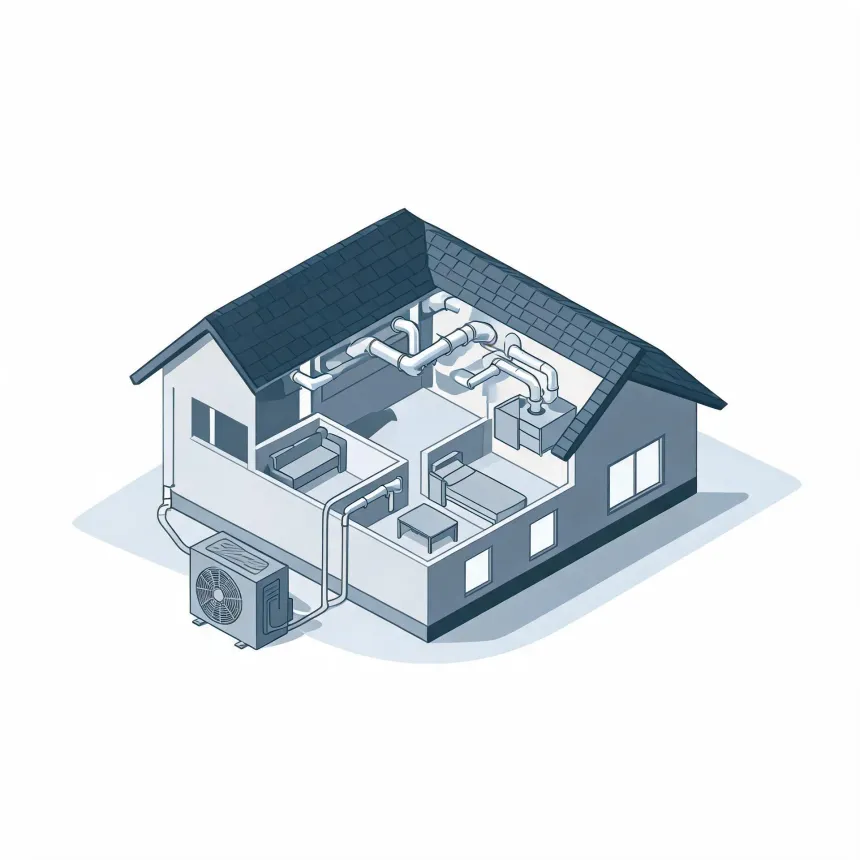
Isometric cutaway illustration of a house showing attic ductwork, an indoor air handler, furnished rooms, and an outdoor condenser unit connected by lines along the exterior wall.
Your system heats October through May and cools June through August.

NOAA nClimDiv, 1991–2020 normals

Heat pumps here go into heating mode in October, right after September's mild stretch.

The first cold snap finds whatever was already weak in the system.

Half the homes here were built by 1988, and a repair still makes sense for a system that age

Half the homes here were built by 1988
55 damaging wind events from 2015 to 2024
92 winter storms from 2015 to 2024

If your heat pump came with a newer build here, get the repair looked at before anyone talks replacement. A system installed in the last decade or so still has years of working life in it, and a failed sensor or a low charge does not change that. Check the install date on the unit itself or in your paperwork if you are not sure when it went in. Age only argues for replacement when the unit is actually old. Short of that, fixing what is broken is the straightforward move.

Get the usual fix

Nothing about this area is especially hard on it. It's most likely the usual problem with the usual fix.

Find a contractor
A man in a dark long-sleeve shirt and tan work pants, seen from behind, carries a canvas tool bag up porch steps toward a dark blue front door, with a potted plant beside him.
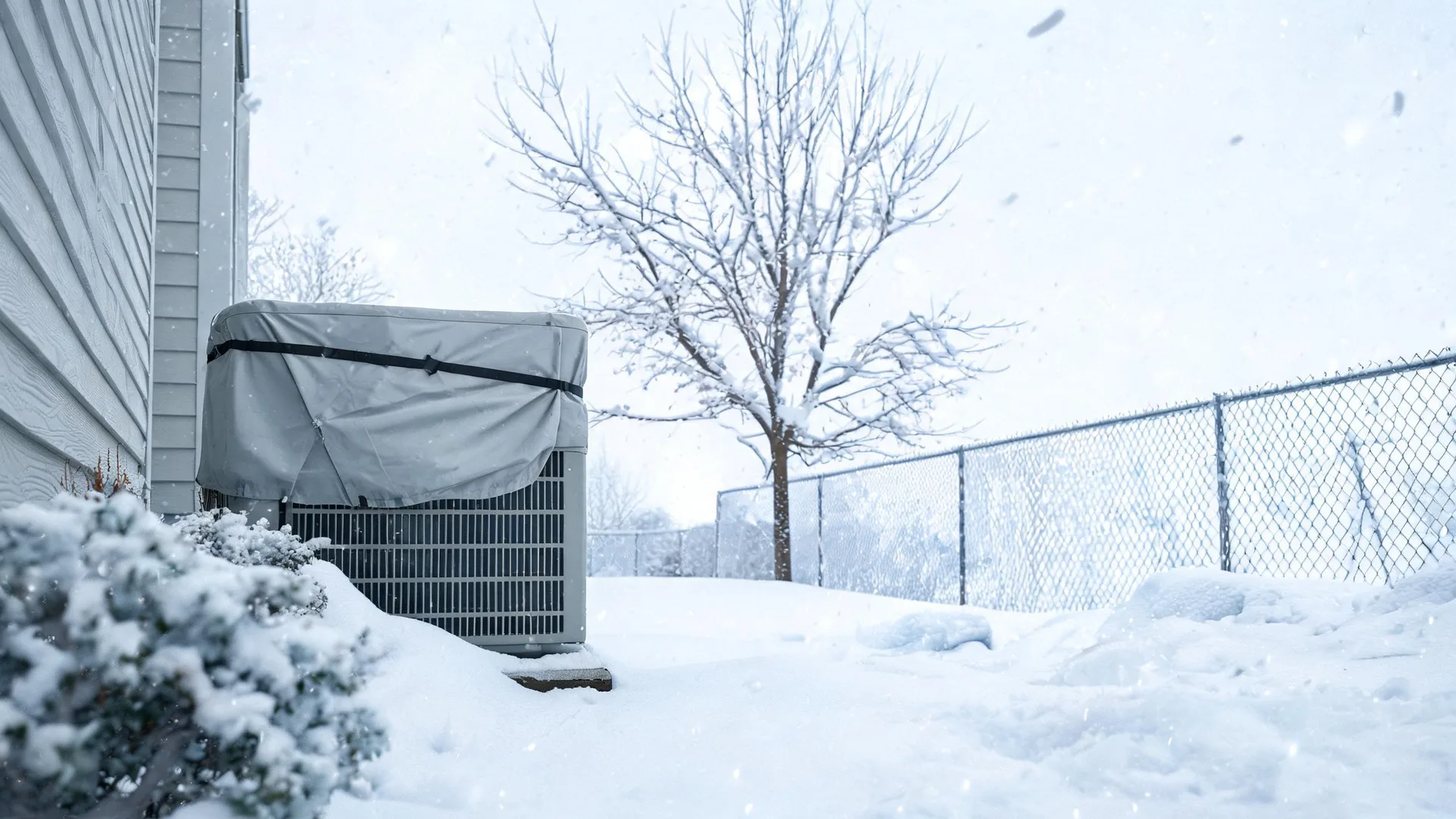
A gray heat pump outdoor unit mounted on a concrete pad next to a residential house with lap siding and stone accents.

It runs in every season, not just the cold months

A heat pump works year round. It switches to cooling in summer and back to heating in winter, so the compressor almost never gets a long rest the way a furnace does. Every one of those running hours passes through the same reversing valve, and when that valve starts to stick, you feel it as warm air coming out when you want cool, or cool air when you want warm. The defrost board is the other part worth watching. It cycles on and off through the cold months to clear frost from the outdoor coil, and when it starts failing you will see actual ice building up on that coil instead of the short defrost runs you are used to. A unit that short cycles, or runs long and still does not reach the set temperature, is usually telling you the charge is low or the coil is dirty, not that the machine is worn out.

A sticking valve wears a groove

A reversing valve that sticks only partway is still getting forced back and forth every time the system calls. Left alone, it wears into the position it keeps sticking in, and a part that was worth cleaning or adjusting becomes a part that only gets replaced.

Ice does not stay put

A coil that starts icing because of a bad defrost cycle keeps icing on every run after that. The ice blocks more airflow each time, the compressor works harder to push through it, and what started as a sensor problem ends up as a compressor problem.

Most heat pump failures trace back to a handful of parts, and they fail for ordinary reasons. Capacitors weaken with age and stop giving the compressor or fan motor the jolt it needs to start. Contactors pit and burn from constant cycling until they stop making good contact. A dirty outdoor coil forces the system to work harder for the same result, and that extra strain shortens the life of whatever runs hardest to make up for it. Low refrigerant almost always means a leak somewhere in the line set or coil, not normal use, since a sealed system does not simply run low on its own. Thermostats and sensors drift out of calibration over years and start telling the system the wrong thing about the temperature. None of this is particular to any one brand or climate. It is just what wears on a machine that runs most of the year.

A repair decision comes down to what is actually failing, not how old the unit looks from the outside. A capacitor, a contactor, a defrost sensor, these are small parts, and replacing one of them does not mean the compressor or the rest of the system is in any trouble. The compressor is the expensive part to replace, and the part most worth asking about directly. If it is still sound, the unit has the heart of a working system no matter what else around it needs attention. What matters more than the single failure in front of you is the pattern. One part failing is a repair. The same system bringing you back every season, each time for something different, is a machine that is wearing out all over, and at that point you are paying to fix one thing while the next one is already starting.