



A multi-story timber-frame and stone house glows with warm interior and exterior lighting on a dark residential street, with mountain peaks and pine trees visible in the background.

Heat Pump Repair in Manila, UT

Tell us about the job

Takes about a minute. No obligation.

RepairHeat PumpDaggett County, UT
Step 1 of 2

What ZIP code is the job in?

Nights here average 12°F through December, January and February, and the county has seen 31 winter storms over the last ten years. That's real cold and real snow, but it's nothing unusual for a heat pump. These units are built to pull heat from outside air well below freezing, and a properly working system should keep up through a Manila winter without trouble. When one stops keeping the house warm, the cause is almost always something ordinary. Low refrigerant. A defrost control that isn't cycling right. A reversing valve stuck in one position. A contractor checking yours will look at the same things they'd check on any heat pump working through a cold winter.

10 months
September through June, your system heats
12°F
the average winter night it heats against
77°F
the average summer afternoon it cools against
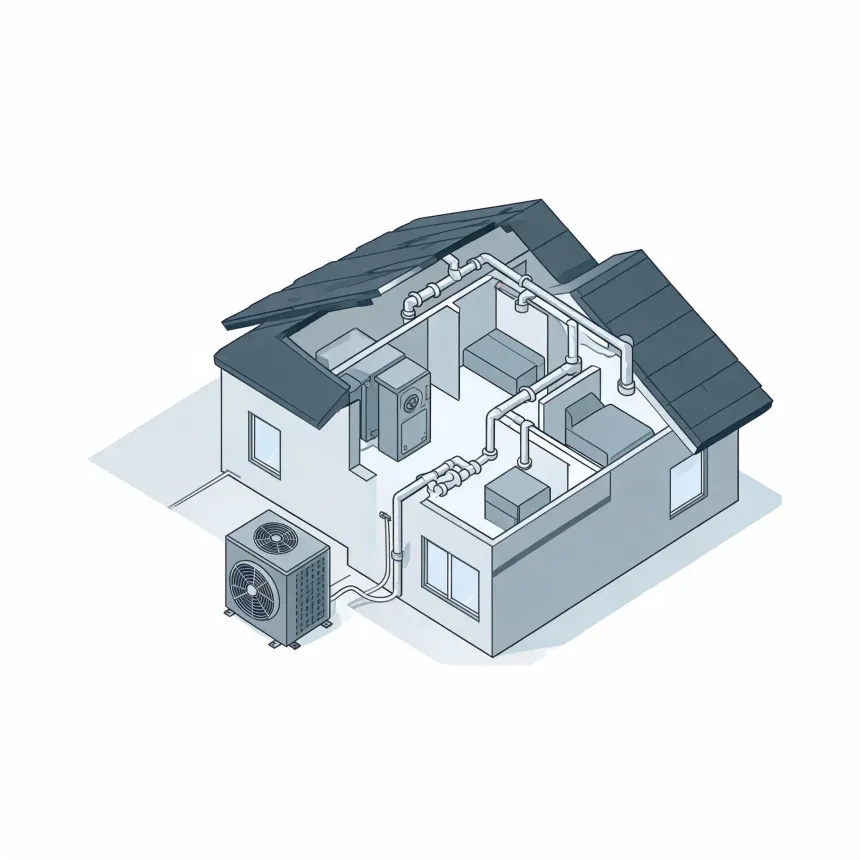
Isometric grayscale illustration of a cutaway two-story house showing interior ductwork, an indoor air handler unit, and an outdoor condenser unit on a pad beside the building.

Heat pumps in Daggett County start working in August, a month before the season.

August is when a weak part is worth finding, before September puts the load on it.

Half the homes here were built by 1979, old enough that the heat pump may be original

Half the homes here were built by 1979
31 winter storms from 2015 to 2024
Winter nights average 12°F

Electricity here runs 12.22 cents a kilowatt-hour, close to the national average. A heat pump that's losing refrigerant or running a bad defrost cycle doesn't just fall behind on heat. It leans harder on the backup strip heat to cover the gap, and that pulls more power than the compressor alone. Turning up the thermostat lets the backup heat make up the difference, but it doesn't fix what's wrong, and the power bill shows it. A contractor who checks refrigerant charge and defrost operation catches the problem before it costs more to run around it.

Find out what shape the unit is in before you pay for the repair

Half the homes in Daggett County were built in 1979 or earlier. If yours is one of them, the heat pump may not be original, but if it is, repairs on a unit that old are worth weighing against what's left in it. A contractor can tell you which one you're looking at before you pay for the fix.

Find a contractor
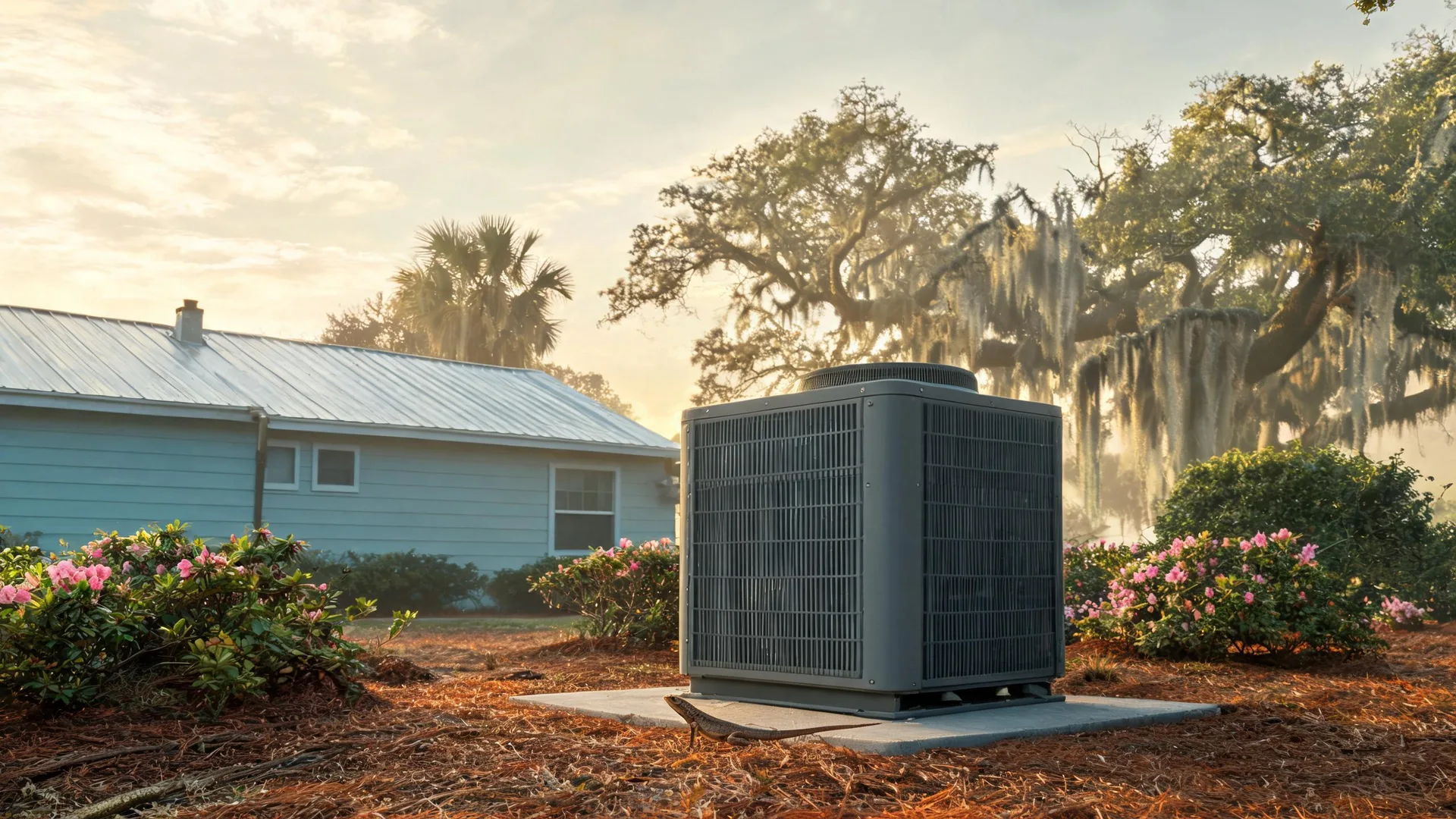
A gray air-source heat pump mounted on a concrete pad next to a house with gray vinyl siding, surrounded by gravel and flanked by green shrubs and white hydrangea flowers.

What to check before the truck shows up

Before anyone comes out, walk around the outdoor unit and look at the coil. If it's packed with ice beyond the thin frost that melts off in a normal defrost cycle, that's worth noting. Check that nothing is blocking airflow around it, no leaves, no snow drift, no cover left on by mistake. Inside, look at the air filter. A filter clogged with dust makes the system work harder and can throw off a defrost cycle that depends on steady airflow. Check your thermostat is set to heat and the temperature is actually set above room temperature, not sitting at a setback. If you have a breaker panel, check whether the breaker for the outdoor unit has tripped. None of this tells you what's broken, but it rules out the easy stuff before a contractor has to.

The first sign is usually sound, not temperature

A heat pump in trouble often tells you before the house feels cold. Listen for a compressor that hums but doesn't start, a clicking reversing valve, or an outdoor fan that runs slower than it should. Short cycling, where the unit kicks on and off every few minutes instead of running a full cycle, wears on parts fast and is worth a call on its own even if the house still feels warm enough.
Warm air that isn't warm enough still counts as a failure

A heat pump pushing out air that's only slightly warmer than room temperature isn't necessarily broken, that can be normal for the system. But if it's running constantly and still losing ground against the cold, or if the strip heat seems to be doing all the work while the compressor sits idle, something upstream of the heat strips has failed. That's not a wait and see problem. The longer a failing reversing valve or low refrigerant charge runs unaddressed, the more strain it puts on the compressor itself.

A reversing valve stuck halfway or a refrigerant leak doesn't stay a small problem if the unit keeps cycling. The compressor is built to move refrigerant at a certain pressure, and when the charge is low, it has to work harder to move what's left. That extra strain shows up as heat, and heat is what wears down compressor windings over time. A defrost cycle that isn't triggering right has its own version of this. Ice builds on the coil, airflow drops further, and the system calls for more runtime to make up for less heat exchange, which only adds to the ice. Left alone, either of these turns a part replacement into a compressor replacement, and the compressor is the part that keeps everything else running.

A diagnostic visit starts outside at the unit, with gauges on the refrigerant lines rather than guessing from how the house feels. From there it's the reversing valve, checked to confirm it switches when called. Then the defrost board, checked against the sensor readings it's supposed to be acting on. A contractor will run the system through a defrost cycle on purpose, watching whether it triggers, runs long enough, and ends when the coil is actually clear. Electrical checks come after that. The contactor, the capacitor, the wiring at the compressor, looking for the failure that hasn't shown up yet but is close. None of this takes guesswork once the gauges are on. Every reading points to one part or rules it out.