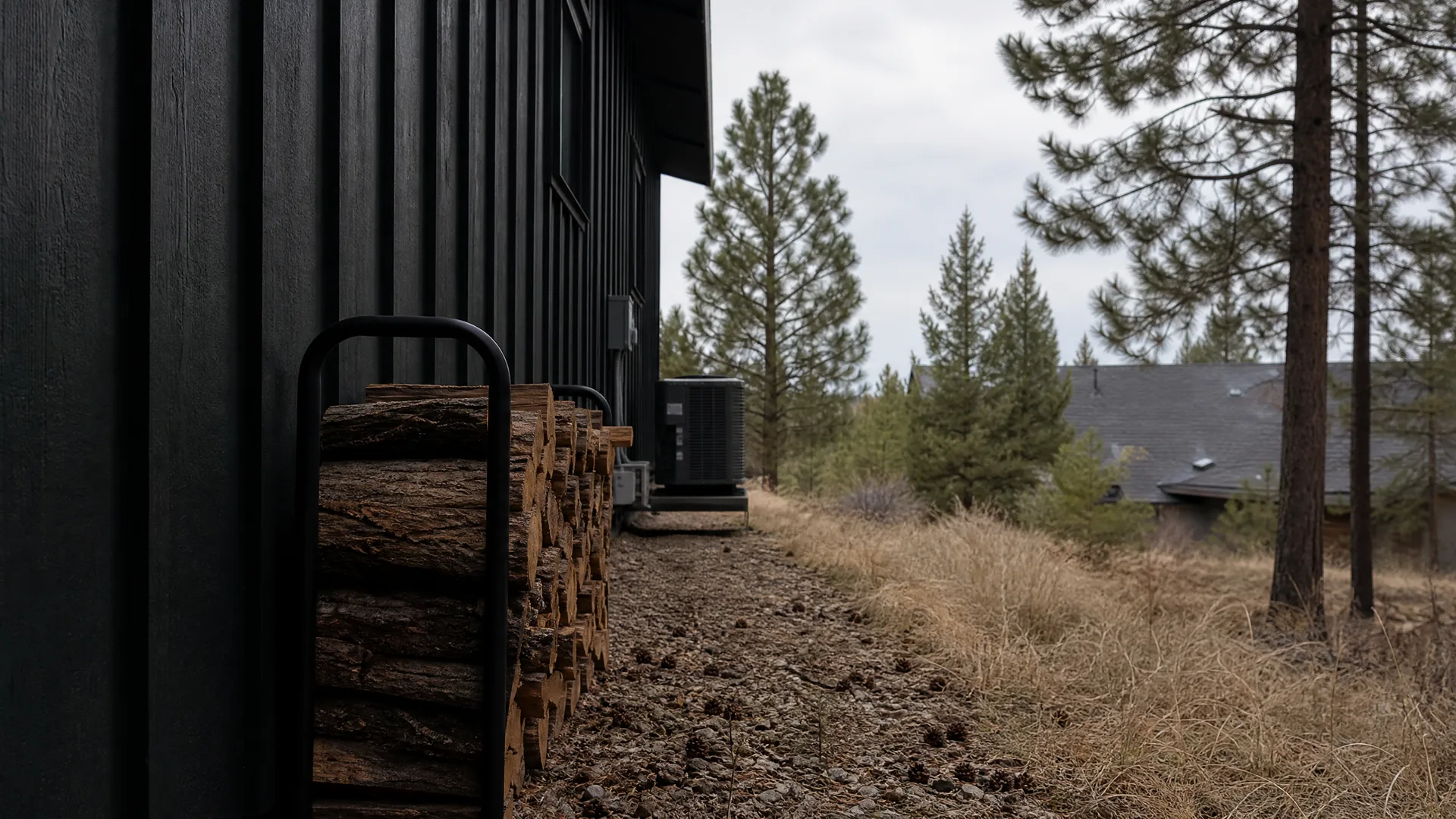
A black vertical-board exterior wall with a metal rack of stacked firewood, an air-conditioning condenser unit beyond, and dry grass, gravel and pine trees with a neighboring roof in the background.

Heat Pump Repair in Delta, UT

Tell us about the job

Takes about a minute. No obligation.

RepairHeat PumpMillard County, UT
Step 1 of 2

What ZIP code is the job in?

The first cold snap in October finds the weak spot

A heat pump in Delta switches over to heating in October and runs through May. Whatever was already marginal, a weak capacitor, a low charge, a failing board, tends to give out once the system has to work hard for the first time that season.

Get it looked at before the long stretch ahead

Eight months of heating is a long time to run on a system that's already struggling. A repair done early in October catches the problem before it has to carry the house through the coldest months.

8 months
October through May, your system heats
3 months
June through August, it cools
20°F
the average winter night it heats against
89°F
the average summer afternoon it cools against
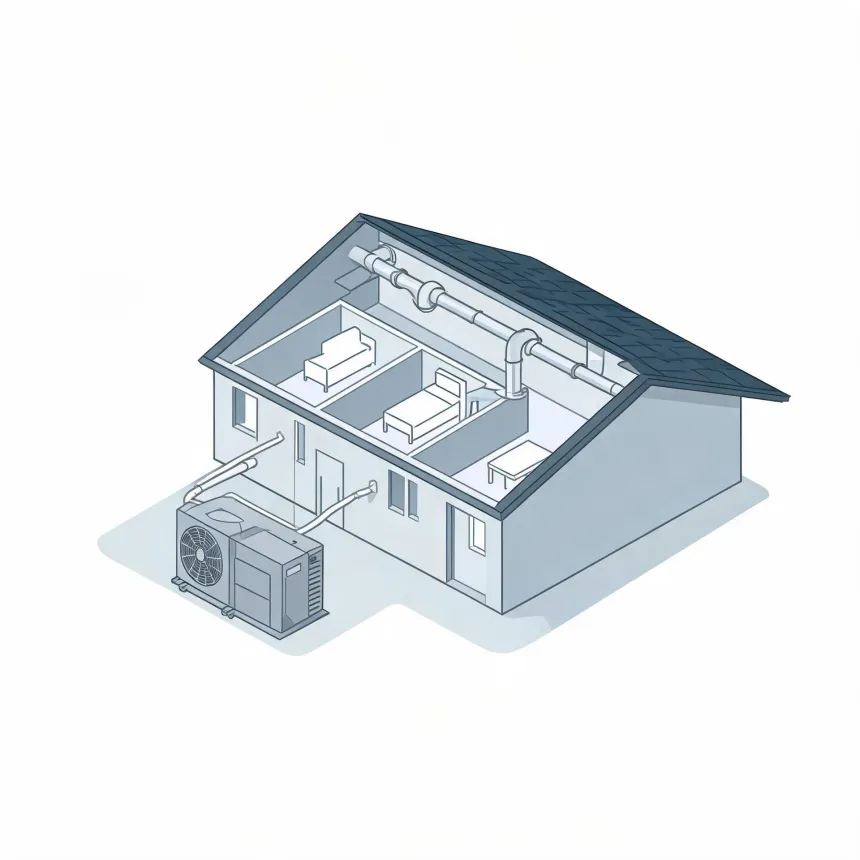
Isometric line illustration of a cutaway single-story house showing interior rooms with furniture and attic ductwork connected to an outdoor condenser unit beside the building.
Your system heats October through May and cools June through August.

NOAA nClimDiv, 1991–2020 normals

Winter nights in Millard County average 20°F, not far below zero.

A heat pump here isn't fighting extreme cold every night, so most repairs are worth making.

Delta's weather isn't what wears out a heat pump

Power costs 12.22 cents a kWh statewide
39 damaging wind events from 2015 to 2024
32 winter storms from 2015 to 2024

A heat pump that's struggling gives you warning before it quits outright. It runs but the air coming out feels lukewarm instead of warm, so the house never quite gets comfortable. It short cycles, turning on and off every few minutes instead of running a steady stretch. Ice builds up on the outdoor unit and doesn't clear during the defrost cycle like it should. You hear it straining, a hard clunk at startup or a hum that doesn't turn into a run. Any of these is worth a call before the system stops heating altogether on a cold night.

Worth fixing, not worth replacing

Mild winter nights mean a heat pump here isn't being pushed hard just to keep up. That points to a fixable problem rather than a system that's worn out, so getting it looked at is usually the right call.

Find a contractor
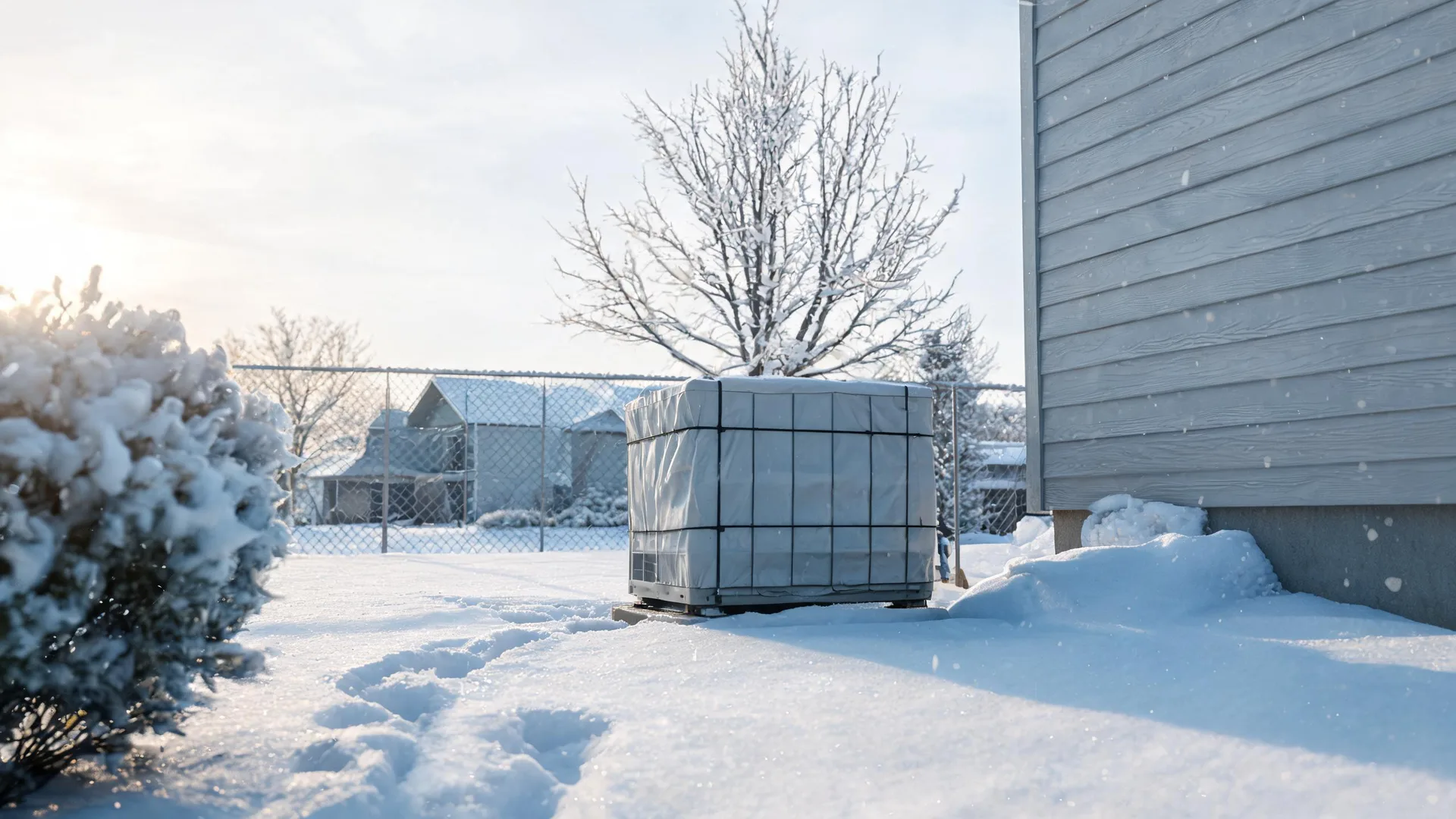
A gray heat pump outdoor unit mounted on a concrete pad next to the stone-accented exterior wall of a house.

Finding the actual problem before touching anything

A diagnostic call starts outside at the unit, before anyone touches a wire. A tech watches what the system is actually doing. Does it run. Does it try to switch between heating and cooling. Does the outdoor fan turn. Gauges go on next to read the refrigerant pressure, since a low charge or a restriction shows up there before it shows up anywhere else. Electrical testing follows. The capacitor, the contactor, the board, each checked against what it should read rather than guessed at from how it looks. The reversing valve gets tested on its own too. A valve stuck partway can make a system blow cold air in heating mode or never fully switch over. None of this takes long, but skipping a step means guessing at the rest, and a heat pump has enough parts that a wrong guess means paying for one that wasn't the problem.

Check the thermostat and the breaker first

Make sure the thermostat is set to heat and the setpoint is actually above room temperature. Check the breaker for the outdoor unit and the one for the air handler, since a heat pump has both. A breaker that looks on but has tripped slightly will often reset clean with a firm flip off and back on.

Look at the outdoor unit before you call

Clear away leaves, ice or anything blocking airflow around the outdoor coil. A heat pump needs air moving freely through that coil in both heating and cooling mode. If the coil is caked in ice that isn't clearing on its own after an hour, that's a defrost problem worth reporting when you call, not something to chip off yourself.

A heat pump that's low on charge or losing a sensor reading doesn't shut itself off. It keeps running, trying to reach the setpoint it can't hit, and that changes what the repair looks like later. A compressor pushing refrigerant with a slow leak runs hotter than it should, and that heat breaks down the oil that's supposed to protect it. A reversing valve that's starting to stick will stick worse the more times it's cycled under strain. Ice that isn't clearing in a normal defrost cycle just keeps building, and a coil that stays frozen stops moving air at all, so the system runs flat out and heats nothing. None of this is a reason to shut the system off and wait. It's a reason to get the call in while the fix is still a part, not the whole unit.

Age is the first thing to weigh, but it's not the only thing. A compressor or a reversing valve near the end of its life is expensive enough to replace on its own that putting that money toward a new system usually makes more sense. A failed capacitor, contactor, defrost board or sensor is a different story. Those are routine parts, not tied to how old the system is, and swapping one out brings a heat pump back to normal operation. The other thing worth asking is whether this is the first repair or the third one in a couple of years. One fixable failure is just that. A system that keeps finding new ways to break is telling you something the next repair won't fix for good.