





Illuminated timber-and-stone luxury homes along a residential street at dusk, with snow-capped mountains visible in the background.

Heat Pump Repair in Circleville, UT

Tell us about the job

Takes about a minute. No obligation.

RepairHeat PumpPiute County, UT
Step 1 of 2

What ZIP code is the job in?

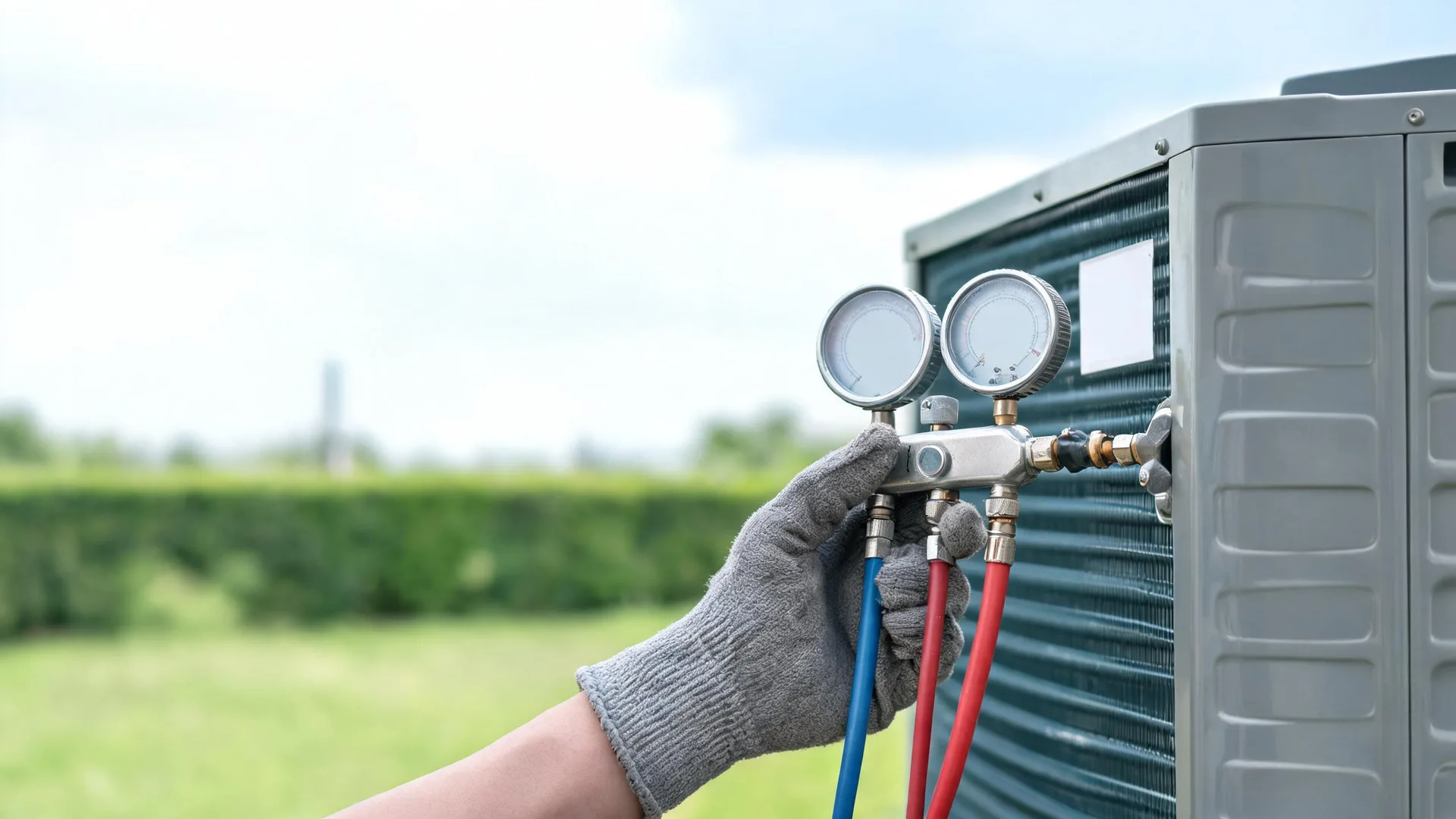
A diagnostic visit starts outside at the unit, checking refrigerant pressure and the condition of the coil. The tech wants to see the fan and compressor both running the way they should. From there it's inside to the air handler, checking the reversing valve and the airflow coming out of the vents. If your system has auxiliary heat strips, those get checked too. Thermostat settings get compared against what the system is actually doing, since a heat pump stuck in the wrong mode can look like a much bigger problem than it is. A failing capacitor, a low charge, a dirty coil, a stuck reversing valve, these cover most of what goes wrong. Once the tech finds the actual cause, they can tell you straight whether it's a quick fix or something that needs a part ordered in.

10 months
September through June, your system heats
16°F
the average winter night it heats against
77°F
the average summer afternoon it cools against
Isometric grey-toned illustration of a cutaway house showing interior rooms, ceiling ductwork and an air handler, connected by lines to an outdoor condenser unit beside the building.

Heat pumps in Circleville sit idle through August, then start running come September.

A part that was already weak tends to give out in that first cold stretch, so September is the month to get it checked.

Cold nights here aren't the problem. A weak part finally giving out is.

Power costs 12.22 cents a kWh statewide
32 winter storms from 2015 to 2024
Winter nights average 16°F

Get it looked at early

Problems tend to show up in the first weeks of the season, when the load hits a part that was already weak.

Find a contractor
A gray heat pump outdoor unit mounted on a concrete pad next to the stone-accented exterior wall of a house.

What to check yourself first

Before you call anyone, go outside and look at the outdoor unit. Check that the fan is actually spinning when the system is running. Look at the coil for ice. A light frost in cold weather is normal, heat pumps frost up and defrost themselves on a cycle. But if the whole unit is coated solid, that's worth telling the tech. Walk around back and check nothing is blocking airflow into the coil, no leaves packed against it, no shrub grown in too close. Inside, check the thermostat is actually set to heat, not cooling or fan only. Put your hand up to a vent and feel what's coming out. Heat pump air in heating mode runs cooler than a furnace, that's normal, but it should still feel warm against your hand, not cold. If it's blowing cold air while the thermostat is calling for heat, that's worth mentioning when the tech asks. Check the breaker panel too. A tripped breaker to the outdoor unit will shut the whole system down, and flipping it back can be all it takes. None of this tells you what's actually wrong inside the system, but it narrows things down before someone has to drive out.

Warm air that isn't warm enough

A heat pump blowing air that feels lukewarm instead of cold is often doing exactly what it's supposed to, since heating mode never feels as hot as a furnace. The sign to actually worry about is the system running constantly and still losing ground against the thermostat setting. That points to low refrigerant charge, a compressor struggling to keep up, or a reversing valve not fully switching over.
Short cycling wears parts out faster

A heat pump that kicks on, runs a couple minutes, then shuts off again is short cycling, and it's hard on the compressor every time it happens. Left alone, the part causing it only gets worse, and whatever started as a quick repair turns into a compressor replacement. A system doing this is worth getting looked at before the next cold stretch, not after.

A heat pump with a real problem doesn't fix itself by staying on. Low refrigerant charge is a good example. The compressor still runs, but it's working harder to move heat with less refrigerant doing the job, and that extra strain is what burns a compressor out early. A reversing valve that's stuck partway behaves the same way, forcing the system to fight itself cycle after cycle instead of failing clean. Ice on the coil follows the same pattern. A little frost melts off on its own, but a coil that's iced over blocks airflow, and a system starved for airflow runs longer and harder to make up the difference. None of these get better with time. The part under strain stays under strain until something gives, and what gives first is usually the compressor.

Age is the first thing worth weighing. A heat pump that's old enough has already had its weaker parts replaced along the way, and the compressor is usually what's left original. If the compressor is the part failing, that's the whole system, not a piece of it. A capacitor or a control board is a different conversation. Those parts fail on their own on a system that otherwise has plenty of life left, and swapping one is a normal repair, not a stopgap. The other thing to ask is whether this is the first breakdown or one of several. A system that keeps finding new ways to fail is telling you something a single repair won't fix.