
Illuminated timber-and-stone mountain cabins along a curved road at twilight, with lit trees and mountain peaks in the background.

Furnace Repair in Price, UT

Tell us about the job

Takes about a minute. No obligation.

RepairFurnace or heatingCarbon County, UT
Step 1 of 2

What ZIP code is the job in?

A furnace usually gives some warning before it quits outright. It might short cycle, turning on and off every few minutes instead of running a full heating cycle. The blower might kick on but no heat comes through the vents, which points to the igniter or a gas valve that isn't opening. A burner flame that looks yellow or flickers instead of burning steady blue is worth paying attention to, since that's often a sign of a combustion problem. Grinding or squealing from the blower motor won't fix itself and tends to get worse. If the thermostat calls for heat and nothing happens at all, don't wait on that one.

9 months
September through May, your furnace is on duty
15°F
the average winter night it heats against
82%
of homes here heat with gas, so most furnaces here burn gas
29 winter storms
in ten years, the nights a failure hurts most
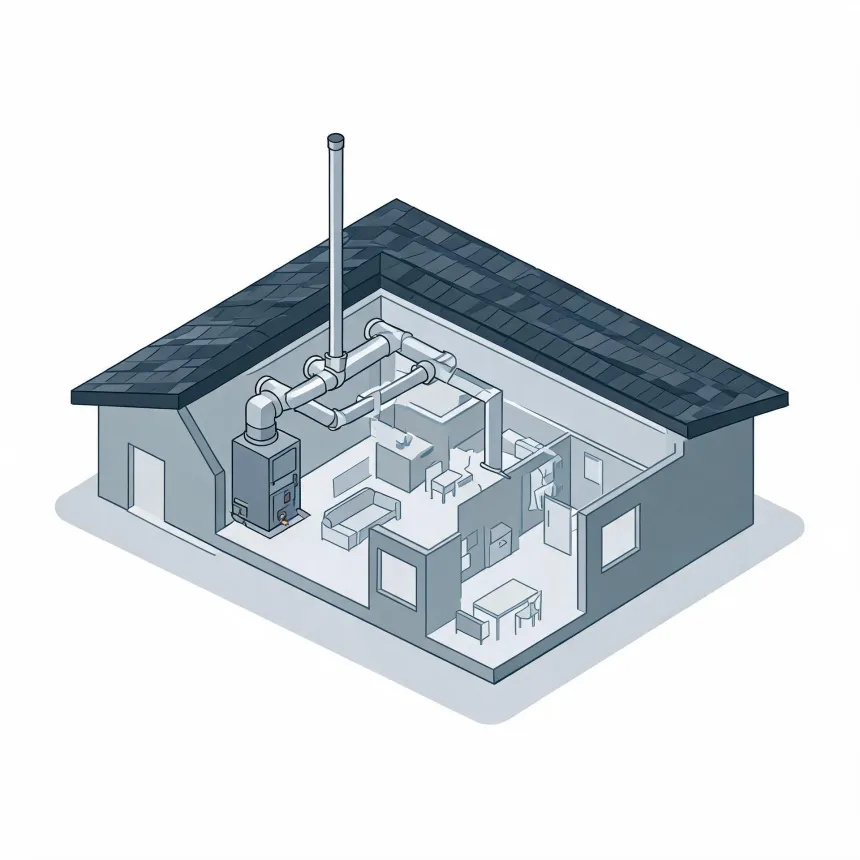
Isometric cutaway illustration of a single-story house showing interior rooms with furniture, a furnace unit with connected ductwork and a tall vertical flue pipe extending above the dark shingled roof.
Your furnace works hardest from November through April.

NOAA nClimDiv, 1991–2020 normals

Natural gas ran $12.55 per million Btu in Utah homes in 2024.

Price doesn't ask more of a furnace than any other cold place does, so the usual parts fail first, the igniter, the gas valve, the blower motor.

Half the homes here were built by 1972, before your furnace's time

Half the homes here were built by 1972
Heat runs September through May
Winter nights average 15°F
Nine months of heat, starting in SeptemberFurnaces here start running in September and go through May, so August is the month to catch a weak part before it fails.

Furnace here runs about nine months a year, September through May. Overnight lows average 15°F through December, January and February, right in the middle of that stretch. There's no real break in there for the igniter or the blower motor to coast through. A part that's been working that hard for months is more likely to be the one that finally gives out, not something failing out of nowhere. That's worth knowing before deciding whether a fix is a quick patch or the real problem.

Get the usual fix

Nothing about this area is especially hard on it. It's most likely the usual problem with the usual fix.

Find a contractor
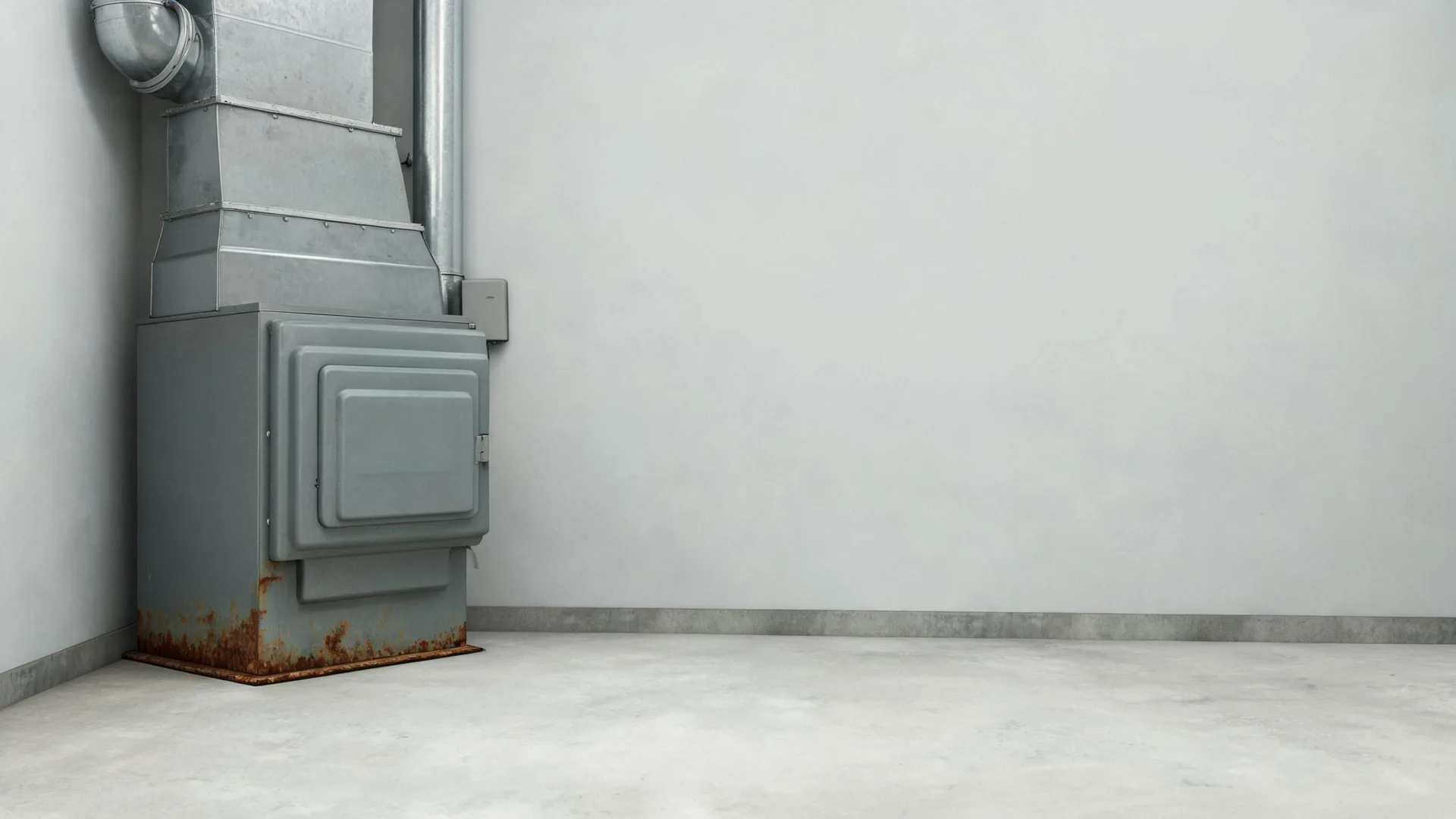
A gray residential gas furnace installed in an unfinished basement, connected to sheet-metal ductwork and PVC pipes.

What actually wears out

Most furnace failures trace back to the same handful of parts. The igniter draws power every time the furnace starts a cycle, and a hot surface igniter is built to go brittle after enough of them, until it cracks. The flame sensor sits right near the burner flame and slowly coats over with oxidation, and once it can't sense the flame anymore, the furnace shuts itself off as a safety measure rather than run blind. Blower motor bearings wear from spinning for hours at a stretch, which starts as a squeal and ends with the motor seizing. A capacitor that helps start the blower weakens with age and heat, and once it's weak the motor struggles to start or run at all. Every one of these wears from doing its job, cycle after cycle, not from sitting around getting old.

What you can check safely

Check the thermostat is set to heat and the temperature is above room temperature. Check the furnace switch, it looks like a light switch on or near the unit, and make sure it's on. Check the circuit breaker hasn't tripped. Check the air filter, a filter clogged with dust can choke airflow enough to trip a safety switch and shut the whole system down. If you have a window near a vent, check nothing is blocking it.

What to leave alone

Don't take the burner compartment apart or go near the gas valve, that's not a safe place to guess. Don't reset the furnace more than once if it shuts off on its own, a safety switch that keeps tripping is telling you something is actually wrong. If you smell gas, don't flip any switches at all, leave the house and call the gas company from outside.

A gray forced-air furnace with sheet-metal ductwork stands in an unfinished basement with exposed wooden joists, concrete walls, and a hanging incandescent bulb.

A new furnace would cut about $130 a year off heating for a typical Carbon County home.

  • A new high-efficiency furnace$540 a year
  • An older furnace$670 a year

Estimates for a typical Carbon County home, compared with an older unit built to the previous federal minimum, from EIA household energy data, Utah fuel prices and NOAA climate normals. Your home will differ.

Repair makes sense when one part has failed and the heat exchanger is sound.

Replacement makes sense when the heat exchanger is cracked or the furnace keeps needing parts.

A diagnostic visit starts before any panel comes off. A tech will ask what the furnace was doing right before it quit, whether it was short cycling, running cold, or just dead at the thermostat. That changes where they look first. From there they'll pull the burner compartment cover and watch a full cycle, checking the igniter glows and the flame burns steady, then testing the flame sensor and the gas valve with a meter rather than guessing by eye. If the blower is the complaint, they'll check the capacitor and listen to the motor under load, since a weak capacitor and worn bearings sound different once you know what to listen for. Most of this is testing one part at a time until the bad one shows itself, not replacing things to see what helps.